
Daniel Comboni
Missionnaires Comboniens
Zone institutionnelle
D’autres liens
Newsletter
Christian Women in China
Monday, March 9, 2026
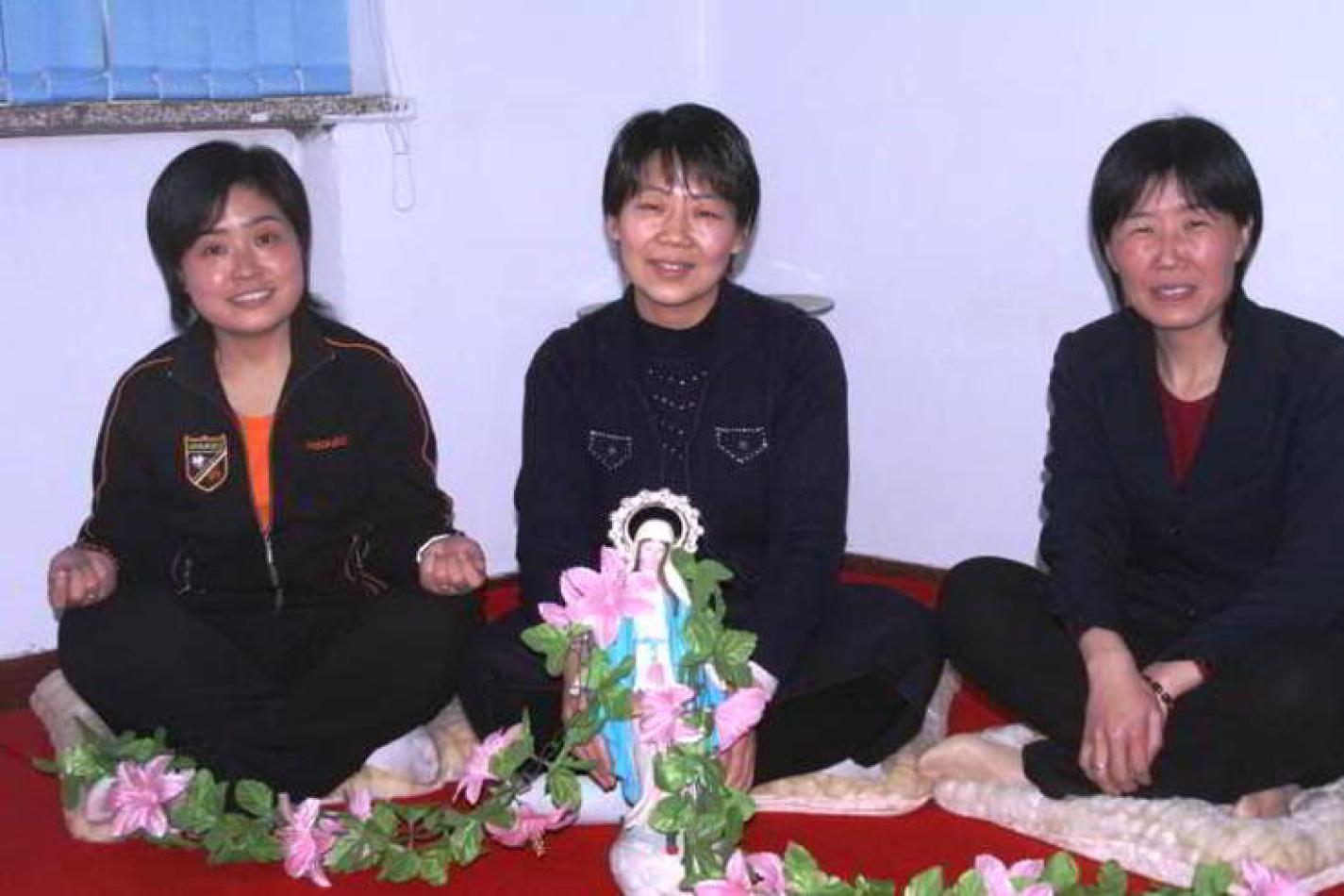
Chinese society is changing and offering Christian women new opportunities to participate in the life of the Church. The rule of the Catholic women. “In China, Christians remain a minority compared to the population, and Catholics are even fewer. However, among Catholics, women are numerous and actively participate in the celebrations and the life of the Church.” [Photo: file swm. Comboni Missionaries]
Since the 20th century, Chinese women have assumed an increasingly important role in society. A significant shift has occurred. Their lives are no longer centred exclusively on the family, as was the case in the past. Women actively participate in nearly all sectors of society, including education, healthcare, services, commerce, and even politics. To demonstrate their value, a proverb says: “Women cover half the sky.”
In China, Christians remain a minority compared to the population, and Catholics are even fewer. However, among Catholics, women are numerous and actively participate in the celebrations and the life of the Church. During Mass, the majority of the faithful are women. This phenomenon, particularly in rural areas, is linked to their role in the family and society, as women are more flexible than men in organising their time. To accompany their children to school and care for the elderly, they often seek jobs with more flexible hours.
In addition to these women who have followed their vocation to marriage, other Catholic women have responded to a special calling, that of consecrating themselves totally to God. They live a contemplative, apostolic life with special commitment.
Catholic women, both lay and religious, fulfil various roles within the Church and society, which can be grouped into four categories: liturgy and prayer, catechesis, service, and charitable works. In some parishes in northern China, the faithful customarily gather every day, morning and evening, in church or in the house of prayer to praise the Lord.
Women and girls initiate the prayers and chants. They also share the same functions as men during the Eucharistic celebration, such as reading the readings and universal prayers. Women also devote time to parish life and charitable works, decorating places of prayer before every major Church feast, visiting the sick and elderly, and accompanying the dying.
The parish priest sometimes asks practising and trained lay people, including women, to impart catechesis to children and young people during the summer and winter holidays. In some dioceses around Beijing, both women and men, after one or two years of theological and intellectual formation, are sent to proclaim the Gospel to non-Christians.
While lay women actively participate in the life of the Church with their limited time, religious sisters organise activities that extend beyond the confines of the Church. They adapt to society based on geographical and political circumstances; many religious congregations in China have very diverse missions. The religious sisters sent by their superiors collaborate with parish priests in all areas necessary for the parish.
Thanks to their theological formation, the nuns organise spiritual retreats and give lectures in seminaries and parishes. Those trained in psychology offer support to Christians and non-Christians alike. In a congregation in the north, the nuns take in elderly people who live alone, have been abandoned by their children, or who, due to poverty, have no children to care for them.
The sisters also take in orphans, often severely physically and mentally disabled, preparing meals for them and teaching them to pray. They also take care of their daily lives, including changing sheets, washing clothes, cleaning the house, and playing with them. Medical practices are another activity of the nursing sisters and doctors; these places offer both care to the sick and a means of support for the sisters.
Also noteworthy are the kindergartens that welcome all children, regardless of religion. Unfortunately, this work has been unable to continue for various reasons. All these activities are linked to the needs of the Church and society and evolve over time.
The active participation of women, both lay and religious, appears to be crucial to the vitality of the Church and to projecting a positive image of the Church in China. It is also a spiritual fulfilment for them. Thanks to their new social position and their training in various fields, Catholic women can bear special witness to the Church’s presence in an atheistic society and call for action for the good of society.
Welcoming disabled elderly and orphans can attract the attention of non-Christians and encourage them, in turn, to care for the most vulnerable and treat them with humanity and dignity. Visits by social groups of all ages to these associations are already bearing fruit.
I have met visitors and groups of children who have brought food, toys, and other useful items to share with children with disabilities. The nursing home, orphanage, and clinics are not only places of welcome, but also places where Christians bear witness to their faith in everyday life.
It is a way to put into practice the evangelical exhortation of the former Pope Francis: an outgoing Church. Women’s involvement in parish life enables a personal and communal spiritual life in the face of modern challenges. When they participate in the liturgy, organise retreats, and conduct catechesis, they themselves benefit first and foremost, for he who gives will receive more (cf. Mt 13:12).
To strengthen their role, both as religious and lay women, they must receive more structured formation, not only in theology and catechesis, but also in other social areas. In this way, they will be able to better accompany and support families, children, and young people facing the challenges of Chinese society, characterised by an ageing population, marital problems, and social stress.
In conclusion, Catholic women’s activities offer numerous benefits to the Church and have a significant impact on society, even if their values do not always receive the recognition and support that they deserve. Catholic women play a crucial role in transforming the faith, strengthening parish communities, and engaging in social work, demonstrating a remarkable capacity for adaptation and innovation. In short, the future of the Catholic Church in China will largely depend on Catholic women’s ability to adapt, innovate, and remain faithful to their faith.
(Sister Julie, a diocesan religious in China/MEP) – (Photo: file: swm)
Comboni Missionaries