
Daniel Comboni
Misjonarze Kombonianie
Obszar instytucjonalny
Inne linki
Newsletter
In Pace Christi
Sprocatti Fortunato
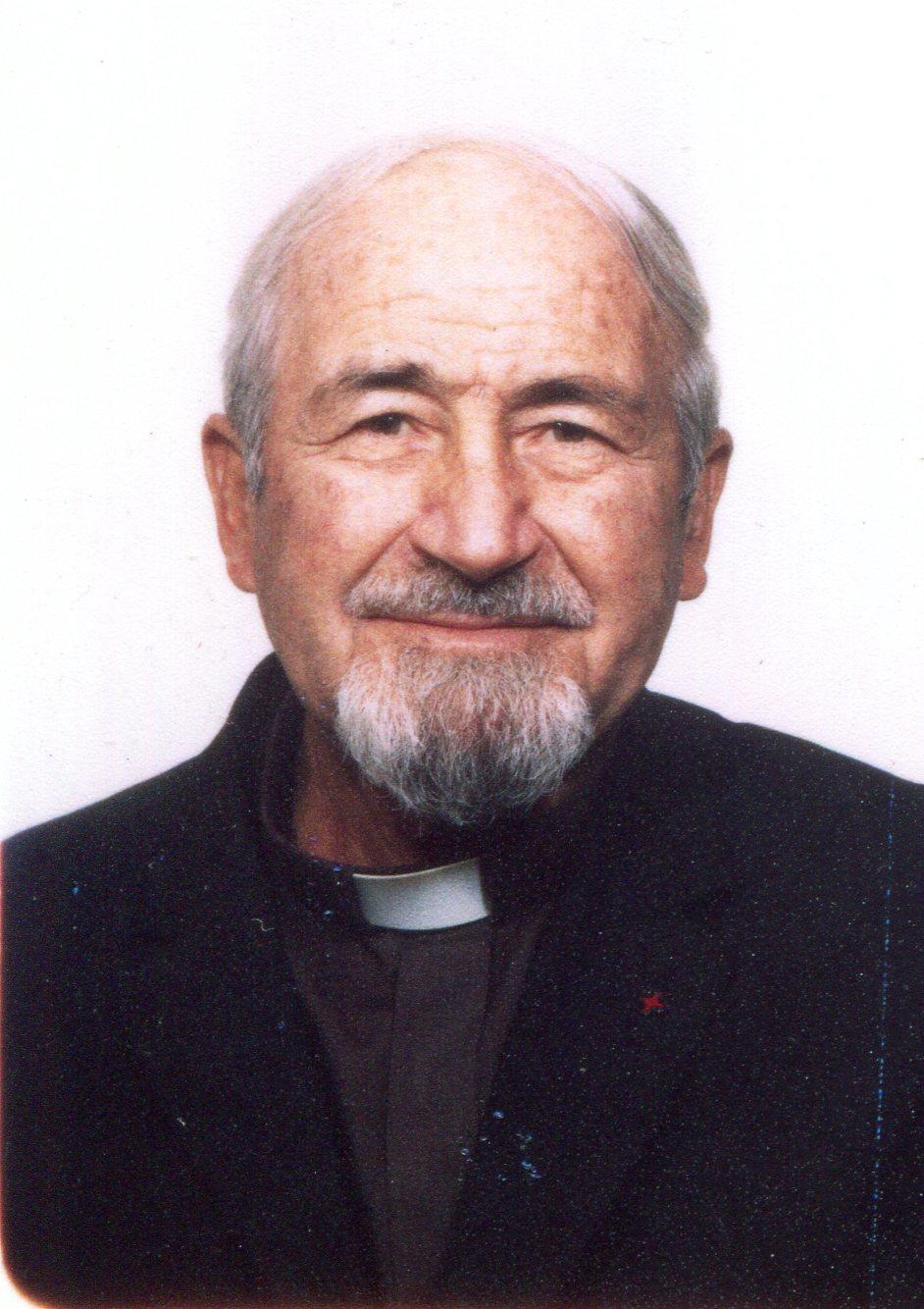
The Sprocatti family could call itself well-off, because they owned several pieces of good land that provided a comfortable life for the six children of Giuseppe and Elisa (neé Trevisani).
The father was a believer, but not a practising Catholic. On the other hand, the mother would not have missed Sunday Mass for any reason in the world. So every Sunday, trailing her brood of half a dozen, she would walk the three kilometres into town, to give the children the chance to carry out their religious duties and receive the sacraments - leading by example in this, too.
Fortunato was the third of four boys and two girls. He went to primary school at Ceneselli, and completed it with top grades, because he was gifted with a marked intelligence.
The War
Fortunato served in the Navy at Pola and then La Spezia, before the notorious 8th September 1943, when Italy was invaded by the Germans and the Italian army disbanded.
"At the age of 18," he wrote, "I volunteered for the Navy in the harbour office at Chioggia. I was not attracted by the adventure; it was a serious decision, with apostolate as the aim. On 9th September 1943 I was taken prisoner by the Germans. After a few days I managed to escape from the concentration camp. I almost reached the door of the gas chamber..."
It was too risky to go back home, both for himself and his family, so he decided to join the partisans at Montefiorino (Modena).
Emigrate?
In 1948, Fortunato's family parted from that of an uncle with whom they had been living at Ceneselli, and settled at Trecenta, where Giuseppe had bought a piece of land as his own property.
There was a Parish Priest at Trecenta, who later died "in the odour of sanctity"; he welcomed the family like long-lost friends, and immediately concerned himself with the younger members.
Fortunato was 24, with an experience behind him that had given him maturity. He was soon elected president of Catholic Action and of the Sunday School, as well as starting some social work among the young men who were returning from the war, their lives rather badly disrupted.
Vocation
In this climate, assisted by the Parish Priest to whom he was able to talk frankly, he gave serious thought to his future. It seemed to him that to dedicate his life to those who did not yet know the Lord, as a collaborator with missionary priests in Africa, was the most wonderful thing he could do. So, on 19th March 1950, he wrote:
"For some years now I have felt an increasing desire to give to Jesus a bit more than I could give Him if I remained in the world. And in the last months this desire has become a burning passion: I feel able for it, because I wish with all my heart to give, sacrifice, offer to Jesus, for Jesus and for souls, everything entirely and forever; holding back nothing.
I have already sought the counsel of prudent and enlightened persons. I have heard that this is the Lord's will, therefore, considering myself called by God to consecrate myself to the missionary apostolate in Africa as a Brother to assist the priests, I have chose your Institute because I, too, want to become a Son of the Sacred Heart.
So I ask you please to let me know the day on which you wish to summon me...".
In a relatively short time all arrangements were made, and Fortunato stepped into the novitiate at Gozzano on 14th April 1950. "His parents were a bit taken aback by Fortunato's firm decision, at the age of 26; but they were happy, as we all were" writes Quinto, his brother.
At the same time his elder sister Giulietta was taking steps to enter the Pie Madri della Nigrizia, but was blocked by health problems. This holy woman, who remained in the world, but lived like a nun all her life, became a nurse and worked alongside her brother in prayer, support and a complete sharing of ideals... right to the end.
It must be said that the novitiate was quite difficult from the start for a young, mature man with a lot of experience, having to live alongside lads of 16 or 17. But Bro. Fortunato did so well that the superiors decided to send him to England for the second year of novitiate, so that he could learn the language as well. He had two Novice Masters during that year. The first, Fr. Albertini, wrote: "Serious and dignified in behaviour, diligent in his duties. He is calm and steady in everything, not given to crises or ups and downs. He is a good example for others. He shows good practical sense and judgement. He is doing well in his language study, and I think he shows a good intellectual capacity. He has a quiet and obedient character, and listens to observations with great humility. I feel sure he will be a good Brother, even though he will always be one who can speak his mind."
Fr. Baroni, who succeeded Fr. Albertini, added: "Cheerful, good company, open. He likes stating his opinions, which he holds quite strongly. Sincere piety, but not showy. Intelligent, diligent, practical. I recommend him for religious profession". We can say that sticking to opinions, the sign of a strong and responsible personality, would also be a defect against which Bro. Sprocatti had to struggle all his life.
On 9th September 1952 he pronounced his Vows at Sunningdale, thus being consecrated as a Comboni Missionary. Then he remained a further two years in England, doing building work.
In Africa
On 14 December 1954, Bro. Fortunato was at Aber, in Uganda. He was in charge of building works there until 1958, then moved on with the same office, to Karamoja: Kangole until 1960, Kaabong to 1966, Matany up to 1970 and Morulem until 1977. Bro. Angelo Drago describes the next period, with some general reflections: "He spent several years at Amaler, about 4 km. from Namalu, in charge of the farm there, and teaching African workers the arts of larger-scale agriculture. He was there by himself during the liberation war in 1979, guarding the mission. He built Kaabong mission (northern Karamoja) with a team of builders he had formed himself. He loved hunting; during holidays he would teach novices about the `psychology' of various animals, and how to avoid danger while getting something for the pot."
Fortunato was back at building in 1982, and also worked in the Procure at Moroto. Then in 1987 he went to Kanawat for more construction work. From here he went to the Centre for Sick Confreres at Verona and... to the Father's House.
Willing service
All his mission activity can be summed up thus: service and willingness, together with competence and a sense of responsibility. Over the years, confreres and superiors have borne abundant witness to this. To quote some of the "heavyweights" - Fr. Bresciani: "Steady and solid character, a man of real, active charity"; Fr. Barbisotti: "Willing, sticks to his work, ready obedience"; Fr. Russo: "He likes to read books in his spare time, to learn more"; Fr. Santi: "Sure of himself, a man of sacrifice".
Fr. Tarcisio Pazzaglia writes: "We remember his dedication and optimism, his cheerfulness and his `counsels' for young missionaries who did not yet know the language, and were coming to grips with people who had a different sense of time, and called stealing cleverness (ryeko).
His own testimony
In 1990, although Uganda was fairly peaceful under Museveni, Bro. Fortunato was the victim of bandits, who struck him on the head quite hard, and could easily have killed him. He did not tell his family until he had recovered, and made little of it with superiors and the police, so that "the poor fellows, driven by hunger rather than malice - and whom I pardoned at once - would not get into trouble".
"The mission of Loyoro is 30 km. from Kanawat. I built it from the ground up in 1964, living in a tent. Yesterday it was attacked and looted twice. Everything was taken from the church: the sacred vessels thrown about, the tabernacle smashed and the hosts scattered on the ground and trampled on. Over 40 people were killed, too" (May 1987).
"We had no news of Fr. Egidio Ferracin for 6 days. He had gone to say Mass about 20 miles away. At last, they found his body, tied to a tree, where he had been tortured and killed... the Church suffers and accepts."
In danger
Despite events like these, Bro. Fortunato's letters show no sign of dismay, only expressions of trust in God and understanding for people, even killers. "On 13 April next, it will be 40 years since I left home. I regret none of the past, of the choices made; indeed, I thank God for the situation, this place full of dangers, want and suffering. I have crosses to bear, but crosses fill the soul with true joy, even amid tears. It means the Lord has not forgotten me, and loves me. Missionaries walk the road to Calvary. There is a tomb ahead, but beyond that is the Resurrection. This is our hope". These words are from a letter written shortly before his final return to Italy.
"They say there are over 25 thousand unregistered rifles, all automatic. I have lost count of the number of times I have been stopped by armed men, and I have been fired at a good number of times. Thanks to my guardian angel - whose presence is felt very strongly in times of terror - I am still alive."
Out of the blue
In over 40 years of missionary life, Bro. Sprocatti had returned to Italy several times for holidays. The leave that began in May 1995 included a thorough medical check-up, because his health was no longer what it used to be.
The tests showed no serious problems, except for varicose veins that needed to be dealt with, to reduce the chance of phlebitis, thrombosis or clots. On 21st July he went into hospital at Lonigo (VI) for an operation on the following Monday (24th). However, during the night between Sunday and Monday he suffered a stroke, with paralysis of the left side. He was taken to the nearby hospital of Arzignano for a body scan, which showed that a wide area of the brain had been affected. His relatives were told at once. His sister Giulietta, now retired, offered to stay with him to help with the nursing. His confreres said they would take over on nights.
Strangely, Brother did not seem aware of his state, but with the medical attention and nursing, he began to improve quite nicely. On 9th August he returned to the Mother House in Verona for rehabilitation therapy. Here he seemed to go down psychologically as fast as he improved physically, becoming quite depressed. It was caused mainly by the fear of never being able to return to the mission. Giulietta came along to keep him company and help him to get over this mental state.
On 24th August she thought of going home for a few days, but Fortunato persuaded her to remain until the weekend. At about 10.30, after his therapy, he asked to be sat up in an armchair. His blood pressure was normal, and his sister gave him a cup of tea. But after tasting it, he asked to be put to bed, as he did not feel well. While the nurses were doing this, they noted that his pulse had disappeared: he seemed to be in cardiac arrest. A doctor was there in minutes, but he was able only to confirm that Fortunato had died.
United in death, as in life
In the afternoon Giulietta packed, thinking she would go back home with her relatives, who were on their way to Verona. Then she went up to watch and pray beside Fortunato. At 14.15 she took his wallet down to one of the Brothers, saying she had tidied his clothes and the bedside table, and went back up to the room. A few minutes later Bro. Plazzotta followed with Fr. Altieri, who had been with Bro. Fortunato when he died. They opened the door, and saw Giulietta in the armchair with her head thrown back, as though asleep. But she did not start at the noise. The Brother hurried over and say she was very pale, her lips blue. He laid her on the floor and tried cardiac massage; but to no avail. Three hours after he brother, she too had died of a heart attack. Once again, the doctor could do nothing but confirm that death had taken place.
Humanly speaking, it was a very sad and shocking day; but it seemed clear that the Lord had called them both together, since they had shared the missionary vocation and ideal so closely here on earth.