
Daniel Comboni
Comboni Missionare
Institutioneller Bereich
Andere Links
Newsletter
Cecilia Sierra: “The veil literally saved my life”
Saturday, December 13, 2025
I have worn a veil or a scarf for much of my life. In my congregation, the Comboni Sisters, the veil is not obligatory, yet I freely embraced it—first in Italy, the homeland of many of our elderly sisters, for whom the veil carries deep meaning. There, it became a sign of continuity, respect, and belonging.
In the United States—while studying at university, living on campus, serving migrant communities at the border, engaging in parish ministry, making mission appeals, or directing the Latina Sisters Association—I wore it with intention, aware of how it spoke to identity and mission.
I made my final vows in Egypt, a predominantly Islamic country, where the veil became almost part of who I was. At times, replacing it with a simple scarf allowed me to blend into daily life, moving freely through streets, mosques, and markets. Yet whenever I wore the veil, it grounded me—a quiet assurance of home, protection, and purpose.
In Sudan, as a young sister directing the communications office, the veil offered both identity and authority. It opened doors and granted respect in places where a young, unveiled woman would not have been taken seriously.
In South Sudan, it became a shield. During the volatile years following the Comprehensive Peace Agreement, when soldiers and militias filled the roads, the veil literally saved my life. One scorching afternoon, a furious soldier stopped me; only when I covered my head did his posture change. “Excuse me, Sister,” he said, handing back my documents.
Guatemala was different. There, the veil signified status and prestige I did not want to claim. I chose instead to dress like local women—pants, colorful embroidered blouses—so I could walk with them as one of their own.
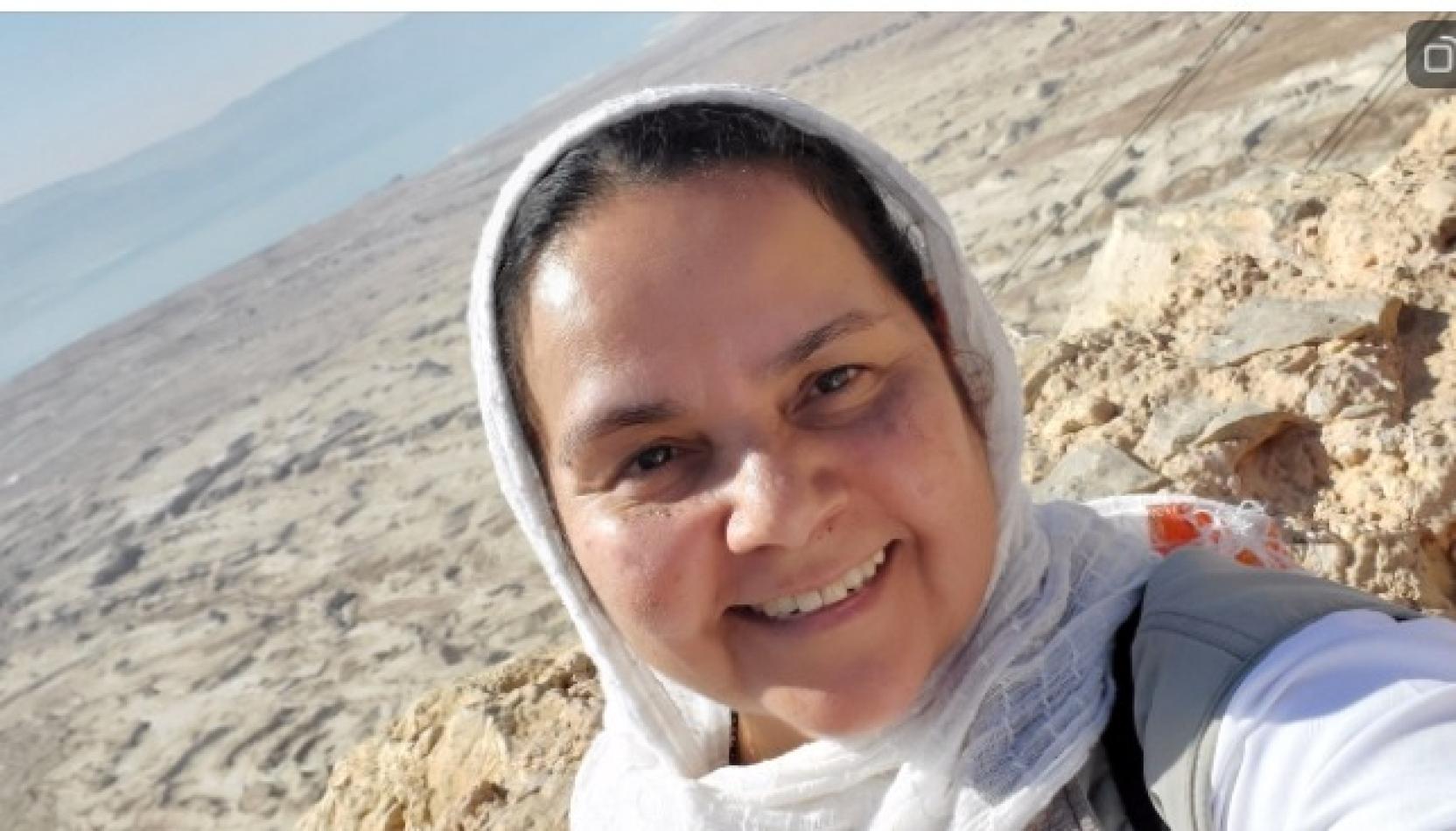
In Palestine, working with Bedouin women in the West Bank, the veil once again felt natural. Their grace and dignity in wearing it made me feel at home. In Jerusalem and across the desert of the Holy Land, women—Muslim, Jewish, and Christian—cover their heads. Among them, I find resonance. My simple white veil becomes a sign of who I am and what I commit to be.
Each time I wear it, I remember the promise I made on the day of my first vows: to journey among God’s peoples with humility and presence—sometimes with a veil, sometimes without it—always seeking harmony with the women, the cultures, the languages, and the lives that surround me.
Beyond the veil, I remain united with the One who is Compassionate and Merciful, the God who gathers us all and invites us to take refuge beneath the soft veil of His holiness—the divine mantle that shelters, consoles, and gently draws every heart toward its true home.
Cecília Sierra,
Comboni missionary sister in the West Bank desert