
Daniel Comboni
Comboni Missionaries
Institutional area
Other links
Newsletter
1st Sunday of Lent – Year A: Lent, a Time of Awakening



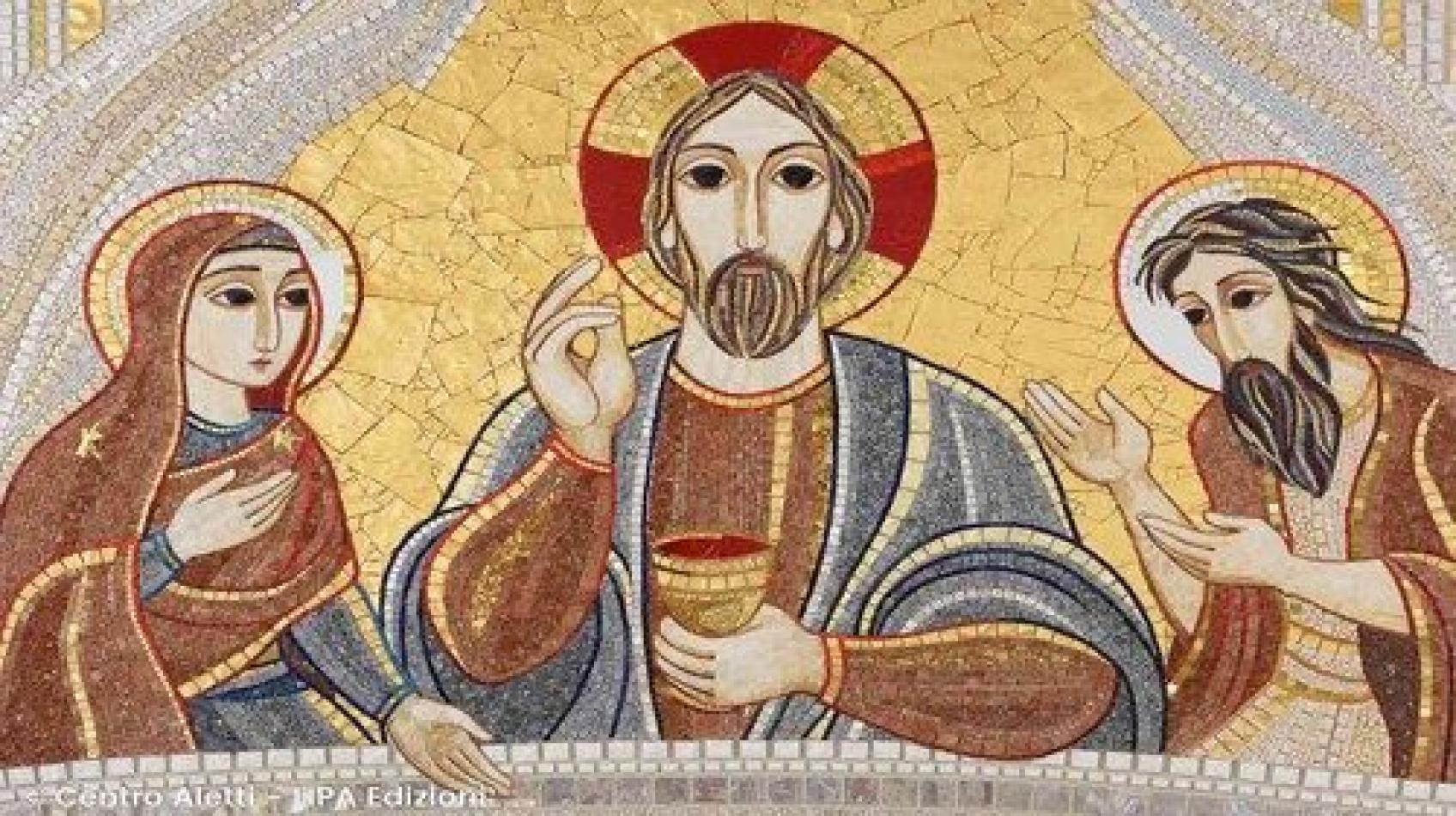
With Ash Wednesday we began a special and precious time in our lives. It returns every year and may seem like a simple repetition, like the passing of the seasons. In reality, each Lent is different, because it never finds us the same as the previous year and it brings with it a new grace for each of us. (...)
“Jesus was led by the Spirit into the wilderness to be tempted by the devil.”
Matthew 4:1–11
1. From Ashes to the Fire of Easter
With Ash Wednesday we began a special and precious time in our lives. It returns every year and may seem like a simple repetition, like the passing of the seasons. In reality, each Lent is different, because it never finds us the same as the previous year and it brings with it a new grace for each of us.
Lent, as the Latin term indicates, lasts forty days. The number forty, in the Bible, is rich in meaning: it recalls the forty years of Israel in the wilderness, the forty days of the prophet Elijah’s journey to Sinai, the forty days granted to Nineveh for repentance, and above all the forty days of Jesus in the wilderness, between his baptism and the beginning of his ministry.
This journey leads us towards Easter, the centre and heart of our faith. It is a path that begins with ashes — a sign of frailty and extinguished illusions — and moves towards the fire of the Vigil and the light of the Easter dawn, the promise of new life. Beneath the ashes the fire may still be glowing: it is the Spirit of the Risen Lord who rekindles it and transforms it into hope.
The forty days are counted from Ash Wednesday to Palm Sunday, which opens Holy Week. There is a symbolic link between these two moments: the ashes are obtained from the olive or palm branches of the previous year. According to our way of counting, there would be thirty-nine days, but in the biblical tradition both the first and the last day are included. Another way of calculating excludes the Sundays — always a remembrance of Easter — and thus extends the journey to Easter Sunday, linking it to the fifty days of the Easter season.
2. The Very High Mountain of Temptation
Today we are led by the Spirit into the wilderness with Jesus, to be tempted by the devil. We have often experienced temptation, but this time it will be different. We shall not be alone before the ancient serpent, “the most cunning”, who stripped us of our splendour as children. This time we shall stand behind “the stronger one” who “will crush his head”.
Every day we ask the Father to “lead us not into temptation”, but this time perhaps he will not grant our request! This Lenten period will be a time of trial. The Father wants us to fight together with his Son, to learn from him how to unmask the serpent, how to evade his deadly moves and how to defeat him.
This cycle of trials will conclude on a mountain, the first of seven in Matthew’s Gospel. The devil will take us with Jesus up “a very high mountain and show us all the kingdoms of the world and their splendour”. This mountain is not unfamiliar to us, nor are these kingdoms of the world and their splendour. Many times they have dazzled us with their seductive charm. This mountain stands in contrast to the seventh mountain that closes Matthew’s Gospel, the mountain of mission, where Jesus says: “All authority in heaven and on earth has been given to me”, and his disciples worship him before going down to evangelise the world (Mt 28:16–20).
3. The Three Cardinal Temptations
There are three temptations to which we, like Jesus, are subjected. They are the summary or the root of all the temptations of human life. For this reason I would call them the three cardinal temptations, the hinges of every temptation, and in some way they oppose the three theological virtues: faith, hope and charity. What are these three temptations, mothers of all the others? Bread, Prestige and Power.
The first is the temptation of BREAD. It concerns the satisfaction of our primary needs and our relationship with the goods of the earth. A disordered relationship with material goods weakens our FAITH in the Father, from whom the believer trustingly expects daily bread. The Church proposes the Lenten practice of FASTING (from the good that tempts us most!) in order to heal our relationship with THINGS.
The second is the pursuit of PRESTIGE. It is the temptation that inflates our ego, that drives us to make a name for ourselves and prevents us from hallowing God’s name. It is an unhealthy relationship with ourselves, which compromises the virtue of HOPE. Indeed, a person tends to place trust in himself or herself. The Church proposes the practice of PRAYER and attentive listening to the Word of God in order to correct this unhealthy relationship with OURSELVES.
The third is POWER. It is the most dangerous temptation because it leads us to place others at our service. Instead of seeking the Kingdom of God and his will, we try to build our own kingdom and subject others to our will. It stands in opposition to the virtue of CHARITY. It is the temptation that sets us against God, who is love and service.
We may think that this temptation does not concern us. In fact, it is not easy to uncover. It is all the more insidious the more subtle it is. It can take many forms. I shall list seven: the power of the role or service we exercise; of our knowledge and competence; of economic status; of our charm over others; the manipulation of affections; the use of the media; and even religious power that manipulates consciences. All of us, in one way or another, are tempted by this seven-headed Dragon (Revelation 12:3). Discovering our particular form of abuse of power is of vital importance. The Church proposes the concrete practice of charity and service in order to combat this temptation.
4. The Fourth Temptation and Its Secret
Temptations can be reduced to three, but each of us has a particular dominant temptation, where our vulnerability is revealed. It is a breach in our defences, a secret passage known to the Enemy. Through it he can easily infiltrate the heart. Knowing this fourth temptation is of crucial importance for regaining freedom.
Often that fragility hides a secret that escapes us. Behind it there may lie an energy, like a powerful underground spring. Unrecognised or unwelcomed, it is repressed and diverted elsewhere. Behind that instinct or tendency, which we try in vain to contain, there is probably a potential. It is a resource waiting to be identified and properly directed, so as to bring new vitality to our human and spiritual life.
In conclusion, let us remember that Lent is a time of awakening for the Christian — not only spiritually, but for the whole of existence. It is our springtime. Life bursts forth at Easter, but Lent is its awakening: a slow rebirth before the blossoming. May our Lenten commitment announce the coming of the “fair season”!
Fr Manuel João Pereira Correia, mccj
GOSPEL REFLECTION
Pope Francis
Matthew 4:1-11
In this First Sunday of Lent, the Gospel introduces us to the journey toward Easter, revealing Jesus as he remains in the desert for 40 days, subjected to the temptations of the devil (cf. Mt 4:1-11). This episode takes place at a precise moment in Jesus’ life: immediately after his Baptism in the River Jordan and prior to his public ministry. He has just received the solemn investiture: the Spirit of God has descended upon him, the heavenly Father has declared him “my beloved Son” (Mt 3:17). Jesus is now ready to begin his mission; and as this mission has a declared enemy, namely, Satan, He confronts him straight away, “up close”. The devil plays precisely on the title “Son of God” in order to deter Jesus from the fulfillment of his mission: “If you are the Son of God” (4:3, 6); and proposes that He perform miraculous acts — to be a “magician” — such as transforming stones into bread so as to satiate his hunger, and throwing himself down from the temple wall so as to be saved by the angels. These two temptations are followed by the third: to worship him, the devil, so as to have dominion over the world (cf. v. 9).
Through this three-fold temptation, Satan wants to divert Jesus from the way of obedience and humiliation — because he knows that in this way, on this path, evil will be conquered — and to lead Him down the false shortcut to success and glory. But the devil’s poisonous arrows are “blocked” by Jesus with the shield of God’s Word (vv. 4, 10), which expresses the will of the Father. Jesus does not speak a word of his own: He responds only with the Word of God. Thus the Son, filled with the power of the Holy Spirit, comes out of the desert victorious.
During the 40 days of Lent, as Christians we are invited to follow in Jesus’ footsteps and face the spiritual battle with the Evil One with the strength of the Word of God. Not with our words: they are worthless. The Word of God: this has the strength to defeat Satan. For this reason, it is important to be familiar with the Bible: read it often, meditate on it, assimilate it. The Bible contains the Word of God, which is always timely and effective. Someone has asked: what would happen were we to treat the Bible as we treat our mobile phone?; were we to always carry it with us, or at least a small, pocket-sized Gospel, what would happen?; were we to turn back when we forget it: you forget your mobile phone — ‘oh! I don’t have it, I’m going back to look for it’; were we to open it several times a day; were we to read God’s messages contained in the Bible as we read telephone messages, what would happen? Clearly the comparison is paradoxical, but it calls for reflection. Indeed, if we had God’s Word always in our heart, no temptation could separate us from God, and no obstacle could divert us from the path of good; we would know how to defeat the daily temptations of the evil that is within us and outside us; we would be more capable of living a life renewed according to the Spirit, welcoming and loving our brothers and sisters, especially the weakest and neediest, and also our enemies.
May the Virgin Mary, perfect icon of obedience to God and of unconditional trust in his will, sustain us on the Lenten journey, that we may set ourselves to listen docilely to the Word of God in order to achieve a true conversion of heart.
Lent 2017