
Daniel Comboni
Comboni Missionaries
Institutional area
Other links
Newsletter
Mons. Christian Carlassare: “South Sudan knows well the weight of the Cross”
Thursday, April 2, 2026
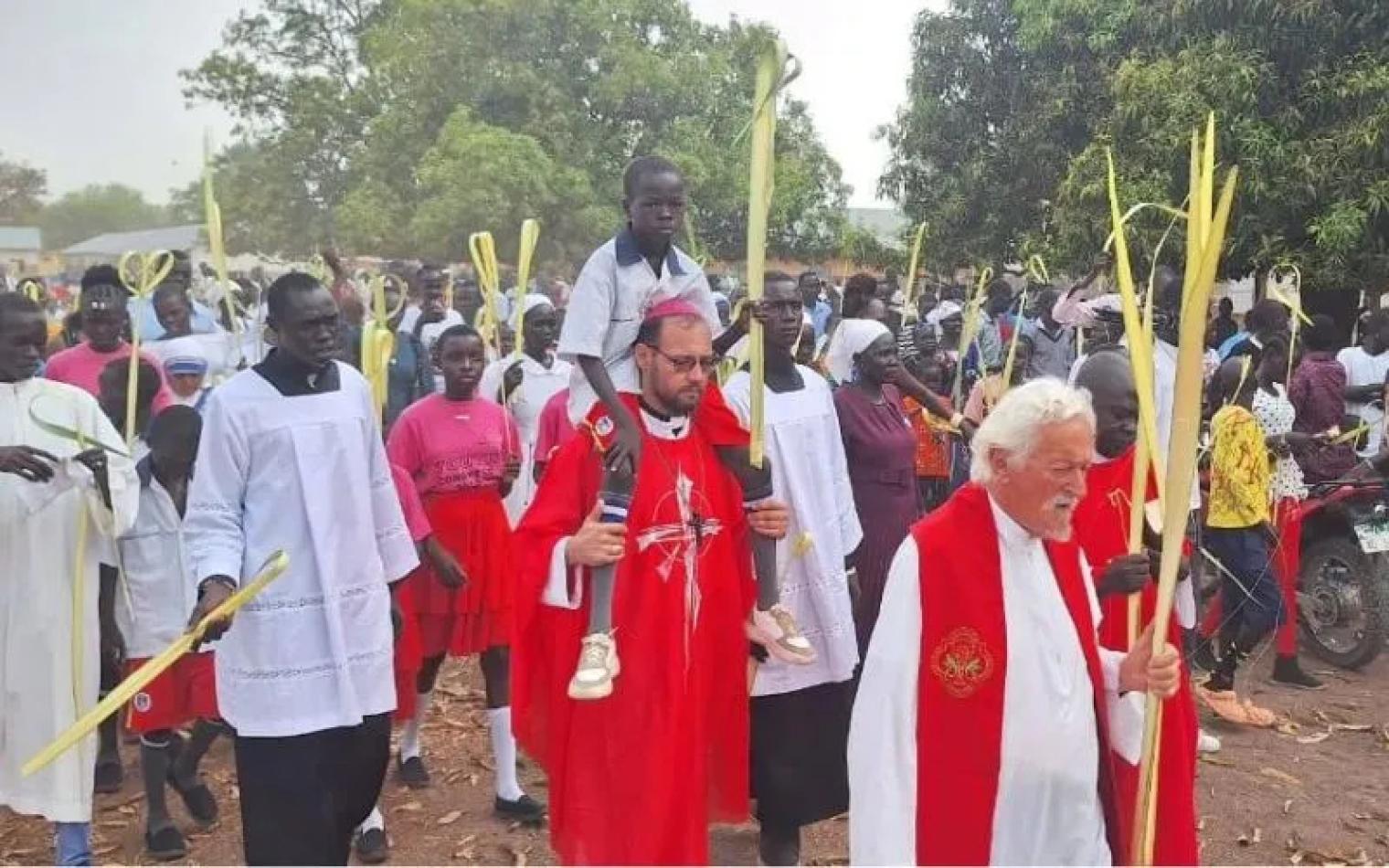
Easter is near. During Lent, we have walked with Jesus along the way of the Cross—a path marked by suffering, injustice, violence, and humiliation. South Sudan knows well the weight of the Cross.
The year began with strong political tensions that led to clashes between different army groups and the re-emergence of certain militias. The government initiated a military mobilization, particularly affecting the state of Jonglei, in an effort to counter opposition forces. In these operations, many communities were struck, tragically involving numerous civilians. Humanitarian agencies were even denied access to certain areas, leaving people without aid.
On March 1st, a terrible massacre took place: 169 innocent people were killed by a group of armed youths from one community within our diocese against a neighboring community. An unjustifiable attack, explained only by prejudice, lack of dialogue, accumulated hatred, and the political manipulation of these sentiments.
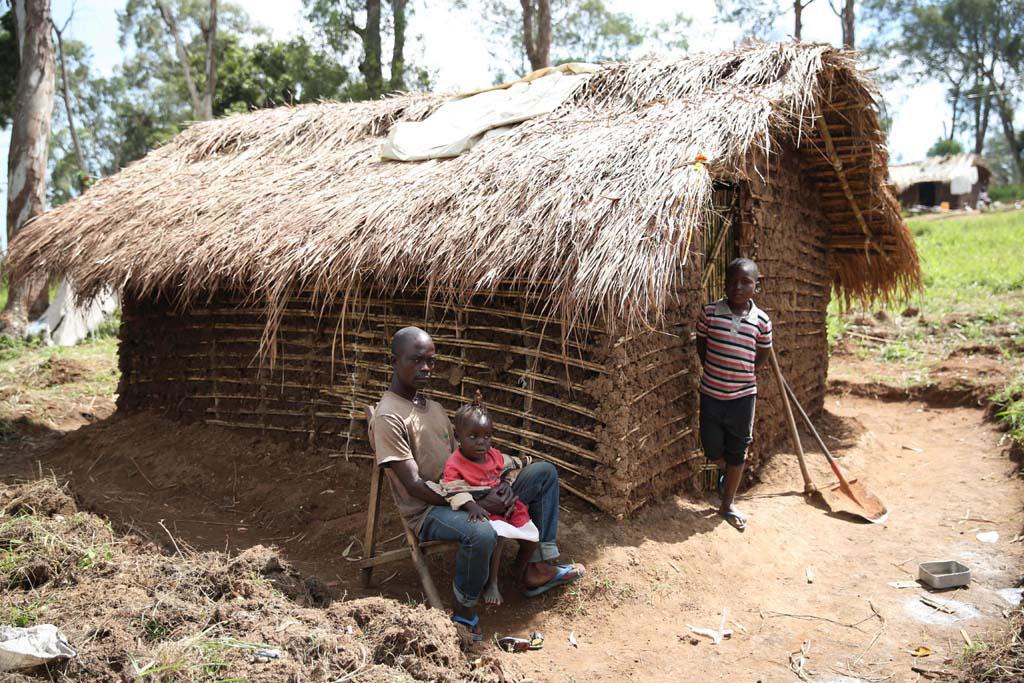
Too many families have mourned their dead. Too many communities have been shattered by violence. Too many hearts carry deep wounds. And when wounds run so deep, the word “forgiveness” can seem almost disrespectful, and the word “peace” may appear fragile, distant—almost impossible.
And yet, it is precisely here, within these very wounds, that true peace can be born.
At the beginning of the year, Pope Leo used a striking expression: he spoke of a “wild peace.” It is not a peace that simply coincides with the end of conflict. It is not the result of signed agreements or armed truces. It is not born in palaces, nor is it designed at a table.
It is a peace that springs up spontaneously, like a flower in the undergrowth or in the crack of a rock. It grows wherever it finds even the smallest open space, because it cannot help but grow. It is the deep human longing that resists evil, weary of living in a world that has lost God’s creative dream. It is a peace that is born because hope has not been lost.
This is the peace of the Gospel. It is not imposed, nor is it merely the silence of weapons. It is not a fragile balance of power. The peace of Christ is born in hearts: in the hearts of people who are tired of hating, of seeking revenge, of seeing their children grow up in fear.
How often, here in South Sudan, has peace begun in just this way: with two people choosing not to take revenge; with a mother teaching her child not to hate; with young people of different ethnic groups overcoming distrust and becoming classmates at school. Small gestures, almost invisible. Yet it is precisely there that peace takes root.
The “wild peace” of which the Pope spoke begins here: in the hearts of wounded men and women who choose not to let violence have the final word. Easter tells us the same: peace is born within the wound. Jesus did not avoid the Cross; He did not save the world by escaping violence, but by passing through it without being overcome by hatred.
It is in this spirit that the mission continues.
We have completed a project to build wells equipped with solar pumps and storage tanks, providing water to four parishes, in addition to two wells with manual pumps. Soon, we will reach other communities to ensure access to clean water.
We have also transported two truckloads of building materials—cement, timber, iron, and metal sheets—and we are setting up a workshop where we will prepare structures for various constructions. Work has begun on the primary school, which will be dedicated to Saint Martin de Porres: about 30 cm of earth has already been leveled, and we are planning drainage systems to prevent water stagnation.
Next to the school, a sports center will be built, with fields for football, basketball, and volleyball—a space for encounter and growth, designed to foster among young people a spirit of friendship, joy, and peace.
The primary school has already been operating for a few years, though in a temporary location. There are about twenty teachers, and this year they are supported by Sister Anna Marie Reha, from the School Sisters of Notre Dame, who is making an important contribution to providing more effective and appropriate education for the children.
I am deeply grateful for the presence of Brother Hans Eigner, a Comboni engineer, who is carrying forward these projects with competence and dedication. Father Giovanni Girardi and Matteo Perotti are also offering invaluable help, taking care of the installation of solar systems and water distribution pumps. Thanks as well to Francesca Montalbetti, who is shaping the ministry of health care through youth awareness and attention to those living with particular vulnerabilities.
With the coming of the rains, we hope to begin agricultural activities that can grow into a true project of self-sustainability and care for the environment. We also wish to promote initiatives for women, likely through the construction of a bakery, which will provide bread both for the schoolchildren and for the wider community.
In this Easter season, as we contemplate the victory of life over death, I wish that the light of the Risen Christ may reach every heart, especially those most wounded. May it bring consolation where there is pain, hope where there is discouragement, and peace where violence still reigns.
A blessed and holy Easter to all of you, with gratitude and affection.
+ Christian Carlassare
Comboni missionary and Bishop of Bentiu (South Sudan)