Daniel Comboni
Comboni Missionaries
Institutional area
Other links
Newsletter
Father Giuseppe Scattolin: A Life Devoted to Building Bridges
Wednesday, April 29, 2026
Comboni missionary Father Giuseppe Scattolin, who passed away on April 27, was among Italy’s foremost scholars of the Arab world. His life stood as a concrete testament to how faith and intellect can become instruments of peace. His funeral will be held today, April 29, at 10:00 AM, at the parish church of Rebbio (Italy).
Fr. Giuseppe Scattolin was born on 29/12/1942 in Pinzolo, Italy, from Pietro and Celestina Dalle Nogare. He joined the novitiate in Gozzano, Italy, in 1961. He professed the first vows on 9/9/1963. As a scholastic, he spent three years in Rome, one in Venegono and one in Crema. He professed the perpetual vows on 9/9/1968. He was ordained priest on 30/11/1968.
From 69 to 71 he studied Arabic in Zahle, Lebanon, then English in Sunningdale, England, from 71 to 72. From 73 to 78 he taught at the Comboni school in El Obeid. He is remembered for being in a group of young confreres advocating for change and passionate about interreligious dialogue, oftentimes at odds with late Bishop Paolino Lokudu’s love for tradition and protocol.
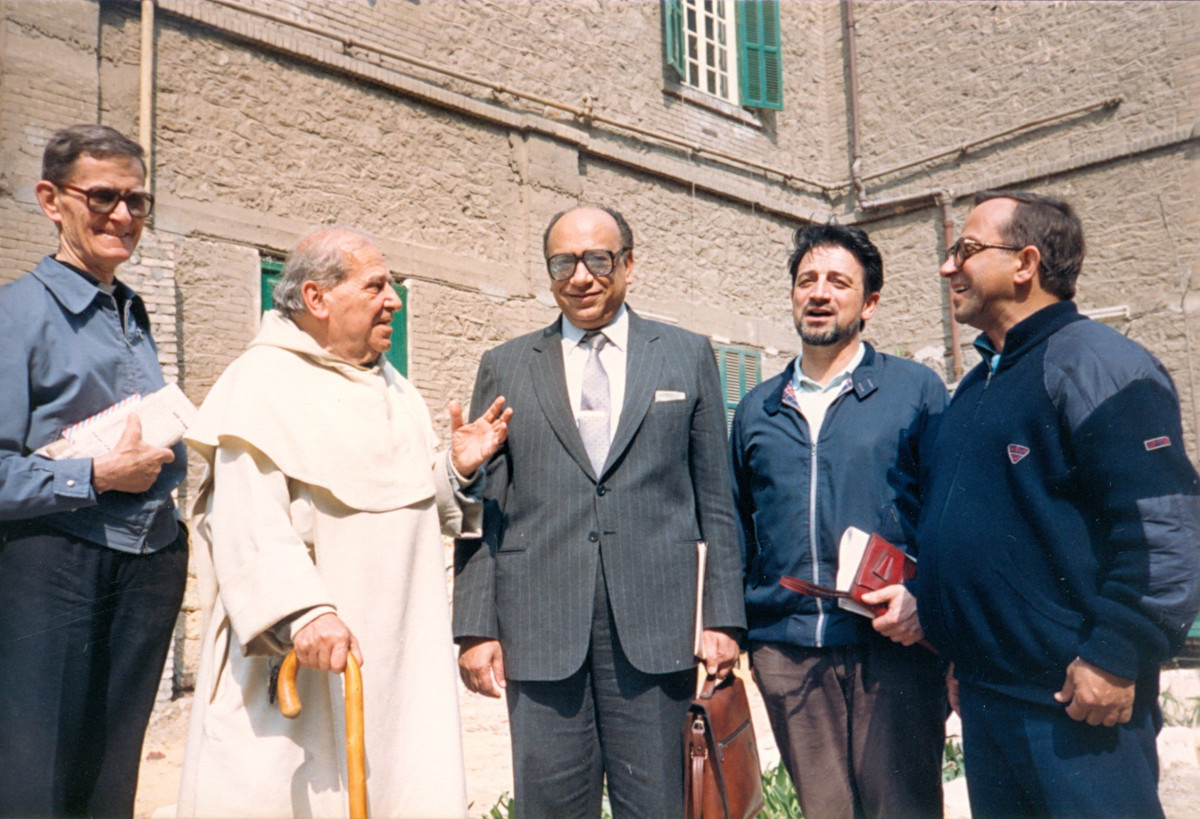
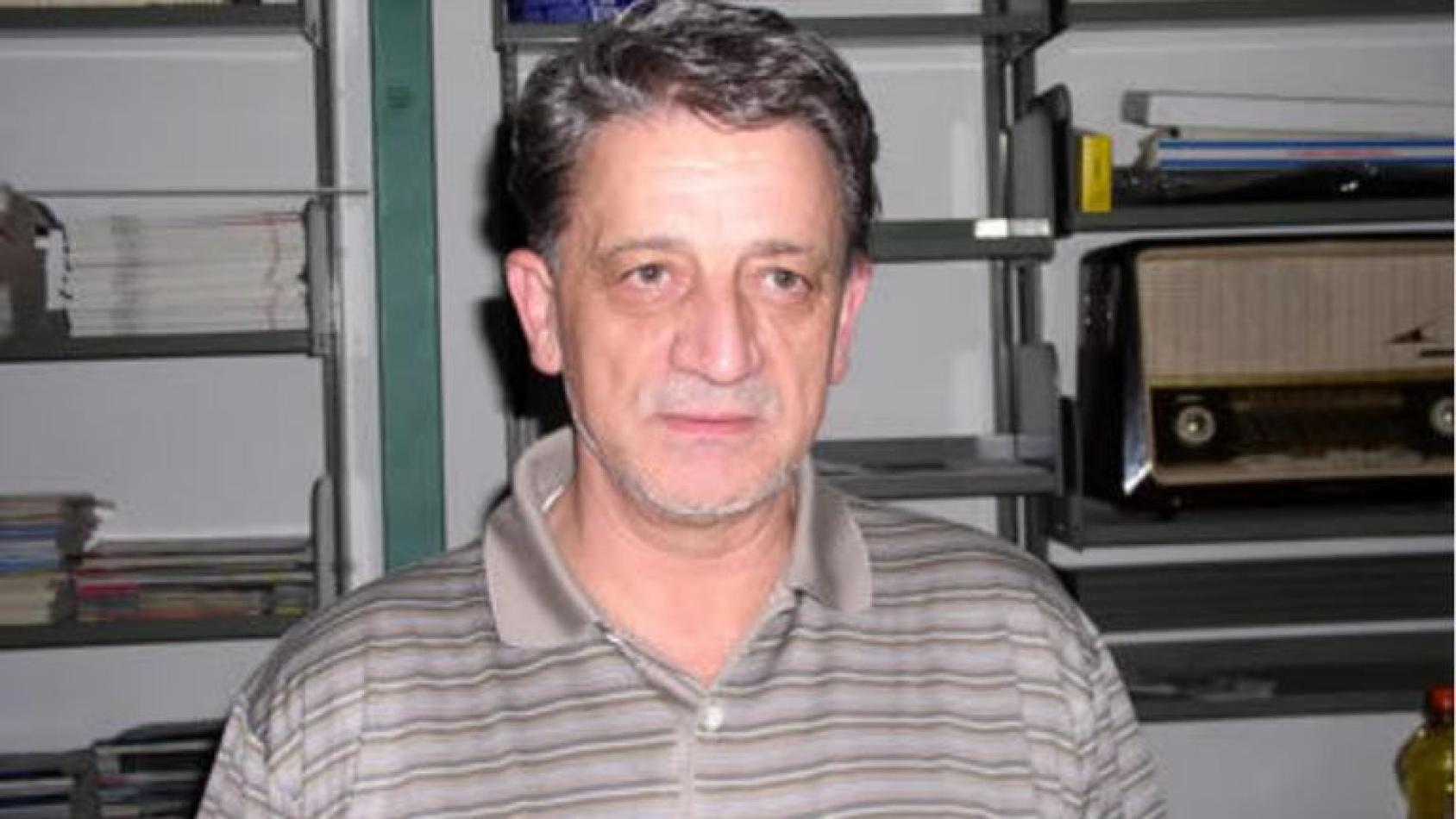
Photo from the 1980s, taken in Sakakini, Egypt.
After a renewal course in Rome in 79, he came to Cairo, where he worked in Zamalek, Cordi Jesu, then Sakakini, teaching in the newly created institute of Dar Comboni from 86 to 90. His presence in Egypt has always been connected to the work of research and of teaching in Dar Comboni, up to 2021, when he returned to Italy, with some periods for further specialization in the USA from 90 to 92 and in England from 99 to 2000. Besides few years as parish priest in Sakakini in the 80’s, he has never been involved in pastoral work, except for his commitment with the Neocatecumenal Way, being member of its earliest communities in Egypt.
His academic titles:
• Licenciate in theology (Milano, 1969)
• Certificate of Arabic Language (Bikfaya, 1971)
• Licenciate in Arabic Langauge and Literature (Cairo University, 1978)
• PhD in Islamology (Pisai, Rome, 1987)
• Postdoctoral fellowship in Islamology (Yale University, 1992)
• MA in Spirituality (Heythrop College, London, 2000)
Languages he knew fluently: Italian, Arabic, English, French and German; he had a reading knowledge of Greek, Latin and Persian.
He wrote over 50 books and scientific articles in Italian, Arabic and English. Among these: Esperienze mistiche nell’Islam (2000); L’Islam nella globalizzazione (2004); Dio e Uomo nell’Islam (2004); Islam e dialogo (2004); Spiritualità nell’Islam (2004); The Diwan of Ibn al-Farid (2004, critical edition); Between Monotheism of Isolation and Monotheism of Communion. A Reflection on Islamic Monotheism (2008); Al-Tajalliyāt ar-rūhiyya fī l-islām (2008); Ta’mmulāt fī al-taṣawwuf wa-l-ḥiwār al-dīnī. Min ajl thawra rûhiyya mutajaddida (2013). He was a member of the Academy for the Arabic Language in Cairo University and of the scientific committee of OASIS in Italy. In 2018 he was awarded by the Faculty of Arts of Cairo University, in appreciation to his studies on Sufism. In his research and teaching he collaborated with the Gregorian University, PISAI, IDEO and Al Azhar University.
He promoted dialogue between academic, missionaries, lay people, just anyone interested to know and share knowledge. The “Zamalek meetings” which he organized for a number of years are a cherished memory for many who took part, also in the most controversial times of the Arab Spring and the following uneasy times Egypt has sailed through since.
In 2020 he was hospitalized twice: in June for a kidney infection and then in December for Covid19. These two illnesses left him weak, and eventually he had to accept to move to Italy, to the community of Rebbio, not far from his home place. Like for Comboni, so also for Fr. Giuseppe it can be said that while obedience had forced him to Italy, he had left his heart here in his mission place, on the banks of the Nile.
He passed away last Monday 27 April, in a hospital nearby Rebbio, due to a sudden brain hemorrhage. He leaves one sister, Maura, and two brothers, Umberto and Mariano; his brother Dino died just few months ago for an accident at home.
He will be remembered – and missed – for his critical mind. He was passionate about dialogue, fervent about social justice, never superficial. In Fr. Giuseppe we have seen that to be a researcher is not just to have a big brain, but rather a heart that feels for the people and for the world. A world like the one in which we live needs more agents of dialogue, more passion for truth. May he inspire us to continue in his legacy.