
Daniel Comboni
Comboni Missionaries
Institutional area
Other links
Newsletter
Solemnity of the Most Holy Trinity – Year A: All things sail upon the infinite Sea of Love!
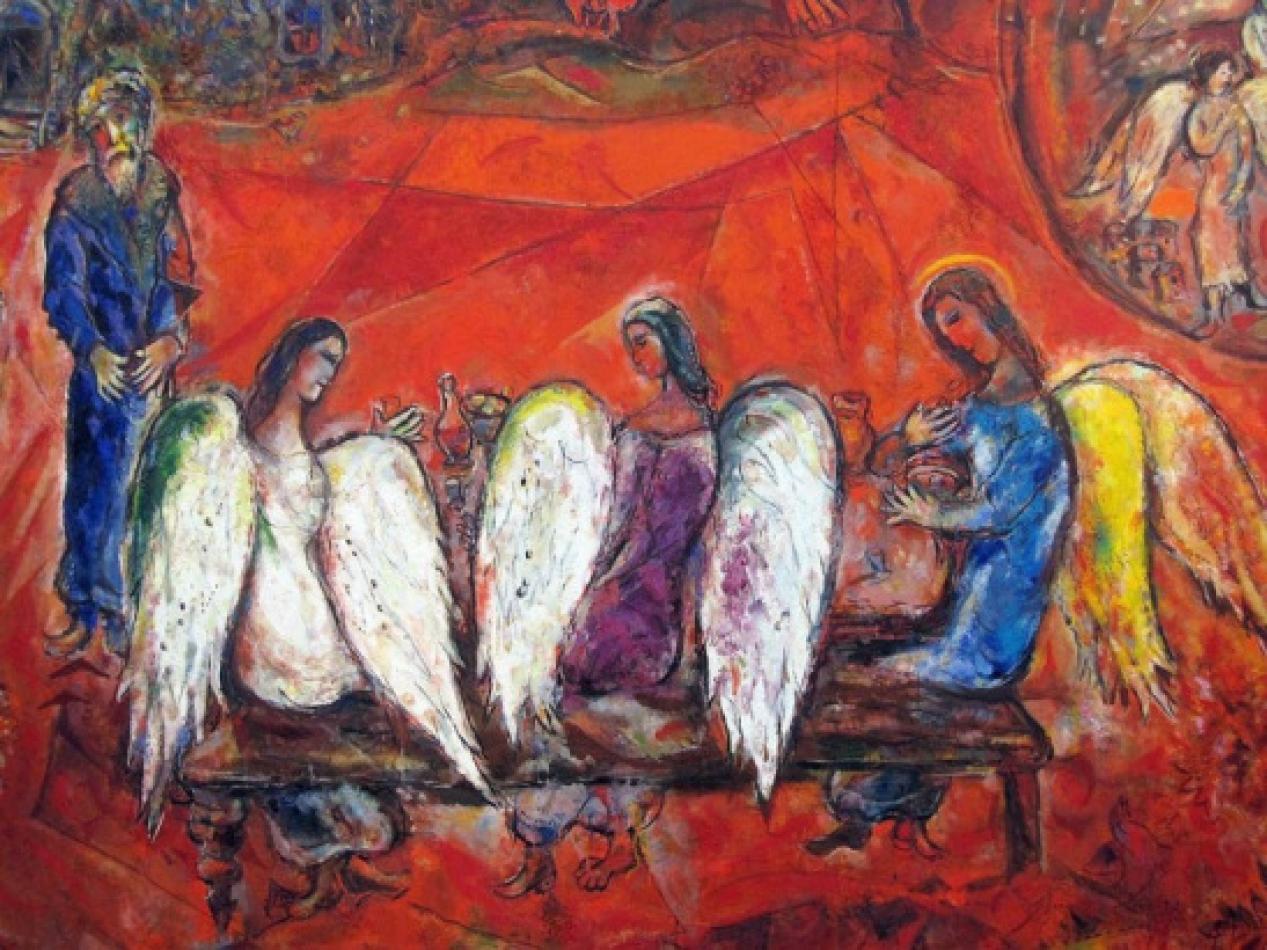


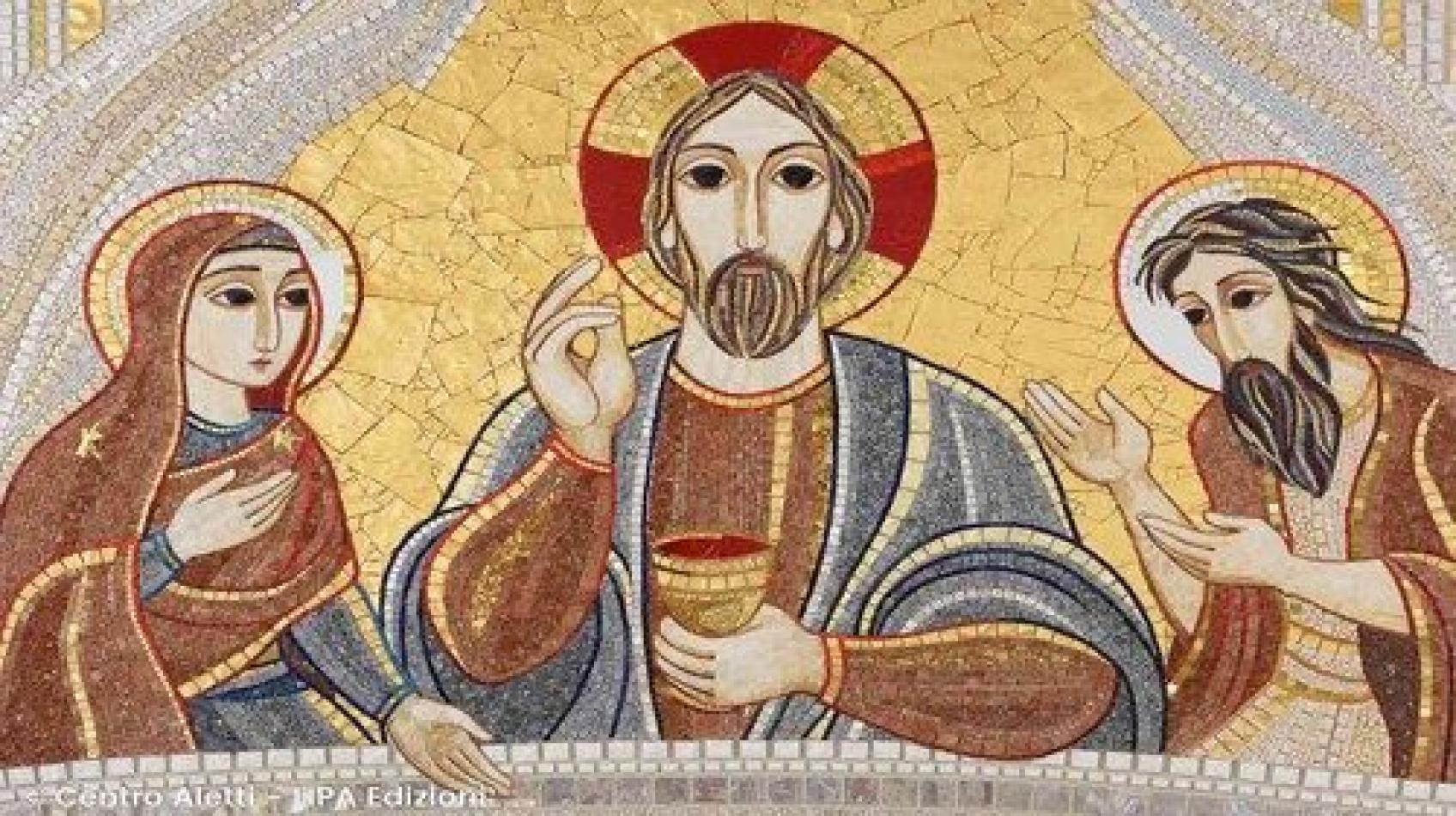
Today we celebrate the Solemnity of the Most Holy Trinity. It is a relatively recent feast: it was introduced into the liturgical calendar in 1334 by Pope John XXII. The main reason was to give a solemn celebration to the central mystery of our faith: God, one and triune, Father, Son and Holy Spirit. The Incarnation and the Trinity are the two essential mysteries of the Christian faith. Indeed, all Christians are baptised in the name of the Father, and of the Son, and of the Holy Spirit. [...]
All things sail upon the infinite Sea of Love!
“God so loved the world that he gave his only-begotten Son.”
John 3:16-18
Today we celebrate the Solemnity of the Most Holy Trinity. It is a relatively recent feast: it was introduced into the liturgical calendar in 1334 by Pope John XXII. The main reason was to give a solemn celebration to the central mystery of our faith: God, one and triune, Father, Son and Holy Spirit. The Incarnation and the Trinity are the two essential mysteries of the Christian faith. Indeed, all Christians are baptised in the name of the Father, and of the Son, and of the Holy Spirit.
The placing of this solemnity on the Sunday after Pentecost is no coincidence. Throughout the ninety days of Lent and Eastertide, with Holy Week — the Passion, death and resurrection of Jesus — at the centre, we have experienced the saving action of the Father, the Son and the Holy Spirit. On this Sunday after Pentecost, we contemplate the loving action of the three divine Persons in their unity and communion. “This feast is like an oasis of contemplation, after the fullness of Pentecost” (Don Angelo Casati).
Everyone can arrive at the existence of God through his epiphany in creation. Human intelligence can also come to recognise the oneness of God, that is, monotheism. But it is faith in Jesus that has led us to the Trinity of Persons in the one God, because “No one has ever seen God: the only-begotten Son has revealed him to us” (John 1:18). This is not, however, a theoretical or purely dogmatic knowledge, which would be of little or no use, but an introduction into the intimacy of God, an immersion in his immense, surprising and fascinating mystery.
God is love
The readings proposed by the liturgy, brief but profound, help us to deepen our understanding of this mystery. They all emphasise the love of God. In the first reading, the Lord presents himself as “a merciful and gracious God, slow to anger and rich in love and faithfulness” (Exodus 34). In the second, the conclusion of the Second Letter to the Corinthians, Saint Paul, with words full of tenderness, takes leave of the community by saying: “Brothers and sisters, rejoice, strive for perfection, encourage one another, be of one mind, live in peace, and the God of love and peace will be with you” (2 Corinthians 13:11-13). The Gospel presents us with one of the most extraordinary and revolutionary statements in the whole of Sacred Scripture: “God so loved the world that he gave his only-begotten Son, so that everyone who believes in him may not be lost, but may have eternal life.”
In his First Letter, Saint John develops this truth to the point of affirming: “God is love” (1 John 4:16). The Trinity is a requirement of love: God is love, therefore he is Trinity! In meditating on this Mystery, the insight of Saint Augustine remains unsurpassed: he defines the Father as the one who loves, the Son as the one who is loved, and the Holy Spirit as the love that unites them.
As long as we do not welcome this Gospel novelty into our hearts, we risk turning God into an idol, made in “our image and likeness”: from a judging god to the most perverse distortions, as we can see in certain forms of fundamentalism. But let us not claim too quickly that we know God. The Word presents to the Athenians — and also to us — “the unknown God” (Acts 17:23)!
How can we perceive the love of God? How can we reach what Saint Paul wishes for the Ephesians: “May Christ dwell in your hearts through faith, so that, rooted and grounded in love, you may be able to comprehend with all the saints what is the breadth and length and height and depth, and to know the love of Christ which surpasses all knowledge” (Ephesians 3:17-19)?
A journey from the outside towards the depths
Today we live projected towards the world and the universe, eager — rightly so — to discover the mysteries of the cosmos and of life. We also seek to know the “cosmos” we carry within us: what makes us human, what makes us unique, what distinguishes us from artificial intelligence… Yet few seem interested in deepening their understanding of the Mystery par excellence!
The astonishing progress of the sciences, our knowledge of the origin and expansion of the universe, of evolution and of the laws that caused the spark of life to be kindled, arouse wonder and amazement. Despite everything, however, the sense of the infinite and the deep meaning of life seem to escape us, elusive and beyond our grasp. They seem always to point us… further on! We ourselves continue to be an enigma to ourselves. For the believer, the thought arises spontaneously: could it be that only the knowledge of God and of his Mystery can offer us the key to existence?
This is how the italian theologian Paolo Scquizzato speaks of it: “God-Trinity, the unfathomable Mystery — who knows — perhaps he is the Ground of being, the creativity of the Universe, the Beauty of beauty, the Goodness of good, the Life of the living, the Information of the Cosmos, the Soul of the world, the Consciousness of the Universe, the tenderness of lovers, the Leaven of matter, the Love that asks me at every instant to express myself fully and to grasp the sacredness of all that exists.”
A change of direction: from within outwards
“The love of God has been poured into our hearts through the Holy Spirit who has been given to us,” Saint Paul states in the Letter to the Romans (5:5). We usually speak of “following Jesus”, of going after him. This is the perspective of the Synoptic Gospels: Mark, Matthew and Luke. However, Saint John and above all Saint Paul prefer to speak of Christ and of God “in us”: “It is no longer I who live, but Christ who lives in me” (Galatians 2:20). Christ dwells in Paul, animates him, transforms him.
Perhaps we have not sufficiently deepened this dimension. We need not seek God who knows where, outside ourselves. He is in the innermost being of each person, in the deepest core, there where we receive our being from the love of God. Jesus comes to meet us “from within outwards”, says Blessed John of Ruusbroec, the medieval mystic. We are naturally turned towards the outside; he, instead, is within. This marvellous reality makes Saint Augustine exclaim, in wonder: “You were more inward to me than my innermost self, and higher than the highest part of me.” God is hidden in our heart. There we find the source of the dignity of our humanity.
How shall we conclude our reflection?
Christians are not simply those who believe in God, creator of heaven and earth, an eternal and almighty God. We could be afraid of such a God. We could respect him, but not love him. We could be wary of him and see him as a threat to our freedom. Christians, rather, define themselves in this way: “We have believed in the love that God has for us” (1 John 4:16). Such a God we can love. In such a God we can trust, and to him we can abandon ourselves!
Suggested prayer for the week
“Eternal Trinity, you are like a deep sea, in which the more I seek, the more I find; and the more I find, the more my thirst to seek you grows. You are insatiable; and the soul, being satisfied in your abyss, is not satisfied, because it remains hungry for you, longing for you ever more, O eternal Trinity, desiring to see you with the light of your light.” (Saint Catherine of Siena)
Fr Manuel João Pereira Correia, MCCJ
GOSPEL REFLECTION
John 3:16-18
There are only three but very dense verses. They constitute the Gospel passage today. They would be enough to correct the distorted image of God still present in the minds of many Christians—that of the stern and inflexible judge—and to open our hearts to trust in his love. “God so loved the world that he gave his only begotten Son that whoever believes in him may not be lost”(v. 16). It can be considered the summit reached by the biblical revelation on the meaning of creation, life and human destiny.
Contemplating and amazed at the revelation of God’s plan, John discovers that God’s gratuitous love is at the origin of all. Unlike what he says in his first letter—where he sees this love spilling itself over into the Christian community (1 Jn 4:7-12)—here the evangelist attends to the unfolding of endless horizons: the love of God expands, irrepressible, unstoppable and fills the entire “world.” We are at the antipode of the famous statement: “The world in which we live can be understood as a result of the disorder and chance; but if it is the outcome of a deliberate intent, this must have been the intent of a devil.”
Although it may seem strange, the image of God who loves people has struggled to establish itself in Israel. It had to wait for the prophet Hosea (8th cent. B.C.) to find it for the first time. This reluctance was due to the fact that, in pagan religions, the rapport of love with the divinity had ambiguous connotations of a sexual nature.
John, who has seen with his own eyes and touched with his hands the word of life (1 Jn 1:1), arrives to say, “God is love” (1 Jn 4:8); love that manifested itself in giving his only begotten Son as his gift to the world. He has not only given him in the Incarnation; he delivered him into human hands to die on the cross. There he has shown his true face, without any veil.
Paul shows that he understood this miracle of love when, writing to the Romans, says: “But see how God manifested his love for us, while we were still sinners, Christ died for us” (Rom 5:8). In the face of this gift, what is required of a person? One thing only: that one trusts, abandons oneself in God’s arms—as does the bride with the groom—who hands herself to him in immense love and in the certainty of meeting life.
When we think of God who became one of us in Jesus of Nazareth, sometimes we make the mistake of considering this fact as an episode, a sad parenthesis of his existence. He came among us, remained a little more than thirty years, suffered and died on the cross, then returned to heaven, far away, happy to have retaken the former state.
That is not so. Our God took on our human nature and remains forever one of us. He has not pulled himself out of our world. He is and remains always the Emmanuel, the God-with-us (Mt 28:20).
One of the most balanced articles of the Jewish faith was the God who judges everyone’s deeds. The same Messiah was awaited not as one who helps to overcome sin, but as the executor of divine judgment. This belief also transpires from many texts of the New Testament: John the Baptist announces an impending judgment from which no one could escape (Mt 3:7-10); Paul preaches the “a great punishment on the day of judgment when God will appear as a just judge. He will give each one his due, according to his actions” (Rom 2:5-6); Jesus himself uses at times, the image of the court: “I have never known you, away from me, you evil people” (Mt 7:23).
In the Gospel of John, neither the Father nor Jesus appear as judges who condemn, but only as saviors of persons: “God did not send his Son into the world to condemn the world; instead, through him, the world is to be saved” (v. 17). “For I have come, not to condemn the world, but to save the world” (Jn 12:47).
They seem to be contradictory texts; in reality, while using various languages and images, they affirm the same truth: God’s judgment is always and only salvation. It’s not a judgment pronounced at the end of life. It is the valuable assessment that the Lord puts today in front of every person so that his choices are guided by true wisdom, not that of this world which leads to death, but that of Christ.
The third and final verse of today’s passage is read in this perspective. In it, the responsibility of each person in front of God’s love is highlighted. “Whoever believes in him will not be condemned. He who does not believe is already condemned” (v. 18).
The judgment is not pronounced by God at the end of time but now. It is the person who, trusting in Christ and in his word, chooses life. Refusing God’s plan of love, a person decrees his own condemnation.
Today we are called to welcome the joy that God offers, but we can also commit the folly of delaying or even refusing his embrace. He expects an immediate “yes” from persons because every moment spent in sin, in the rejection of his love, is a wasted opportunity.
What is the criterion, the reference point specified by God to have a wise and right judgment on the choices to make in life?
We find the answer in a group of texts that, in John’s Gospel, present Jesus the judge. “I came into the world to carry out a judgment” (Jn 9:39); “The Father has entrusted all judgment to the Son” (Jn 5:22). It is on his person, on his proposal of life, and values he preached that the Father will assess the existence of every person and he will decide the success or failure.
It does not state that in the end, he will forever refuse who did wrong, who followed other criteria, other judgments. God does not cast out anyone; “he wants all to be saved” (1 Tim 2:4). The absurdity of one of his condemnation is presented by Paul with a series of rhetorical questions: “If God is with us who shall be against us? Who shall accuse those chosen by God? He takes away the guilt. Who will dare to condemn them? Christ who died, and better still, rose and is seated at the right hand of God, interceding for us?” (Rom 8:31-34). The conclusion is obvious: “No creature will ever separate us from the love of God which we have in Jesus Christ, our Lord” (Rom 8:39).
However, at the end of life, when God “will test the work of everyone” (1 Cor 3:13), the conformity or discrepancy of each person’s action with the person of Christ will appear clear. God then surely welcomes all in his arms, though some will be forced to admit to having badly managed, and hopelessly wasted the unique opportunity that was offered to them. The work of this person—warns Paul— “will become ashes; although he will be saved, but it will be as if passing through fire” (1 Cor 3:15).
READ: The Gospel proclaims the inexhaustible depths of God’s love that gives away the Son to redeem humanity.
REFLECT: Being a communion of love, God gives us the fullness of Himself and His Love. So, like the Trinity, we are all called to be in communion in Love as well.
PRAY: Communion and solidarity are what we need in this globalized but greatly divided world. We pray for the unity of all the children of God. We also pray for the daily gift of grace, love, and fellowship of the Trinitarian God in our life.
ACT: How can we be agents of unity? It is when we build bridges, not walls, in our communities
Fernando Armellini
Italian missionary and biblical scholar