
Daniel Comboni
Comboni Missionaries
Institutional area
Other links
Newsletter
Studying a virus that maps extreme poverty

Friday, September 11, 2026
The Lassa arenavirus rarely makes headlines like Ebola, yet its impact can be just as devastating, particularly among children in some of the world’s most vulnerable communities. For years, researchers in the Democratic Republic of Congo and Uganda have been investigating a possible link between the virus and aggressive oral tumours.
In his book How to Write About Africa, Kenyan writer Binyavanga Wainaina ironically described the Western imagination of the continent, which is often reduced to violence, hunger and disease. There is an element of truth in this image, but it remains incomplete.
For more than seven years, together with a group of Ugandan and Congolese scientists, we have been trying to shed light on the possible role of a virus in devastating oral tumours that affect and kill an unknown number of children in Equatorial Africa, Latin America and Asia. It is a virus that seems to follow the geography of poverty, disproportionately affecting the most vulnerable and marginalized populations.
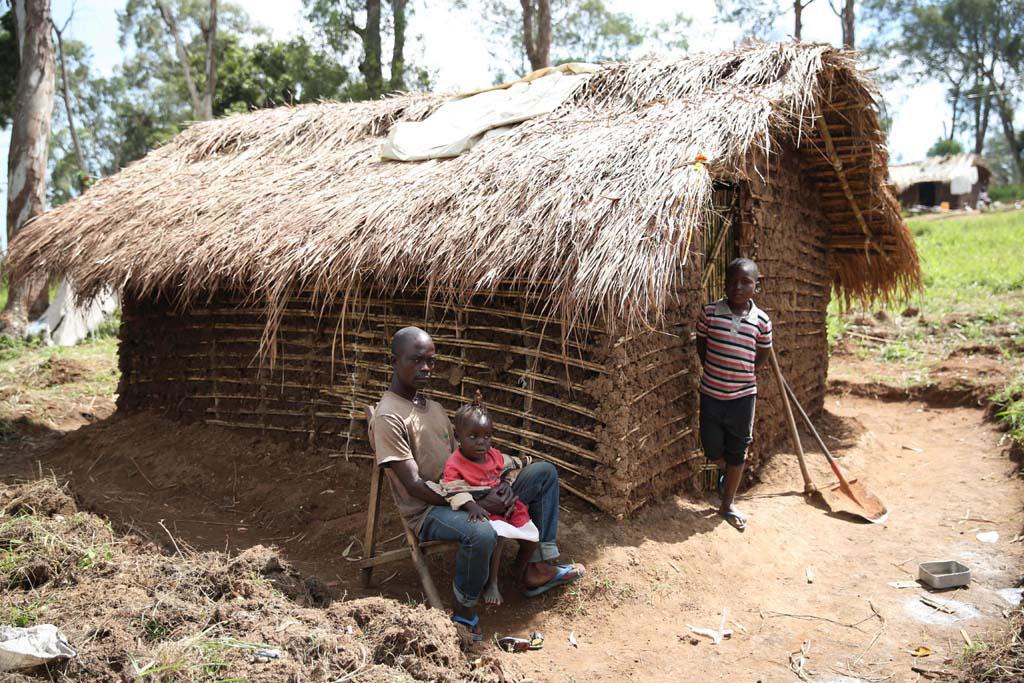
Among the researchers involved is a young Ugandan who grew up—and still lives—in a village of huts near Gulu, the capital of the district of the same name in the northern part of the country. His presence is a concrete sign of an Africa that, when it is involved and given the opportunity to develop its potential, demonstrates skills and intelligence capable of challenging many stereotypes.
A virus at the heart of the investigation
At the centre of the study is a Lassa arenavirus, first identified in 1969 in the town of Lassa in what is now Borno State, Nigeria. Our data suggest a possible association between this virus and tumours characterized by high aggressiveness and frequent recurrence, capable of dramatically deforming the faces of those affected.
This is not an exaggerated description. It is a clinical and social reality. It is social because patients are often isolated in their villages, much as people with leprosy once were. It is clinical because there are no effective treatments and the disease can lead to death amid terrible suffering.
After years of field research and molecular analyses conducted at the Institut National de Recherche Biomédicale in Kinshasa, Democratic Republic of Congo, Lassa virus—a zoonotic and haemorrhagic virus belonging to the same family as Ebola—has been identified in several tumour samples.
The ways in which the virus is transmitted now appear less mysterious. In vast rural areas of sub-Saharan Africa, the consumption of rats, bats and snakes is widespread, often because people have little choice but to rely on whatever food is available for survival.
The rodent Mastomys natalensis, the principal reservoir of the virus, is among those most commonly consumed, especially by children, who hunt and eat it after removing its internal organs.
Transmission can also occur through water contaminated by rodent urine and faeces, infected food, or fruit that has been bitten by bats and subsequently collected. In some cases, traditional medical practices may also inadvertently contribute to the spread of the virus.

Lina: where the research began
Funding research in Italy is often a challenge. Projects survive thanks to fundraising campaigns, charity concerts and spontaneous initiatives. In this case, support came from the Comboni Missionaries and the Economia Alternativa Association associated with them. The project began at a mission hospital, Saint Mary’s Hospital in Lacor, Uganda.
Everything began with a Karimojong girl, Lina [pictured], who was brought to the hospital accompanied by a Comboni missionary. Her face had been devastated by the tumour’s recurrence. We had already operated on her two years earlier.
I remember that moment clearly. I promised the missionary that I would do everything possible, even telling him that I would try to discover the cause of these tumours. I knew it was almost an impossible promise. But when faced with the suffering of a child, words become an act of hope, especially for someone like me, who is not a researcher but a dentist.
That promise gave rise to a journey lasting years, involving Uganda, the Democratic Republic of Congo, other African countries and eventually Brazil. Dozens of scientists became involved in an attempt to understand the origin of devastating tumours that primarily affect children and adolescents who have been forgotten by much of the world.
Lina died at the age of thirteen after seven recurrences. She is buried in her village.
The research was also presented to Pope Francis, who expressed interest and concrete support, and more recently to Pope Leo XIV. The mapping of tumours in Uganda shows a significant picture: ameloblastoma is the most common, followed by ossifying fibroma and fibrous dysplasia. These are different tumours, but they share a strong fibro-osseous component.
The distribution of cases largely coincides with areas where rodents are consumed. There are also clusters of tumours occurring within the same family or in the same village, suggesting the possible presence of shared environmental factors.
When poverty becomes cause of disease
Among these factors, contaminated water probably plays a key role. The spread of Lassa virus also appears to follow similar patterns, with a lower incidence in large cities, where eating habits are different.
At the root of the problem are extreme conditions of poverty: lack of food and safe drinking water, poor hygiene and the absence of alternatives. During a visit to a village in the Ugandan savannah, I tried to explain the risks associated with eating rats. At the end, an elderly man asked me: “Then what are we supposed to feed our children?” That day, the meal consisted of rats shared among the entire family.
That question gets to the heart of the matter. Disease does not arise only from a virus, but also from hunger, the absence of alternatives and inadequate access to healthcare. This is what we now call a “syndemic”: the interaction of health, social and economic factors that together create and intensify disease.
The study, carried out under often difficult conditions, aims to identify therapies capable of preventing or treating these tumours. But reliable epidemiological data are lacking. Many patients live in isolated areas without access to healthcare facilities or cancer registries. They remain invisible.

Research for those who remain invisible
Today, the only therapeutic possibility is often radical surgery: extensive removal of parts of the mandible or maxilla. These mutilating procedures have serious consequences, particularly for children. And recurrences are frequent.
After years of working largely alone, I can now count on a group of Italian and African scientists united by the same goal. It is a difficult journey, partly because tumours affecting people in the poorest countries receive little attention, even though Lassa virus is considered by the World Health Organization to have pandemic potential. Precisely for this reason, the human value of the project is even greater.
No one is working for personal gain. We invest our own time, energy and resources, driven by profound motivations: the memory of a child, a sense of justice, and the conviction that healthcare is a right for everyone.
Perhaps this is the most authentic strength of research: to continue searching for answers even when resources and infrastructure are lacking, because behind the numbers are faces and stories that cannot be ignored simply because they are far away.
Marco De Feo
Dentist and researcher