
Daniel Comboni
Comboni Missionaries
Institutional area
Other links
Newsletter
27th Sunday in Ordinary Time – Year A: Guardians or plunderers?
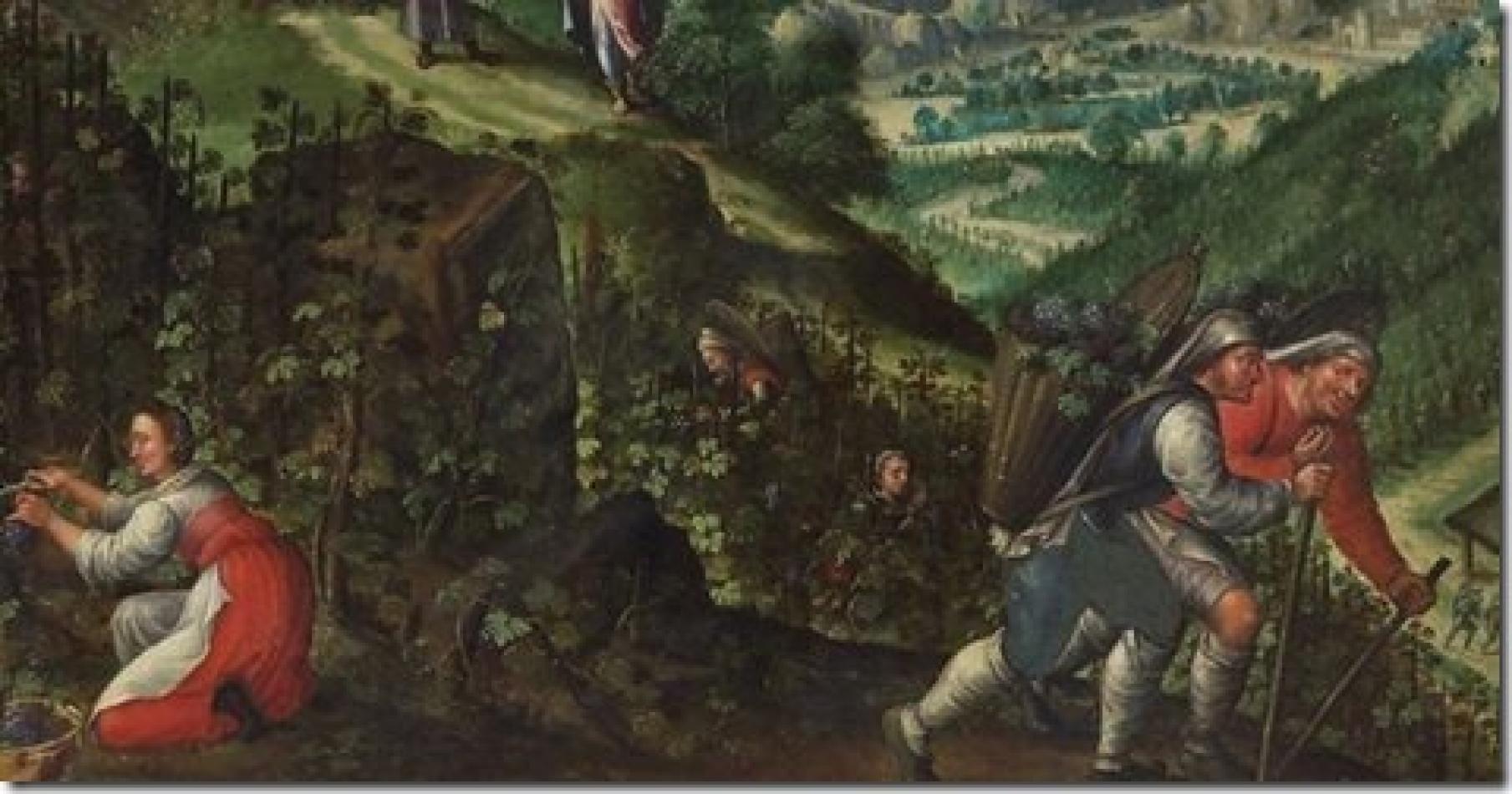


This Sunday’s Gospel offers us the third parable centred on the vineyard. Like last Sunday’s parable of the two sons sent into the vineyard, it is addressed to the chief priests and the elders of the people, as well as to the Pharisees (see v. 45), who at first do not realise that it is directed precisely at them.
Guardians or plunderers?
"Listen to another parable!"
Matthew 21:33-43
The parable, known as that of the “murderous tenants”, is spoken in the Temple, has dramatic overtones, and prophetically foreshadows the tragic end of Jesus, “seized, thrown out of the vineyard and killed” outside the walls of Jerusalem.
1. God is a vine-grower
The symbolism of the vineyard as a representation of God’s people, Israel, is well known and is illuminated by the first reading from the prophet Isaiah (5:1-7). Jesus, however, tells the parable against the religious leaders who have taken possession of this vineyard, deaf to the appeals of the prophets (the “servants” in the parable) and now also to that of the Son, sent by God, the Owner of the vineyard.
The first Christian generations interpreted the parable allegorically: the first group of servants would represent the prophets and the second the apostles. Its conclusion, “The kingdom of God will be taken away from you and given to a people who will produce its fruit”, has sometimes been interpreted as an announcement of the replacement of Israel by the Church. However, this does not appear to be the primary meaning of the parable; rather, it is a strong rebuke to the religious authorities of his time and of every age.
2. We are God’s vineyard
It seems appropriate to dwell, first of all, on God’s loving care for his vineyard, which reflects his love for his people and for each one of us. “What more was there to do for my vineyard that I had not done?”, the Lord laments, seeing that instead of producing grapes, the vineyard has produced wild grapes (Isaiah 5:1-7).
That vineyard planted “on a fertile hill”, “dug over and cleared of stones” so that it might become good soil, and planted with “choice vines”, refers also to us. We too are part of that vineyard, branches united to the one who is the true vine (John 15). In our hearts he has built a “tower”, not the Tower of Babel, but that of the Pentecost of the Spirit. He has “dug a winepress”, which calls to mind the water of Baptism and the wine of the Eucharist. He has protected us within the enclosure of the Church…
This, then, is a good opportunity to acknowledge that “the Lord has done great things for us” (Psalm 125:3). But it is also an opportunity to ask ourselves about the fruit our Christian life is producing: grapes or wild grapes?
3. We are God’s vine-growers
God “went away” and, with extraordinary trust, entrusted his vineyard to us so that we might care for it. In other words, he entrusted his gifts to our responsibility: life and health, the earth and material goods, gifts and talents, faith and spiritual graces… Everything is to be managed wisely in the service of all.
The great temptation is to take possession of the “vineyard”, that is, of what God has entrusted to our care, using it as we please and for our exclusive benefit. Indeed, already in the account of the first sin we find the temptation to seize what does not belong to us. Our greed leads us to hoard goods, to ignore the needs of others and their rightful claims, to make people serve us, to trample on the poor and even to kill, as the parable so clearly illustrates.
Let us ask ourselves what our “vineyard” is and how we are managing it: as owners or as tenants? How do we exercise a role: as service or as power? The Lord will ask us: what have you done with my vineyard? How did you receive my messengers? How did you treat my Son? And let us remember that there are many ways of killing Christ!…
4. In the vineyard of creation: guardians or plunderers?
This responsibility does not concern only personal gifts; it also extends to the great “vineyard” that God has entrusted to humanity: creation. On 4 October 2023, Pope Francis published the apostolic exhortation Laudate Deum, a continuation of Laudato si’, in which he called everyone to responsibility in the stewardship of the earth’s goods. The consequences of an unrestrained, selfish and predatory use of nature are there for all to see.
We often adopt an attitude of near indifference or minimise the issue, as though it did not really concern us, perhaps because we are unwilling to change our way of life. At other times we shift responsibility onto others, especially politicians, who are often influenced by major economic interests, while failing to accept our own share of responsibility, perhaps considering it insignificant. Whether the earth becomes a paradise or a desert depends also on each one of us!
Faced with the inadequacy of the responses adopted by many governments and by the international community, Pope Francis therefore sounded a new alarm, urging action before it was too late. He reminded us that “the world that surrounds us is not an object of exploitation, unbridled use and unlimited ambition” (no. 25). “We have made impressive and astonishing technological advances, and we do not realise that at the same time we have become highly dangerous beings, capable of jeopardising the lives of many beings and our own survival” (no. 28).
And the Pope concluded by saying: “‘Praise God’ is the title of this letter. For a human being who claims to take the place of God becomes the worst danger to himself” (no. 73).
Let us ask ourselves: is our relationship with nature an act of praise to God or a way of trampling upon his gift? In the vineyard of creation, do we behave as guardians, or as owners and plunderers?
For weekly reflection
-
To see whether our life is producing the good grapes of love and justice or, on the contrary, the wild grapes of selfishness and injustice, let us compare ourselves with the eight characteristics of Christian conduct indicated by Saint Paul in today’s second reading: “Whatever is true, whatever is noble, whatever is just, whatever is pure, whatever is lovely, whatever is honourable, whatever is virtuous and whatever deserves praise, let these be the object of your thoughts” (Philippians 4:6-9).
-
What could you do concretely to “pollute less, reduce waste, consume prudently” (no. 71) and foster a new sensitivity of respect for the “vineyard” of creation?
Matthew 21: 33-43
Gospel reflection
As the prophet Isaiah, Jesus also uses the image of the vineyard to describe the work of God and person’s response. However, the scene is quite different. The personages change: in the foreground, God and the vineyard that produces bitter and inedible grapes are not there but there is the owner, God, and his dependents, identified as the high priests and the spiritual guides of the people to whom the parable is directed (Mt 21:23). Then the vineyard is not sterile; it seems to bear fruit, but these are not delivered. Finally, the conclusion is different: there is no abandonment, devastation of the vineyard, but a new beginning, an intervention of salvation, a replacement of the inept workers.
We come to the parable. A master plants a vineyard, with a hedge around it, digs a mill there, builds a tower, entrusts it to tenants and goes.
When the time of harvest arrived, he sent his servants to collect the produce, but here’s the surprise: the farmers do not want to deliver the benefits. The first hypothesis one thinks is that they want to keep the produce for themselves. There is another possibility, perhaps more likely, they have no fruit to present. They may not have worked. They may have spent time in carousing and drunkenness or have worked badly.
Some of them began to make fun of the master’s envoys, then the insults, beatings and finally the killing of some servants. The landlord does not give up; he loves his vineyard too much. Then he sends other servants more numerous than the first, but even these have no luck. As a final attempt, he sends his son, but the workers in the vineyard hunt him out and kill him. They are convinced of being able to be masters of the field that has been entrusted to them.
As in the First Reading, all the details of the Gospel story have a symbolic meaning.
The master is the Lord who has lavished so much care and expressed an immense love for his people (v. 33). The hedge is the Torah, the law that God has revealed to his people, to protect it from enemies, that is, from the proposals of senseless life that would lead it to ruin. The tenants are the chiefs, religious and political leaders, whose task is to place the people in ideal conditions to produce the fruits that the owner expects. The fruits are identified by the First Reading. They are the works of love for the neighbor and social justice.
The two groups of envoys are the prophets who, before and after the exile, were sent, always more numerous, to warn Israel to be faithful to the covenant. That’s how God expresses himself by the mouth of Jeremiah: “From the time I brought their forebears out of Egypt until this day I have continually sent them my servants, the prophets, but this stiff-necked people did not listen. They paid no attention and were worse than their forebears” (Jer 7:25-26). The fate of these men was dramatic: beatings, stoning (2 Chr 24:21), fetters and chains (Jer 20:2), death by the sword (Jer 26:23). They should not expect anything else: they were the mouthpiece of God and of his wisdom, too far from the absurd and unacceptable thoughts of men. That is why the tenants want to take possession of the field, claim to manage the “vineyard” by themselves. They represent those who want to do without God and consider His gifts good to be appropriated.
The son is Jesus.
The time of harvest is the time of God’s judgment that—this must be kept in mind—should not be understood as the “day of reckoning,” but as an intervention of salvation. Let me explain. At the end of the parable, Jesus involves his audience and asks their opinion on what behavior to suggest to the owner. They convincingly respond: “The master will bring those evil men to an evil end” (v. 41).
This severe image is the result of the effervescent oriental fantasy that—as we have repeatedly pointed out—is pleased to paint pictures with strong colors.
But Jesus follows a different logic. Instead of approving the words of threat and destruction handed down by his hearers (v. 41), he suggests the action of God. The Lord will not react by destroying evil and not even pretending that evil was not committed. This remains, it cannot be reset. God intervenes to make it serve the good, making it yield a masterpiece of salvation. You may remember what Joseph said to his brothers who had sold him to the Egyptians: “You intended to do me harm but God intended to turn it to good to bring about what is happening today—the survival of many people” (Gen 50:20).
The verses 39, 42-43 form the central part of the parable describing the death and resurrection of Jesus. The leaders of the people take the Son and throw him out of the vineyard. This is what happened to Jesus. He was deemed a blasphemer, impure and for this, he was brought out of the city walls and was executed. But God, in raising him, glorified him and made him Lord, the cornerstone of a new building.
The end result of the intervention of the master is the delivery of the vineyard to other workers who will make it produce fruits. This is not about the master’s annoyed reaction, but his gesture of love and salvation. Not even the rejection and murder of his son can make him an enemy of humanity.
In narrating this parable, the evangelist Matthew certainly thought of the infidelity of the leaders of his people and their rejection of the Messiah of God. But not only to them; he also thought of his community and the entire world: every person is a vine-grower from which the Lord expects delivery of the fruits.
The happy news which concludes the Gospel (v. 43) is that, despite all the refusals of people, in the end, God always finds the way to achieve his purpose and to obtain the good fruit he wants.
Fernando Armellini
Italian missionary and biblical scholar