
Daniel Comboni
Comboni Missionaries
Institutional area
Other links
Newsletter
32nd Sunday in Ordinary Time (Year A): Sheep or Goats?

On the last three Sundays of the liturgical year, the Church invites us to meditate on the “last times,” those of the return of the Lord, her Bridegroom. This year, in which the Gospel of Matthew has accompanied us, we conclude with the last of the five discourses that structure his Gospel, the eschatological discourse (from the Greek eschaton, the ultimate reality).
Sheep or Goats?
"Whatever you did for one of the least of these brothers of mine, you did for me!"
Matthew 25:31-46
This Gospel passage is the conclusion of Jesus’ last discourse (Matthew 24-25) on the end of time and the Lord’s return. It is his last teaching before he sets out on the road to his passion. Jesus, who is about to be judged by the political and religious authorities, proclaims himself the judge of all the earth! “When the Son of Man comes in his glory, and all the angels with him, he will sit on his glorious throne. All the nations will be gathered before him!”
1. The deep meaning of this feast
The solemnity of “Our Lord Jesus Christ, King of the Universe” is a relatively recent feast, instituted by Pius XI in 1925 and later fixed on the last Sunday of the liturgical year. What is the meaning of this feast? It points to the direction of the liturgical year and of all history, oriented towards the “recapitulation of all things in Christ” and towards his glorification (see the first reading and Ephesians 1:10). Christ is “the Alpha and the Omega, the First and the Last, the Beginning and the End” (Revelation 22:13). This feast therefore presents to us the end, the point of arrival of history and of our pilgrimage. It is worth asking ourselves: where is my life heading? Towards recapitulation in Christ or towards annihilation?
2. A slap in the face for all kings!
The terminology of King, Kingdom and Reign, used by the liturgy (see the Gospel and the second reading), may cause perplexity, even though we know it is figurative biblical language that we cannot do without. On top of that, many make a triumphalist use of it! The “king” belongs to other times, with a flavour of absolutism, arbitrariness and abuse that we would like to forget. I think, however, that proclaiming Jesus as “King” is a revolutionary and provocative act, because Christ is exactly the opposite of any king. A king enthroned on the cross is like a slap in the face for every “king”, political or religious. All political, religious, social or family power that is not at the service of others is condemned to annihilation, because he comes to “abolish all rule, authority and power” (second reading).
3. One King, one Lord for all!
“All the nations will be gathered before him.” Who are these “nations”? The Greek word (ethnos) was used to designate the pagan nations, that is, those who did not belong to God’s “people” (laos). The preceding parables, for their part, referred to the judgement of believers. This does not exclude believers from the criteria of judgement used here by Jesus; on the contrary, it increases their responsibility: “That servant who knows his master’s will but does not get ready or act according to his will, will be beaten with many blows” (Luke 12:47-48).
4. The six works of mercy
What is the Lord’s criterion for separating the “blessed” (at his right) from the “cursed” (at his left)? The practice of the six works of mercy! “I was hungry and you gave me food, I was thirsty and you gave me drink; I was a stranger and you welcomed me, I was naked and you clothed me, I was sick and you visited me, I was in prison and you came to me.” Jesus does not speak in the abstract, of “justice”, “solidarity” or “love”, but of very concrete gestures of help to those in need!
This list of works of mercy is repeated four times, twice positively and twice negatively. The repetition has a mnemonic purpose, besides underlining its importance. Astonishment is general, both among those on the right and those on the left: “Lord, when did we see you…?” The Lord’s reply is unprecedented: “Amen, I say to you, whatever you [did not] do for one of these least ones, you [did not] do for me.”Never before had a deity identified himself with the person in need!
Jesus’ discourse is not meant to intimidate us with the threat of punishment, but to help us reread our life from the point of view of the end. The true judgement takes place in history: our path is already a journey of blessing or curse, of life or death! The strong, prophetic language of Jesus wants to shake us so that we do not run the risk of ruining our lives!
I ask myself: why “six” (imperfection) and not “seven” works of mercy? I would answer: the seventh is the service of faith rendered by believers (see the parables of the talents and of the ten virgins).
5. The mystery of the Incarnation is not yet complete!
Jesus’ identification with the little ones makes us think that the mystery of the Incarnation is not yet complete. Jesus not only became (a) man, but continues to become incarnate in every man and woman, taking upon himself all human suffering.
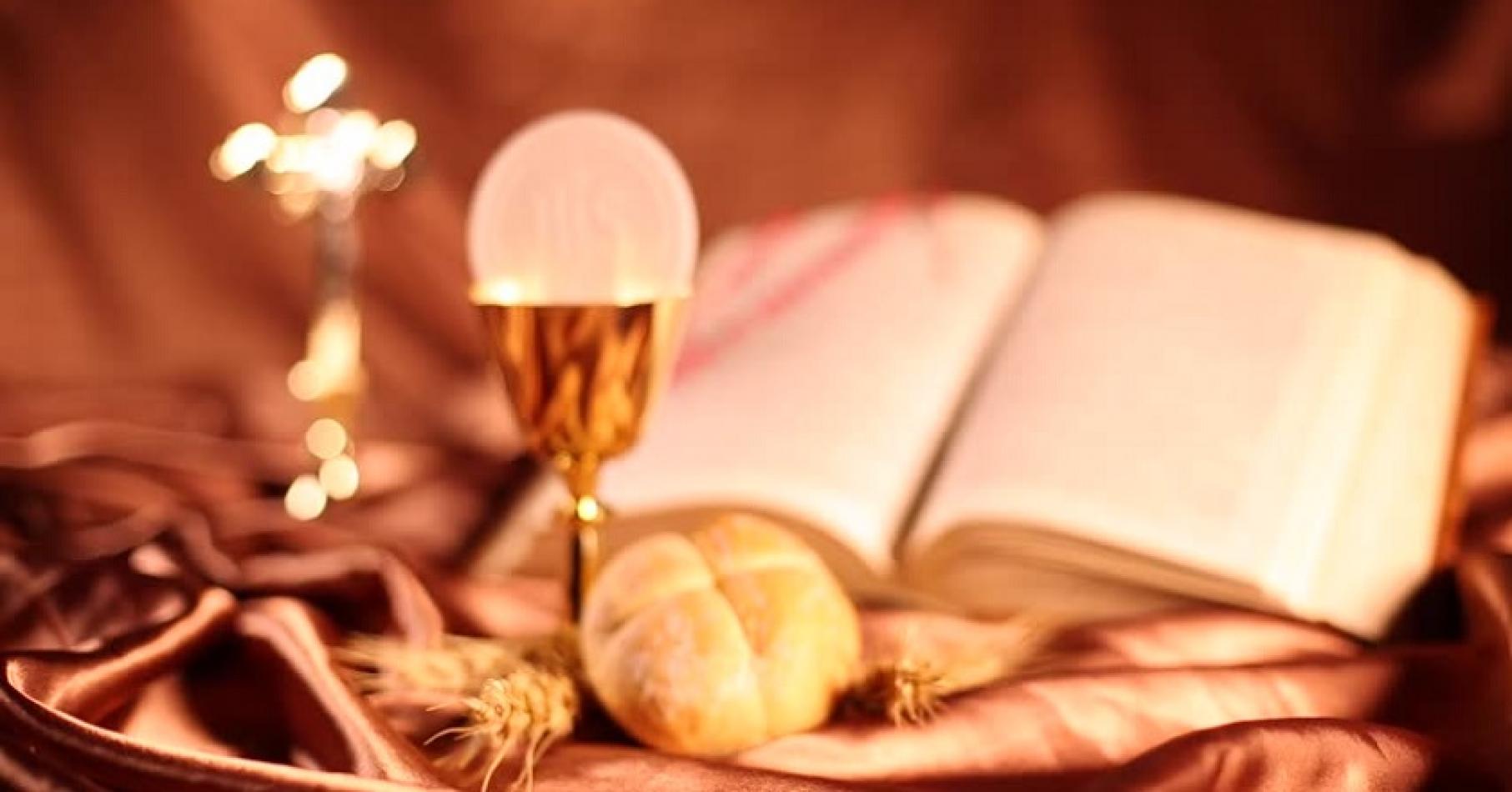
This also leads us to think that the Eucharistic mystery is prolonged in the poor: “This is my body… this is my blood!”
Spiritual exercise for the week
- Invoke the coming of the Kingdom of God in the different situations and places we frequent during the day: “Your Kingdom come [here]!”
- “Do not turn your face away from any poor person” (Tobit 4:7, World Day of the Poor).
- Let us make a serious examination of conscience to see whether we too are being influenced by the “globalization of indifference” (Pope Francis).
Fr Manuel João Pereira Correia, MCCJ
There is a tomorrow that is too late!
"Keep watch, for you know neither the day nor the hour!"
Matthew 25:1-13
In a context of invitation to vigilance, Matthew offers us three parables of Jesus on what it means to be watchful: the faithful and prudent servant who awaits his master’s return (which we will not read), the ten virgins (today’s parable), and the parable of the talents (next Sunday), concluding with the final judgment (the Sunday of Christ the King).
A lamp in the night
The parable is not simple, because it has some improbable features. This is part of the style of parables, which often introduce something that goes against common sense and the logic of reality, in order to draw attention to the final message.
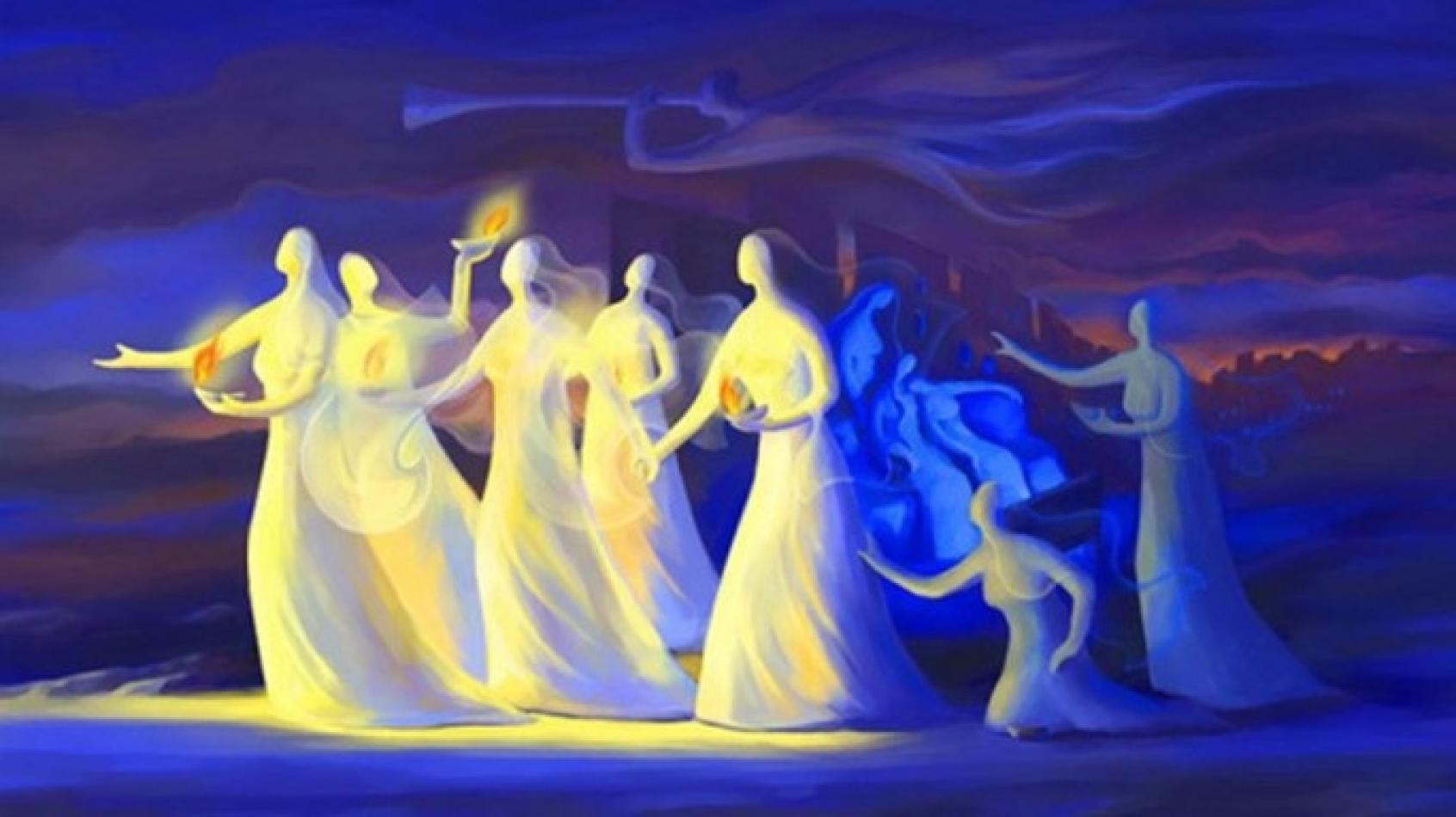
“The kingdom of heaven will be like ten virgins who took their lamps and went out to meet the bridegroom.” Ten symbolizes totality. The ten virgins represent everyone. Our life is a going out to meet the Bridegroom, whether we are aware of it or not. But it is night, a long night. We need a lamp to drive away the darkness, at least enough to let us take a step forward. This is the light of faith. “Your word is a lamp for my steps, a light for my path” (Psalm 109 [119]).
“Five of them were foolish and five were prudent.” There is one way of living as fools and another as the prudent, the wise. And here all humanity, believers and non-believers alike, is divided into two distinct parts. We must ask ourselves: to which of these two parts do we belong? And this is no ordinary question, but an anticipation of the final examination of our existence: a fulfilled life, “wise,” that is, one with meaning, or an irremediably wasted life, “foolish,” without meaning! The world is not divided between rich and poor, between the intelligent and the ignorant, between masters and servants, but between foolish people and wise people!
In what do foolishness and wisdom consist? “The foolish ones, when they took their lamps, took no oil with them, but the prudent ones took flasks of oil with their lamps.” The difference seems small, insignificant, but it will prove decisive. Without feeding the lamp, the light goes out and the darkness of night invades life. At the end of the Sermon on the Mount, Jesus says that the foolish man builds his house on sand and the prudent or wise man on rock (Matthew 7:24-27).
“Since the bridegroom was delayed, they all became drowsy and fell asleep.” All of them were overcome by sleep! Matthew is surely thinking of his own community, at the end of the first century, which had embraced the faith with enthusiasm but, worn down by the long wait for the Lord’s return, had grown lukewarm. Saint Peter illustrates this situation of crisis well: “Where is the promise of his coming? From the day our fathers fell asleep, all things continue as they were from the beginning of creation!” (2 Peter 3:4). This may also be our own feeling. We need only look at so many of our Christian communities, asleep, without enthusiasm, disillusioned… After the Second Vatican Council, a new springtime was expected for the Church, but the fierce winds of secularism and scandals stifled it. It was hoped that war and hunger would become distant memories of the past, but those nightmares have returned. In all this, God seems ever more absent. To the prophet’s question, “How long?”, the answer remains: “The righteous shall live by his faith!” (Habakkuk 2:4). “But when the Son of Man comes, will he find faith on earth?” (Luke 18:8).
Lamps without oil
“At midnight there was a cry: ‘Behold, the bridegroom! Come out to meet him.’ Then all those virgins got up and trimmed their lamps.” In the middle of the world’s night, a cry! Like that of the night of the Exodus (Wisdom 18:14-15). We want to foresee everything, plan everything, but there are events that always take us by surprise! Then the truth of our life will be revealed: whether our sleep was the sleep of the foolish or the sleep of a heart in love: “I sleep, but my heart is awake” (Song of Songs 5:2).
“The foolish ones said to the prudent, ‘Give us some of your oil, for our lamps are going out.’ But the prudent replied, ‘Perhaps there will not be enough for us and for you. Go instead to the merchants and buy some for yourselves.’” What does the oil signify? Although all agree that the lamp is faith, there are different opinions about the oil. Most think of works of charity or of putting the Word of God into practice. Each of us can reflect on what “oil” we need to feed the flame of our life. This “oil” only you can obtain. We cannot receive it “by proxy”!
A closed door, a today without a tomorrow!
“While they went off to buy it, the bridegroom came. Those who were ready went into the wedding feast with him, and the door was locked. Afterwards the other virgins came and said, ‘Lord, lord, open the door for us!’ But he replied, ‘Amen, I say to you, I do not know you.’” The parable echoes what Jesus said in the Sermon on the Mount: “Not everyone who says to me, ‘Lord, Lord,’ will enter the kingdom of heaven, but only the one who does the will of my Father in heaven” (Matthew 7:21).
“And the door was locked”! “Knock and it will be opened to you!” (Luke 11:9-10). Too late! It is the end of all opportunities! It is not true that “it is never too late”! “The best part of life is spent saying ‘it is too early,’ and then ‘it is too late’” (Gustave Flaubert).
“Therefore, stay awake, for you know neither the day nor the hour!” Life unfolds in the “today” of our life. “Now is the favorable time; now is the day of salvation!” (2 Corinthians 6:2). “Encourage one another every day, while it is still called ‘today’” (Hebrews 3:13). “What is specific to the Christian?” asks Saint Basil. “To be vigilant every day and every hour and to be ready to fulfill fully the will of God, knowing that at the hour when we do not expect it the Lord comes.”
Fr. Manuel João Pereira Correia, MCCJ
Gospel Reflection
In today’s parable, there are some strange, unlikely, even contradictory details. I list some of them: why don’t the foolish virgins join the wedding with the little oil they still have? What goes through their minds to goto the market to buy some oil? At midnight, the markets are closed. The wise virgins are introduced with great honor at the wedding feast, but we would want to drive them away. We would not know what to make of soselfish friends. The recommendation which concludes the story: “So stay awake, for you do not know the day nor the hour” (v. 13) has nothing to do with the parable because even the wise virgins slept, and none has been vigilant.
Even the figure of the groom (who clearly is Christ) is not at all sympathetic. He is a strange one. He arrives at an inappropriate time. Then on the very day on which he should appear friendly with everyone, he starts to threaten and chase people out for no fault of their own. On his feast, we all would participate withapprehension.
To understand these strange details, it must be remembered, first, that we are dealing with a parable. In these stories, not all is logical. Sometimes elements are introduced that are designed solely to provoke the imagination of the listener, to keep them interested and attentive, to make it easier for them to assimilate the message. The details of our dramatic parable are due—as I have said on other occasions—to the typicaloriental taste for impressive images. Attention must not be focused on them but on the central teaching.
There is another important factor to keep in mind in order to understand the parable: Jesus’ original story was edited by Matthew. He has adapted it to the catechetical needs of his communities. We’ll see how.
The wedding party in Israel was very solemn and lasted about a week. On the first day, the groom went to the house of his in-laws to take the bride with him. The bridesmaids were there to welcome him. They are the unmarried girls of the village who were singing, dancing, and if it was night, holding torches, to accompany the unmarried girls of the village who were singing, dancing, and if it was night, holding torches, to accompany the friend who was getting married to her new home where the wedding party was taking place.
Jesus takes his cue from this ceremony—which he certainly has attended and participated often—to compose a parable with which to mediate his message.
If one keeps in mind that both the number five and the virgins are symbols of the people of Israel and thatthe number ten indicates the totality, it is easy to grasp the meaning that the parable had on the lips of Jesus.The ten virgins represent the people of Israel awaiting the Messiah (the groom): a part of this people (the fivewise virgins) is prepared to accept and enter into the Christian community, while another part (the five foolish virgins) is not attentive to God’s plans, are unfaithful and are kept out of the banquet hall.
Fifty years later, when Matthew writes his Gospel, the historical, cultural and religious contexts have changed. Christian communities have arisen in the pagan world. The problems faced by the disciples are different. In the new situation, one feels more than ever the need of the illuminating word of the Master. Matthew, a true pastor of souls and attentive to the spiritual needs of his church, retakes the parable of Jesus and once again, offered it, while adapting it to the new reality.
What were the problems of the Christian communities at the end of the first century A.D.?
We have seen in the Second Reading that in the early decades of the Church’s life, there was a widespread conviction that the Lord would return soon “on the clouds of heaven” to take his disciples with himand introduce them in glory. But nothing had happened. The feverish expectation had been disappointing. The first doubts had arisen, and fatigue and discouragement subtly entered in the communities. As a result, many defections among Christians were recorded. Some apostate directed ironic arguments to his former brothers in faith: “What has become of his promised coming? Since our father in faith died, everything still goes on as it was from the beginning of the world” (2 P 3:4).
Disappointed by the failure of the Lord’s return, many resumed the dissolute life they had led before baptism. They returned to take an interest in the trade and business. They resumed their arrogant attitudestowards their employees and exploited slaves, just as if they had never heard the Gospel of Christ. They wereplunged into a dangerous spiritual slumber; they were at the mercy of the most complete blunting of consciousness.
Matthew rewrites the parable to remind those people who let their torch go unlit. It is to shake those who let their own faith be reduced to a smoldering wick. The scene is that of God’s judgment, the colors are dark, the language is hard, but it’s the situation that calls for it. There is also an added exhortation of Jesus which he has certainly delivered on another occasion: “So stay awake, for you do not know the day nor the hour” (v. 13), but the evangelist considers it appropriate to place it in this context.
In the first part of the parable (vv. 1-5), the characters are introduced and the preparations for the feast are described.
In the new version—the one adapted by Matthew for his community—the ten virgins do not indicate Israel any longer, but the Church that awaits the return of her Lord, her Bridegroom.
Thus, there is also a logical explanation for the fact that the bride does not appear: the bride is the Christian community, represented by the ten virgins.
“Five of them were foolish and five were wise” (v. 2).
A theme dear to Matthew is resumed here. In the Christian community, the good and the evil live together; the wheat and the weeds grow in the same field; the good ones and the bad ones are on the same network; clean and dirty people sit at the same table; the wise and the foolish are side by side.
Note also that the foolish virgins are mentioned first because they are causing concern. They represent the Christians at risk, those disciples who were asleep and behave like frivolous, vain, airhead girls who lose their heads over clothes, jewelry, perfume, looks and who neglect the essentials. They focus their lives on what is transient; they neglect the true values; they forget the one thing necessary, that which Mary had chosen being at the Lord’s feet and becoming his disciple (Lk 10:38-42).
The vigilant virgins are instead Christians who do not let themselves be seduced by vanity and remainfocused on what is important in life.
The parable is re-proposed to Christians today, to help them discover and recognize the “foolish virgin” that is in each of them. Often it is she who—without their noticing her—takes them by the hand, advises them, guides them, gives suggestions and orients them toward foolish choices.
In the second part of the parable (vv. 6-9), there is, first of all, the cry of someone who, more vigilant than others, is the first to guess that the bridegroom is coming. Then the groups are compared to the way they live the time of waiting.
The puzzling behavior of the wise virgins, who refuse to share their oil with their companions, contains avaluable message. In the past, you could hear the spiritual masters repeat the phrase: “The important thing is to die in the grace of God,” almost enough to have a good feeling, a good thought at the end of life, to put in order a poorly managed life; but a ruined life is not rebuilt at the last minute and no one can lend part of one’s own life. The important thing, therefore, is not to die but to live well. It is true that God always finds a way to save the person, but in the end everyone will end up with what one did: with a solid and magnificent palace orwith a papier-mache castle, which will not stand the fire of God’s judgment, when he “will test the work of everyone” (1 Cor 3:13-17).
The third part (vv. 10-12) contains the scene of judgment: the bridegroom comes, some are admitted to thefeast, others are rejected.
In Matthew, the parables often end in dramatic fashion, with threats and punishments. These are notintroduced to terrify, but to warn of errant behaviors that lead to failure. They are a reminder of the importanceof the present moment, the only one that is given to us and that not even God can make us relive. If you investit in evil, it is lost forever.
The closing of the door indicates the end of every opportunity. Hence, the urgent need to establish how to use life well and the image of the lighted lamp suggests the way.
Whoever has made evangelical choices will be approved by God. He will have been persevering and will have kept in mind and heart the light of faith, even in those moments when trials and difficulties will go beyond the expected. However, the choice of one who, for a while, will have followed the proposals of Christ, but then, being tired, will have bent oneself toward other values and interests, will be condemned and judged insane.
The message of the parable is only this, the rest is drama to make it incisive. It is not a description of what Jesus will do at the end of the world with one who will be led by a fool.
The epilogue (v. 13) is a last call to vigilance: the Groom can come at any moment and it is necessary toalways be ready to receive him.
It would be a mistake to imagine this world as a waiting room where patients are seated and maybe dozing off, like Christians waiting for the Lord to come to take and introduce them in the future world.
This concept (which was that of some Christians in Thessalonica) gave rise to idleness, immobility, disaffection, indifference to the problems of the world and of earthly realities. These attitudes are the most anti-Gospel one could imagine.
Jesus is not coming only at the end of our life. He comes in every moment and wants to find his disciplesengaged in service, in the gift of themselves to their brothers and sisters. In their room, the lamp should always be on, as a point of reference and reminder of hope for the poor seeking help, for the outcast and the strangerwho invoke love and justice, for the woman who demands respect, for those who are victims of violence andare longing for peace, for those who did wrong and need understanding and forgiveness.
READ: Those who ardently desire wisdom will not be disappointed. Similarly, those who trust in the promise of the Resurrection will not be disappointed either. Jesus gives the parable of the ten bridesmaids who waited for the arrival of the groom.
PRAY: Pray for perseverance in faith and mission.
ACT: Reach out and comfort someone who feels discouraged by the seeming delay in God’s healing intervention in his/her life.
REFLECT: God’s promises will have their fulfillment in his time. It is important to trust in his words and wait in hope with the right preparation. Many people start enthusiastically along the Lord’s path; but the seeming delay in the fulfillment of God’s promise disappoints them. Their oil of faith runs out and they haven’t carried with them extra reserves, and they drop out, only to realize to their regret that God does fulfill the Covenant. Who are we like: the five wise bridesmaids with reserves of faith or the other five not-so-wise ones?
Fernando Armellini
Italian missionary and biblical scholar