Daniel Comboni
Comboni Missionaries
Institutional area
Other links
Newsletter
“Come with me, come with me!”
Friday, November 20, 2026
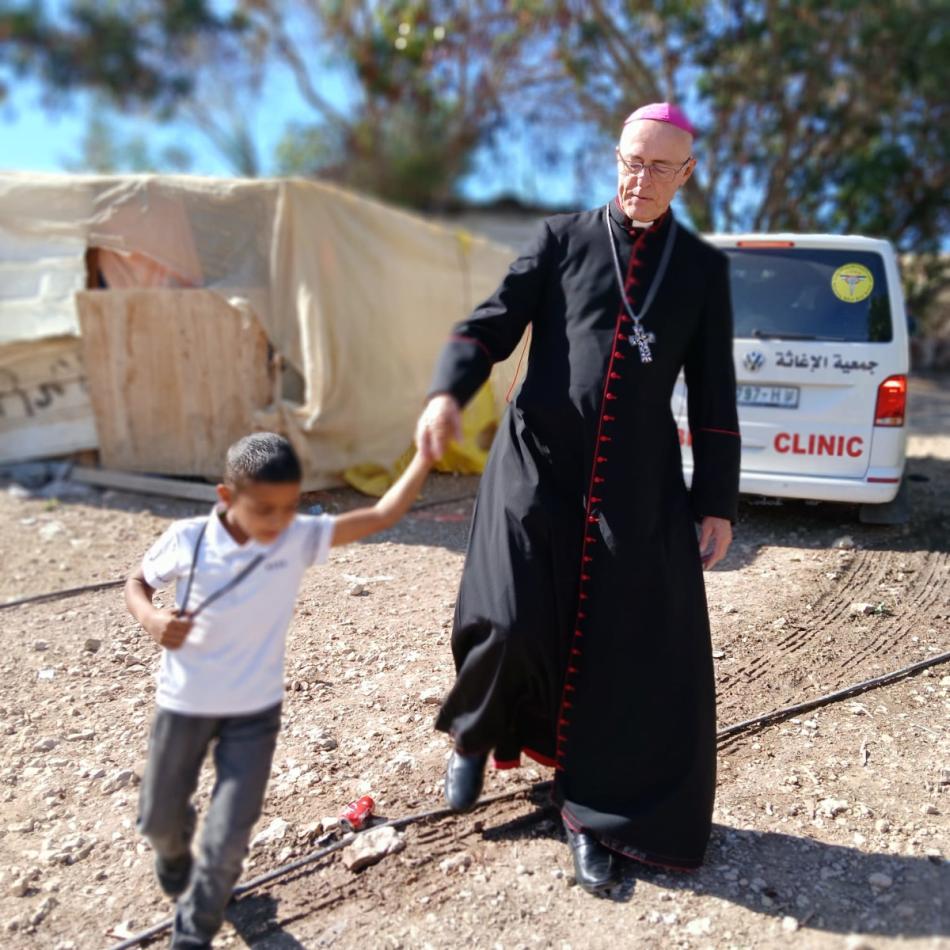
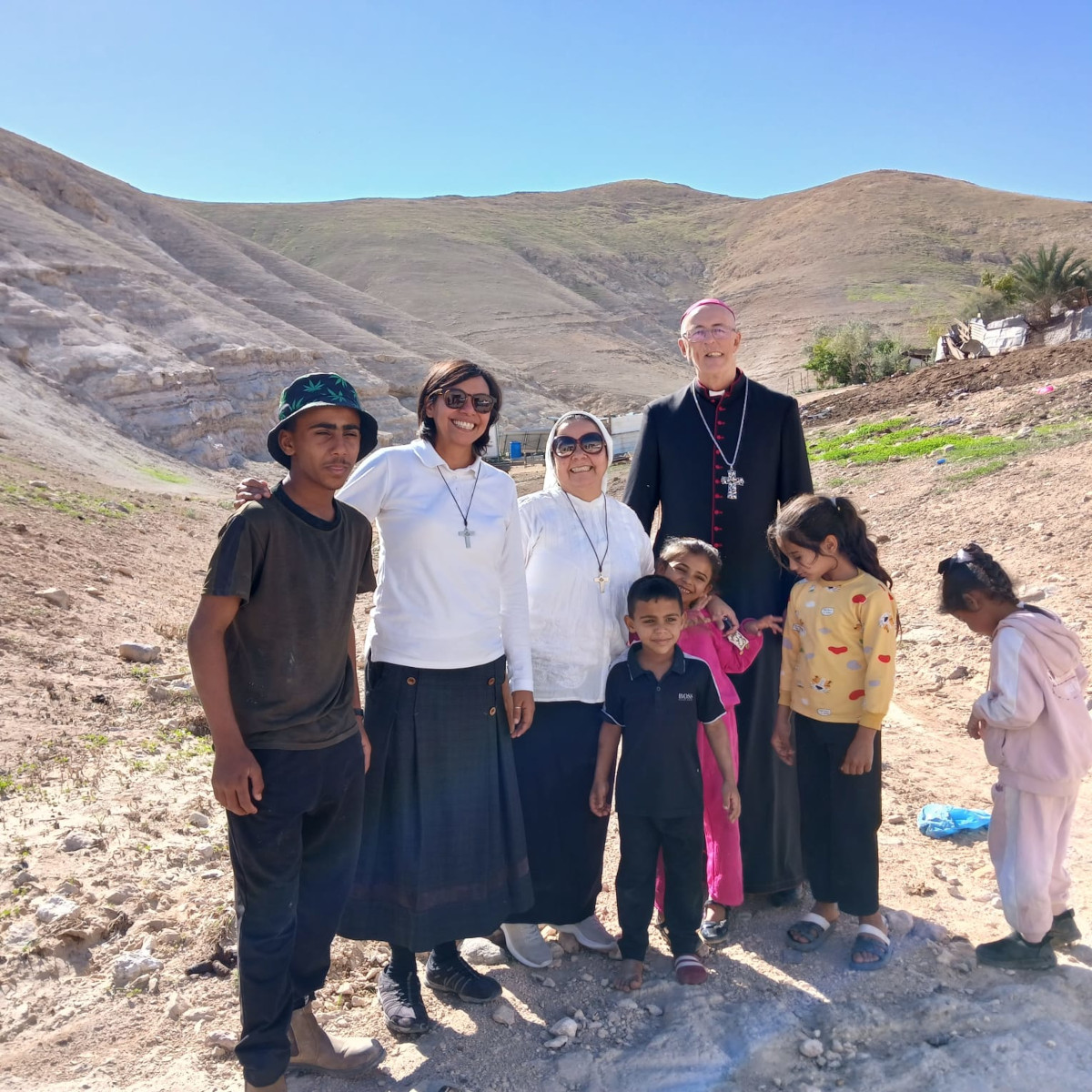
This was the child’s first invitation to Archbishop Giorgio Lingua, Apostolic Nuncio in Israel and Apostolic Delegate in Jerusalem and Palestine since January of this year, when he arrived to visit some Bedouin villages in the Judean desert, in the West Bank.
With the spontaneity and joy that only children can express, they ran to meet him and wanted to open the car door for him, to welcome him and accompany him to where the women had gathered for this special meeting.
It was the first visit by the Pope’s representative to the Bedouin communities of the West Bank desert. A simple visit, but full of meaning: the Church drawing near, overcoming distances and allowing itself to be welcomed into the life of the people.
Among them all, Amir, a boy of only eight, caught our attention. He never left the Nuncio’s side and stayed seated next to him. With the curiosity typical of children, he even went so far as to take the Nuncio’s hat.
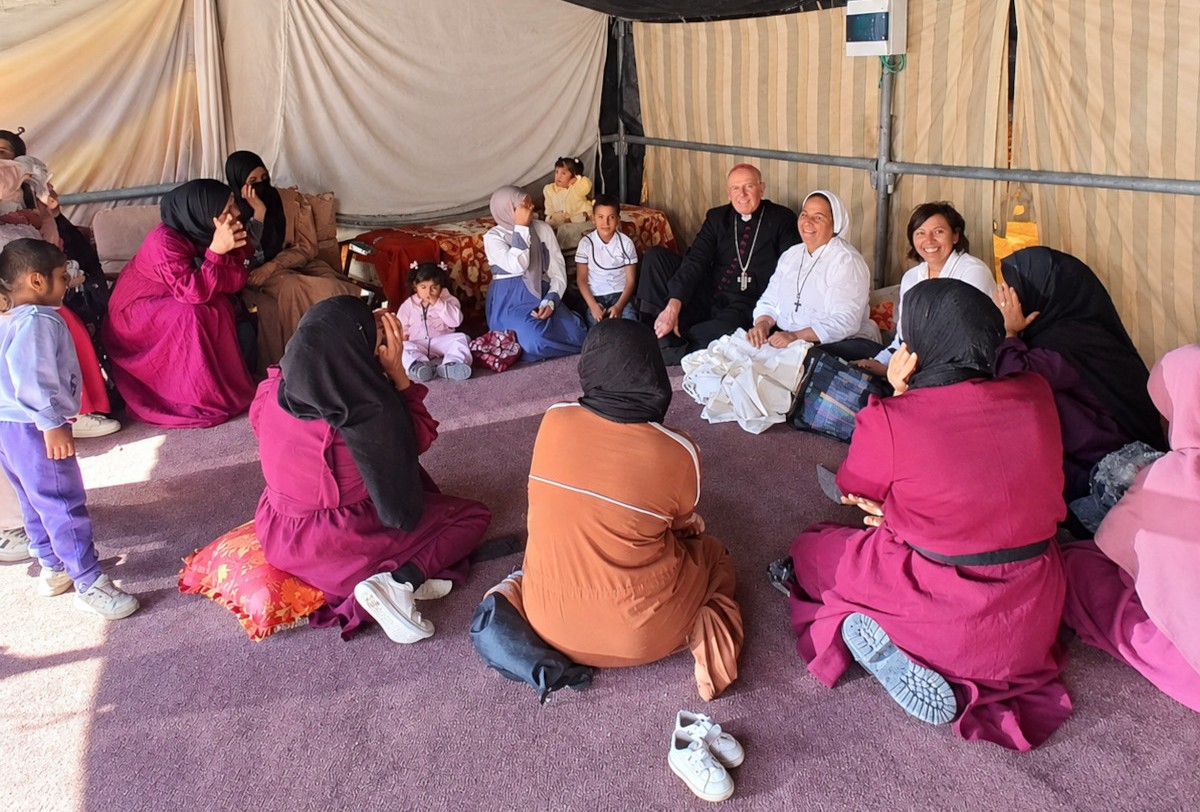
Only when he noticed us watching did he put it down, a little embarrassed. The Nuncio kept smiling and, with great simplicity, sat down on the ground, at their level, naturally entering the world of the children and the women.
In this way he was able to see up close the women’s work: embroidered bags, greeting cards, handmade crafts and soap they produce. Small creations that hold stories of hardship, creativity and a desire for dignity. The Nuncio greeted the women, listened to them and showed interest in what they make with their own hands.
“But do they know who I am?” the Nuncio asked us. Perhaps, for these Bedouin, Arab and Palestinian communities of Muslim tradition, it is not easy to fully grasp what it means to be an “apostolic nuncio.” And yet, that day, there was no need for much explanation. His presence was enough: his sitting on the ground, his attentive gaze and his smile. It was the Church drawing close through a person who represents her.
For sixteen years we Comboni Sisters have been present in these villages. We allow ourselves to be welcomed into their lives and, with a presence made of compassion and closeness, we walk alongside them.
Among them we wish to make the face of Christ visible through a Church that does not pass by, but stops, listens, accompanies and shares the struggles and hopes of the people.
In another village, Mohammed also came to show us the soaps he had made just three days earlier. He was beaming. For the first time, this work gives him the chance to earn something.
Previously he would go all the way to the Monastery of St. George in the desert, and to the area of the Good Samaritan, to sell small items to pilgrims. Now, thanks to his work and creativity, a new possibility is opening up for him: an opportunity perhaps small, but great for someone who wishes to live from his own work and feel like the protagonist of his own life.
The head of one of the villages said he was sorry that the Nuncio had left without staying for lunch: “If he had stayed a little longer, we would have prepared maqluba! It is not possible for such an important person to come and visit us and leave without having eaten!”
His desire to prepare a good dish for him was great. These words reveal the heart of a people: the joy of offering something of one’s own, the beauty of a hospitality that does not measure what it possesses, but desires to share everything it has.
The visit touched three villages and was also an opportunity to meet the Comboni community and to learn more about our presence in the Holy Land, in service of the poorest and most abandoned. A presence made of compassion, closeness and witness to the Gospel, in the spirit of Saint Daniel Comboni.
It was a bright day, warmed by a gentle sun. In the desert, after the first rains, the first shoots of green are beginning to appear. The earth awakens and reminds us that life keeps seeking its own path, even in the most arid and difficult places.
That day, hope took on many faces: in the eyes of the women one could read the desire to work and build a future; in Mohammed’s joy was the pride of being able to show his soaps; in the spontaneous smiles of the children, in their games and their outstretched hands, the trust of being able to approach the Nuncio was made manifest.
Perhaps it was Amir himself, with his “Come with me!”, who gave us the most beautiful image of the day. He had no need to know the titles, the responsibilities or the importance of the person standing before him: he had simply recognized someone to welcome, to take by the hand and to accompany toward his own people.
This is the heart of mission: to let ourselves be taken by the hand by the people, to enter their lives with simplicity, to sit beside them and to share with them a stretch of the road.
Sister Cecilia Sierra