Daniel Comboni
Misjonarze Kombonianie
Obszar instytucjonalny
Inne linki
Newsletter
Sr. Rosa María: “A face full of hope and compassion”
Saturday, March 21, 2026
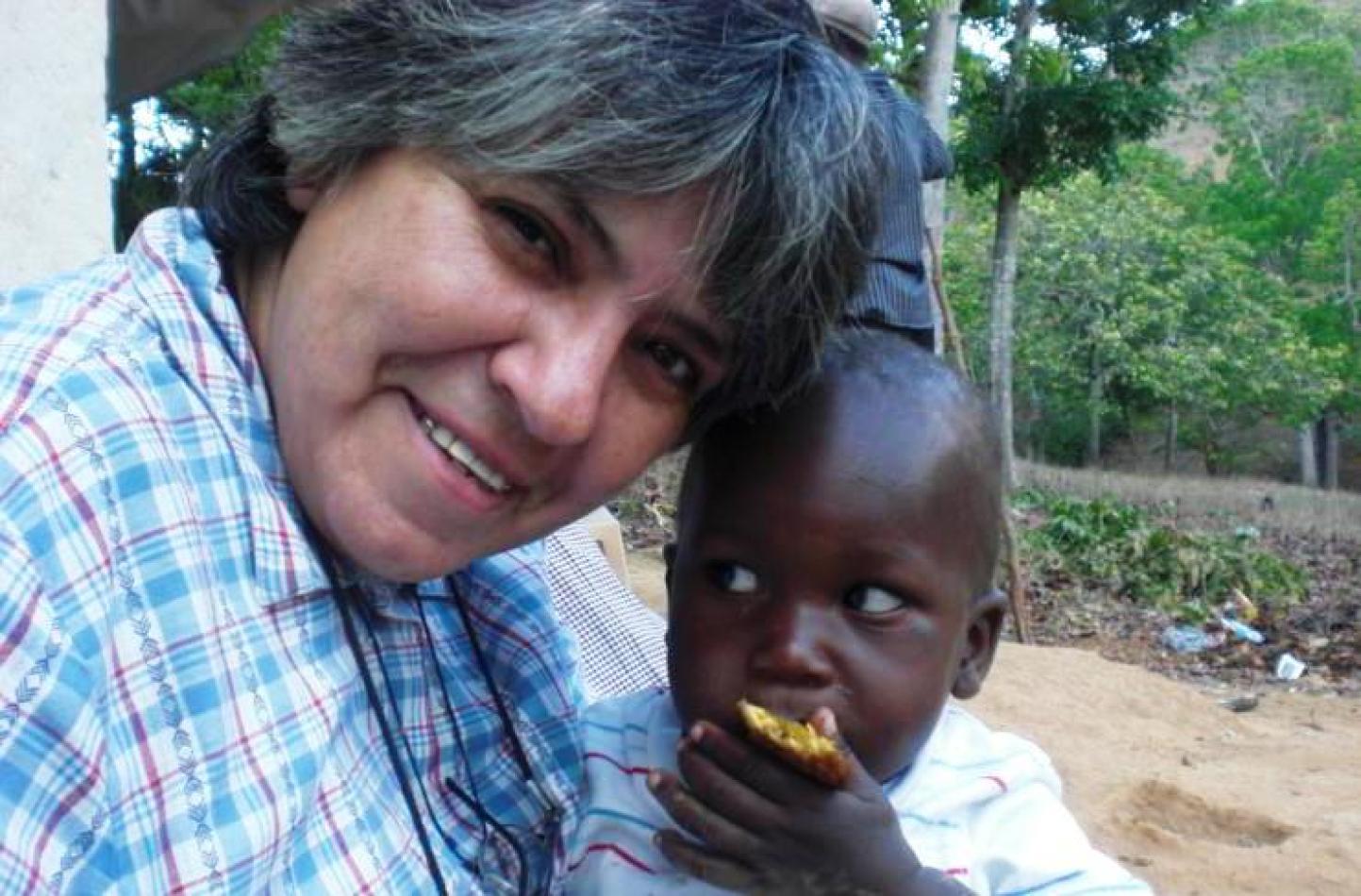
Mexican Comboni nun, Sr. Rosa María del Socorro, talks to us about her experience in one of the most difficult areas of the Dominican Republic. “My pastoral work consists of being present, supporting, and staying close to the elderly abandoned by their families in a nursing home. I collaborate in the parish’s social ministry and also hold natural medicine seminars both in the parish and in the so-called “bateyes” in the municipality of Barahona and the province of San Pedro de Macorís”.
I worked for several years in Chad, Africa; among the indigenous Mazatec people in southern Mexico; and in Haiti. I am currently in Barahona, the Dominican Republic, where I am part of the Intercongregational Missionary Community (CIM), composed of nuns from three congregations: Maestras Católicas del Sagrado Corazón de Jesús, Mercedarias Misioneras de Barcelona, and Misioneras Combonianas.
Barahona is the capital of the Dominican province of the same name, located very close to the border with Haiti and therefore characterised by a large presence of Haitian migrants. It is one of the neediest cities and dioceses, both religiously and economically.
As a missionary community, we work in Pueblo Nuevo, one of the poorest neighbourhoods on the outskirts, with high rates of unemployment, illiteracy, prostitution, drug addiction, and many Protestant churches, which generate a high degree of indifference towards the Catholic faith.
My pastoral work consists of being present, supporting, and staying close to the elderly abandoned by their families in a nursing home. I collaborate in the parish’s social ministry and also hold natural medicine seminars both in the parish and in the so-called “bateyes” in the municipality of Barahona and the province of San Pedro de Macorís.
The “bateyes” are family settlements that live near agricultural plantations, mostly for sugarcane. They are made up of Dominicans of Haitian origin, brought from Haiti in the 1980s, and Haitian migrants who work in planting, cutting, burning, loading, weighing, and transporting sugarcane. It is one of the hardest, most demanding, and most dangerous jobs in the Dominican Republic. There are hundreds and hundreds of “bateyes” scattered throughout the country.
I work as an herbalist in these two areas. It is a simple and popular profession, with training workshops and community health education for a dignified and integral life. I focus primarily on vulnerable women entrepreneurs with limited economic resources who want to help their families and communities, thus strengthening their self-esteem. Most of these “bateyes” are mothers who live in precarious conditions, marginalised and abandoned by the government, due to their migrant status or because they are Haitian descendants.
Through these courses, I try to empower them to become aware of their rights and duties through community health; this helps them stimulate and expand their social, human, and community vision and knowledge, to generate peace, justice, and new models of organisation and commerce. Above all, they avoid having to purchase expensive medicines beyond their family budgets. For this reason, one of the objectives of this training is the development and use of natural medicines.
When I teach these practices and speak in Haitian Creole, their native language, they are surprised and ask me, “How come a foreign, non-Dominican nun speaks our native language?” They begin to sing and applaud. And I say to myself: “The seven years I lived in Haiti, a country still engulfed in poverty and violence, were not in vain.”
Promoting the use of natural remedies based on medicinal plants is very important, since people are accustomed to using them, especially older women, who are highly knowledgeable about them. Starting with a tea or infusion they prepare daily, they learn to make ointments, syrups, soaps, shampoos, and more. There is still much to do and much to cover. I try to be for these “bateyes” a face full of hope and compassion, like that of God the Father and Mother.