
Daniel Comboni
Misjonarze Kombonianie
Obszar instytucjonalny
Inne linki
Newsletter
Catholic Church Leaders in Africa Reflect on Pope Leo XIV’s First Year, Say “gospel does not follow the maps of power”
Friday, May 8, 2026
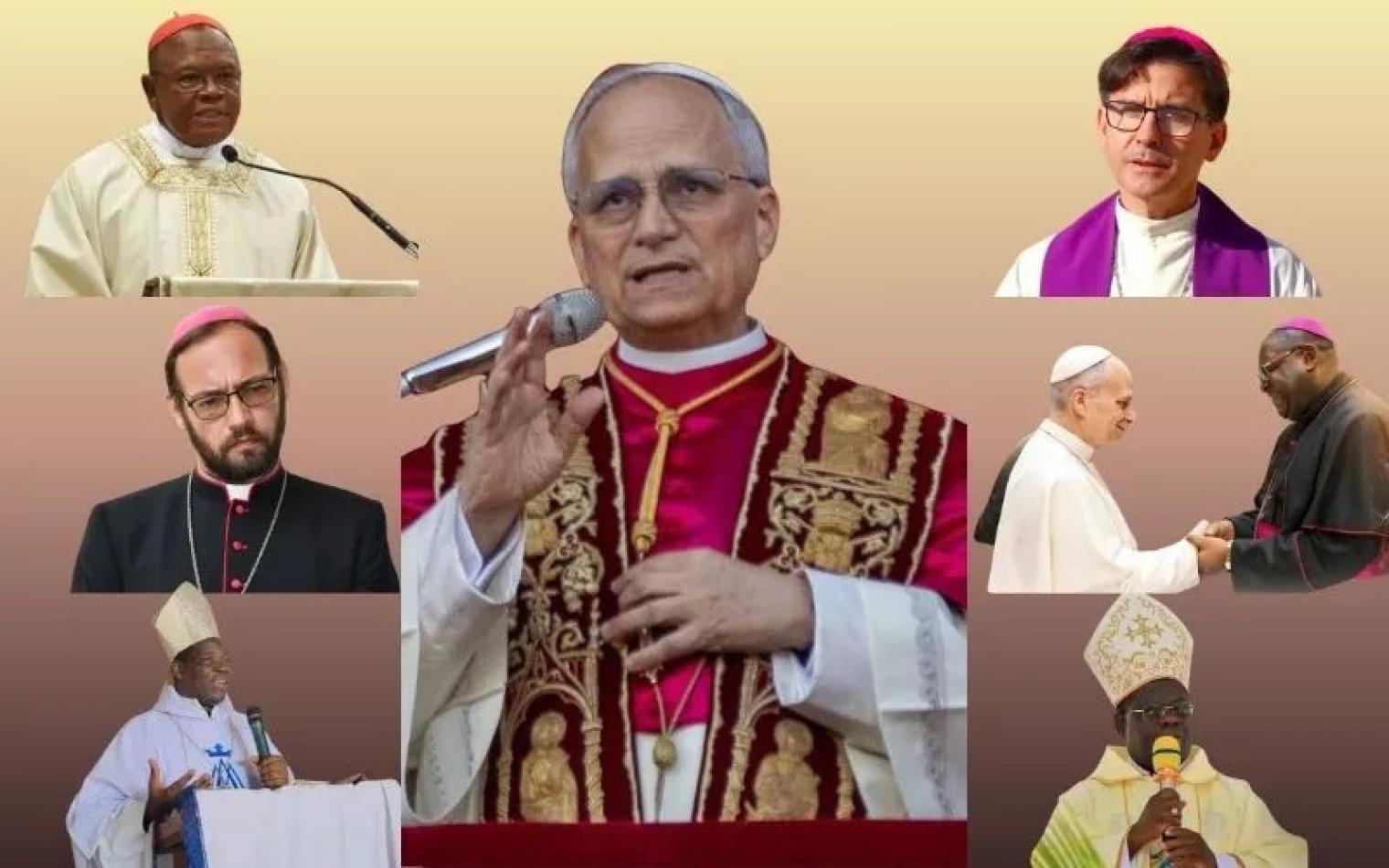
Catholic Church leaders across Africa have described the first year of the Pontificate of Pope Leo XIV as a period marked by pastoral closeness, missionary renewal, peace advocacy, and renewed attention to the peripheries of the Church. [ACI Africa]
In separate reflections shared with ACI Africa on the first anniversary of Pope Leo XIV’s election on May 8, many have pointed particularly to the Pope’s maiden Apostolic Visit to Africa as a defining moment of his ministry. The Catholic Church leaders from across the continent have also highlighted the Holy Father’s emphasis on dialogue, reconciliation, missionary outreach, justice, and peace.
The Symposium of Episcopal Conferences of Africa and Madagascar (SECAM), Fridolin Cardinal Ambongo of the Catholic Archdiocese of Kinshasa in the Democratic Republic of Congo (DRC), Catholic Bishops in Africa say that “throughout this first year of His Pontificate, His witness of faith and humility has become a source of hope for the Church and for the world.”
They say that Pope Leo XIV’s “tireless appeals for peace, reconciliation, justice, and human fraternity have touched hearts across nations and renewed confidence in the Gospel of Christ, especially among those who suffer from war, poverty, displacement, and social injustice”. For SECAM, the Holy Father’s recently concluded maiden visit to Africa was “not merely a pastoral journey, but also a powerful sign of communion, closeness, and encouragement.”
“He came to Africa as a true Apostle of Christ and Messenger of Peace, strengthening the faith of the people, comforting the afflicted, inspiring the youth, and reaffirming the dignity of every human person,” the continental episcopal body said.
“The so-called ‘margins’ become the center”
Bishop Christian Carlassare of South Sudan’s Catholic Diocese of Bentiu and Apostolic Administrator of the Catholic Diocese of Rumbek has described the Pope Leo XIV’s choice of Africa for his first intercontinental visit as a strong ecclesial statement. “Going to Algeria, Cameroon, Angola, and Equatorial Guinea means declaring through actions that the Gospel does not follow the maps of power, but crosses them and overturns them,” Bishop Carlassare says in his reflection shared with ACI Africa.
He adds, “In a world that measures the value of peoples according to economic weight, this journey reversed the perspective: the so-called ‘margins’ become the center.”
The Italian-born member of the Comboni Missionaries of the Heart of Jesus (MCCJ) says that the people of God in Africa are “not communities ‘to be assisted,’ but living subjects of mission.”
“Here, faith is not a cultural fact or a tradition: it is choice, resistance, and concrete hope,” he says.
Reflecting on the significance of the Pope’s engagement with African realities, Bishop Carlassare said the journey highlighted “that mission is increasingly a circular movement of mutual giving and receiving.”
“And in this movement, one realizes that it is often the ‘small ones’ who evangelize the ‘great,’” he added.
The Chairman of the Association of Member Episcopal Conferences in Eastern Africa (AMECEA), Bishop Charles Sampa Kasonde of Zambia’s Catholic Diocese of Solwezi has also reflected on the Pope’s visit to Algeria, Cameroon, Angola, and Equatorial Guinea.
“This is a Pope who is bringing us together to realize the gift of love in our ministry and our mission as a church,” Bishop Kasonde has said about the first Pope from the United States of America, who belongs to the Order of St. Augustine (OSA).
Referring to the April 13-15 Apostolic Journey of Leo XIV to Algeria, the Zambian Catholic Bishop has said the Holy Father “connects with his root, St. Augustine of Hippo, who is the patron saint for their congregation as Augustinians.”
“He gives honor to this great son of Africa,” Bishop Kasonde has further said.
The AMECEA Chairman has also reflected on the Holy Father’s emphasis on Christian-Muslim relations during the Algeria visit. “He goes for them. And this opens up also the interaction with our brothers and sisters, the Muslims, in appreciating what religion stands for,” Bishop Kasonde has said in his audio reflection.
On the Pope’s visit to Cameroon, Bishop Kasonde has said that Pope Leo XIV sought “creating the bond of friendship and praying for that unity that subsists in the children of God.”
For Bishop Diego Ramón Sarrió Cucarella of Algeria’s Catholic Diocese of Laghouat-Ghardaïa, Pope Leo XIV’s presence in Algeria, the first Pontiff to visit the North African nation, carried deep significance for the local Church.
“His visit to Algeria was experienced by our small local Church, and by many beyond the Catholic community, as a moment of fraternity, peace and spiritual encouragement,” Bishop Diego has said.
Spanish-born member of the Missionaries of Africa (MAfr/White Fathers) has added, “His words on dialogue, reconciliation, the dignity of every human person, and the importance of building bridges deeply resonated with the Algerian people.”
In his reflection shared with ACI Africa, Bishop Diego has further described the Holy Father’s insistence “that believers are called to be artisans of peace and fraternity in a wounded world” as “particularly meaningful.”
“The Church must continue to be a sign of peace”
In Cameroon, Bishop Michael Miabesue Bibi of the Catholic Diocese of Buea says that many people were moved by the Holy Father’s message during his four-day Apostolic Visit.
“Many faithful in Cameroon were deeply moved by his encouraging words calling on Africans ‘not to lose hope despite the trials of the present moment,’ and his reminder that ‘the Church must continue to be a sign of peace, reconciliation, and hope in society,’” Bishop Bibi has said, recalling the April 15-18 visit.
The Cameroonian Catholic Bishop said the Pope’s “closeness to young people, displaced persons, and families facing hardship left a lasting spiritual impact on many across the country.”
On his part, Bishop José Luís Gerardo Ponce de León of Eswatini’s Catholic Diocese of Manzini says Pope Leo XIV’s first anniversary cannot be reflected upon without recalling his first address as Pope on 8 May 2025 following his election.
“We cannot but remember his very first address on this day,” Bishop Ponce de León says, recalling the Holy Father’s “call for an unarmed and disarming peace, humble and persevering.”
“These have not been just words. We have seen them leading him daily in the last year and a call to each one of us to be peacemakers with and like him,” the Argentine member of the Institute of the Consolata Missionaries (IMC) has said in a reflection shared with ACI Africa.
For Bishop Eduardo Hiiboro Kussala of South Sudan’s Catholic Diocese of Tombura-Yambio (CDTY), Pope Leo XIV’s first year has resonated strongly in a continent “burdened by conflict, poverty, corruption, and fragile social structures.”
“Pope Leo XIV speaks directly to this reality,” Bishop Hiiboro has said in a reflection shared with ACI Africa, adding that the Holy Father “reminds us that leadership must become service and that the dignity of every human person must remain at the center of society.”
Reflecting on South Sudan’s context, the South Sudanese Catholic Bishop who chairs the Commission for the Promotion of Integral Human Development of the Sudan and South Sudan Catholic Bishops’ Conference (SSS-CBC) says, “Our peace remains fragile, yet our faith remains strong.”
“The Church is called to do the opposite: To see, to recognize, to give voice”
In his reflection shared with ACI Africa, Bishop Carlassare also spoke about exploitation, injustice, and the prophetic role of the Church.
“Pope Leo convincingly returned to the theme of exploitation,” he said recalling the Apostolic Journey to Africa of Pope Leo XIV, and added, “He spoke of plundered natural resources, economic dependence, and dependence on humanitarian aid caused by poor governance and lack of peace.”
Bishop Carlassare went on to quote the late Pope Francis’ January 2023 appeal in the DRC, recalled: “Hands off from Africa. Stop suffocating it: it is not a natural reservoir to be exploited or a land to be plundered.”
For Bishop Carlassare, Pope Leo XIV’s emphasis on dialogue and encounter during his pastoral visit to Africa also stood out.
“Mission does not pass through ideological confrontation, but through daily relationships and becoming a neighbor to the other,” the Bishop of Bentiu Diocese and Apostolic Administrator of Rumbek Diocese says.
He adds, “In a global system that tends to make entire peoples invisible, the Church is called to do the opposite: to see, to recognize, to give voice.”
As Pope Leo XIV marks one year since his election, African Church leaders continue to envision his Pontificate through the lens of missionary closeness, peacebuilding, and attention to those living at the peripheries.
In a message addressed to Pope Leo XIV on the occasion of his first anniversary as Pope, SECAM leadership says that the Holy Father’s “words and gestures” have “renewed missionary zeal, encouraged reconciliation where wounds and divisions persist, deepened solidarity among ecclesial communities, and strengthened the Church’s commitment to justice, peace, and integral human development.”
“The Church in Africa entrusts His ministry to the loving protection of the Blessed Virgin Mary,” Catholic Bishops in Africa have said in the message signed by SECAM President, Cardinal Ambongo.