
Daniele Comboni
Missionari Comboniani
Area istituzionale
Altri link
Newsletter
Synodality – Exploring the intersection of major themes in the light of young people
Wednesday, July 29, 2026
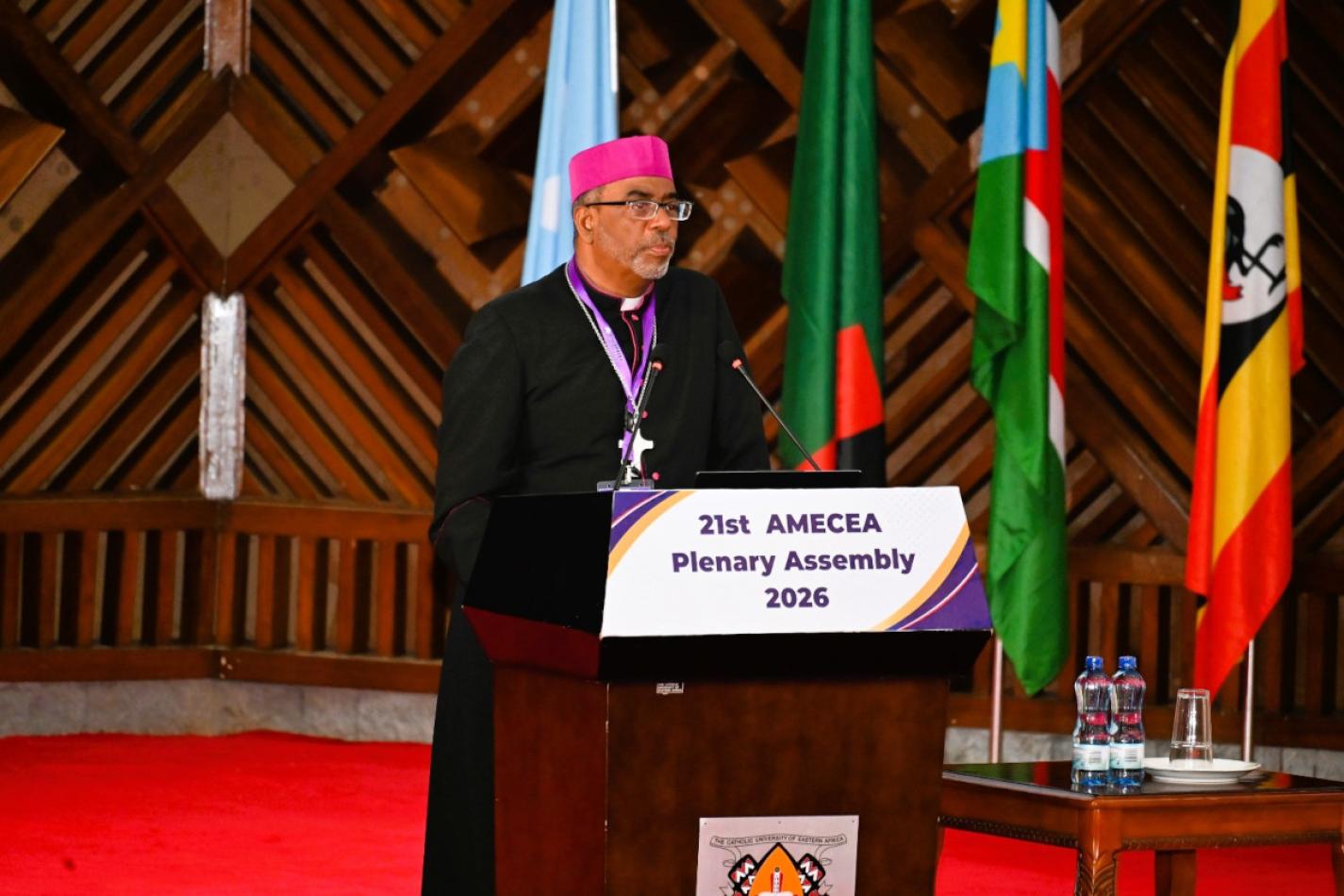
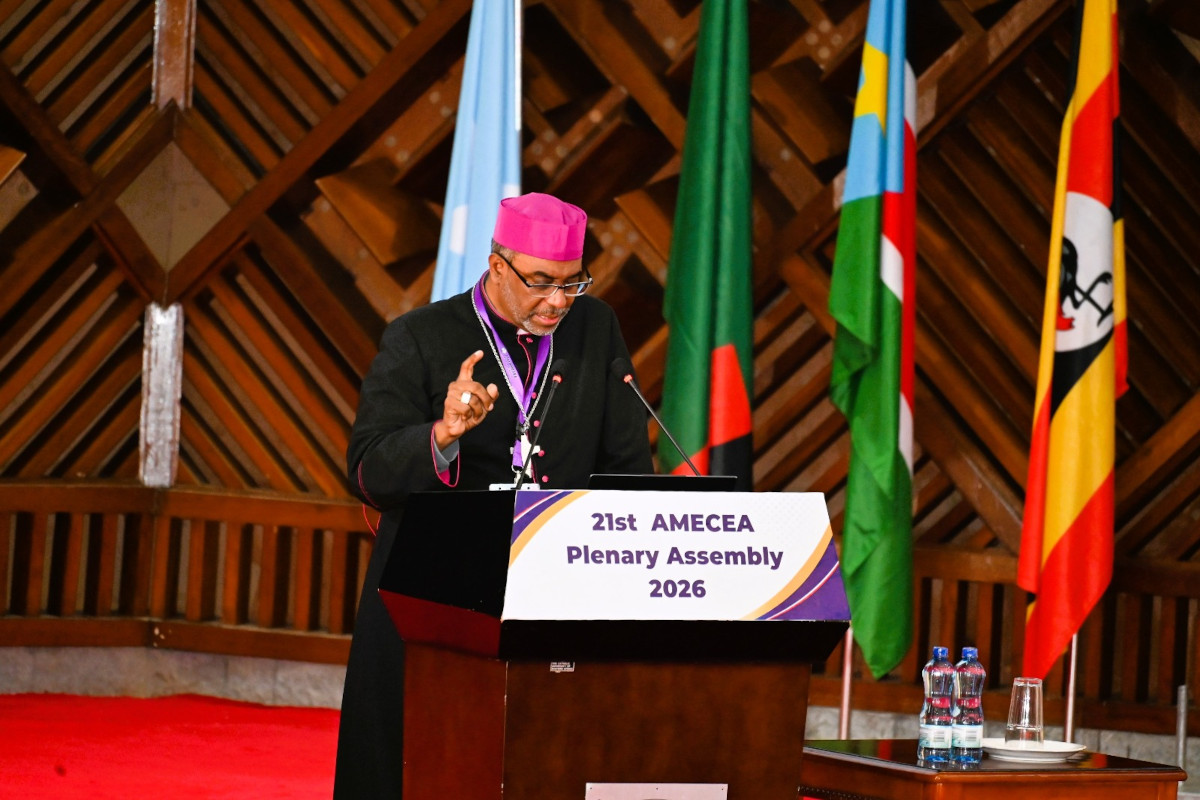
Archbishop Tesfaye Tadesse of Addis Ababa, Ethiopia, presented this reflection on youth and Synodality during the 21st Plenary Assembly of the Association of Member Episcopal Conferences in Eastern Africa (AMECEA) that took place in Nairobi, Kenya, from July 19 to 26, 2026. [Photos ACI Africa]
1. Some basic lessons from our journey of the Synod on Synodality
It comes from the Early Church: “When they came to Jerusalem, they were welcomed by the church and the apostles and the elders, and they declared all that God had done with them. [...] The apostles and the elders were gathered together to consider this matter. And after there had been much debate. [...] ‘But we believe that we shall be saved through the grace of the Lord Jesus, just as they will.’ [...] And all the assembly kept silence; and they listened to Barnabas and Paul as they related what signs and wonders God had done through them among the Gentiles.” (Acts 15:1-35).
Synodality is a journey: “Synodality is not an end in itself. Rather, it serves the mission that Christ entrusted to the Church in the Spirit. To evangelise is ‘the essential mission of the Church. It is [...] the grace and vocation proper to the Church, her deepest identity’ (EN 14). By being close to all without distinction of persons, preaching and teaching, baptising, and celebrating the Eucharist and the Sacrament of Reconciliation, all the local Churches and the whole Church respond concretely to the Lord’s command to proclaim the Gospel to all nations (cf. Mt 28:19-20; Mk 16:15-16). By appreciating all charisms and ministries, synodality enables the People of God to proclaim and witness to the Gospel to women and men of every place and time, making itself a ‘visible sacrament’ (LG 9) of the fellowship and unity in Christ willed by God. Synodality and mission are intimately linked: mission illuminates synodality and synodality spurs to mission.” (Final Document on the Synod on Synodality [FSD] 32).
The journey of Synodality is to be guided by the Holy Spirit: “We stand before You, Holy Spirit, as we gather together in Your name. With You alone to guide us, make Yourself at home in our hearts; Teach us the way we must go and how we are to pursue it. We are weak and sinful; do not let us promote disorder. Do not let ignorance lead us down the wrong path nor partiality influence our actions. Let us find in You our unity so that we may journey together to eternal life and not stray from the way of truth and what is right. All this we ask of You, who are at work in every place and time, in the communion of the Father and the Son, forever and ever. Amen.” (Ad Sumus Sancte Spiritus, attributed to St. Isidore of Seville – 560-636).
We have tried to do our homework given by the Synod on Synodality: “The synodal process does not conclude with the end of the current Assembly of the Synod of Bishops. [...] The local Churches are asked to continue their daily journey with a synodal methodology of consultation and discernment, identifying concrete ways and formation pathways to bring about a tangible synodal conversion in the various ecclesial contexts (parishes, Institutes of consecrated life and Societies of apostolic life, movements of the faithful, dioceses, Episcopal Conferences, groupings of Churches, etc.).” (FSD 9).
The journey of Synodality is a call for conversion: “Synodality is primarily a spiritual disposition. It permeates the daily life of the Baptised as well as every aspect of the Church’s mission. A synodal spirituality flows from the action of the Holy Spirit and requires listening to the Word of God, contemplation, silence and conversion of heart... It welcomes with gratitude and humility the variety of gifts and tasks distributed by the Holy Spirit for the service of the one Lord (cf. 1 Cor 12:4-5). It does so without ambition, envy or desire for domination or control, cultivating the same attitude as Christ who ‘emptied himself, taking the form of a slave’ (Phil 2:7). We recognise the fruits of a spirituality of synodality when the daily life of the Church is marked by unity and harmony in pluriformity. No one can progress along the path of authentic spirituality alone; we need support, including formation and spiritual accompaniment, both as individuals and as a community.” (FSD 43).
We all need to be formed so that we may grow in practising Synodality: “One of the requests that emerged most strongly and from all contexts during the synodal process is that the formation provided by the Christian community be integral, ongoing and shared. There was also a marked insistence throughout the synodal process upon the need for a common and shared formation, in which men and women, laity, consecrated persons, ordained ministers and candidates for ordained ministry participate together, thus enabling them to grow together in knowledge and mutual esteem and in the ability to collaborate. This requires the presence of suitable and competent formators, capable of demonstrating with their lives what they transmit with their words. Only in this way will formation be truly generative and transformative... We, therefore, need to invest in the formation of formators.” (FSD 143).
Synodality is a journey together and a concern for humanity and for our world at large: “Living through the synodal process, we have renewed our awareness that the salvation to be received and proclaimed is inherently relational. We live it and witness to it together. History reveals itself to us tragically marked by war, rivalry for power and thousands of injustices and abuses. We know, however, that the Spirit has placed the desire for authentic relationships and true bonds in the heart of every human being. Creation itself speaks of unity and sharing, of diversity and of variously interconnected forms of life. [...] We can live the communion that saves by walking in a synodal way, in the intertwining of our vocations, charisms and ministries, by going forth to meet everyone in order to bring the joy of the Gospel: communion with God, with the entire humanity and all of creation. In this way, thanks to this sharing, we have already begun to experience the banquet of life that God offers to all peoples.” (FSD 154).
The journey of synodality helps us to respond to the call we have received. We are called to contribute in the kerygmatic mission of the Church: proclaiming the Good News (Kerygma), witnessing to Christ (Martiria) and serving the needy (Diakonia) and creating communion (Koinonia). We are called to make a common journey with the world, being present and journeying with the suffering and the marginalised.
The Synodal journey helps us to form in our schools and centres, our Christian lay faithful, at large and especially women, youth, so that they may be engaged in issues of Justice and Peace, Human Rights, Reconciliation, Ecumenical initiatives and Interreligious Dialogue, with a deep journey of Ecological Conversion in the light of Laudato Si’.
2. Some indications from the Synod on Synodality, about young people recorded in the Final Synod Document
In the Magisterium of Pope Francis, the youth have their place. Even before the Synod on the Young People, he clearly stated in Evangelii Gaudium the following:
“Youth ministry, as traditionally organized, has also suffered the impact of social changes. Young people often fail to find responses to their concerns, needs, problems, and hurts in the usual structures. As adults, we find it hard to listen patiently to them, appreciate their concerns and demands, and to speak to them in a language they can understand. For the same reason, our efforts in the field of education do not produce the results expected. The rise and growth of associations and movements mostly made up of young people can be seen as the work of the Holy Spirit, who blazes new trails to meet their expectations and their search for a deep spirituality and a more real sense of belonging. There remains a need, however, to ensure that these associations actively participate in the Church’s overall pastoral efforts.” (EG 105).
In the final document of the Synod, we find the word “youth” only once and “young” 11 times, a related term for the category of young people; “children” we find it 15 times, while “women” is mentioned 45 times.
The core text that speaks about the young people is paragraph 62.
It is important to remember that in 2018, we had a Synod on the Youth. We have many indications and guidelines both the Final Document on the Synod on the Youth in 2018 and the Apostolic Exhortation of Pope Francis Christus Vivit in 2019.
Let us look at the text of the final document on the Synod on Synodality and comment the paragraphs.
- “Looking upon the Lord does not distance us from the tragedies of history. Instead, it opens our eyes to the suffering of those around us, and we are pierced by the faces of war-stricken, terrorised children, weeping mothers, the shattered dreams of so many young people, refugees facing terrible journeys, and the victims of climate change and social injustice.” (FSD, 2).
- “Young people also make a contribution to the synodal renewal of the Church. They are acutely aware of the values of fellowship and sharing while rejecting paternalism or authoritarian attitudes. At times, their attitude toward the Church can come across as critical, yet often it manifests positively as a personal commitment to the creation of a welcoming community dedicated to fighting against social injustice and for the care of our common home. The request that they made at the 2018 Synod on Young People to ‘walk together in daily life’ corresponds exactly to the vision of a synodal Church. For this reason, it is fundamental that we assure them of thoughtful and patient accompaniment; in particular, the proposal of ‘an experience of accompaniment in view of discernment’, which arose thanks to their contribution, deserves to be revisited and taken up again. It foresees companionship shared with educators, an apostolic commitment lived at the service of the neediest, and the offer of a spirituality rooted in prayer and the sacramental life (cf. Final Document of the XV Ordinary General Assembly of the Synod of Bishops, Young People, the Faith and Vocational Discernment, 161).” (FSD, 62).
- “In particular, in recent years, there has been a growing awareness that, when it comes to the pastoral care of families, families themselves are active participants and not just passive recipients. For this reason, families to meet and network together, and Church institutions focused on the education of children and young adults may help assist them in doing so.” (FSD 64).
- “Equal attention needs to be given to the membership of the participatory bodies in order to encourage greater involvement by women, young people, and those living in poverty or on the margins. Furthermore, it is essential that these bodies include Baptised who are committed to living their faith in the ordinary realities of life; who are recognisably committed to an apostolic and missionary life, not only those engaged in organising ecclesial life and services internally.” (FDS 106).
- “The spread of digital culture, particularly evident among young people, is profoundly changing their experience of space and time. It influences their daily activities, communication, and interpersonal relationships, including faith. [...] Christian digital communities and groups, particularly young people, are also called to reflect on how they create bonds of belonging, promoting encounter and dialogue. They need to offer formation among their peers, developing a synodal way of being Church.” (FSD 113).
- “We recognise that institutes of consecrated life, societies of apostolic life, as well as associations, movements, and new communities, have the ability to take root locally and, at the same time, connect different places and milieus, often at a national or international level. Their action, together with that of many individuals and informal groups, often brings the Gospel to highly diverse contexts: to hospitals, prisons, homes for the elderly, reception centres for migrants, minors, those marginalised and victims of violence; to centres of education and training, schools and universities where young people and families meet; to the arenas of culture and politics and of integral human development, where new forms of living together are imagined and constructed.” (FSD 118).
- “This encounter often brings together people of different generations, from the youngest to the oldest. In the Church, no one simply receives formation: everyone is an active subject and has something to give to others. Popular piety, too, is a precious treasure of the Church, which teaches the whole People of God on the journey.” (FSD 144).
- “Thus, they become capable of promoting an alternative to the dominant models that are often driven by individualism and competition, thereby also playing a prophetic role. In some contexts, they are the only settings where children and young people come into contact with the Church.” (FSD 146).
3. Some indications for youth ministry after the 2018 Synod on the Youth
It is possible that many of us may think that during the Synod on Synodality, very little has been said concerning the journey with the young people. But we must not forget that in 2018 there was a Synod dedicated only or mainly to the youth.
In the Post-synodal Apostolic Exhortation Christus Vivit, given in Loreto on March 25, 2019, some proposals for pastoral care of the youth ministry have been indicated and I want to mention these paragraphs and comment on them shortly.
“A pastoral care that is synodal
I want to state clearly that young people themselves are agents of youth ministry. Certainly, they need to be helped and guided, but at the same time left free to develop new approaches, with creativity and a certain audacity. So I will not attempt here to propose a kind of manual of youth ministry or a practical pastoral guide. I am more concerned with helping young people to use their insight, ingenuity, and knowledge to address the issues and concerns of other young people in their own language.
The young make us see the need for new styles and new strategies. For example, while adults often worry about having everything properly planned, with regular meetings and fixed times, most young people today have little interest in this kind of pastoral approach. Youth ministry needs to become more flexible: inviting young people to events or occasions that provide an opportunity not only for learning, but also for conversing, celebrating, singing, listening to real stories, and experiencing a shared encounter with the living God.
At the same time, we should take into greater consideration those practices that have shown their value – the methods, language, and aims that have proved truly effective in bringing young people to Christ and the Church. It does not matter where they are coming from or what labels they have received, whether ‘conservative’ or ‘liberal’, ‘traditional’ or ‘progressive’. What is important is that we make use of everything that has borne good fruit and effectively communicates the joy of the Gospel.
Youth ministry has to be synodal; it should involve a ‘journeying together’ that values ‘the charisms that the Spirit bestows in accordance with the vocation and role of each of the Church’s members, through a process of co-responsibility... Motivated by this spirit, we can move towards a participatory and co-responsible Church, one capable of appreciating its own rich variety, gratefully accepting the contributions of the lay faithful, including young people and women, consecrated persons, as well as groups, associations and movements. No one should be excluded or exclude themselves’.
In this way, by learning from one another, we can better reflect that wonderful multifaceted reality that Christ’s Church is meant to be. She will be able to attract young people, for her unity is not monolithic, but rather a network of varied gifts that the Spirit ceaselessly pours out upon her, renewing her and lifting her up from her poverty.
In the Synod, many concrete proposals emerged for renewing youth ministry and freeing it from approaches that are no longer effective because they are incapable of entering into dialogue with contemporary youth culture. Naturally, I cannot list them all here. A number of them can be found in the Final Document of the Synod.” (Christus vivit 203-208).
4. Some elements concerning the pastoral call of bishops who make their journey together with young people
The Synod speaks about conversion in our relationships. The youth are seriously in need of relationships. They want to communicate, but they are increasingly pushed to have virtual relationships than those of the family, schoolmates, and neighbours. In the African context, the youth are questioning their family ties, their ethnic belonging, and also traditional families within the extended family, the need to be married officially according to the tradition and the teaching of the Church. “Thus, synodal conversion calls each person to enlarge the space of their heart, the heart being the first place where all our relationships resonate, grounded in each believer’s personal relationship with Jesus Christ and His Church. This is the starting point and the condition of any synodal reform of the bonds of our communion and the spaces where we are Church. Pastoral action cannot be limited to tending to relationships between people who already feel attuned to one another but rather encourage the encounter between all men and women.” (FSD 110).
Bishops are called to be shepherds of the people of God, of whom the young people make a good part. In the context of many African Local Churches, the youth make up most of our Christian communities, so to organise a particular care of the pastoral of the youth (youth ministry) is not optional. In the Mission of God, Missio Dei, we have the duty of proclaiming the Gospel, witness our Christian Faith as followers of Christ and the mission of service, the diakonia, which we may do ourselves and through the service of Advocacy in front of local, continental and universal governments and networking with our partners.
The bishop needs to have, or serve with, a group of pastoral agents experienced in different areas of apostolate and Christian commitment. The shepherd of a local church has to look for, to empower and authorise a group of pastoral agents in the service of the mission among the youth. Here we are not talking about people who carry out the office and the program, but we are talking about pastoral agents whose hearts beat for the young people in our communities. Here we are talking about people who are deeply spiritual and faith-filled, who respect the sacredness of life. We need to work together in the processes of human and Christian Maturity. Our young people need a dignified life, where they are employed, with all their talents and expertise; “By working we become a fuller person, our humanity flourishes, young people become adults only by working.” (Dilexit te 115).
As pastors, we are all called to be people of deep hope who help the community go beyond the challenges of every day. The youth are seriously worried about their present and also about their future. They ask to be loved and are capable of loving and returning love. They need to be encouraged, spiritual accompaniment of individuals and groups among the youth is very much crucial. The youth need to listen to the proclamation of Jesus Christ our Lord and Saviour. They need to be helped to live moments of individual and community prayer with a well-prepared liturgy and programs...
Many young people undergo many negative experiences of life which affect their present and future. They share many stories of abuse when we encounter them deeply: emotional, spiritual, political and relational stories of instrumentalization and abuse... we need to be well organised and equipped with experts to accompany them in their journey of self-knowledge, self-acceptance, with faith and courage, and trauma healing. We need to make them more and more protagonists of the work of evangelization, during and their experience of salvation.
The youth demand that our communities and our Mother Church and her servants grow in being credible witnesses. The young people don’t expect that we are perfect; in fact, they are afraid that we tend to be perfectionists, as they are struggling with life and with themselves. The youth expect that we are humble witnesses who try to proclaim the Gospel of our Lord Jesus Christ in our days with credible efforts. They are happy to see us strive. “Anyone called to be a parent, pastor, or guide to young people must have the farsightedness to appreciate the little flame that continues to burn, the fragile reed that is shaken but not broken (cf. Is 42:3). The ability to discern pathways where others only see walls, to recognize potential where others see only peril. That is how God the Father sees things; he knows how to cherish and nurture the seeds of goodness sown in the hearts of the young. Each young person’s heart should thus be considered ‘holy ground,’ a bearer of seeds of divine life, before which we must ‘take off our shoes’ in order to draw near and enter more deeply into the Mystery.” (Christus vivit 67).
We need to know that the context is changing continuously and very fast. There are new challenges and questions coming up among the young people of the different continent. The same thing can be said about the experience of faith and religion among the youth. We need to prepare and send pastoral agents who know how to speak to the youth and invite for a common journey of faith to discover more about our Lord Jesus Christ and the Good News, in order to make them contribute to the building of the Kingdom of God.
The young people in our communities are instruments of intercultural, interreligious living together; they practice a lot of tolerance. But at the same time, some of them can also be tempted to become extremists. May young people can be attracted by new proposals, especially where they extremists group promise a lot of good things; they can easily follow some radical leaders of religions or ideas.
The youth are tempted by the culture of individualism; we see this in our communities, seminaries, ecclesial movements, and small Christian communities... How do we practice communion with the youth? How much space do we give them? How do we welcome and embrace them in our communities? Our young people are well connected, and they are increasingly global in their way of looking at things. What happens in the communities in Europe, in the USA, Australia, or Japan has its impact in our communities. What happens in South Africa or in Nairobi or in Cairo has its consequences among our youth in our cities and villages. During the pre-Synod journey, in the synthesis of the reports that came from Ireland and the UK, the young people in the Irish synthesis said: “a significant number (of young people) disagreed with the Church’s teaching on sexuality, and the Church’s position on sex was considered a barrier to participation by some young people.” In the Scottish synthesis we read: “Many young people were impressed with the Church’s social teaching, its outreach to the poor, its call for social justice, and caring for others and the environment.” We need to read and listen again to what our young people in Africa at large, and in our region, have said.
How do we make them participate in the life of the Church? Can they be protagonists of some service of promotion and evangelization? What mission can be theirs in the life of the Church? They have a lot of talent, energy, and generosity. They want to give meaning to their life and their sense of call. How do we send them to the mission...
The local ordinary who knows the gifts, talents, expertise, and vocation of the various pastoral agents in the diocese is supposed to be the unifying figure of all those pastoral offices, centres, congregational programs of consecrated people, and ecclesial movements that involve, journey with, and are the service of the youth.
What about the Digital Continent to be evangelized by young people? “The spread of digital culture, particularly evident among young people, is profoundly changing their experience of space and time. It influences their daily activities, communication, and interpersonal relationships, including faith. [...] Christian digital communities and groups, particularly young people, are also called to reflect on how they create bonds of belonging, promoting encounter and dialogue. They need to offer formation among their peers, developing a synodal way of being Church.” (FSD 113).
We must learn, then, how to exercise restraint in the use of AI and to protect our young people from the promise of the perfect machine, from that subtle temptation which renders human thought seemingly superfluous precisely when it is most needed. “Let us invest in education, beginning with ourselves! We all need to learn how to engage with the digital world in a human way, as an integral part of our education in the faith and in a life lived according to the Gospel. Indeed, we must consider the digital world as a new continent to be evangelized, one that requires generous missionaries who are mature in the faith. In a particular way, we need adults to rediscover their vocation as artisans of education, prepared to work patiently each day, with the support of extensive and shared educational partnerships. Today, accompanying children and young people in using technology for developing responsible relationships, helping them to recognize the risks and choose what fosters inner freedom, is a concrete form of charity and will safeguard their dignity. Teaching new generations that technological evolution does not follow a predetermined path, but can be guided by personal and collective responsibility, constitutes one of the most valuable services to the common good.” (Magnifica humanitatis 238).
As shepherds of the people of God, we are called to ensure that the formation of our seminarians and candidates for consecrated life is well done and in a Synodal manner. “One of the requests that emerged most strongly and across all contexts during the synodal process is that the formation provided by the Christian community be integral, ongoing, and shared. There was also a marked insistence throughout the synodal process upon the need for a common and shared formation, in which men and women, laity, consecrated persons, ordained ministers, and candidates for ordained ministry participate together, thus enabling them to grow together in knowledge and mutual esteem and in the ability to collaborate. This requires the presence of suitable and competent formators, capable of demonstrating with their lives what they transmit with their words. Only in this way will formation be truly generative and transformative... We, therefore, need to invest in the formation of formators.” (FSD, 143)
We need to continue our Synodal journey with the indications given to us for the for the journey in 2027-2028, we have received the Letter on the Accompaniment Process of the Implementation Phase of the Synod, of March 25, 2025. We have a group of scholars, a think-thank helping us, with the Synodality Observatory for Africa, we all have received the letter Rev. Fr. Paul Béré S.J., President of SynObs, we are going to have some indications from the next meeting of the SECAM-Continental Body on Synodality which will meet in Addis Ababa in the first week of August 2026.
“Youth ministry, as traditionally carried out, has been significantly affected by social and cultural changes. Young people frequently fail to find in our usual programmes a response to their concerns, their needs, their problems and issues. The proliferation and growth of groups and movements predominantly associated with the young can be considered the work of the Holy Spirit who constantly shows us new paths. Even so, there is a need to look at the ways such groups participate in the Church’s overall pastoral care, as well as a need for greater communion among them and a better coordination of their activities. Although it is never easy to approach young people, two things have become increasingly evident: the realization that the entire community has to be involved in evangelizing them, and the urgent requirement that young people take on a greater role in pastoral outreach.” (Christus vivit 202)
+Abba Tesfaye (Tesfasilasie) Tadesse Gebresilasie, M.C.C.J.
Metropolitan Archbishop of Addis Ababa