
Daniel Comboni
Comboni Missionaries
Institutional area
Other links
Newsletter
First Sunday of Advent – Year A: Building Our Ark
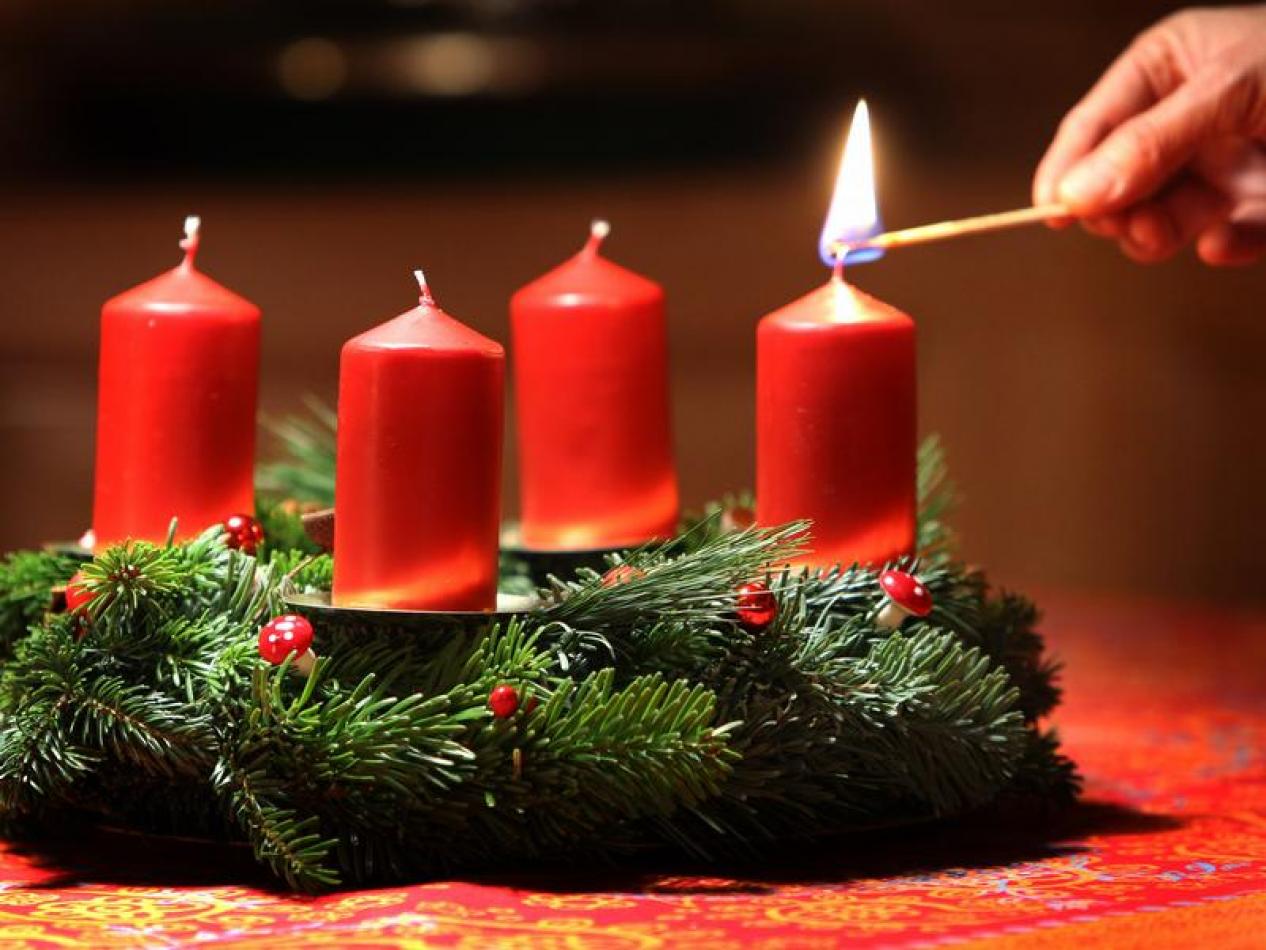
With the first Sunday of Advent a new liturgical year or cycle begins: Year A, during which we meditate on the Gospel of Matthew. It is the New Year of our life of faith! Indeed, the liturgical year does not coincide with the civil calendar. It begins with the first Sunday of Advent and ends with the week of Christ the King. It is not a simple repetitive reprise of the mysteries of the Christian faith. The Mystery finds us in a different personal situation, and the life of the Church and of the world has also changed. We could speak of a spiral progression.
“So stay awake, because you do not know the day when your Lord will come.”
Matthew 24:37–44
With the first Sunday of Advent a new liturgical year or cycle begins: Year A, during which we meditate on the Gospel of Matthew. It is the New Year of our life of faith! Indeed, the liturgical year does not coincide with the civil calendar. It begins with the first Sunday of Advent and ends with the week of Christ the King. It is not a simple repetitive reprise of the mysteries of the Christian faith. The Mystery finds us in a different personal situation, and the life of the Church and of the world has also changed. We could speak of a spiral progression.
1. Advent: a threefold coming
Advent, from the Latin Adventus, means coming, the Coming of Christ. But when we speak of the coming of Christ, it is not only a matter of recalling his visit in the past, but of rekindling our hope in the promise of his return. Yet between past and future lies the reality of his manifestation in the present: Christ has come and will come again, but he COMES today, making his visit to Bethlehem present for us and anticipating his arrival at the end of time.
Saint Bernard says on this subject: “We know of a threefold coming of the Lord. In the first, he came in the weakness of the flesh; in the last, he will come in the majesty of glory. A hidden coming lies between the other two, which are visible. This middle coming is, so to speak, the road that leads from the first to the last: in the first, Christ was our redemption; in the last, he will appear as our life; in this one, he is our rest and our consolation.”
2. On the way, accompanied: the figures of Advent
Four figures will accompany us during this Advent season:
– ISAIAH, whom we will find in the first reading of these Sundays. He is the prophet who, seven centuries before Christ, contemplates and announces the advent of the Messiah and invites us to MESSIANIC JOY. He therefore speaks to us using verbs in the future. This future, inaugurated with the advent of the Messiah, is, however, still unfolding.
In today’s first reading (Is 2:1–5), he already contemplates definitive peace: “They shall beat their swords into ploughshares, and their spears into sickles; nation shall not lift sword against nation, they shall not learn war any more.” Jesus, however, as he took leave of his own, still spoke of wars: “Nation will rise against nation, and kingdom against kingdom” (Mt 24:7). The situation has not changed since the time of Christ—indeed, quite the opposite. It is enough to look at the current global scene of wars and conflicts. Violence seems to be increasing. It is estimated that there are more than a billion small arms in the world, 85% of them in civilian hands!
– JOHN THE BAPTIST, who—on the second and third Sundays—with fiery words calls us to CONVERSION in order to prepare for the coming of Christ: “Repent, for the kingdom of heaven is close at hand! … Prepare the way of the Lord, make his paths straight!”
– JOSEPH and MARY, who—on the fourth Sunday—invite us to WELCOME the Lord within the womb of our hearts, in obedience and in love.
3. Whom are we waiting for: the friend or the thief?
Jesus uses various images to speak of his return, but three are particularly significant: the BRIDEGROOM who comes in the night (Mt 25:1–13, the parable of the ten virgins); the MASTER of the house who arrives unexpectedly (Mt 24:43; Mt 25:14–30, the parable of the talents); and the THIEF who breaks in at night (Mt 24:43–44).
The Lord certainly wants to be awaited as the bridegroom or as a friend. Yet we cannot ignore that at times his arrival frightens us, as a master frightens a servant. Indeed, he is the Lord to whom we must render account. Nevertheless, he is not a master who tyrannises, but rather one who appreciates our service and prepares to make us sit at table and serve us himself (Lk 12:37).
But what about the intriguing image of the thief? Allow me to allude to a personal experience.
In 1998, while preaching a retreat in Lima (Peru), Jesus’ warning to the community of Sardis struck me in a particular way: “If you do not keep awake, I shall come to you like a thief, and you will not know at what hour I am coming to you” (Revelation 3:3). I sensed that such a visit would be particularly painful. From then on, and for years, this prayer accompanied me: “Lord, do not visit me as a thief! Visit me as a friend! And if by chance you find me distracted, knock on the door of my heart as a persistent friend—knock and knock until I am forced to open to you. But do not come to me as a thief!”
When, a few years later, my illness (ALS) was diagnosed, my spontaneous reaction was: “Lord, you truly are visiting me as a thief!” Yet I made a discovery: even the thief’s visit is grace! Every time the illness stole something from me, the Thief left behind something else far more precious; and thus, each of his visits, mysteriously, enriched me.
A piece of advice: make friends with the Thief, and every one of his visits will be a grace!
4. Noah’s Sunday
The season of Advent, which leads us to Christmas, unfolds over four Sundays, corresponding to the forty days of Lent in preparation for Easter. Each Sunday has its own character. The first could be called Noah’s Sunday, because Jesus reminds us of this figure in order to interpret the time of his return: “As it was in Noah’s day, so it will be when the Son of Man comes.” This Sunday invites us to AWARENESS and VIGILANCE as we await the return of the Lord.
The people of Noah’s time “suspected nothing until the flood came and swept them all away.” Saint Paul, in the second reading (Rom 13:11–14), urges us to be “aware of the time: it is now the moment to wake from sleep.” Being “aware of the moment” we are living is more urgent than ever. Consequently, Jesus tells us in the Gospel: “So stay awake, because you do not know what day your Lord is coming.”
We must acknowledge that we too live far too distracted. Distraction and superficiality are “the supreme vice of our age” (R. Panikkar). We risk living “without noticing anything” and thus being carried away by events, swept along by the daily grind, doing many things without giving them any meaning or direction.
The evocation of Noah and his ark on this first Sunday of Advent does not seem to me purely coincidental. In reality, the story of Noah and his ark speaks of us and of our times! Many and varied tsunamis threaten, today more than ever, the life of all and the life of our planet! Christ is the true Noah, the one who has built the Ark of the New Covenant, a communion of life between heaven and earth. Each person, however, is called to be a new Noah and to build an inner ark, within their own heart, to receive and protect life.
A proposal for this Advent: build an ark—your own, personal one—according to your vocation and abilities, to protect a specific dimension of life or the life of people you know who risk being overwhelmed by the stormy waves of life!
Fr. Manuel João Pereira Correia, mccj
Isaiah 2:1-5; Romans 13:11-14; Matthew 24:37-44
The first year of the three year liturgical cycle, year A, begins Sunday. Matthew’s Gospel accompanies us through this year. This Gospel is characterized by its ample reporting of Jesus’ teachings — the famous sermons, such as the Sermon on the Mount — and its attention to the relationship between the Law and Gospel (the Gospel is the “New Law”). It is also considered the most “ecclesiastical” Gospel because of its account of the primacy of Peter and because of its use of the term “Church,” which is not encountered in the other Gospels.
The statement that stands out among all others in this Gospel of the first Sunday of Advent is “Stay awake! For you do not know on which day your Lord will come. […] So too, you also must be prepared, for at an hour you do not expect, the Son of Man will come.” We ask ourselves why God would keep hidden something so important as the hour of his coming, which, for each of us, coincides with the hour of death.
The traditional answer is: “So that we will be vigilant, each one of us supposing that it will happen in his days” (St. Ephrem the Syrian). But the principal reason is that God knows us; he knows what terrible anxiety it would be for us to know beforehand the exact hour and to await its slow, inexorable coming. It is that which causes the most fear in regard to certain illnesses. Today there are more people that die of unforeseen heart problems than those who die of incurable illnesses. But the latter cause more fear because they seem to take away the uncertainty that allows us to hope.
The uncertainty of the hour should not cause us to be careless but to be vigilant. If the liturgical year is at its start, the civil year is at its end. This is an optimal occasion for a sapiential reflection on the meaning of our existence. In autumn, nature itself invites us to reflect on time that passes. That which the poet Giuseppe Ungaretti said of the soldiers in the trenches on the Carso front in the First World War holds for all men: “They are on the trees as leaves in autumn.” They are ready to fall at any moment. “Time passes,” said our Dante Alighieri, “and man pays no attention.”
An ancient philosopher expressed this fundamental experience with a celebrated phrase: “Everything is in flux.” Life is like a television screen. The screen is a kind of palimpsest, one program follows and erases the previous one. The screen is the same but the images change. This is how it is with us: The world remains, but we come and go, one after the other. Of all the names, the faces, the news that fills the papers and television today — of me, of you, of all of us — what will remain in a few years or a decade? Nothing of nothing. Man is nothing but “a design created by a wave on the sand, which the next wave will wash away.”
Let us see what faith has to tell us about this fact that everything passes. “Yet the world and its enticement are passing away. But whoever does the will of God remains forever” (1 John 2:17). There is someone who does not pass, God, and there is also a way for us not to completely disappear: Do God’s will, that is, believe and follow God. In this life we are like a raft carried along by the current of a roaring river headed for the open sea, from which there is no return.
At a certain point the raft comes near to the bank. It is now or never and you leap onto the shore. What a relief when you feel the rock under your feet! This is the sensation often felt by those who come to the faith. We might recall at the end of this reflection the words left by Saint Teresa of Avila as a kind of spiritual testament: “Let nothing disturb you, nothing frighten you. All things are passing. God alone remains.”
Fr. Raniero Cantalamessa
[Translation by Joseph G. Trabbic]
http://www.zenit.org
The horizon of Hope!
Today, on the First Sunday of Advent, we begin a new liturgical year; that is, a new journey of the People of God with Jesus Christ, our Shepherd, who guides us through history toward the fulfillment of the Kingdom of God. Therefore, this day has a special charm, it makes us experience deeply the meaning of history. We rediscover the beauty of all being on a journey: the Church, with her vocation and mission, and all humanity, peoples, civilizations, cultures, all on a journey across the paths of time.
But where are we journeying? Is there a common goal? And what is this goal? The Lord responds to us through the prophet Isaiah, saying: “It shall come to pass in the latter days that the mountain of the house of the Lord shall be established as the highest of the mountains, and shall be raised above the hills; and all the nations shall flow to it, and many peoples shall come, and say: ‘Come, let us go up to the mountain of the Lord, to the house of the God of Jacob; that he may teach us his ways and that we may walk in his paths’”(2:2-3). This is what Isaiah says regarding the goal toward which we are travelling. It is a universal pilgrimage toward a common goal, which in the Old Testament is Jerusalem, where the Temple of the Lord rises. For from there, from Jerusalem came the revelation of the Face of God and of his Law. Revelation found its fulfillment in Jesus Christ, and he, the Word made flesh, became the “Temple of the Lord”: he is both guide and goal of our pilgrimage, of the pilgrimage of the entire People of God; and in his light the other peoples may also walk toward the Kingdom of justice, toward the Kingdom of peace. The Prophet continues: “They shall beat their swords into plowshares, and their spears into pruning hooks; nation shall not lift up sword against nation, neither shall they learn war any more” (2:4). Allow me to repeat what the Prophet says; listen carefully: “They shall beat their swords into plowshares, and their spears into pruning hooks; nation shall not lift up sword against nation, neither shall they learn war any more”. But when will this occur? What a beautiful day it shall be, when weapons are dismantled in order to be transformed into tools for work! What a beautiful day that shall be! And this is possible! Let us bet on hope, on the hope for peace, and it will be possible!
This journey never comes to an end. Just as in each of our lives we always need to begin again, to get up again, to rediscover the meaning of the goal of our lives, so also for the great human family it is always necessary to rediscover the common horizon toward which we are journeying. The horizon of hope! This is the horizon that makes for a good journey. The season of Advent, which we begin again today, restores this horizon of hope, a hope which does not disappoint for it is founded on God’s Word. A hope which does not disappoint, simply because the Lord never disappoints! He is faithful! He does not disappoint! Let us think about and feel this beauty.
The model of this spiritual disposition, of this way of being and journeying in life, is the Virgin Mary. A simple girl from the country who carries within her heart the fullness of hope in God! In her womb, God’s hope took flesh, it became man, it became history: Jesus Christ. Her Magnificat is the canticle of the People of God on a journey, and of all men and women who hope in God and in the power of his mercy. Let us allow ourselves to be guided by her, she who is mother, a mamma and knows how to guide us. Let us allow ourselves to be guided by her during this season of active waiting and watchfulness.
Pope Francis
Angelus 1.12.2013