
Daniel Comboni
Comboni Missionaries
Institutional area
Other links
Newsletter
Immaculate Conception of the Blessed Virgin Mary: December 8
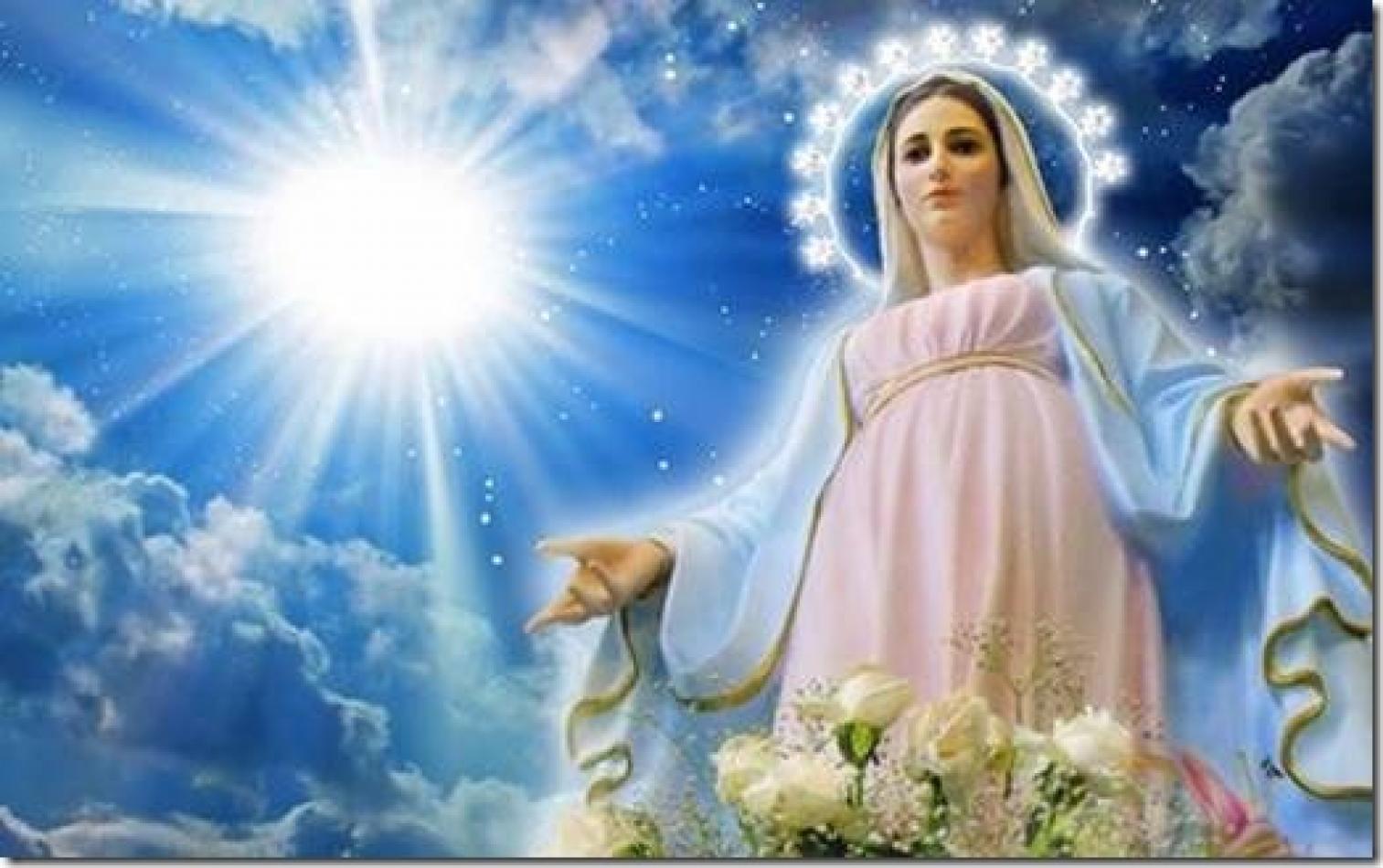
On December 8th, we celebrate the Solemnity of the Immaculate Conception of the Blessed Virgin Mary. Mary was conceived without original sin in anticipation of her role as the Mother of the Savior. This does not refer to the virginal conception of Jesus but rather to the fact that Mary herself was preserved from sin from the very first moment of her existence. This celebration harmoniously fits into the Advent season, inviting us to live this liturgical time under Mary’s gaze, the mother of Jesus and our mother. [...]
The Immaculate and Our Conception
“Behold, the handmaid of the Lord.”
Luke 1:26-38
On December 8th, we celebrate the Solemnity of the Immaculate Conception of the Blessed Virgin Mary. Mary was conceived without original sin in anticipation of her role as the Mother of the Savior. This does not refer to the virginal conception of Jesus but rather to the fact that Mary herself was preserved from sin from the very first moment of her existence. This celebration harmoniously fits into the Advent season, inviting us to live this liturgical time under Mary’s gaze, the mother of Jesus and our mother.
The dogma of the Immaculate Conception of Mary was solemnly proclaimed by Pope Pius IX on December 8, 1854, following an extensive consultation with the episcopate worldwide. In the papal declaration, we read: “The most Blessed Virgin Mary, in the first instance of her conception, by a singular grace and privilege granted by Almighty God, in view of the merits of Jesus Christ, the Savior of the human race, was preserved free from all stain of original sin” (Ineffabilis Deus).
Four years later, on March 25, 1858, at Lourdes, the Virgin Mary introduced herself to the adolescent Bernadette Soubirous (1844–1879) with these words: “I am the Immaculate Conception,” spoken in the local dialect: “Que soy era Immaculada Councepciou.”
Although the proclamation of the dogma is recent, the feast of the Immaculate Conception has deep roots in Christian tradition. It is the fruit of centuries of theological reflection, liturgical celebration, and popular devotion. We can say that the dogma was anticipated by the sensus fidei, the intuition of the Christian people. Indeed, from the Patristic period, Mary was seen as “the new Eve” (St. Irenaeus). This vision held the first premonition of the dogma of the Immaculate Conception. Eve, as the first woman, was created by God without the stain of sin; Mary, the new Eve, called to be the Mother of God, was likewise conceived immaculate.
Contemplating this unique grace and beauty of Mary, however, should not lead us to elevate her above the earth and our humanity, as if she were an unreachable star. Viewing Mary only as a woman graced with privileges and celestial gifts risks alienating her from us. To understand the role of the Virgin Mary, we must return to the simplicity of the Gospels. Once “the angel departed from her,” Mary returned to the gray daily life of joys and sorrows, of worries and struggles, of doubts and uncertainties… One of us, walking alongside us, living by faith!
St. Thérèse of Lisieux said: “For a sermon on the Holy Virgin to please me and do me good, it must show me her real life, not her supposed life; I am sure her life was absolutely simple. She is shown as inaccessible; instead, she should be shown as imitable, her virtues revealed, saying that she lived by faith like us, quoting the Gospel. […] Otherwise, if you listen to a sermon and are forced to marvel from start to finish and exclaim, ‘Ah! ah!’, you’ve had enough!” (August 21, 1897).
Points for Reflection
1. Conceived in Mystery
Every conception is shrouded in mystery. Conceived by her parents—Joachim and Anne, according to tradition—unaware of the divine plan, only God knew the moment He conceived Mary in His love. He created her as the new Eve, “in His image and likeness,” for His purpose in her. Something similar happens with each of us. The Lord knew and loved us even before our parents became aware of our existence.
The Immaculate Conception reveals something about our own conception. God has also “blessed us with every spiritual blessing”; He has also “chosen us before the creation of the world to be holy and immaculate in His sight in love, predestining us to be His adopted children” (Ephesians 1:3-6, second reading).
In every person, there remains an “immaculate,” “virgin”, “original” part—the good soil where God’s Word can take root and bear fruits of love.
2. Visited by God
Like Mary, God visits each of us. He sends His angel, His Word, to deliver a threefold message:
– “Rejoice! For the Lord is with you!”
God invites us to joy. Every true joy stems from the awareness that we are not alone, at the mercy of life’s events, but that the Lord is with us.
– “Do not be afraid! For you have found favor with God!”
The Lord tells us not to fear. Fear—every fear, but especially the fear of death!—prevents us from living peacefully and fully enjoying life. St. Paul, aware of this reality, exclaims: “I am convinced that [nothing] will be able to separate us from the love of God” (Romans 8:35-39).
– “Behold, you will conceive a son! For nothing is impossible with God!”
How often have we thought of our lives as barren, insignificant, empty, or even meaningless! The Lord says, “Let me enter your heart, and I promise to make your life fruitful, as fruitful as Abraham’s!”
3. “Where Are You?” – Here I Am!
God continually visits us, but are we ready to be found? “Where are you?” is the existential question God continues to ask each of us. It is not a question of judgment but the loving concern of a Father or the Good Shepherd.
Often, we hide from His gaze out of shame. We feel naked, unworthy to stand in His presence. Yet God’s joy in finding a lost son or daughter is so great that He forgets our wandering.
Let us take courage: let us come out of our hiding places! Let us go to Him and trustingly respond to His call, as the Virgin did: “Here I am!” He will immediately clothe us with the robe of the Son, renewing our dignity.
Fr. Manuel João Pereira Correia, MCCJ
SOLEMNITY OF THE IMMACULATE CONCEPTION
OF THE BLESSED VIRGIN MARY
Pope Francis
Today we are contemplating the beauty of Mary Immaculate. The Gospel, which recounts the episode of the Annunciation, helps us to understand what we are celebrating, above all through the Angel’s greeting. He addresses Mary with a word that is not easy to translate, which means “filled with grace”, “created by grace”, “full of grace” (Lk 1:28). Before calling her ‘Mary’, he calls her full of grace, and thus reveals the new name that God has given her and which is more becoming to her than the name given to her by her parents. We too call her in this way, with each Hail Mary.
What does full of grace mean? That Mary is filled with the presence of God. And if she is entirely inhabited by God, there is no room within her for sin. It is an extraordinary thing, because everything in the world, regrettably, is contaminated by evil. Each of us, looking within ourselves, sees dark sides. Even the greatest saints were sinners and everything in reality, even the most beautiful things, are corroded by evil: everything, except Mary. She is the one “evergreen oasis” of humanity, the only one uncontaminated, created immaculate so as to fully welcome, with her ‘yes’, God who came into the world and thus to begin a new history.
Each time we acknowledge her as full of grace, we give her the greatest compliment, the same one God had given her. A beautiful compliment to give to a woman and to tell her, politely, that she looks youthful. When we say full of grace to Mary, in a certain sense we are telling her this too, at the highest level. In fact we recognize her as forever youthful, because she never aged through sin. There is only one thing that makes us age, grow old interiorly: not age, but sin. Sin ages, because it hardens the heart. It closes it, renders it inert, withers it. But she, full of grace, is without sin. So she is always youthful; she is “younger than sin” and is “the youngest of humankind” (G. Bernanos, Diario di un curato di campagna, ii, 1988, p. 175).
The Church today compliments herself with Mary by calling her ‘all fair’, tota pulchra. Just as her youth does not lie in age, her beauty does not consist in her outward appearance. Mary, as today’s Gospel reading shows us, does not stand out in appearance: from a simple family, she lived humbly in Nazareth, a village practically unknown. And she wasn’t well-known: even when the Angel visited her, no one knew of it; there were no reporters there that day. Nor did Our Lady have a comfortable life, but worries and fears: she was “greatly troubled” (v. 29), the Gospel says, and when the Angel “departed from her” (v. 38), her troubles mounted.
However, she, full of grace, lived a beautiful life. What was her secret? We can understand it by looking again at the scene of the Annunciation. In many paintings Mary is depicted as seated before the Angel with a small book in her hand. This book is the Scripture. Thus, Mary was accustomed to listening to God and interacting with him. The Word of God was her secret: close to her heart, it then became flesh in her womb. By dwelling with God, in dialogue with him in every circumstance, Mary made her life beautiful. Not appearances, not what is fleeting, but the heart directed toward God makes life beautiful. Today let us look joyfully at her, full of grace. Let us ask her to help us to remain youthful, by saying ‘no’ to sin, and to live a beautiful life, by saying ‘yes’ to God.
Prayer to the Immaculate
Pope Francis
Virgin most holy and immaculate,
to you, the honour of our people,
and the loving protector of our city,
do we turn with loving trust.
You are all-beautiful, O Mary!
In you there is no sin.
Awaken in all of us a renewed desire for holiness:
May the splendour of truth shine forth in our words,
the song of charity resound in our works,
purity and chastity abide in our hearts and bodies,
and the full beauty of the Gospel be evident in our lives.
You are all-beautiful, O Mary!
In you the Word of God became flesh.
Help us always to heed the Lord’s voice:
May we never be indifferent to the cry of the poor,
or untouched by the sufferings of the sick and those in need;
may we be sensitive to the loneliness of the elderly and the vulnerability of children,
and always love and cherish the life of every human being.
You are all-beautiful, O Mary!
In you is the fullness of joy born of life with God.
Help us never to forget the meaning of our earthly journey:
May the kindly light of faith illumine our days,
the comforting power of hope direct our steps,
the contagious warmth of love stir our hearts;
and may our gaze be fixed on God, in whom true joy is found.
You are all-beautiful, O Mary!
Hear our prayer, graciously hear our plea:
May the beauty of God’s merciful love in Jesus abide in our hearts,
and may this divine beauty save us, our city and the entire world.
Amen.