
Daniel Comboni
Comboni Missionaries
Institutional area
Other links
Newsletter
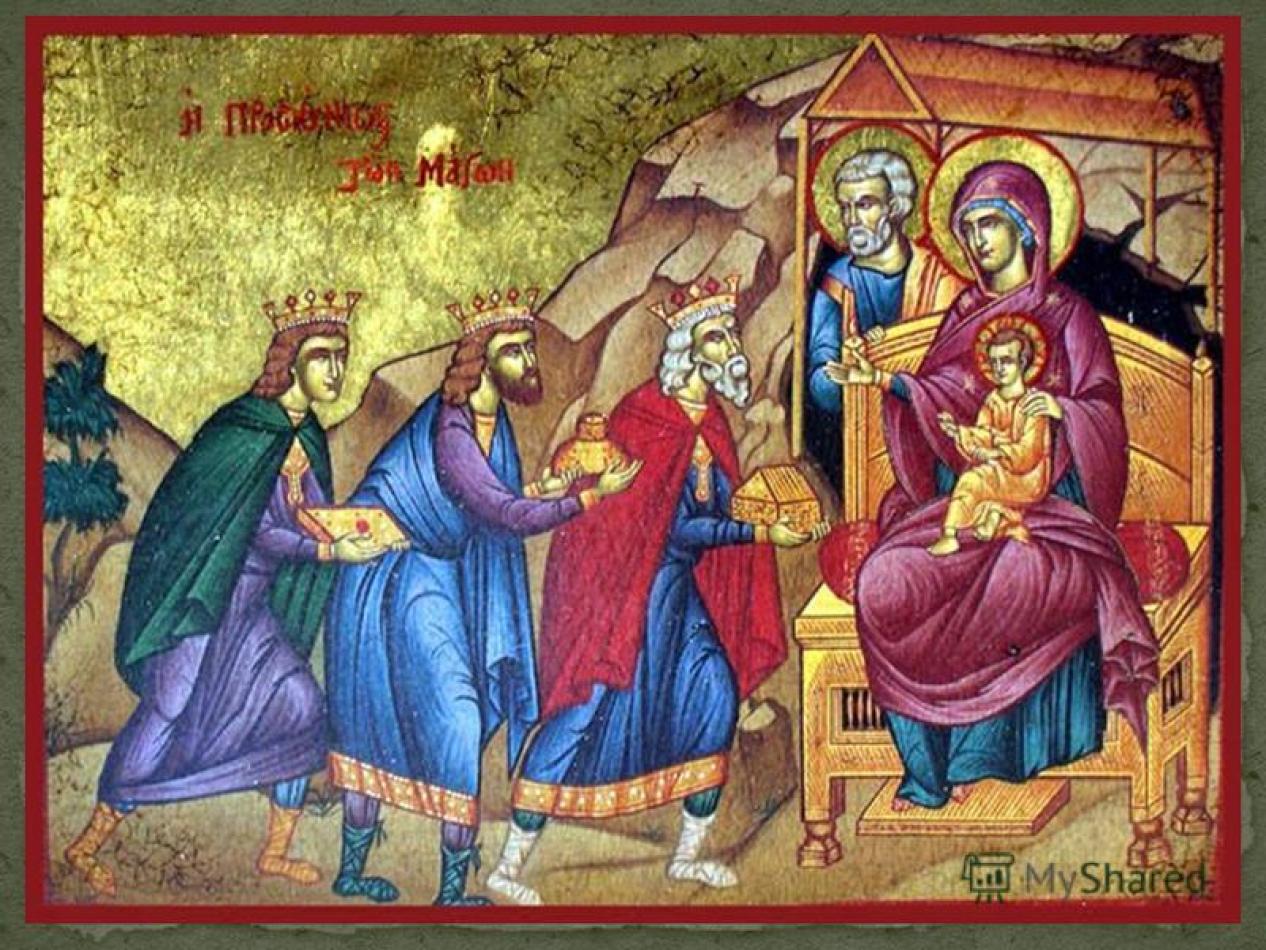
The visit of the Magi occurs directly before the story of the Holy Family’s flight into Egypt. Matthew’s Gospel tells a version of Jesus’ birth that is different than the one in Luke. Of the actual birth of Jesus, Matthew tells us little more than, “When Jesus was born in Bethlehem of Judea, in the days of King Herod . . . ” The story of the census is found only in Luke’s Gospel, but we hear about the visit of the Magi only in Matthew’s Gospel. (...)
Radiant Stars, Extinguished Stars, and Black Holes
“Where is he who has been born?”
Matthew 2:1-12
On 6 January, twelve days after Christmas, the Church has celebrated, since its earliest centuries, the solemnity of Epiphany. It is one of the four great feasts of the liturgical year, together with Easter, Christmas and Pentecost.
Some historical background
The Greek word epiphàneia means “manifestations” (in the plural) and was used to denote the 'manifestations' of divinities. In ancient Greece, it referred to festivals dedicated to a specific deity. This term was adopted by Christianity to signify the “manifestation” of Jesus to the nations, represented by the Magi.
The date of Epiphany is close to the Christmas celebrations of Eastern Churches, held on 7 January. The discrepancy of 13 days is solely due to the calendar adopted. While Western Churches follow the Gregorian calendar (named after Pope Gregory XIII, who introduced it in 1582), Eastern Churches still use the old Julian calendar (devised by Julius Caesar in 45 BC). Thus, 25 December in the Orthodox Christmas aligns with our 7 January, while Epiphany corresponds to our 19 January, thirteen days later.
Let us focus on the three elements of Matthew’s account (2:1–12): the Magi, the star and the gifts.
THE MAGI, Seekers of God
The vivid episode of the Magi, recounted succinctly by St Matthew, has been one of the most intriguing and studied narratives since the time of the Church Fathers and early apocryphal Christian writings. Around the Gospel account, a rich and creative tradition has developed:
- The Magi became three, like the three gifts: gold, frankincense, and myrrh.
- They are considered kings, perhaps because a king is the supreme representative of a people, and also due to the influence of some biblical texts, such as Isaiah 60 (see the first reading) and Psalm 72: “May the kings of Tarshish and the isles render tribute, may the kings of Sheba and Seba bring gifts” (responsorial psalm).
- They were given names: Caspar, Melchior, and Balthasar.
- They are said to have come from three different continents: Africa, Asia, and Europe.
- One has dark skin, another fair, and the third yellow.
- One is young, one middle-aged, and the third elderly.
Clearly, this tradition developed so that the three Magi would represent all humanity paying homage to Christ. They also represent us.
In the second reading, St Paul emphasises that the Epiphany is the revelation of a “mystery” hitherto hidden: “In Christ Jesus, the Gentiles are heirs together with Israel, members of the same body, and sharers in the promise through the Gospel” (Ephesians 3:6).
Until then, the history of salvation was interpreted through a nationalistic lens: God’s promises were reserved exclusively for the people of Israel. This celebration, therefore, takes on a predominantly universal and missionary significance. It is the antithesis of the Tower of Babel and the foretaste of Pentecost!
The Magi are an eloquent symbol of those who seek God and set out on a journey. Faith is “restless”: it does not leave us content with the answers found or the goals reached. A faith that does not make us pilgrims is like that of the scribes of Jerusalem, questioned by Herod. They know where the Messiah is to be born but do not move to seek him.
Every believer is like Abraham, who “set out, not knowing where he was going” (Hebrews 11:8). The journey of the Magi is an emblem of Christian life and of every human existence: to set out together in search of meaning, looking upwards, ready to face the unknown, and capable of discerning God’s presence in smallness.
THE STAR and Stars
The Magi were “astrologers” who observed the stars. Their origin in the East suggests Persia. Many astronomers have tried to identify which star or comet they might have observed. However, the explanation should not be sought so much in science as in the biblical realm. St Matthew probably referred to the oracle of the ‘prophet’ Balaam: “I see him, but not now; I behold him, but not near: a star shall come out of Jacob, and a sceptre shall rise out of Israel” (Numbers 24:17). This star is interpreted as a reference to the Messiah.
In antiquity, it was commonly believed that every person had their own star, which rose at their birth and disappeared at their death. The brighter the star, the more significant the person was considered.
Many stars shine in our “firmament”, but not all lead to Christ. Some make us lose our way in life. Which “star” is the compass of my existence?
What does the Star represent? It first evokes Jesus, “the bright morning star” (Revelation 22:16). He is the Star that guides the Christian’s life. However, we too are called to “shine like stars in the world” (Philippians 2:15). Every Christian is invited to become a star guiding others to Christ.
THE GIFTS: Gold, Frankincense, and Myrrh
What do the three gifts represent? Traditionally, it is said that gold symbolises Christ’s messianic kingship; frankincense, his divinity; and myrrh, his humanity. However, different interpretations abound. St Bernard, for example, suggested that the gold was to alleviate Mary’s poverty, the frankincense to purify the stable’s air, and the myrrh as a worm repellent!
But what might these gifts represent for us today? And, above all, what can we offer Jesus? Let us look into the treasure chest of our hearts: what treasures do we hold? What gifts might we offer as a sign of our adoration, gratitude, and love?
Conclusion
“Epiphany takes all the holidays away,” says a popular proverb. May the Star, however, remain alive in our hearts! Otherwise, how could we illuminate the world, we who are called to be “the light of the world”? Without it, we would be extinguished stars or, worse, “black holes” that absorb and cancel every ray of light they encounter.
Fr. Manuel João Pereira Correia, mccj
EPIPHANY OF THE LORD
Matthew 2:1-12
First Reading
Isaiah 60:1-6
Jerusalem shall be a light to all nations.
Responsorial Psalm
Psalm 72:1-2,7-8,10-11,12-13
Every nation on earth shall worship the Lord.
Second Reading
Ephesians 3:2-3a,5-6
Gentiles are coheirs in the promise of Christ.
Gospel Reading
Matthew 2:1-12
The Magi seek out Jesus and do him homage.
Background on the Gospel Reading
The visit of the Magi occurs directly before the story of the Holy Family’s flight into Egypt. Matthew’s Gospel tells a version of Jesus’ birth that is different than the one in Luke. Of the actual birth of Jesus, Matthew tells us little more than, “When Jesus was born in Bethlehem of Judea, in the days of King Herod . . . ” The story of the census is found only in Luke’s Gospel, but we hear about the visit of the Magi only in Matthew’s Gospel.
We know little about the Magi. They come from the East and journey to Bethlehem, following an astrological sign, so we believe them to be astrologers. We assume that there were three Magi based upon the naming of their three gifts. The Gospel does not say how many Magi paid homage to Jesus. In Matthew’s Gospel, they represent the Gentiles’ search for a savior. Because the Magi represent the entire world, they also represent our search for Jesus.
We have come to consider the gifts they bring as a foreshadowing of Jesus’ role in salvation. We believe the meaning of the gifts to be Christological. Gold is presented as representative of Jesus’ kingship. Frankincense is a symbol of his divinity because priests burned the substance in the Temple. Myrrh, which was used to prepare the dead for burial, is offered in anticipation of Jesus’ death.
The word Epiphany means “manifestation” or “showing forth.” Historically several moments in Christ’s early life and ministry have been celebrated as “epiphanies,” including his birth in Bethlehem, the visit of the Magi, his baptism by John, and his first miracle at Cana.
http://www.loyolapress.com
Useful lessons from the Magi
Pope Francis
The Evangelist Matthew tells us that the Magi, when they came to Bethlehem, “saw the child with Mary his mother, and they fell down and worshiped him” (Mt 2:11). Worshiping the Lord is not easy; it does not just happen. It requires a certain spiritual maturity and is the fruit of an at times lengthy interior journey. Worshiping God is not something we do spontaneously. True, human beings have a need to worship, but we can risk missing the goal. Indeed, if we do not worship God, we will worship idols – there is no middle way, it is either God or idols; or, to use the words of a French writer: “Whoever does not worship God, worships the devil” (Léon Bloy) – and instead of becoming believers, we will become idolaters. It is just like that, aut aut.
In our day, it is particularly necessary for us, both as individuals and as communities, to devote more time to worship. We need to learn ever better how to contemplate the Lord. We have somewhat lost the meaning of the prayer of adoration, so we must take it up again, both in our communities and in our own spiritual life. Today, then, let us learn a few useful lessons from the Magi. Like them, we want to fall down and worship the Lord. To worship him seriously, not as Herod said: “Let me know where the place is and I will go to worship him”. No, that worship is not good. Ours must be serious!
The Liturgy of the Word offers us three phrases that can help us to understand more fully what it means to be worshipers of the Lord. They are: “to lift up our eyes”, “to set out on a journey” and “to see”. These three phrases can help us to understand what it means to be a worshiper of the Lord.
The first phrase, to lift up our eyes, comes to us from the prophet Isaiah. To the community of Jerusalem, recently returned from exile and disheartened by great challenges and hardships, the prophet addresses these powerful words of encouragement: “Lift up your eyes and look around” (60:4). He urges them to lay aside their weariness and complaints, to escape the bottleneck of a narrow way of seeing things, to cast off the dictatorship of the self, the constant temptation to withdraw into ourselves and our own concerns. To worship the Lord, we first have to “lift up our eyes”. In other words, not to let ourselves be imprisoned by those imaginary spectres that stifle hope, not to make our problems and difficulties the centre of our lives. This does not mean denying reality, or deluding ourselves into thinking that all is well. On the contrary, it is a matter of viewing problems and anxieties in a new way, knowing that the Lord is aware of our troubles, attentive to our prayers and not indifferent to the tears we shed.
This way of seeing things, which despite everything continues to trust in the Lord, gives rise to filial gratitude. When this happens, our hearts become open to worship. On the other hand, when we focus exclusively on problems, and refuse to lift up our eyes to God, fear and confusion creep into our hearts, giving rise to anger, bewilderment, anxiety and depression. Then it becomes difficult to worship the Lord. Once this happens, we need to find the courage to break out of the circle of our foregone conclusions and to recognize that reality is much greater than we imagine. Lift up your eyes, look around and see. The Lord asks us first to trust in him, because he truly cares for everyone. If God so clothes the grass of the field, which grows today, and tomorrow is thrown into the fire, how much more will he provide for us? (cf. Lk 12:28). If we lift up our eyes to the Lord, and consider all things in his light, we will see that he never abandons us. The Word became flesh (cf. Jn 1:14) and remains with us always, for all time (cf. Mt 28:20). Always.
When we lift up our eyes to God, life’s problems do not go away, no; instead we feel certain that the Lord grants us the strength to deal with them. The first step towards an attitude of worship, then, is to “lift up our eyes”. Our worship is that of disciples who have found in God a new and unexpected joy. Worldly joy is based on wealth, success or similar things, always with ourselves at the centre. The joy of Christ’s disciples, on the other hand, is based on the fidelity of God, whose promises never fail, whatever the crises we may face. Filial gratitude and joy awaken within us a desire to worship the Lord, who remains ever faithful and never abandons us.
The second helpful phrase is to set out on a journey. Before they could worship the Child in Bethlehem, the Magi had to undertake a lengthy journey. Matthew tells us that in those days “wise men from the East came to Jerusalem, saying: ‘Where is he who has been born king of the Jews? For we have seen his star in the East, and have come to worship him’” (Mt 2:1-2). A journey always involves a transformation, a change. After a journey, we are no longer the same. There is always something new about those who have made a journey: they have learned new things, encountered new people and situations, and found inner strength amid the hardships and risks they met along the way. No one worships the Lord without first experiencing the interior growth that comes from embarking on a journey.
We become worshipers of the Lord through a gradual process. Experience teaches us, for example, that at fifty we worship differently than we did at thirty. Those who let themselves be shaped by grace usually improve with time: on the outside, we grow older – so Saint Paul tells us – while our inner nature is being renewed each day (cf. 2 Cor 4:16), as we grow in our understanding of how best to worship the Lord. From this point of view, our failures, crises and mistakes can become learning experiences: often they can help us to be more aware that the Lord alone is worthy of our worship, for only he can satisfy our innermost desire for life and eternity. With the passage of time, life’s trials and difficulties – experienced in faith – help to purify our hearts, making them humbler and thus more and more open to God. Even our sins, the awareness of being sinners, of experiencing such bad things. “But I did this… I did…”: if you approach it with faith and repentance, with contrition, it will help you to grow. Paul says that everything can help us to grow spiritually, to encounter Jesus, even our sins. And Saint Thomas adds: “etiam mortalia”, even the bad sins, the worst. But if you respond with repentance it will help you on this journey towards encountering the Lord and to worship him better.
Like the Magi, we too must allow ourselves to learn from the journey of life, marked by the inevitable inconveniences of travel. We cannot let our weariness, our falls and our failings discourage us. Instead, by humbly acknowledging them, we should make them opportunities to progress towards the Lord Jesus. Life is not about showing off our abilities, but a journey towards the One who loves us. We are not to show off our virtues in every step of our life; rather, with humility we should journey towards the Lord. By keeping our gaze fixed on the Lord, we will find the strength needed to persevere with renewed joy.
And so we come to the third phrase: to see. To lift up our eyes; to set out on a journey; to see. The Evangelist tells us that, “going into the house they saw the child with Mary, his mother, and they fell down and worshiped him” (Mt 2:10-11). Worshiping was an act of homage reserved for sovereigns and high dignitaries. The Magi worshiped the One they knew was the king of the Jews (cf. Mt 2:2). But what did they actually see? They saw a poor child and his mother. Yet these wise men from far-off lands were able to look beyond those lowly surroundings and recognize in that Child a royal presence. They were able to “see” beyond appearances. Falling to their knees before the Babe of Bethlehem, they expressed a worship that was above all interior: the opening of the treasures they had brought as gifts symbolized the offering of their own hearts.
To worship the Lord we need to “see” beyond the veil of things visible, which often prove deceptive. Herod and the leading citizens of Jerusalem represent a worldliness enslaved to appearances and immediate attractions. They see, yet they cannot see. It is not that they do not believe, no; it is that they do not know how to see because they are slaves to appearances and seek what is attractive. They value only the sensational, the things that capture the attention of the masses. In the Magi, however, we see a very different approach, one we can define as theological realism – a very “high” word, yet helpful – a way of perceiving the objective reality of things and leads to the realization that God shuns all ostentation. The Lord is in humility, he is like that humble child, who shuns that ostentation which is precisely the product of worldliness. A way of “seeing” that transcends the visible and makes it possible for us to worship the Lord who is often hidden in everyday situations, in the poor and those on the fringes. A way of seeing things that is not impressed by sound and fury, but seeks in every situation the things that truly matter, and that seeks the Lord. With Saint Paul, then, let us “look not to the things that are seen but to the things that are unseen; for the things that are seen are transient, but the things that are unseen are eternal” (2 Cor 4:18).
May the Lord Jesus make us true worshipers, capable of showing by our lives his loving plan for all humanity. Let us ask for the grace for each of us and for the whole Church, to learn to worship, to continue to worship, to exercise this prayer of adoration often, because only God is to be adored.
Epiphany 2021
Shining Star Light for All Peoples
Fernando Armellini
From the earliest days of the Church, the magi have aroused keen interest among the faithful. They were one of the favorite themes of the early Christian artists: sarcophagi and paintings appear more often with the same scene of the Nativity.
Christians were not satisfied with the limited information that can be found in the Gospel text. Too many details are missing: where they came from? How many were there? What were their names? What kind of transport did they use? What did they do after returning to their home countries? Where are they buried?
To answer these questions, many legends were born. It was said that they were kings. They were three: one came from Africa, one from Asia and one from Europe, and that one was black, one yellow and one white. Guided by the star , they met at the same point and then they walked together on the last stretch of the journey to Bethlehem. They were called Gaspar (the beardless youth and colorful) Melchiorre (the hoary old man with long beard), Balthasar (the mature man with beard). They were clearly the symbols of the three ages of life. For the trip they were served by camels and dromedaries. After returning home, when they had already reached the ripe old age of 120 years, one day they saw the star again. They departed and found themselves back together in a city of Anatolia, to celebrate the Christmas Mass. On the same day, they were happy and they died. Their remains went round the world: first in Constantinople, then to Milan until 1162, when they were transferred to the cathedral of Cologne, Germany.
It is about pleasant and touching stories, but must be kept accurately distinct from the Gospel story as not to compromise the message that the sacred text wants to communicate.
So let us begin to clarify some details that in our minds that are closely linked to the figure of the Magi, but which have nothing to do with what Matthew narrates.
First of all, it was not said that there were three, and that they were magi, not kings. They had to belong to the category of diviners, astrologers, well known and appreciated people in antiquity for their wisdom, ability to interpret dreams, predict the future and read the will of God through the ordinary or extraordinary events of life.
There is no wonder that Matthew has introduced the magi in his story. He has chosen them as a symbol of all the pagans that, before the Jews themselves, opened their eyes to the light of Christ.
With respect to the star, it was widely believed that the birth of a great person was accompanied by the appearance in the sky of his star: big for the wealthy, tiny for the poor, blurry for the weak. The appearance of a comet was thought to be a sign of the advent of a new emperor.
But did the wise men really saw a comet?
Many astronomers have devoted time and energy to check if two thousand years ago, there appeared in the heavens a very bright star in concurrency with the birth of Jesus. They found that in 12-11 BC and the comet ‘Halley’s passed. Then in the year 7a.C. three times the conjunction of Jupiter (the star of kingship) with Saturn (the star of the Jews – according to Tacitus) was verified.
They were admirable for their efforts. However, carried out in this way, the search of the comet of Bethlehem reminds me of the expedition to Ararat to find the ark of Noe. Reading the text of Matthew astronomers should easily realize that the evangelist does not allude to an astronomical phenomenon. The wise men saw the star that precedes them while they are going from Jerusalem to Bethlehem, then a star … from north to south. Really strange! All the celestial bodies move from east to west.
The star referred to by Matthew is not to be found in heaven, but in the Bible.
The evangelist writes for readers who are familiar with the Old Testament for centuries and are waiting to see the appearance of a star mentioned in a mysterious prophecy in the book of Numbers.
In Numbers 22-24 there was a curious story of Balaam and his talking donkey. Balaam was a soothsayer, a magi of the East, just like the ones mentioned in the Gospel today. One day he unwittingly makes a prophecy: “I see it but it is not an event that will happen shortly; I behold him but not near. A star shall come forth from Jacob, a king, born of Israel, rises…One of Jacob will dominate over his enemies” (Numbers 24, 17:19).
So Balaam, “the man penetrating eye” (Num. 24: 3) spoke, about 1200 years before the birth of Jesus. Since then, the Israelites began to anxioulsy wait for the rising of this star that was none other than the Messiah himself.
Presenting to us the wise men of the East who see the star, the evangelist wants to tell his readers: from the descendant of Jacob the expected deliverer rose. It is Jesus. He is the star.
Should we then remove the comet from our cribs? No! Let us contemplate the star and point it also to our children, but we must explain to them that the star is not a star in the sky, but it is Jesus. He is the light that enlightens every person (John 1 : 9). He is the brilliant morning star (Rev 22 , 16).
Matthew writes in the 80s AD and what does he verify? He notes that the heathens entered en masse in the church. They recognized and adored the star, while the Jews, who were waiting for so many centuries, refused him.
The story of the Magi is therefore a “parable” of what was happening in the Christian community at the end of the first century. The pagans who sought the truth with honesty and perseverance have received from God the light to find it.
Matthew highlights another particular: the magi (the symbol of the pagan peoples) would never have come to Christ if the Jews, with their Scripture, had not shown them the way. Israel may not have followed the star but accomplished her mission, She was the mediator of salvation for all peoples.
Now we try to connect today’s gospel with the first reading. The prophet said that when in Jerusalem the light of the Lord shined, all nations would be on their way to the holy city, bringing their gifts. With the story of the Magi, Matthew is telling us that this prophecy is fulfilled: guided by the light of the Messiah, the Gentiles (represented by the Magi) make their way to Jerusalem, to bring gold, frankincense and myrrh. The popular piety applied to each of these gifts a symbolic meaning: gold indicates the recognition of Jesus as king, incense represents the adoration in front of his divinity, myrrh recalls his humanity – this fragrant resin will be remembered during the passion (Mk 15, 23 , Jn 19 39).
Even the story of the mounts was not been invented for nothing. It is still the first reading today that speaks to us of “a troop of camels and dromedaries” that come from the East (Is 60: 6). Unlike the shepherds who contemplated and rejoiced in front of the salvation that the Lord had revealed to them, the magi prostrated themselves in worship (v.11). Their gesture recalls the court’s ceremony – the prostration and kissing of the feet of the king – or kissing the ground before the image of the deity. The pagans have therefore recognized as their king and their God, the child of Bethlehem and offered him their gifts.
They have become the symbol of people around the world who are led by the light of Christ. They are the image of the church, made up of people of every race, tribe, language and nation. Entering the church does not mean giving up one’s identity. It does not mean submitting to an unjust and false uniformity. Every person and every people maintain their cultural characteristics. With these, they enrich the universal church.
Fernando Armellini
https://sundaycommentaries.wordpress.com
LEARN TO ADORE GOD
José A. Pagola
Today there’s much talk about the crisis of faith, but they hardly say anything about the crisis of religious sentiment. And yet, as one theologian points out, the drama of modern man isn’t as much our incapacity to believe, as our difficulty to feel God as God. Even those who declare themselves believers seem to be losing the capability of living out certain religious attitudes in the face of God.
A clear example is the difficulty of adoring God. In times not so far back it seemed easy to feel reverence and adoration before the immensity and the unfathomable mystery of God. Today it’s more difficult to adore the one whom we’ve reduced to a strange, uncomfortable and superfluous being.
In order to adore God it’s necessary to feel ourselves as creatures, infinitely small before God, but infinitely loved by God; we need to admire God’s unfathomable greatness and enjoy the near and loving presence of God that envelopes our whole being. Adoration is admiration. It’s love and self-giving. It’s handing our being over to God and remaining in grateful and joyful silence before God, admiring God’s mystery from our smallness.
Our difficulty in adoring comes from many roots. Whoever lives disturbed inside by all kinds of noise and rushing around through a thousand distractions, without ever stopping before what’s essential, that one will find «the adorable face» of God with difficulty.
On the other hand, to adore God it’s necessary to stand still in the presence of the mystery of the world and know how to look lovingly upon it. Whoever looks at life lovingly in its depths will begin to uncover the footprints of God before he suspects it.
Only God is adorable. Not the most valuable things nor the most loved persons are worthy of being adored as God is. That’s why only someone who is free within can adore God truly.
This adoration of God isn’t far from commitment. Whoever adores God fights against all that destroys the human being, who is God’s «sacred image». Whoever adores the Creator respects and defends God’s creation. Adoration and solidarity, adoration and ecology are intimately united. That’s how to understand the words of the great scientist and mystic Teilhard de Chardin: «The more human we become, the more we experience the need to adore».
The story of the Magi offers us a model of authentic adoration. These wise men know how to look at the cosmos in its depth, capture signs, come close to the Mystery, and offer their humble homage to the God incarnate in our existence.
José Antonio Pagola
Translator: Fr. Jay VonHandorf
https://www.feadulta.com
Missionary Epiphanies:
Christ as the light of all peoples
Romeo Ballan, mccj
A Christian starts the New Year with two strong commitments: peace and mission. Both these commitments have as their kernel Jesus Christ. 1st January is Christ our peace; Epiphany is Christ as the light of all peoples. Epiphany is a multiple feast: every manifestation of our Lord is an epiphany. On January the 6th, in fact, the liturgy proclaims that this holy day shines for three miracles: The magi who arrive at Jerusalem from the Orient, guided by a star; Christ baptised in the river Jordan; the water changed into wine at Cana. To these classic epiphanies, the evangelists add a few more: the very birth of Christ; John the Baptist who points out the Lamb of God in their midst (Jn 1:36); Jesus who reveals himself to Nicodemus (Jn 3) and to the Samaritan woman (Jn 4), etc. Each event takes place in different places, times, manner and with different people, but the content is the same: it’s Christ who manifests himself, it’s Christ whom we are invited to discover and announce to others, just as the Magi, the Baptist, the Samaritan woman… did.
These Epiphanies normally take place in a light setting. Christmas is surrounded by the light that enlightens the shepherds; the Magi follow a light in the sky that leads them to Jesus… Often the light is evident by its presence or, by contrast, for its absence… Though the light has come into the world men have shown they prefer darkness to the light because their deeds are evil (Jn 3:19). God himself is light with no darkness in him, He is love (1Jn 5). He’s light that enlightens people’s journey, love that warms and gives life. For this reason Epiphany is the missionary feast of all peoples who are called to walk in the light and love which come from God. It is meaningful that, around this time, the missionary calendar below is so rich of anniversaries of great evangelisers (who come from different places of origin, religious families, places of apostolate…) and of events linked with mission (days for peace, migrants, Christian unity…). A mosaic of universality!
– Epiphany is the missionary feast of children, of migrants and of vocational appointment for young people willing to offer their life in the service of the Gospel in nearby and faraway places.
– The feast of the Baptism of the Lord (Lk 3:21-22) shows Christ who stands in line like everyone else, among sinners…; as he comes out of the water, he carries on his shoulders the world which he lifts up and saves.
– The good wine of Cana (Jn 2:10) manifests the quality of the new and abundant life brought by Christ for the happiness of the human family (Jn 10:10).
– Epiphany does not happen just for people faraway or through extravagant signs. Epiphany is revealed also in the ability to see the signs of God’s manifestation in the daily small events: an act of goodness, the smile of a child, an elderly person’s tear, a mother’s anguish, a worker’s sweat, a migrant’s fear, a friend’s amiable joke, the gift of a toy…
– Our challenge is to be transparent Epiphanies of God: to be missionaries, to witness by life and word, to be merciful and make ourselves available to receive and serve others. All of us. Just as Jesus did.