
Daniel Comboni
Comboni Missionaries
Institutional area
Other links
Newsletter
Leonel Claro, the priest who carries out his mission through pop-rock music
Friday, January 23, 2026
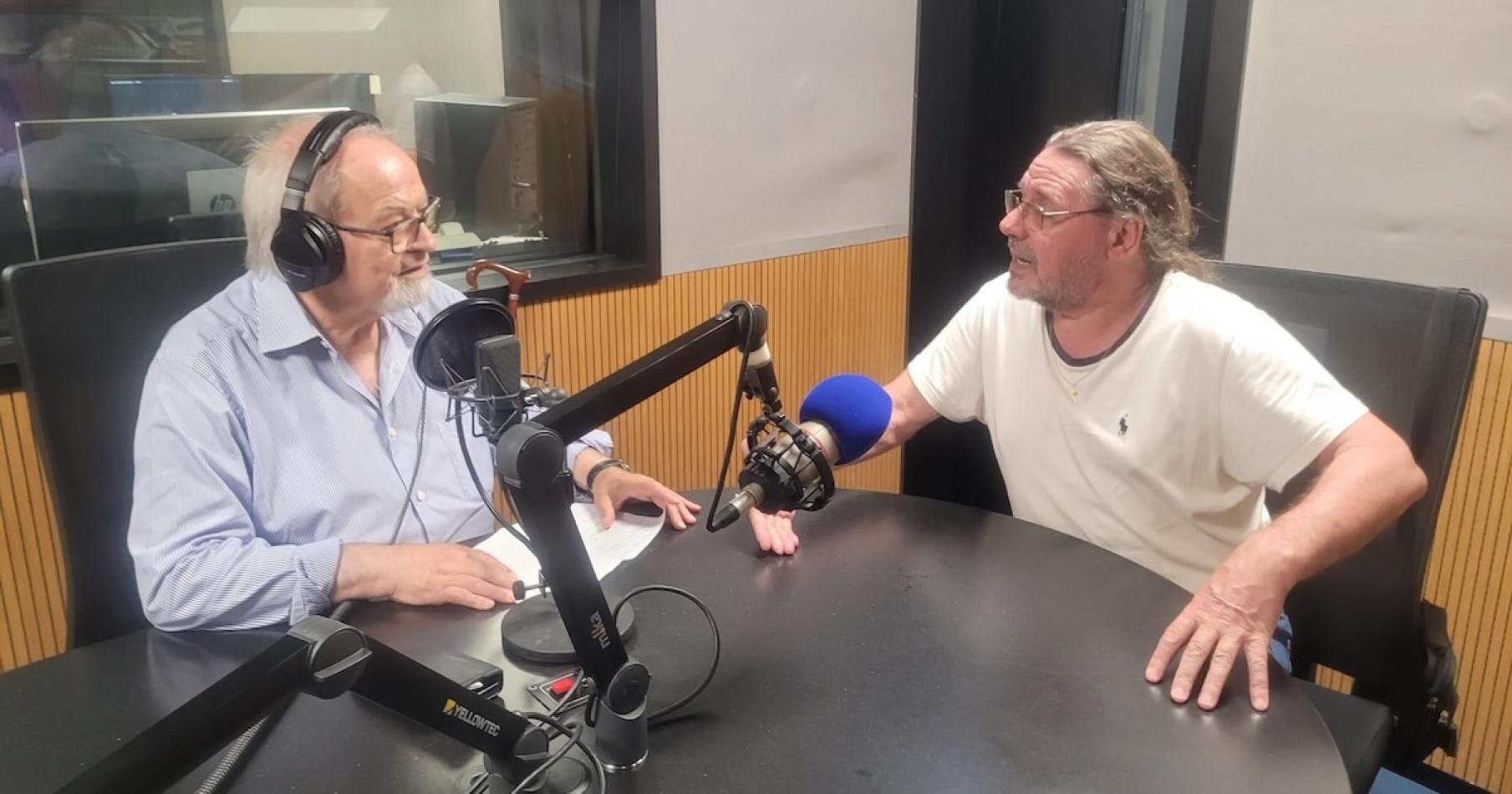
“It is a challenge for Christianity to find its place among traditional religions,” such as African ones, “which are more closely oriented towards nature and spiritism,” says Father Leonel Claro, 63, a Comboni missionary who worked for many years in Chad. “The religion of fear, of witchcraft, deeply connected with nature – the spirit of trees, water, earth, darkness, night, day, light… – calls for an attitude of openness,” explains the missionary, who in Coimbra and Maia founded and led Missio, a Christian-inspired pop-rock band. What follows is the interview he gave for the latest episode of ‘Rostos e Rumos’, a collaboration between 7MARGENS and TSF. [In the picture: Father Leonel Claro, being interviewed. TSF]
The summer sun scorched the fertile lands of Penude, in the municipality of Lamego (Portugal), when Leonel Rodrigues Claro was born into a farming family on 21st August 1962, in a village still without roads, where in winter children reached school by walking along muddy tracks.
Primary school opened its doors to this lively child when he was seven. One day an Italian missionary visited the school and spent an entire day with the pupils, telling stories of fierce animals, canoes gliding along great rivers, and distant lands. At the end, he asked who would like to become a missionary. Leonel remained silent. It was the teacher who mentioned his name, which the missionary carefully noted in his notebook. At the end of primary school, the priest returned and invited Leonel to attend a summer camp he was organising.
Two months later, Leonel entered the Comboni seminary in Viseu, where he completed lower secondary school and grammar school. From 1978 to 1980 he attended upper secondary studies at the seminary in Vila Nova de Famalicão. He recalls: “My parents always cared deeply about ensuring that all their children could study, making every effort so that they would receive a proper education.”
In 1980 he began the postulancy in the institute founded by Daniele Comboni, a nineteenth-century missionary who worked in the regions that today correspond to Egypt and Sudan. Leonel then studied philosophy and theology at the Higher Institute of Theological Studies in Coimbra. In 1982 he entered the novitiate in Santarém, which he completed on 9th June 1984 with his first religious profession in a solemn ceremony in the city’s cathedral. He was then assigned to the scholasticate in Paris, enrolling in a specialist course in theology at the Catholic Institute of Paris (1984–1988). On 23rd April 1988, he made his perpetual religious profession. Shortly afterwards he was ordained deacon in the church of St Francis of Assisi, in the municipality of Vanves, south of Paris. In June of the same year, he obtained a short degree in Canon Law.
His priestly ordination took place on 20th August 1989 in his home village of Penude, at the Sanctuary of Our Lady of Remedies.
“After my ordination,” he says, “I never again had any doubts about my vocation – doubts that had existed during my years of formation. From that day on I never questioned whether I should leave or not, nor have I ever regretted being a missionary.”
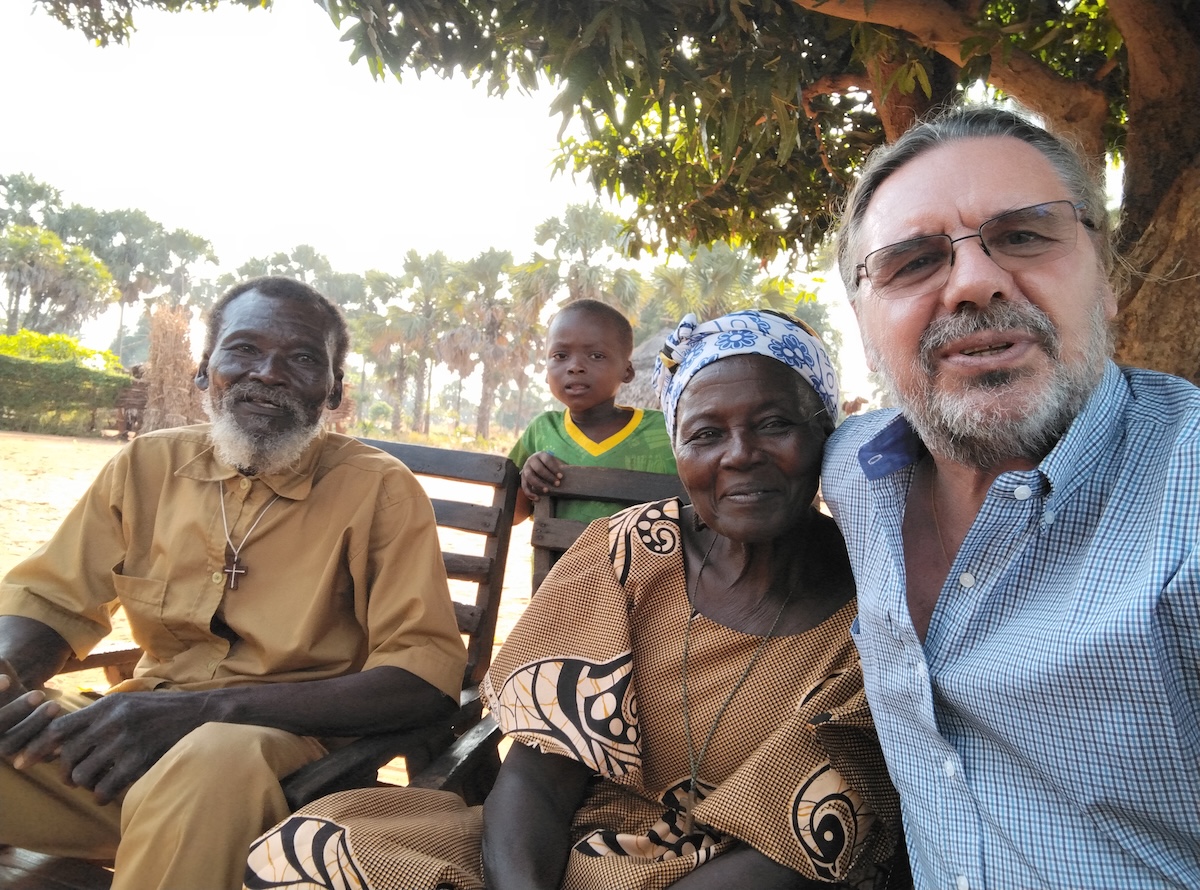
A parish larger than the Diocese of Porto
For the following six years, from 1988 to 1994, Father Leonel devoted himself to youth and vocational ministry, with the seminary in Famalicão as his main point of reference. From the outset his remarkable ability to communicate through modern music became evident. It was in this context that he founded the band Missio, with which he produced highly acclaimed religious programmes for Radio Cidade-Hoje in Famalicão.
On 4th October 1994 he was assigned to the mission of Moïssala, in Chad, in Central Africa. The country, a former French colony, had emerged from years of civil war marked by poverty and famine; corruption was endemic, aggravated by the exploitation of oil resources.
For seven years the Portuguese missionary served as parish priest of an area with 120,000 inhabitants, only 4 per cent of whom were baptised. The parish, located in the south of the country, covered an area of 7,000 square kilometres – a territory larger than the Diocese of Porto.
He lived in community with two other confrères, an Italian (later replaced by a Mexican) and a Togolese. “The fact that the three of us lived together, coming from different continents, countries and cultures, and with different skin colours, was a powerful witness for those people, who were accustomed to ethnic divisions and mutual mistrust,” he recalls. “Ours was true teamwork, true solidarity: we lived in the same house, planned together and worked together. It was a beautiful testimony.”
He smiles and adds: “Even if the local people found it strange that three men without wives should live together.” He then quickly acknowledges: “Our way of life was also a genuine provocation. I never tired of telling the people: ‘I did not come here to help… but to share my faith with you.’ They, of course, would have preferred the missionaries to give them something – and this did happen through the diocesan Caritas. And so, by speaking honestly with them and supporting them in their development projects, we managed to convince many that, after all, the missionaries really were helping them.”
After a sabbatical year spent in Jerusalem and Paris, in 2005 Father Leonel returned to Portugal to resume his work in youth ministry. In 2016 he was once again assigned to Chad, to the dioceses of Lai and Sarh in the south of the country, where he became responsible for primary schools, boarding schools and cultural centres.
In 2025 he was granted a new sabbatical year, with refresher courses at the generalate house in Rome, where he is currently based.