Daniel Comboni
Comboni Missionaries
Institutional area
Other links
Newsletter
Africa Meeting 2026: “To Migrate or to Stay. Brain Drain in Africa”
Wednesday, January 28, 2026
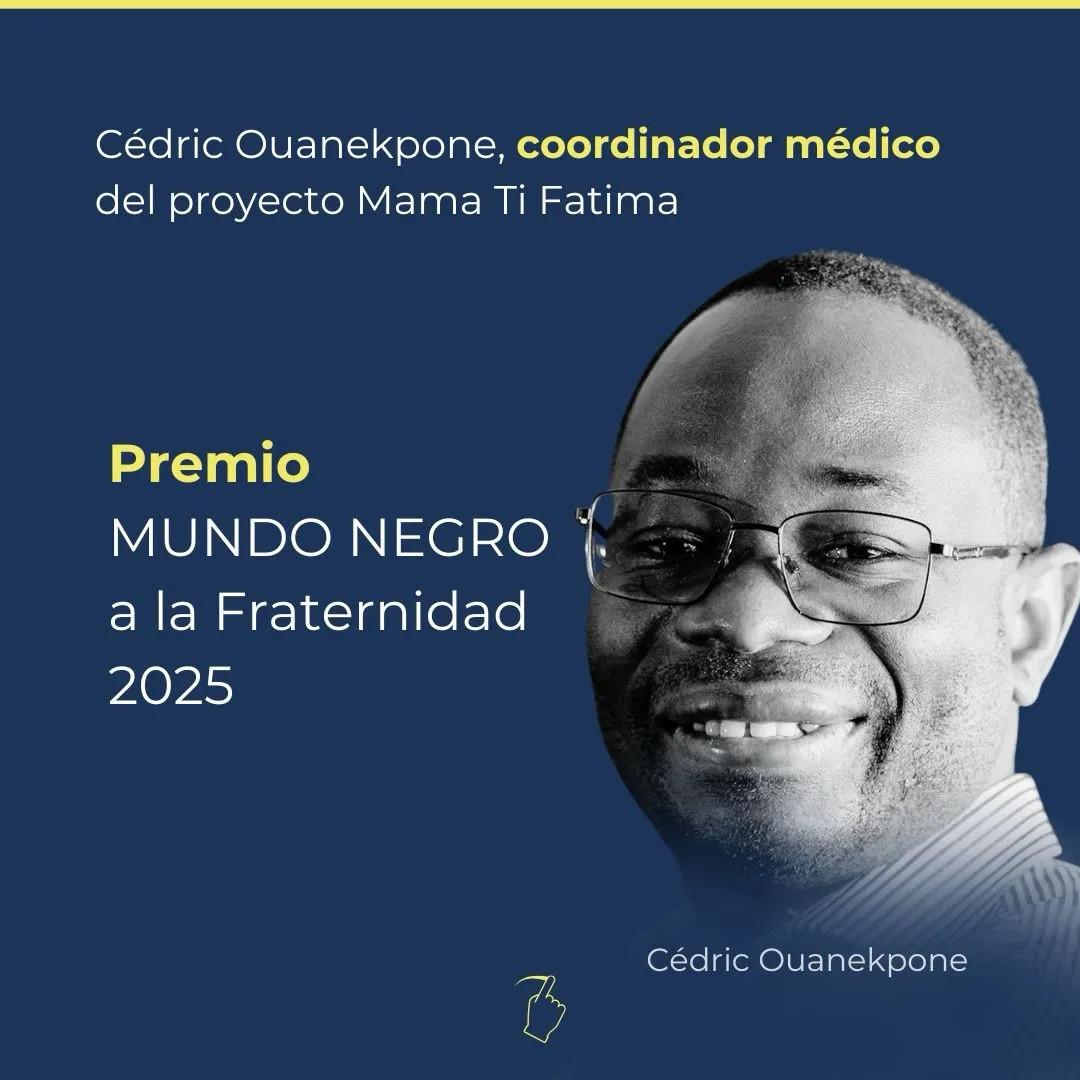
On 31st January, at 5.30 p.m., the 38th Africa Meeting entitled To Migrate or to Stay – Brain Drain in Africa will take place in Madrid. During the event, the Mundo Negro Prize for Fraternity 2025 will be awarded. This year’s prize has been conferred on Dr Cédric Ouanékponé of the Central African Republic. [Mundo Negro]
Mundo Negro Prize for Fraternity 2025
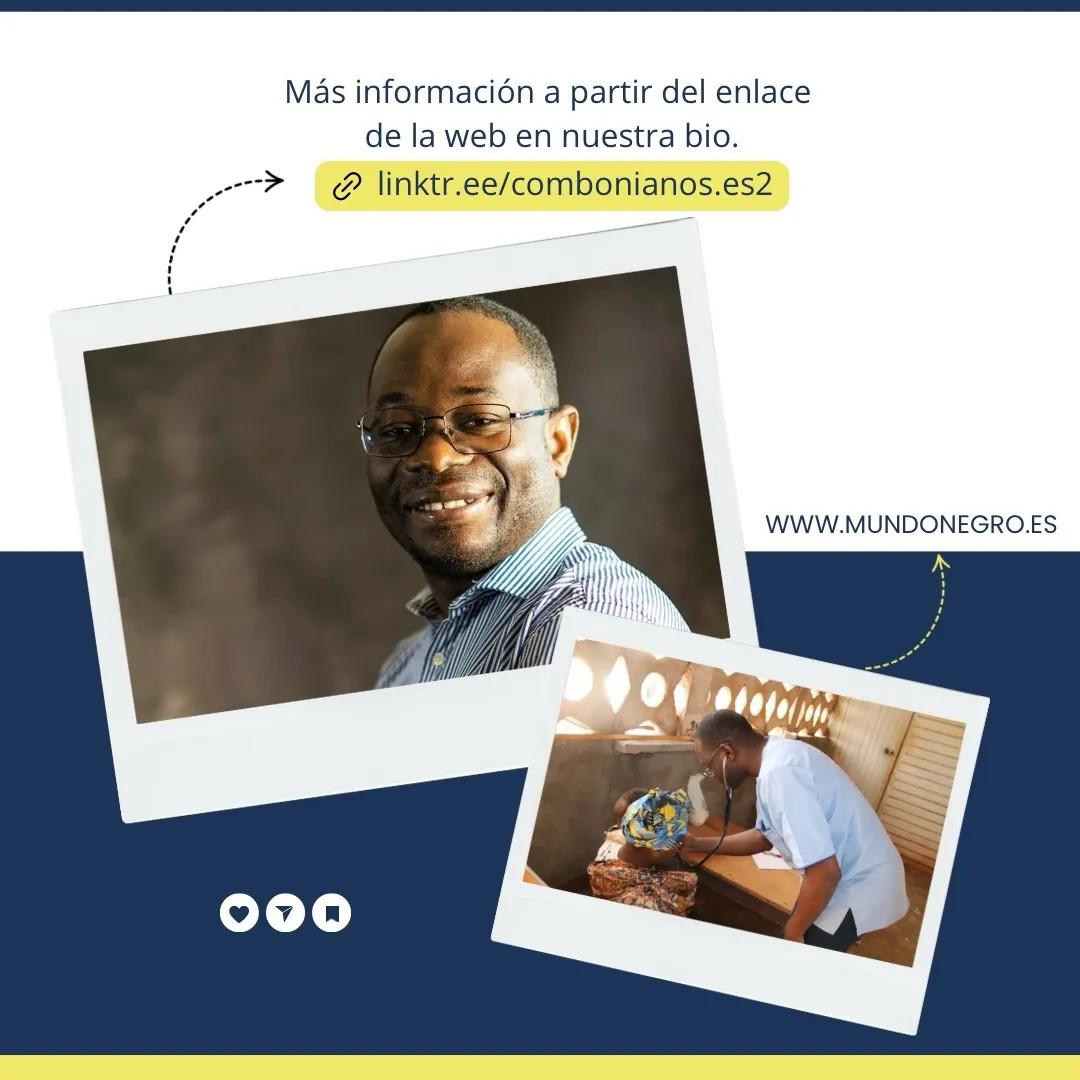
Cédric Ouanékponé, medical coordinator of the “Mama Ti Fatima” project
The 38th Africa Meeting will address the impact that the phenomenon of brain drain has on the African continent. In this context, on 31st January the young Central African doctor Cédric Ouanékponé will receive the Mundo Negro Prize for Fraternity 2025 for his commitment to improving access to dignified healthcare conditions in the Central African Republic.
At the end of his medical specialisation in Strasbourg (France), Dr Cédric Patrick Le Grand Ouanékponé was very clear that he would return to his country, the Central African Republic. He turned down an attractive contract offer, and every attempt to increase his salary proved futile.
He was the first nephrologist in the country and knew that the National Haemodialysis Centre in Bangui—built in 2020 by the African Development Bank and handed over to the government for management—had remained inactive for two years due to the lack of a specialist. Ouanékponé took on the medical directorship of the centre, and lives immediately began to be saved.
Born in Bangui on 8 March 1986, Cédric was baptised at the age of two in the parish of Our Lady of Fatima, run by the Comboni missionaries—a very important setting in the doctor’s life story.
The first uprisings that broke out in the country in 1996 led to the closure of schools, and Cédric, together with other children, benefited from a school support programme organised by the parish. On the recommendation of the then parish priest, the Italian Father Giovanni Cosentino, he entered the Carmelite minor seminary in 2000, with the desire to become a religious, but three years later he abandoned the idea, drawn instead to scientific research.
War
In 2012, when the Seleka rebellion broke out (a rebel organisation formed by factions of dissidents from the Union of Democratic Forces for Integration, the Convention of Patriots for Justice and Peace, the Democratic Front of the Central African People, and other groups), the young man had completed his medical studies at the Faculty of Health Sciences in Bangui. However, because of the war, he had to wait to obtain his qualification.
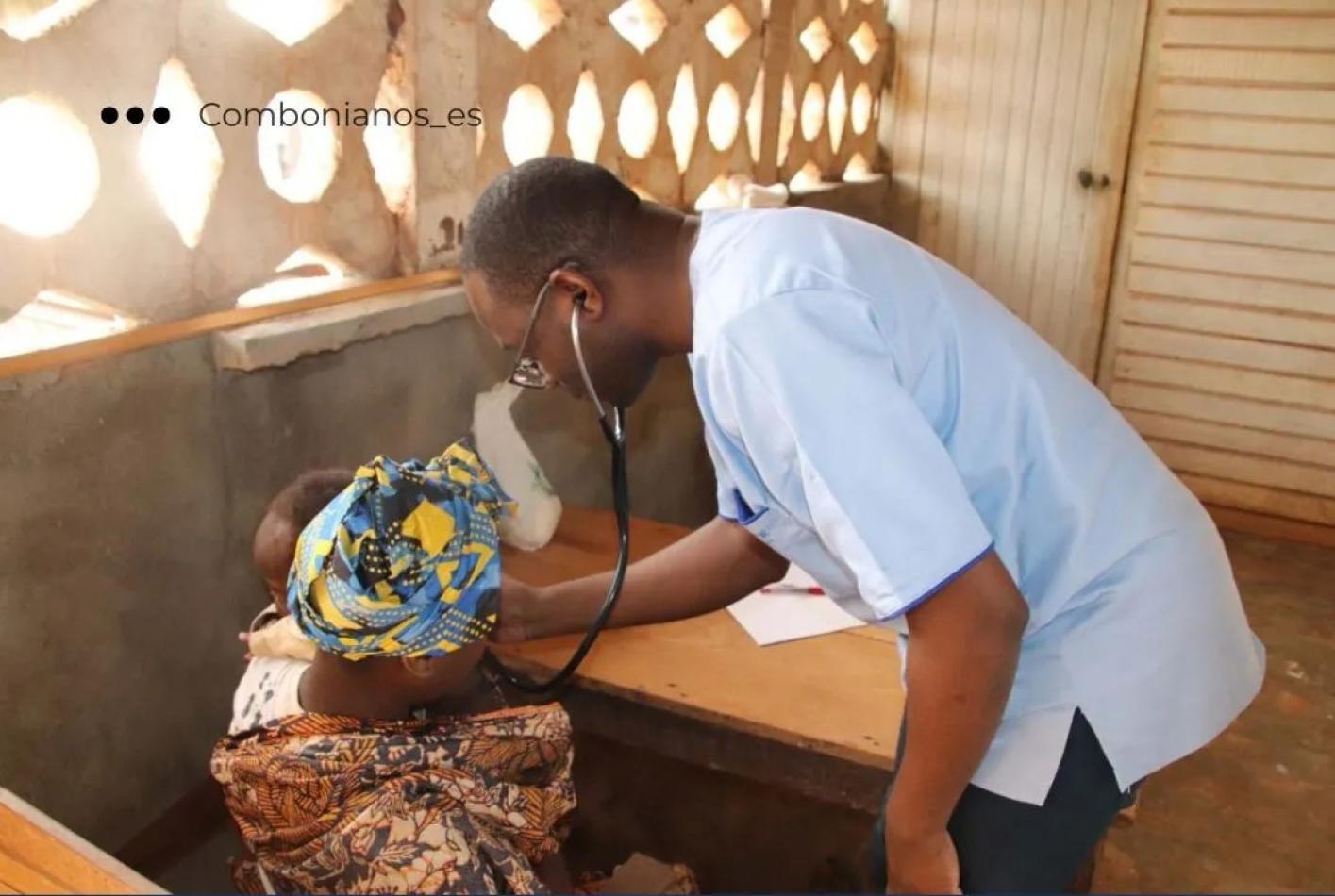
The cycle of violence continued for several years, turning the parish of Our Lady of Fatima into a vast refugee camp hosting more than 5,000 people. The person in charge of the refugees, the Ugandan Father Moses Alir Otii, who had only recently been ordained, relied on Cédric and other young health workers from the parish to deal with the health emergency until NGOs arrived (cf. Mundo Negro, no. 711, pp. 44–47). With almost no resources, Cédric cared for the elderly and children and helped dozens of women give birth.
In 2014, in the midst of the crisis, the French NGO Cercle de Haute Réflexion sur la Jeunesse arrived in the country with a shipment of medicines, and Cédric treated countless people, including those from the Muslim neighbourhoods of PK5. He had to do so almost secretly, to avoid being accused of “helping the enemy” in a conflict that was wrongly labelled “interreligious”. When the NGO wanted to pay him according to European standards, Dr Ouanékponé refused, stating that it was his humble contribution to his brothers and sisters.
Five years later, the NGO submitted the young doctor’s nomination for the World Prize for Humanism, and in the city of Ohrid, North Macedonia, he received the award from the hands of former Italian Prime Minister Romano Prodi, who was also honoured on that occasion.
“Mama Ti Fatima”
Cédric Ouanékponé chose to specialise in nephrology—one of the most demanding fields—in order to save lives in his country, where many people suffering from kidney failure were dying due to the lack of specialist care. After training in his homeland, he continued his studies in Senegal (three years) and in France (one year), also thanks to the support of the parish of Our Lady of Fatima.
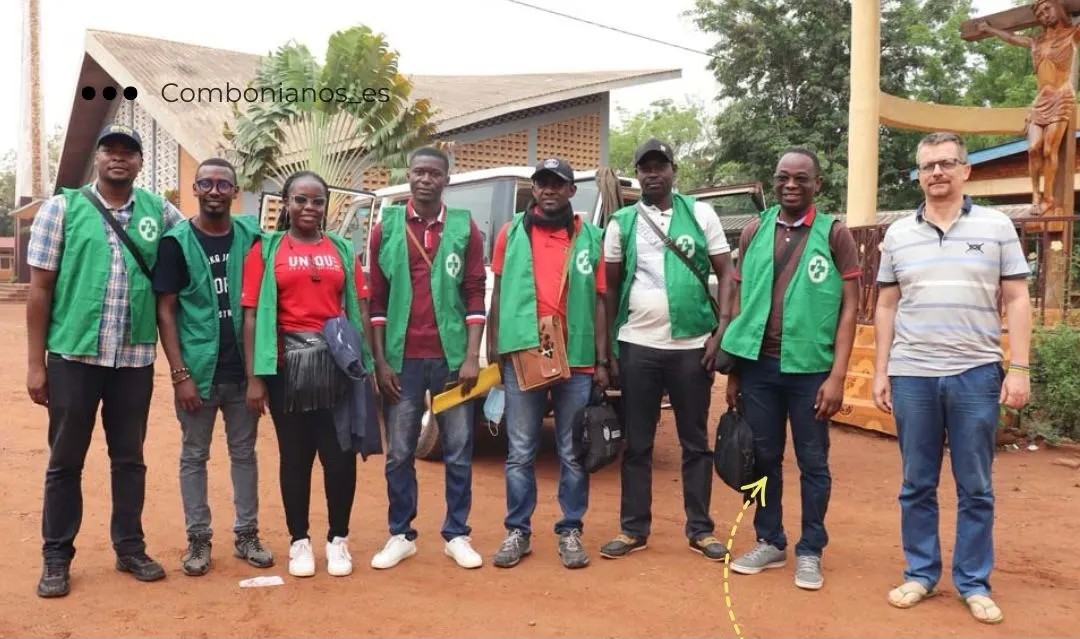
At present, his work at the National Haemodialysis Centre in Bangui provides him with a regular salary, but, sustained by his Christian faith, he has never given up his social commitment. The lack of quality healthcare services led him to promote the “Mama Ti Fatima” medical complex project, supported by the Association of Our Lady of Fatima for Development (ANDFD, French acronym), founded on 11th July 2020.
The doctor’s affable and communicative nature, and above all his great capacity for leadership and teamwork, has inspired other young doctors and health workers who share his vision, enabling the medical complex to grow near the parish church. In 2020, the pharmacy was opened; in 2023, the Medical Analysis Centre followed. In December, support from the Austrian organisation Missio-Vienna made it possible to complete the emergency outpatient building, and work on the maternity ward will soon begin, thanks to funding from the US-based organisation The Papal Foundation. Furthermore, cooperation between ANDFD and the Diocese of Mbaiki has made it possible to organise nine mobile clinics to bring medical care to the most disadvantaged people.
The Central African doctor combines his many activities with teaching at the Faculty of Health Sciences in Bangui, the only medical university centre in the entire country. He also supervises the theses of young doctors, convinced of the fundamental role of education.
“The more health professionals we have, the better our future will be, because the situation in the Central African Republic is terrible. We have one of the lowest doctor-to-population ratios in the world (0.21 per 10,000 inhabitants) and no specialist doctors in the interior of the country. The few of us there are work in Bangui,” he says sadly, but without paralysing pessimism.
To doctors who, by free choice, work abroad, he sends a message: “It is never too late to return, because your presence here is indispensable and you can help far more people than by staying away.”