
Daniel Comboni
Comboni Missionaries
Institutional area
Other links
Newsletter
4th Sunday in Ordinary Time (A): The Eight Gates of the Kingdom
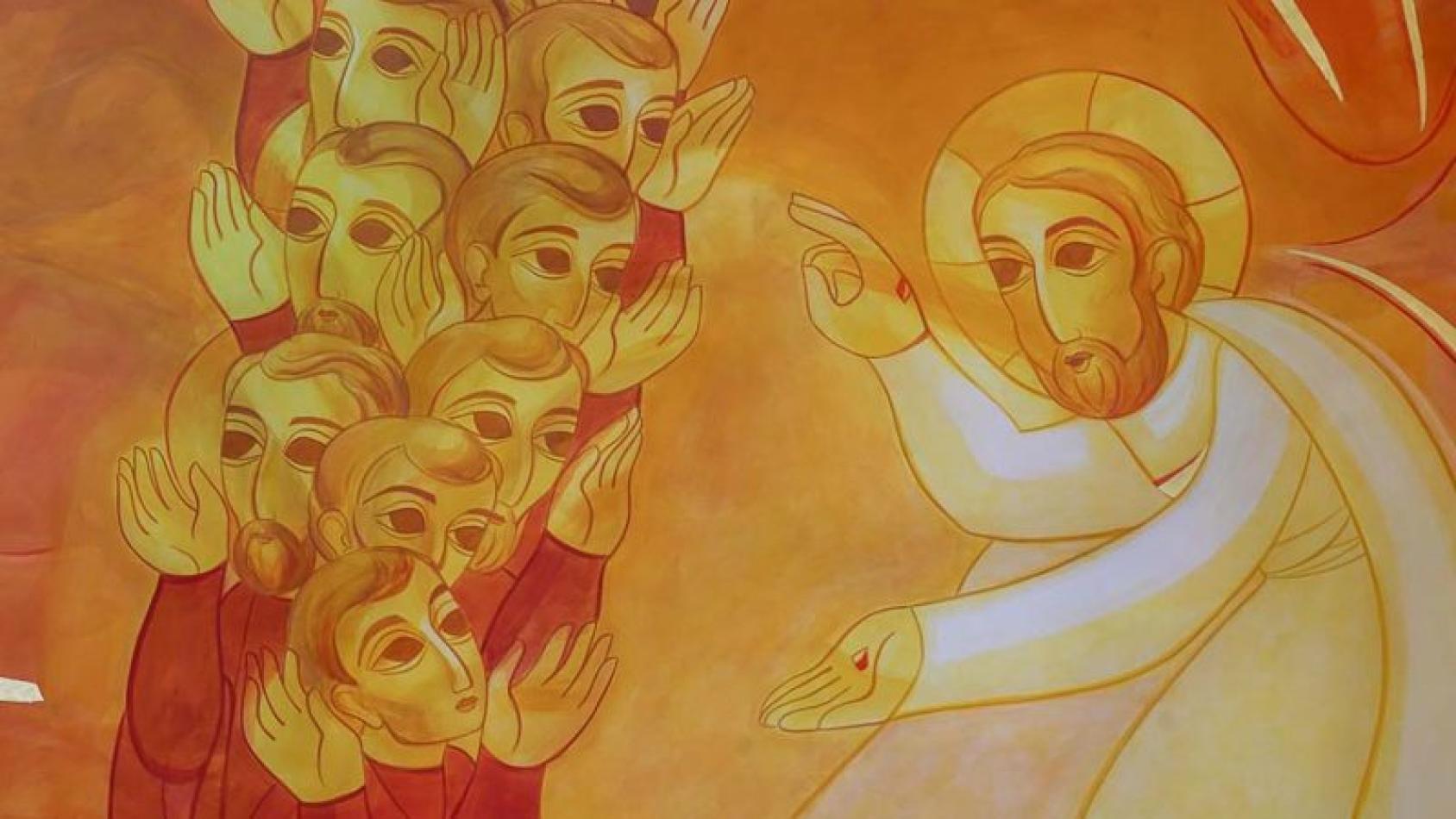


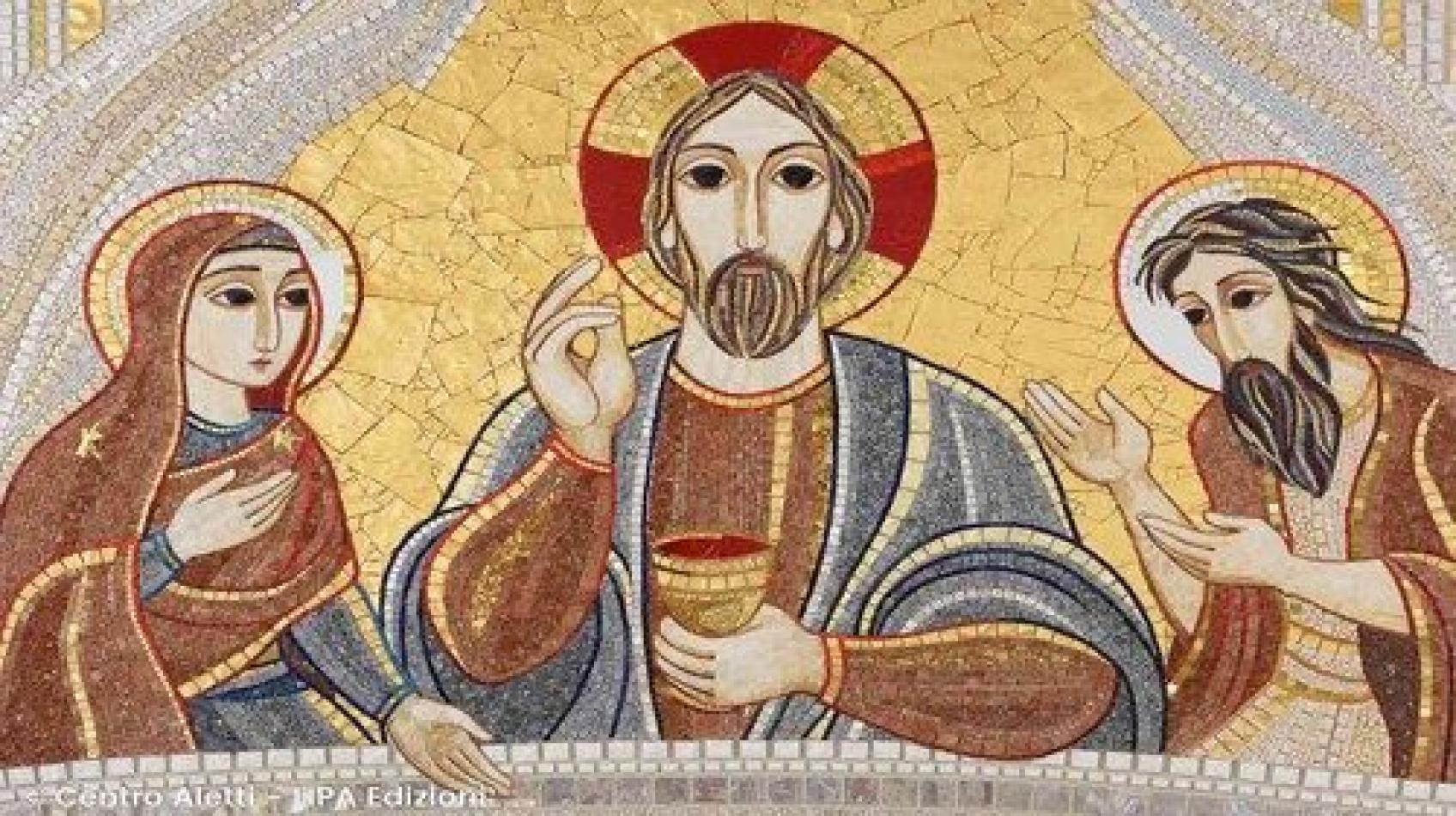
A human being has always cultivated a desire to meet God, to question him, to know his thoughts, to find out his plans. How to find him? Where can we meet him?
The Eight Gates of the Kingdom
Blessed are the poor in spirit, for theirs is the Kingdom of Heaven.
Matthew 5:1–12
We have reached the first stage of our journey following Jesus. We shall make a long pause with the Lord on a mountain called the Mount of the Beatitudes. Here Jesus will address us in a long discourse that occupies three chapters of the Gospel according to Matthew (Mt 5–7). It is the first of the five great discourses of Jesus in Saint Matthew and certainly the most decisive. It is his programmatic discourse, in which Jesus presents the essence of the lifestyle of his disciple.
The Seven Mountains in the Gospel of Matthew
One might say that the evangelist Matthew has a fondness for mountains. The word “mountain” appears fourteen times in his Gospel. Seven mountains in particular mark the public life of Jesus: from the temptations after his Baptism to the apostolic mandate after his Resurrection. These are not “physical” mountains, but places with a “theological” significance. The mountain carries a strong symbolic value of closeness to God. It is therefore pointless to search for the Mount of the Beatitudes on a geographical map. In fact, Saint Luke places this discourse on a plain. These seven mountains, symbols of fullness, punctuate the Gospel of Matthew.
-
The Mountain of the Temptations (Mt 4:1–11): the starting point of the mission;
-
The Mountain of the Beatitudes (Mt 5:1–7:29): here Jesus proclaims the “new Torah”;
-
The Mountain of Prayer (Mt 14:23): a place of intimacy with the Father and discernment of the mission;
-
The Mountain of the Transfiguration (Mt 17:1–8): where Jesus is revealed as the Son and the definitive Word;
-
The Mount of Olives (Mt 24–25; 26:30): the mountain of waiting and judgement, where Jesus delivers the eschatological discourse and faces the agony before the Passion;
-
The Mountain of Calvary (Mt 27:33): apparently defeat, in reality the enthronement of the Messianic King;
-
The Mountain of the Mission (Mt 28:16–20), a mountain in Galilee (unnamed): here the risen Jesus entrusts the disciples with the universal mission.
The seven mountains form a theological itinerary of the Christian vocation:
Temptation → Law → Prayer → Revelation → Waiting → Cross → Mission.
The Mountain of the Beatitudes
“Seeing the crowds, Jesus went up the mountain; and when he sat down, his disciples came to him.” The “ascent of the mountain” and the act of “sitting down” are solemn gestures of the Teacher who sits in the chair of authority. This is a reference to Moses on Mount Sinai. Thus, this “mountain” is the new Sinai, from which the new Moses promulgates the new Law. The Law of Moses, with its prohibitions, established the limits not to be crossed in order to remain within God’s Covenant. The new Law, by contrast, opens up the horizons of a new project of life.
“He began to speak and taught them, saying: ‘Blessed are the poor in spirit, for theirs is the Kingdom of Heaven.’” Jesus’ discourse opens with the eight Beatitudes (the ninth, addressed to the disciples, is a development of the eighth). They are the prologue of Jesus’ discourse and the summary of the Gospel. It is a very well-known text, but precisely for this reason we risk skimming over it too quickly and almost ignoring, beneath its apparent simplicity, its richness, depth, and complexity. It is no coincidence that Gandhi also affirmed that these are “the highest words of human thought”.
I would simply like to invite you to read, reread, meditate upon, and pray with this text. Nevertheless, I venture to share with you some reflections that may help us to approach it more closely.
The Beatitudes are NOT…
-
The Beatitudes are not the dream of an idealised, unattainable world, an utopia for dreamers. For the Christian, they are a criterion for life: either we accept them or we shall not enter the Kingdom! They are not, however, a new moral law.
-
The Beatitudes are not a praise of poverty, suffering, resignation, or passivity. Quite the opposite: they are a revolutionary discourse! For this very reason, they provoke the violent opposition of those who feel threatened in their power, wealth, and social status.
-
The Beatitudes are not an opiate for the poor, the suffering, the oppressed, or the weak, because they would dull their awareness of the injustice of which they are victims, leading them to resignation—even though they have often been used in this way in the past. On the contrary, they are an adrenaline that urges the Christian to commit himself to the struggle for the elimination of the causes and roots of injustice!
-
The Beatitudes are not a postponement of happiness to the future life, in the hereafter. They are a source of happiness already in this life. Indeed, the first and the eighth beatitudes, which frame the other six, have the verb in the present tense: “for theirs is the Kingdom of Heaven”. The other six have the verb in the future tense. Nevertheless, this is a promise that makes happiness already present today. It is the guarantee that evil and injustice will not have the final word. The world is not, and will not be, in the hands of the rich and the powerful!
-
The Beatitudes are not (only) personal. It is the Christian community, the Church, that must be poor, merciful, weep with those who weep, and hunger and thirst for righteousness… in order to bear witness to the Gospel!
The Beatitudes ARE…
-
The Beatitudes are a cry of happiness, a Gospel addressed to all. “Blessed” (makarios in Greek) can be translated as happy, congratulations, well done, I congratulate you… But we must realise that this message stands in complete contradiction to the prevailing mindset of the world.
-
The Beatitudes are… one single reality! The eight are variations on a single theme. Each one sheds light on the others. Generally, commentators consider the first to be fundamental: “Blessed are the poor in spirit, for theirs is the Kingdom of Heaven”. All the others are, in some way, different forms of poverty. Whenever the Bible seeks to renew the Covenant, it begins by restoring the rights of the poor and the excluded. We might ask, however: why is there no beatitude about love? In reality, they are all concrete expressions of love!
-
The Beatitudes are a person: they are the mirror, the self-portrait of Christ. To understand them and grasp their nuances, one must look at Jesus and see how each of them is fulfilled in his person.
-
The Beatitudes are the key to entry into the Kingdom of God for everyone: Christians and non-Christians, believers and non-believers. In this sense, the Beatitudes are not “Christian”. They define who will enter the Kingdom. This is what Matthew 25 tells us about the final judgement.
-
The Beatitudes are eight gates of entry into the Kingdom. To gain access, we must pass through one of these gates and belong to one of the eight categories of the Beatitudes.
Conclusion: what is my beatitude? Which one do I feel particularly drawn to? Which do I sense to be my vocation, by temperament and by grace? That is my gate of entry into the Kingdom!
Fr Manuel João Pereira Correia, mccj
What does the human person seek but joy?
Gospel Reflection – Matthew 5:1-12
Introduction
Do you want to be happy for a few hours? Get drunk. Do you want to be happy for some years? Grab the pleasures that life gives you. Qohelet himself suggests: “Go, eat your bread with joy and drink your wine with a merry heart … and spare not the perfume for your head. Enjoy life with the wife you love, all the days of the vain life granted you under the sun” (Ecl 9:7-9).
But how to be happy always?
Joy is not identified with the pleasure that, although loved and blessed by God, is ephemeral, obsolete and so often leads to sadness and disappointment. “Even in laughter the heart may be sad, and the end of joy may be sorrow” (Prov 14:13).
The Bible guarantees a paradox: true and lasting joy is born of commitment, renunciation, self-denial, sacrifice and accompanied by pain. “Now I am glad to suffer for you,” says Paul to the Colossians (Col 1:24). To persecuted Christians, James recommends: “My brethren, consider it as the greatest happiness to have to endure various trials” (Jas 1:2). And Peter recognizes: “You … rejoice with an indescribable and glorious joy” (1 Pet 1:8).
What is the secret of this joy? Jesus reveals it: “It is better to give than to receive” (Acts 20:35). It is not blessed who accumulates and retains selfishly the goods for himself, but who, distributing, becomes poor to help the needy. A bewildering proposition. Accepting it is risky, but He is the guarantor.
First Reading: Zephaniah 2:3; 3:12-13
There was a time when God seemed to have allied himself with the rich: welfare, fortune, an abundance of goods, numerous offspring, were seen as signs of his blessing (Dt 28:1-14). Reading the Old Testament we see that the Israelite’s ideal was wealth, not poverty.
Little by little, however, the mentality of Israel changes, especially as a result of the preaching of the prophets. Wealth, many began to think, more than a blessing of God, is often a source of problems, abuse, exploitation of workers, deception, skilful machinations, injustices. The poor are no longer considered unhappy because of their impiety, but victims in the hands of the powerful. To the unhappy, Micah cries out in indignation, “stripping the skin of the body, the flesh of the bones” (Miq 3:2).
Zephaniah lives a few years before the destruction of Jerusalem, in a period of social and political chaos. Although of bourgeois origin, the prophet goes against the dignitaries of the court, against the merchants, against the ungodly (cf. Sof 1:8-12) and against all those who commit injustices. It threatens an imminent punishment of God and, as the last possibility of salvation invites them to “conversion to the Lord.”
In today’s reading, the prophet clarifies what it means and directs an invitation to all: “Seek the Lord, all you humble of the land, who have observed his law; seek justice, seek humility” (v. 3). To convert means becoming like the humble, like the poor. It is the first time in the Bible that the word “poor” is used with a new connotation: it indicates not only as a social and economic situation but, above all, an inner religious attitude. For Zephaniah, poor is he who, having no security, trusts entirely in God and submits to his will.
On the day of punishment, says the prophet, God will allow a “humble (poor) people without resources to survive in the land, a remnant of Israel who will seek refuge in the name of the Lord” (vv. 12-13).
After Zephaniah, this new meaning of the term “poor” was very fortunate. The spirituality of “poverty” enjoyed an increasing development, giving rise to a great number of Psalms in which the word “poor” is used as a synonym for pious, just, God-fearing. It is in the context of this spiritual movement that we must place the message of Jesus.
Second Reading: 1 Corinthians 1:26-31
We had indicated last Sunday what the problems of the community of Corinth were: discord, divisions, envy, jealousy. How could they have fallen so low under such an initially fervent community? Paul responds: it has happened because the destroying spirit of competitiveness has been infiltrated among Christians; each seeks to dominate others, to be superior, to be “rich.”
How does God judge those who behaves like this?
The reading indicates his preferences: God does not choose the rich but the poor, the marginalized, those who count nothing. To prove this, Paul argues, it is enough to consider the provenance of the members of the community of Corinth: there are no nobles, few are rich, aristocrats, scholars, gifted with a great culture. Almost all are poor, some live in misery. This is a sign of the preferences of God who chooses the little ones, shows a predilection for the insignificant in the eyes of the world to enrich them with their gifts.
Gospel: Matthew 5:1-12
A human being has always cultivated a desire to meet God, to question him, to know his thoughts, to find out his plans. How to find him? Where can we meet him?
In ancient times it was believed that the ideal place would be the peaks of the mountains. All nations had their sacred mountains—meeting places between heaven and earth, the abode of the gods and goal of human ascent—for the Greeks, Olympus; for the inhabitants of Mesopotamia, Ararat; for the Ugarits, the Tzaphon.
Israel also shared this belief. Abraham, Moses, and Elijah had their strongest spiritual experiences on the mountains: Moria, Horeb, and Mount Carmel.
Matthew places the first discourse of Jesus on the mountain. Christian devotion has identified this place with the hill overlooking Capernaum…
No matter how impressive this experience is, the mountain referred to by Matthew should not be understood in a geographical sense but in its theological significance.
More than a real place, “the mountain” in the Bible refers to any place or time when we dispose ourselves to meet the Lord and to accept his word.
We can visualize the scene. Jesus detaches himself from the plain, a symbol of the society where—in the words of the Ecclesiastes—“all that is done, all that succeeds, results from rivalry with the neighbor: all is meaningless and chasing the wind” (Eccl 4:4). He climbs the mountain where the judging criteria and proposed models of life are radically different: they are those of God.
The scale of values established in the plains is, in broad terms, as follows: the first place to health, then family, professional success, bank account and friends. Even God and the saints—of course—are placed in the ranking, but rather at the bottom, as useful supports of previous values that are really at heart.
Will the person who lives his own life according to these ideals be successful?
What does God think of it?
To avoid the risk of focusing on disappointing goals and wasting one’s existence, it is necessary to confront his judgment.
Which scale of values is proposed on the mountain?
Today’s liturgy invites us to reflect on the proposals of blessedness made by Jesus. They are the ones that the saints in heaven have put into practice and that the saints of earth, encouraged by their example, are encouraged to follow.
Blessed are the poor in spirit
It is hard to say in how many ways this beatitude has been interpreted. Someone referred it to the miserable, the beggars, the exploited as if they were the kind of people God is pleased with and therefore should be left in their state, indeed, it should be ensured that all become like them!
It is, of course, about an absurd, deviant interpretation. The humanity dreamed by God is not the one in which his children are poor, but one in which “no one is poor” (Acts 4:34). Others believe that the “poor in spirit” are those who, while maintaining the possession of their property, are detached from them and generous in bestowing offerings to the less fortunate. But alms—even recommended in some (rare) biblical texts—do not introduce into the world the “new justice;” it does not solve the root problem of the equitable division of assets because the concept believes in the existence of the rich and poor on earth.
The principle of “to each his own” that underpins our justice seems wise and sensible. But it stems from a false premise, derives from the assumption that something belongs to a person, while, in fact, everything is of God: “The Lord’s is the earth and its fullness, the universe and its inhabitants” (Ps 24:1). A person is only an administrator of goods, and s/he will be called to render an account of this administration…
All possessive adjectives that we use express an erroneous conception of reality: if all is of God, it makes no sense to talk about mine, yours and not even of ours because everything is of the creator. The biblical image of the world is that of the banquet hall where the Lord calls each of his children from the moment he called him/her to life. The person is a table companion who rejoices with the brothers/sisters of the gifts that the Father freely makes available to all. Whoever manages them as one’s own property commits a theft? Life itself does not belong to man; it is of God and is a gift that must be offered for love.
In respect of goods, Jesus never assumed the attitude of contempt that characterized the cynical philosophers. For him, the “dishonest wealth” also becomes good when it is distributed to the poor (Lk 16:19). However, although he never condemned it, he regarded it as a threat, “an obstacle—insurmountable for many—to enter the kingdom of heaven” (Mt 19:23). The more a person is favored, the more goods one has, the more one is tempted to tie one’s heart with them, keep them for oneself and employ them selfishly. From those who want to follow him—from those who want to be holy—Jesus asks for total detachment. “None of you may become my disciple if he/she doesn’t give up everything he/she has” (Lk 14:33)…
Jesus does not exalt poverty as such. By adding the specification in spirit, he makes it clear that not all the poor are blessed… Mind you: the poor according to the gospel is not the one who has nothing, but he/she who does not keep anything for himself/herself…
The promise that accompanies the beatitude does not refer to a distant future. It does not guarantee entry into heaven after death, but announces an immediate joy: for theirs is the kingdom of heaven. From the moment one makes the choice to become and to remain poor, one enters the “kingdom of heaven,” and belongs to the family of saints.
This beatitude is not a message of resignation, but of hope: no one will be in need when all will become “poor in spirit,” when they will put the gifts they have received from God in the service of others, as does God, “the Holy One” who, while possessing everything, is infinitely poor: he holds nothing back, gives everything, even his Son.
Blessed are those who suffer
For centuries in the church, an asceticism that exalted pain as a means of uniting oneself more closely to the sufferings of Christ was preached. It attracted legions of saints and awakened precious spiritual energies, but has also spread the mistaken belief that suffering is pleasing to God. It does not. Suffering dehumanizes and the Lord cannot be pleased with an offer that disfigures the face of his children. Jesus—quoting the prophet Hosea—said that God desires love, not sacrifice (Mt 9:13).
What does he mean then when he proclaims blessed are the “afflicted”? The term he uses is well known to those familiar with the Bible. The “afflicted” spoken of in the book of the prophet Isaiah are those who do not have a house to live in, no fields to cultivate because the legacy of their fathers has been usurped by strangers. They are those who have to put themselves at the service of unscrupulous landowners; suffer injustice, abuse of power, embezzlement, and humiliation (Is 61:7).
To these brokenhearted, who sit on ashes wearing mourning garments (Is 61:3) the prophet addresses a message of hope. God—he assures—is about to intervene, he will reverse the situation and eliminate the causes of mourning: “cheer up those who mourn in Zion, give them a garland instead of ashes, oil of gladness instead of mourning, and festal clothes instead of despair” (Is 61:3).
In the synagogue at Nazareth, Jesus applied to himself this oracle. He proclaimed that he had come to fulfill this promise of God (Lk 4:21). The “afflicted” that Heaven regards blessed are those who are attentive and sensitive to the immense cry of pain that rises from the world. “They weep with those who weep” (Rom 12:15), but do not resign themselves in the face of evil and suffering. They expect salvation from God and his word…
Blessed are the meek
The adjective “meek” evokes the idea of a resigned person who does not react to provocations and passively accepts the injustices without complaint… The term “meek” used by Jesus is taken from the Old Testament and, more precisely, from Psalm 37 where those deprived of their rights, liberty are called “the meek ones.” They are poor because the powerful have stolen their fields, houses, and even their sons and daughters. They are forced to suffer injustice without even being able to protest.
They do not give up, but they refuse to resort to violence to restore justice. They do not let themselves be guided by anger; they do not feed the resentment and the desire for revenge. They trust in God and await the coming of his kingdom. Theirs is not, however, a passive waiting as that of those waiting for the bus; it is active; it translates into concrete commitment.
Jesus is the model of true meekness (Mt 11:29; 21:5). He certainly was not a weak, timid, or shy person. He has experienced dramatic conflicts, but confronted them with the provisions of the heart that characterize the “meek ones.” He repudiated violence, loved those who opposed it; by being patient, tolerant and becoming the servant of all… The Promise: they will inherit the earth. They will receive from God a new land; they will build with him a new world, truly human…
Blessed are those who hunger and thirst for righteousness
Hunger and thirst are the most basic biological needs. It is with the same passion—Jesus recommends—that his disciples should hunger for “justice.”
What is justice?
Human justice states that all people are treated according to what they deserve: the good people are rewarded; the guilty are punished and the innocent released. “Executing justice” is actually synonymous to sending to the gallows.
Is this the justice of which we must be hungry and thirsty?
The adjective “just” can be applied to God, but with great caution, because one runs the risk of transforming the Lord into a performer of judgments and guarantor of morality with promises of rewards and threats of punishment. The Bible often speaks of God’s justice, but always and only as a synonym of kindness, never in the sense of our distributive justice… For us, “justice is done” means that the culprit is punished. For God, justice is done when he manages to make a wicked righteous, or when he saves a sinner from the abyss of guilt…
Saints are those who share with Jesus his own hunger and thirst for the salvation of his brothers and sisters. The promise: they shall be filled. They will experience—already here on earth—the joy of God and of the angels of heaven who have more joy over one sinner that is made just over ninety-nine who have no need of repentance (Lk 15:7).
Blessed are those who do works of mercy
This beatitude seems to fit itself in the conflict between patience and desire to punish the culprits. It seems an invitation to let compassion and forgiveness prevail always. This is certainly one of the aspects of “mercy” and agrees well with the recommendation of Jesus: “Be merciful, just as your Father is merciful. Judge not lest you be judged: condemn not, and you will not be condemned: forgive, and you shall be forgiven” (Lk 6:36-37). But this does not exhaust the richness of the biblical term.
In the Bible “mercy” rather than a feeling of pity, is an action in favor of those who need help. The clearest example is that of the Samaritan—the Greek text says—he has made mercy towards the man attacked by bandits (Lk 10:37).
The rabbis of Jesus’ time taught that God is merciful because he does works of mercy and they specify: “God clothed the naked—when he covered Adam and Eve with leaves; (Gen 3:21)—so you have to clothe the naked. He visited the sick—In fact, he visited Abraham when he was suffering from circumcision and visited the barren Sarah, (Gen 18:1)—so you have to visit the sick. He comforted those who were grieving—when he comforted Isaac after the death of his father, (Gen 25:11)—so you have to comfort those who are grieving. He buried the dead—he was the one who buried Moses, (Deut 34:6)—so you have to bury the dead.”
Merciful are the saints who, faced with the needs of a person, feel the emotion of the heart of God and intervene, performing works of mercy, as God did. The Promise: they will find mercy. In the new world, in the kingdom of God, they too, when they need help, will meet brothers/sisters always willing to reach out to them, indeed, to give their lives to help them.
Blessed are the pure in heart
Purity was one of the most marked characteristics of the Jewish religion. Any contact with the pagan cults, with something that might recall death and was unclean, had to be avoided. From this requirement of purity, there arose prohibitions, the detailed provisions of the rabbis obliging them to stay away from what was perceived as contrary to the holiness of God.
Since transgressions were inevitable, it was necessary to obsessively resort to purification rites, ablutions, and sacrifices (Mk 7:3-4). Jesus is not interested in these practices. He demands purity of heart. There is nothing external that makes a person unclean. It is only what comes from the heart that can make one unclean (Mt 15:17-20).
The pure in heart are those who have an undivided heart, those who do not love both God and idols. A person, who serves two masters, whose conduct that does not agree with the faith one professes, who loves God but keeps resentment toward a brother or sister in one’s heart, who never commits bad actions but is adulterous in his heart, has an impure heart (Mt 5:28). The promise: they shall see God. To them is given the blessed experience of trusting abandonment in the arms of God.
Blessed are those who are committed to peace
Among the works of mercy recommended by the rabbis of Jesus’ time, to bring peace, to reconstruct harmony among persons, was the most meritorious. Every action that aims at restoring peace—it was said—attracts the blessings of God. Blessed is certainly the one who, without resorting to violence, commits all his energy to put an end to wars and conflicts. Blessed is he who comes between the contenders and tries to convince them to dialogue, harmony, and peace.
But in the Bible, the word “peace” (shalom) is not just the absence of war. It indicates the total wellbeing, implies harmony with God, with others and with themselves, prosperity, justice, health, and joy. “Peacemakers” are all those who are committed to making this life as good as possible for every person. The most beautiful of the promises is given to these saints: God considers them his children.
Blessed are the persecuted for righteousness
There are disasters that strike unexpectedly: fatality, illness, and misfortune can happen to anyone. Other sufferings are the result of foolish or unethical behavior and we look for these! There is a third kind of tribulations: those that we do not want, but we have to take into account—because they are an inevitable price to pay—if we choose to follow Christ.
Jesus did not delude his disciples; he has not promised honors and achievements, has not assured them of people’s approval and consent and insistently and clearly repeated that adhesion to him entails persecution: “If the head of the family has been called Beelzebub, how much more the members of the family” (Mt 10:25). And again: “They will lay their hands on you and persecute you; you will be delivered to the synagogues and put in prison, and for my sake, you will be brought before kings and governors” (Lk 21:12). “When they persecute you in one town, flee to the next” (Mt 10:23). The wisdom of God said: “I will send prophets and apostles and these people will kill and persecute some of them. But the present generation will have to answer for the blood of all the prophets that has been shed since the foundation of the world” (Lk 11:49-50).
Persecution is the uniform that distinguishes the disciple. Paul is very explicit: “All who want to serve God in Christ Jesus will be persecuted” (2 Tim 3:12)…
Christ paid with his life for the loyalty to his mission, and his disciples must not expect a different treatment: “A servant is not greater than his master. If they persecuted me, they will persecute you, too” (Jn 15:20)…
In the Old Testament, however, persecution is considered bad and the person who suffers it cannot be happy until God intervenes to end it. In the New Testament, the perspective changes. He who suffers for his faithfulness to the Lord is proclaimed blessed for the very fact of being persecuted. Persecution is not a sign of failure, but of success. It is a cause of joy because it is the proof that one is pursuing the right choice, according to the “wisdom of God.”…
Whoever feels his position and prestige threatened by the coming of the kingdom of God reacts with violence, if necessary. The saints never had an easy life: their fate has been sealed from the moment they agreed to act as lambs…
by Fr. Fernando Armellini
https://sundaycommentaries.wordpress.com