
Daniel Comboni
Comboni Missionaries
Institutional area
Other links
Newsletter
Pope Leo XIV’s Pastoral Visit to 4 African Countries
Saturday, April 11, 2026
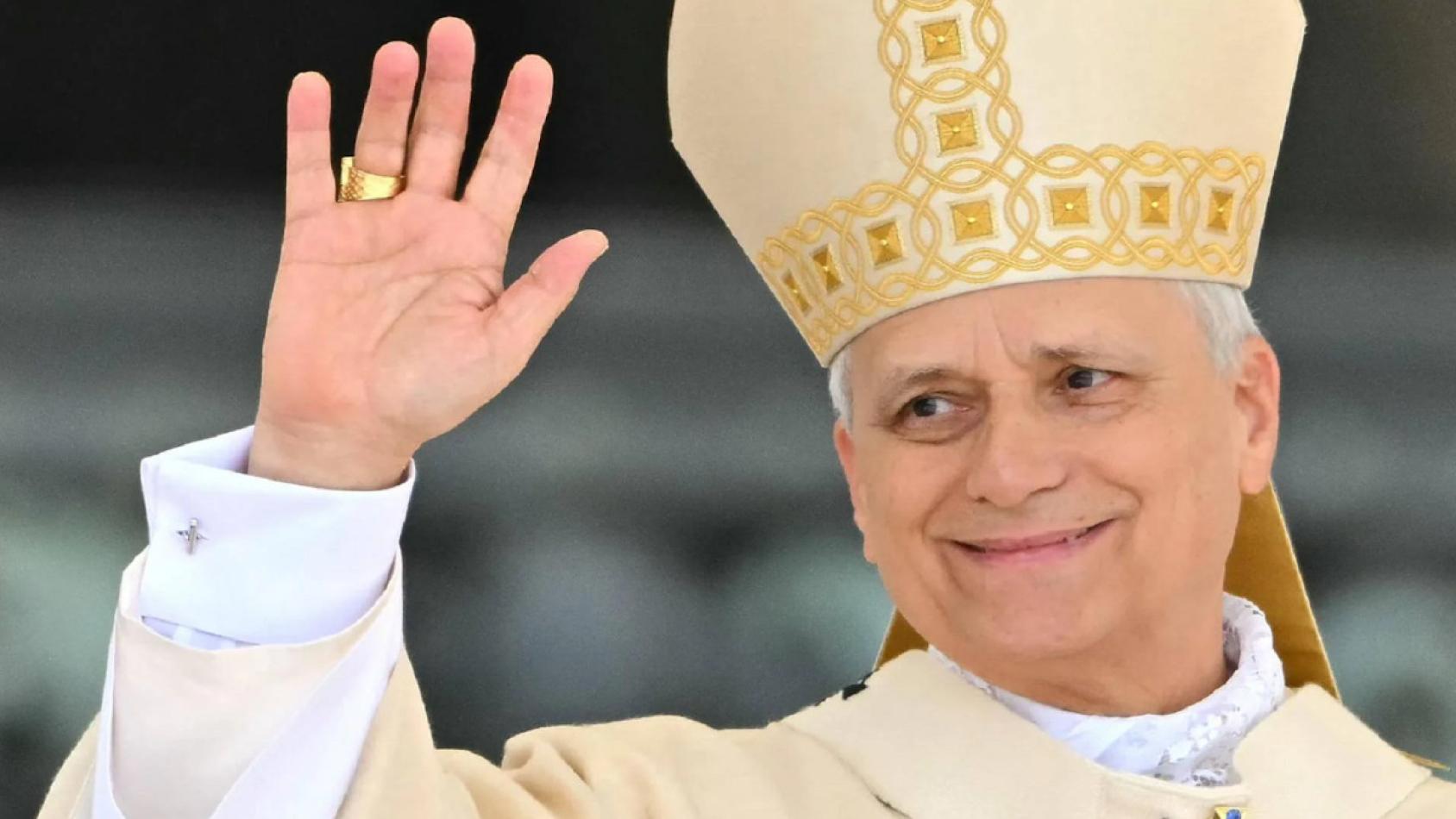
The Vatican has announced that Pope Leo XIV will undertake his first pastoral visit to Africa as pontiff April 13–23. In a statement released on Wednesday, Feb. 25, the Holy See confirmed that the Holy Father’s 11-day apostolic journey will take him to four African countries: Algeria, Cameroon, Angola, and Equatorial Guinea.
According to Vatican officials, the pope is to visit Algiers and Annaba in Algeria April 13–15; Yaoundé, Bamenda, and Douala in Cameroon April 15–18; Luanda, Muxima, and Saurimo in Angola April 18–21; and Malabo, Mongomo, and Bata in Equatorial Guinea April 21–23. The pastoral visit is in response to “invitations of the respective heads of state and ecclesiastical authorities,” Vatican officials said. During the apostolic visits, the Holy Father will promote peace, interfaith dialogue and care for the poor and vulnerable.
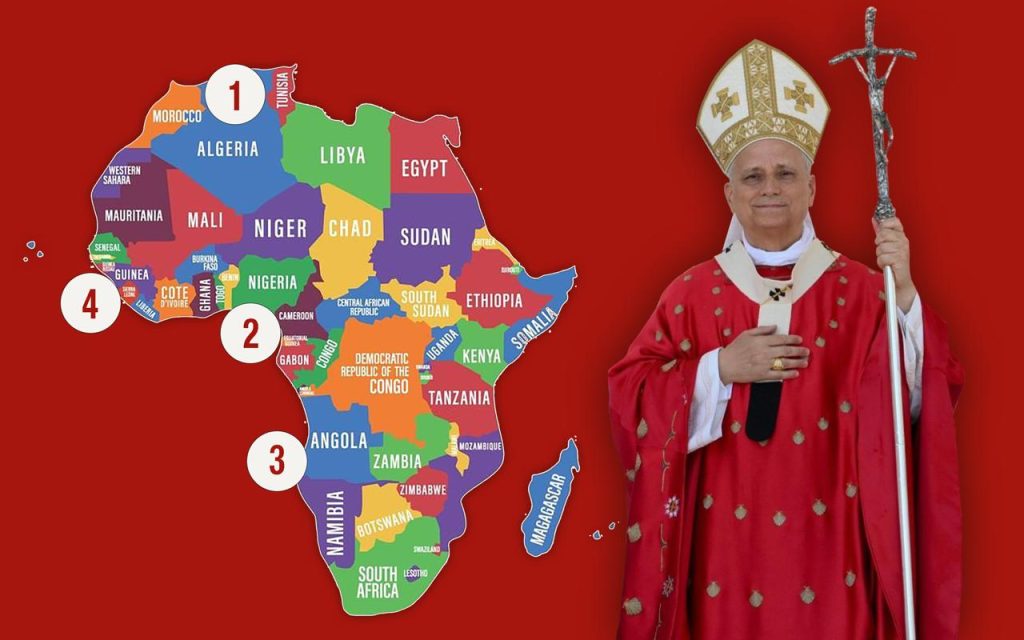
First Trip to Africa
In the first visit to the African continent since the start of his pontificate, Pope Leo will travel to Algeria, Cameroon, Angola and Equatorial Guinea. The Vatican has highlighted that peace and care for the poor will be central themes of the African journey, which will also bring him in the footsteps of St. Augustine.
1. Algeria: St. Augustine and interfaith dialogue
The pope’s apostolic journey to Africa will begin in Algeria, with stops in the capital Algiers and the northeastern city of Annaba from April 13 to 15. Pope Leo previously expressed to journalists his desire to visit the country to see the places associated with St. Augustine and to “continue the conversation of dialogue, of building bridges between the Christian world and the Muslim world.”
Annaba is home to the Basilica of St. Augustine, built near the ruins of the Basilica Pacis where the theologian died in A.D. 430 as Vandals besieged the city. A statue in the basilica contains a relic of one of Augustine’s arm bones.
Algeria is 99% Sunni Muslim, and the Catholic Church counts just 8,740 members, about 0.019% of the population, out of more than 45 million people, according to the 2025 edition of the Annuario Pontificio, the Vatican’s annual yearbook.
2. Cameroon: a visit to a conflict zone
From Algeria, the pope travels to Cameroon from April 15 to 18, visiting the capital Yaoundé, the northwestern city of Bamenda and Douala, the country’s largest city and economic hub. The Bamenda stop brings Pope Leo directly into Cameroon’s Anglophone northwest, where a separatist conflict has been ongoing for nearly a decade.
The crisis began in 2017 when the government cracked down on strikes by English-speaking teachers and lawyers, triggering an armed insurgency that has since claimed thousands of lives and displaced hundreds of thousands more. Security concerns had cast doubt on whether the papal visit would be feasible.
Christianity is the predominant faith in Cameroon, practiced by more than 60% of the population, with more than 7.9 million Catholics in the country, making up 27.9% of the population, according to the Vatican’s latest statistics. Muslims account for approximately 30% of the population.
3. Angola: more than 17.9 million Catholics
The pope will then travel to Angola from April 18 to 21, visiting Luanda, Muxima and Saurimo. Catholicism is the largest religious group in the country, which is home to more than 17.9 million Catholics, according to Vatican statistics, about 49% of the population.
Angola, despite its considerable oil wealth, continues to struggle with high poverty rates and deep economic inequality. Pope Benedict XVI was the last pope to visit Angola in 2009 following St. John Paul II’s 1992 trip to mark the 500th anniversary of its evangelization.
4. Equatorial Guinea: s Spanish-speaking country in Africa
The final leg of the African journey brings Pope Leo to Equatorial Guinea from April 21 to 23, with stops in Malabo, Mongomo and Bata. About 81.58% of the country’s 1.37 million population is Catholic, according to the Vatican, making it one of the most Catholic nations in sub-Saharan Africa by percentage and the only Spanish-speaking country on the continent. It will be only the second papal visit in Equatorial Guinea’s history; the first was St. John Paul’s trip on Feb. 18, 1982.
In total, the apostolic journey to Africa will span 10 days, nearly as long as St. John Paul’s 11-day, seven country African trip in 1985.