
Daniel Comboni
Comboni Missionaries
Institutional area
Other links
Newsletter
Missionary Lent 2026 – Knowing Reality and Converting Our Hearts
Friday, March 6, 2026
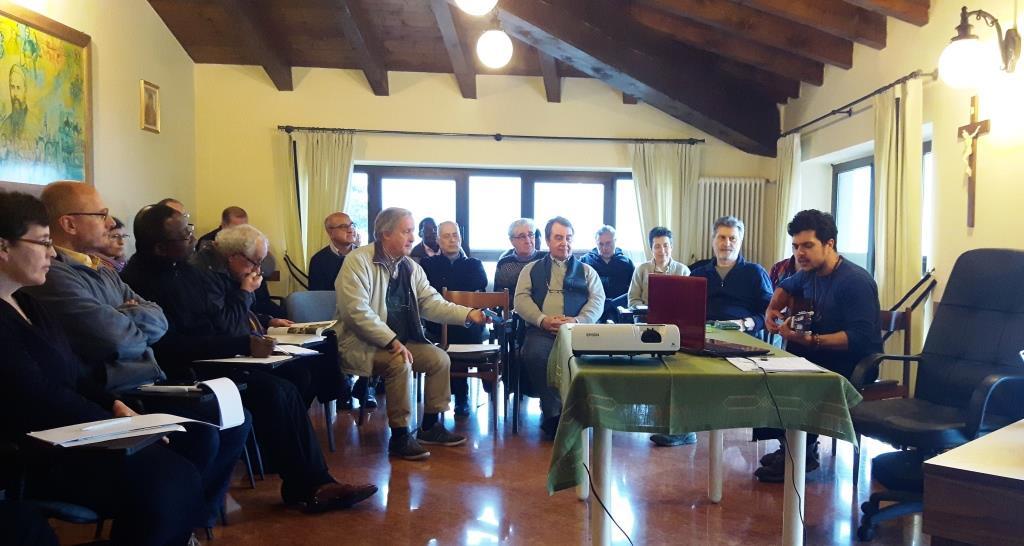
During this year’s Lent, the community of Comboni Missionaries at the General Curia in Rome organised a series of three conferences to enable confreres, as well as friends and neighbours who are interested, to gain a deeper understanding of the situation currently being experienced in the Democratic Republic of the Congo, Palestine and Sudan. The initiative aims not only to shed light on the problems affecting these peoples, but also to offer a space for reflection on how to convert our hearts in the face of the injustices of the world. (See attached)
Programme of Missionary Lent 2026
Comboni Missionaries – Via Luigi Lilio 80, Rome
Knowing Reality and Converting Our Hearts
• Monday, 2nd March, 8:30 pm – Democratic Republic of the Congo
Breaking the Silence on the Congo
“You shall be called the repairer of the breach” (Is 58:12)
• Monday, 9th March, 8:30 pm – Palestine
Weaving Paths of Peace in the Holy Land
“The fast that I choose… to break the chains.” (Is 58:6)
• Monday, 16th March, 8:30 pm – Sudan
What Peace for Sudan?
“Your light shall break forth like the dawn” (Is 58:8)
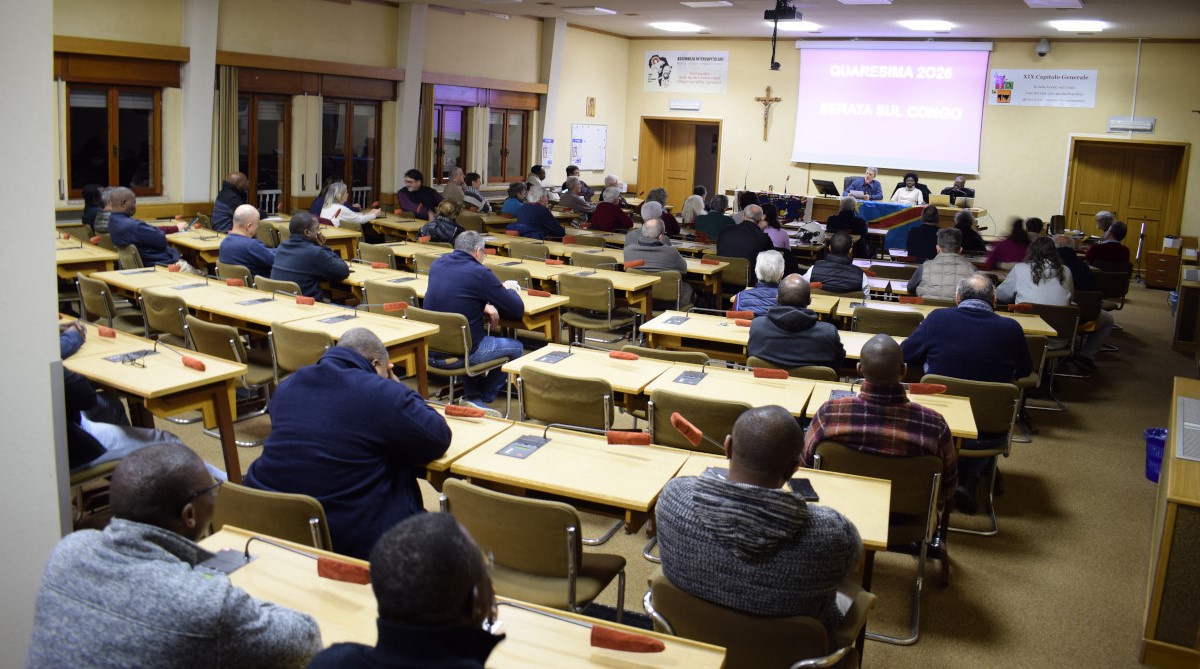
The First Conference – The Tragedy of Eastern DR Congo
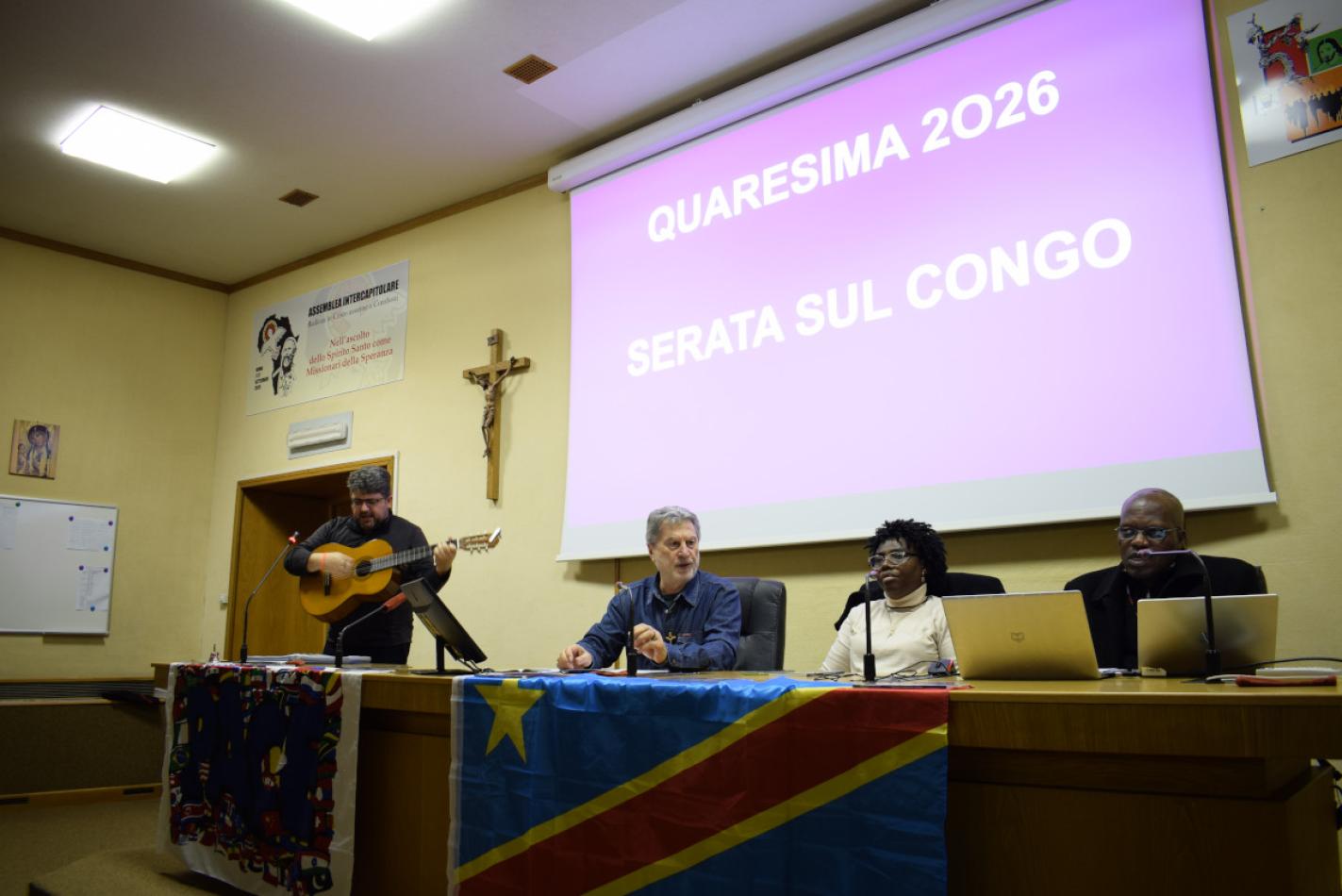
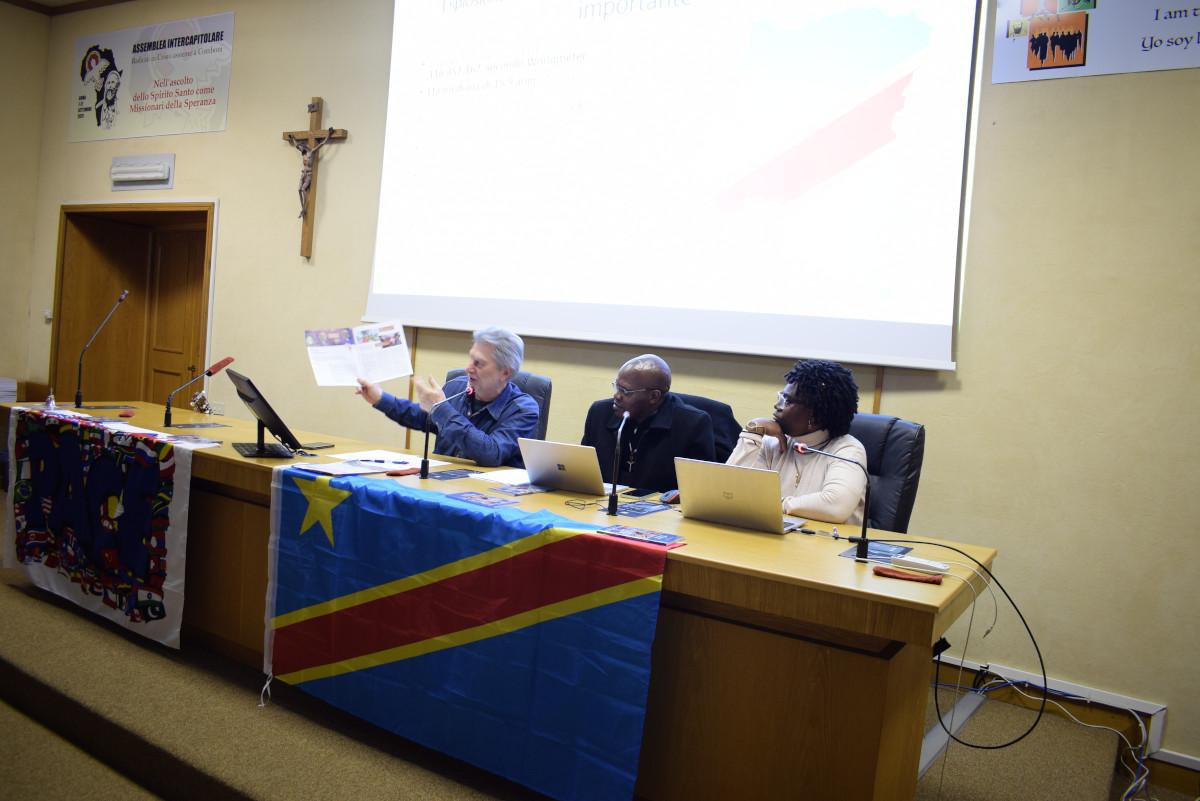
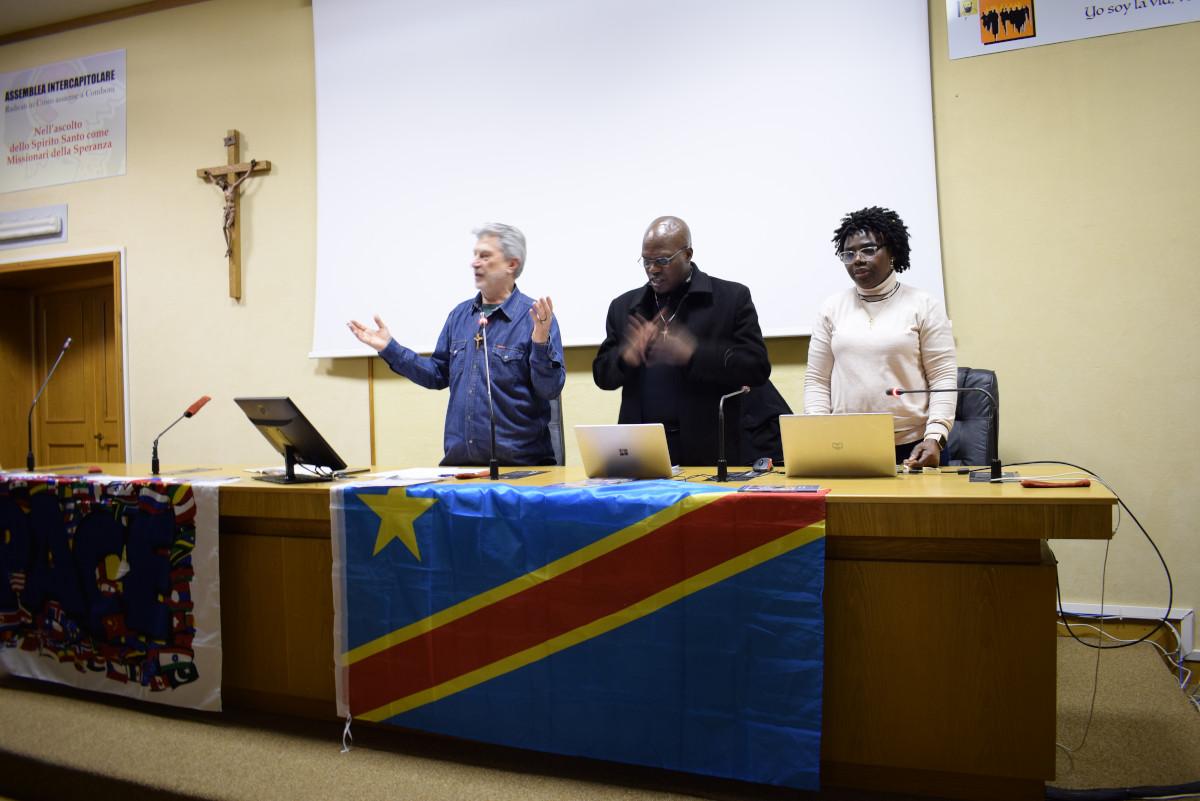
The first conference took place on Monday, 2nd March. The evening’s guests were Fr Justin Kakule Muvawa, Provincial Superior of the Comboni Missionaries in the Democratic Republic of the Congo, and Dr Brigitte Kabu Dia Kivuila, a Congolese scholar who holds a doctorate in Political Philosophy from the Pontifical Gregorian University in Rome and works as a linguistic collaborator with the French section of Vatican Radio.
In his introduction to the meeting, Fr Giorgio Padovan, a Comboni missionary and member of the Curia, recalled the fifth anniversary of the assassination of Luca Attanasio, the Italian ambassador to the Democratic Republic of the Congo, who was killed on 22nd February 2021 during a humanitarian mission while working for a more just and fraternal world. He also remembered Carabinieri officer Vittorio Iacovacci and the driver Mustapha Milambo, who died with him.
Fr Padovan then recalled a passage from the speech delivered by Pope Francis during his visit to the Democratic Republic of the Congo in 2023, in which the Pope strongly denounced the forms of exploitation that still affect the country and, more broadly, the African continent. On that occasion, Pope Francis spoke of a new ‘economic colonialism’, recalling how the immense natural wealth of the Congo does not fully benefit its population.
Here are the words of Pope Francis:
“After political colonialism, an equally enslaving ‘economic colonialism’ has been unleashed. As a result, this country, widely plundered, does not benefit sufficiently from its immense resources: the paradox has arisen whereby the fruits of its land make it ‘a foreigner’ to its own inhabitants. The poison of greed has turned its diamonds to blood. It is a tragedy before which the economically more developed world often closes its eyes, ears and mouth. Yet this country and this continent deserve to be respected and listened to; they deserve space and attention: hands off the Democratic Republic of the Congo, hands off Africa! Stop suffocating Africa: it is not a mine to be exploited or a land to be plundered. Africa must be the protagonist of its own destiny! May the world remember the disasters inflicted over the centuries on local populations and not forget this country and this continent. Africa, the smile and hope of the world, must count for more: it should be spoken of more often and be given greater weight and representation among the nations!”
Fr Padovan also noted that there are currently 54 Comboni missionaries present in the country, distributed among 13 communities, including one in Butembo, in the province of North Kivu, in the north-east of the country.
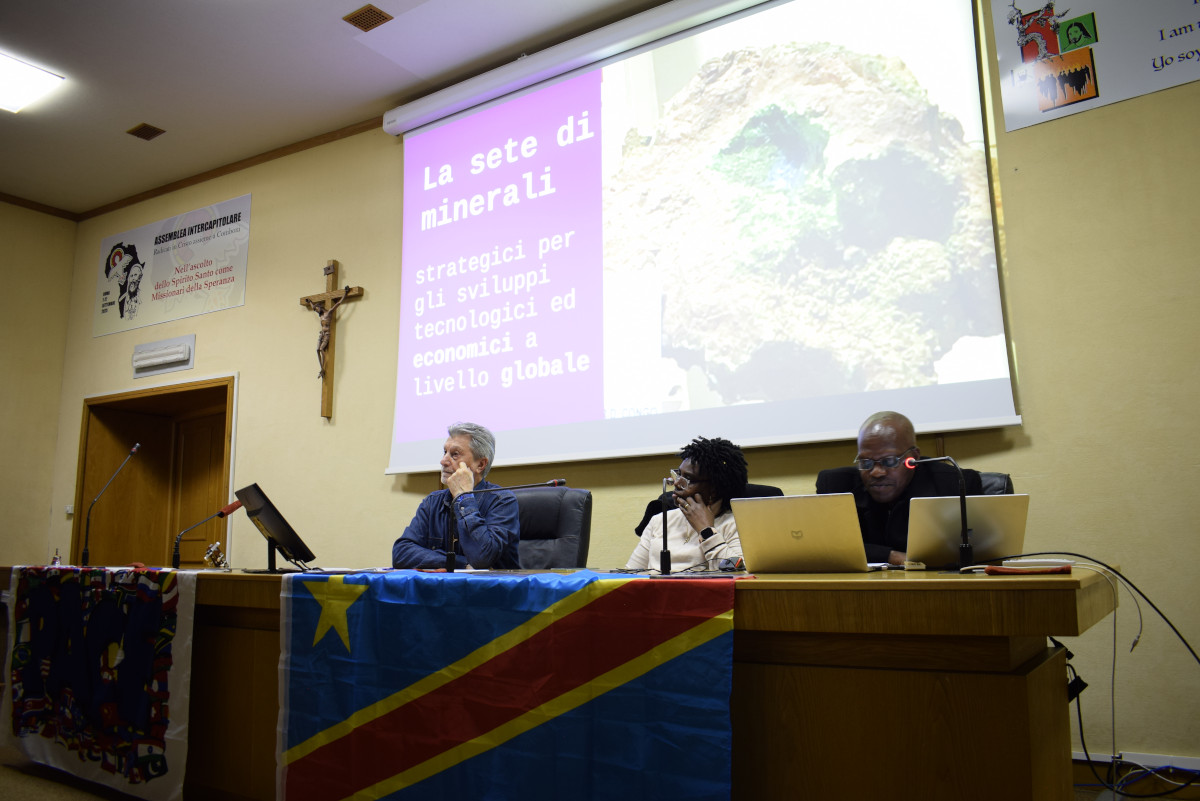
The Situation in North Kivu
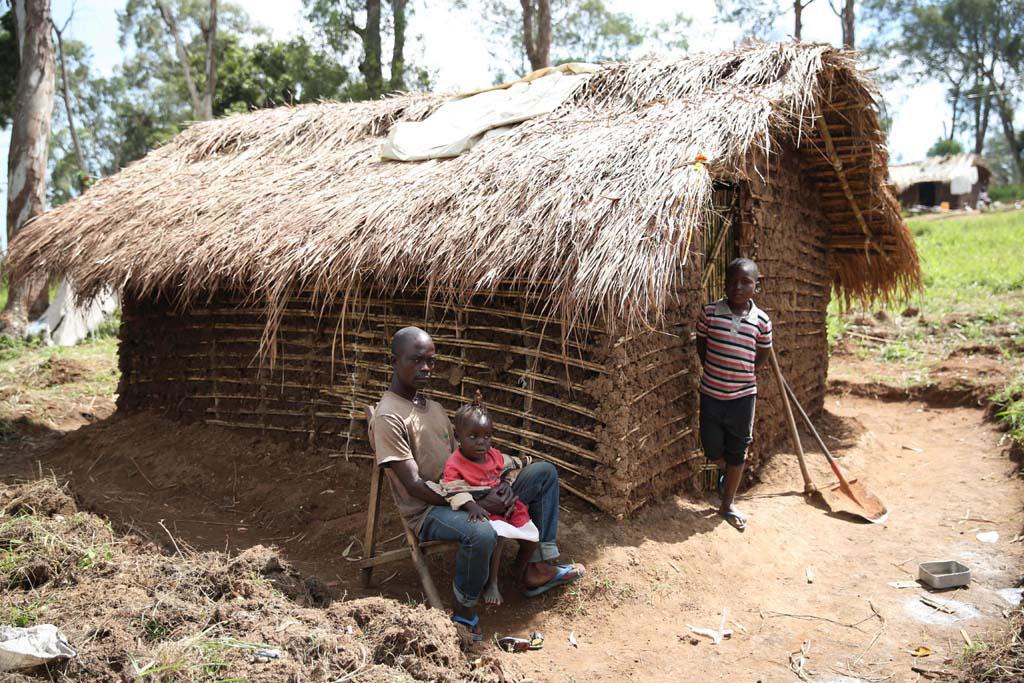
Fr Justin Kakule focused his intervention on the social and political situation in the province of North Kivu, now the epicentre of chronic violence that has dramatically intensified since the beginning of this year.
“The situation in the North Kivu region is dramatic and represents one of the most painful aspects of the ongoing humanitarian crisis,” he said. “The advance of armed groups, particularly the March 23 Movement (M23) — a paramilitary organisation historically considered pro-Rwandan due to the presence of Tutsi fighters — and tensions with the Allied Democratic Forces (ADF), of Ugandan origin, make the context extremely unstable.”
According to Fr Justin, from January to March 2026 eastern DR Congo has been marked by a violent military escalation and an unprecedented humanitarian crisis, despite various attempts at diplomatic mediation.
A profound instability can be observed: on the one hand there are timid signs of diplomatic dialogue, while on the other the reality on the ground remains marked by violence and an increasingly tense domestic political climate. It is a paradoxical situation: despite the signing of peace agreements in 2025, violence continues and political repression in the capital Kinshasa has intensified.
Among the main causes of the conflict is also what Fr Justin described as ‘the thirst for minerals’.
In fact, the subsoil of eastern DR Congo contains numerous “critical minerals”, considered strategic for global technological and economic development: gold, diamonds, copper, cobalt, tantalum, coltan (columbite-tantalite), lithium, tungsten and tin. Many of these are found precisely in the regions of North and South Kivu.
According to the Comboni superior, access to and exploitation of these resources represent a central motivation for the conflict, as they enable armed groups to finance their activities.
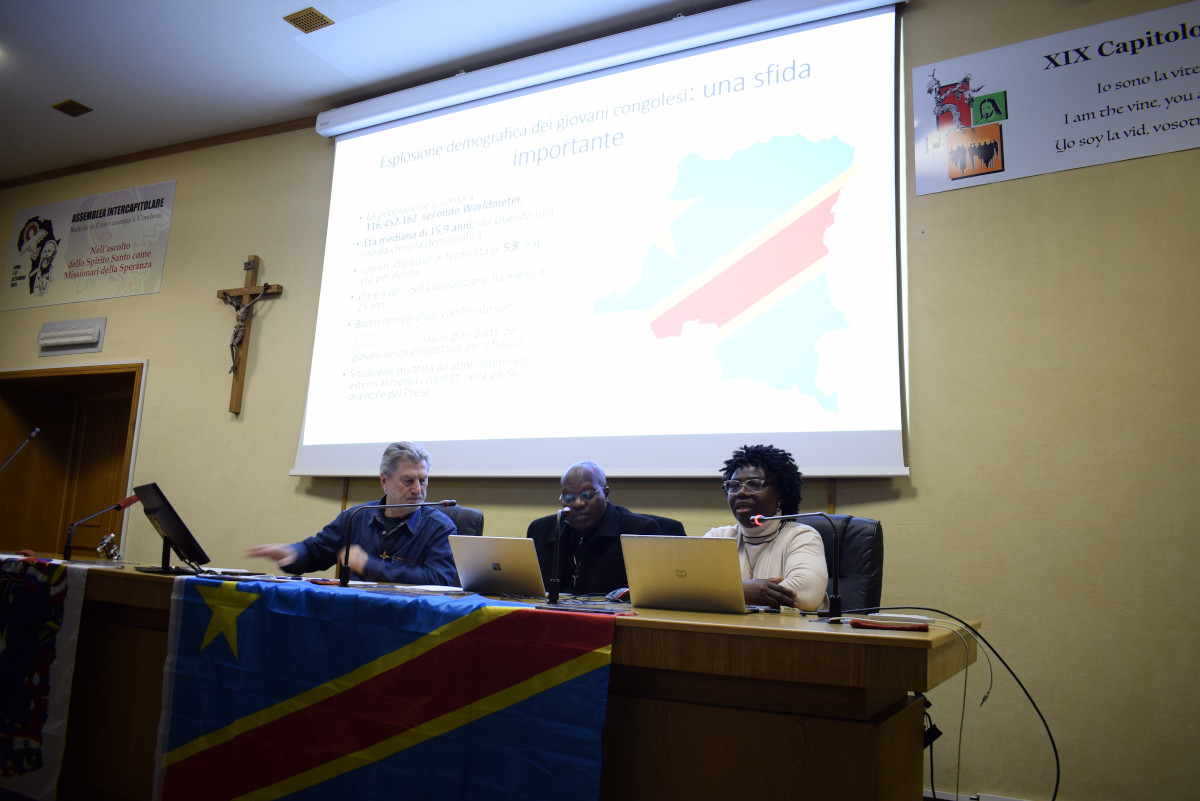
Congolese Youth: A Challenge for the Future
Dr Brigitte Kabu Dia Kivuila, who has lived in Rome for 25 years, focused her intervention on the demographic explosion among young Congolese, who are often exposed to violence, recruitment into armed militias and widespread social instability.
Her reflection began with a significant figure: more than 60% of the Congolese population — around 116 million people — are under the age of 25, while the median age is 15.9 years.
On the one hand, the country is experiencing rapid demographic growth; on the other, there is a serious lack of educational and economic infrastructure, leaving a large proportion of young people without concrete prospects for the future.
According to the speaker, this situation represents a major challenge for the country. If not properly managed, it risks further fuelling conflicts in eastern Congo. However, through effective public policies, awareness-raising campaigns and greater regional cooperation, it is possible to offer these young people real opportunities for development.
The solution, she explained, requires a multidimensional approach that integrates education, employment, community participation and diplomacy, with the aim of safeguarding Congolese youth and building a future of peace and prosperity.
The DR Congo, the “Diamond” of Africa
At the conclusion of the meeting, Fr Giorgio Padovan returned to an image used by Pope Francis during his 2023 visit to the country: the DR Congo as a diamond.
The diamond, first of all, recalls the country’s extraordinary natural wealth and, even more so, the dignity of its people. Yet it is also a blood-stained diamond, because what should be a source of light and beauty has become a cause of violence and exploitation.
A cut diamond has many facets that reflect the light. This image can become a metaphor for Congolese society, characterised by a great plurality of ethnicities, cultures and groups. Just as carbon atoms can form graphite (darkness) or diamond (light), the difference lies not in the people themselves but in the way they choose to live together.
A rough diamond must be cut and shaped. Likewise, Congolese youth — the country’s “most precious diamonds” — need education, opportunities and protection from exploitation, especially from child labour in the mines. Education is presented as the main path towards freedom and development for the country.
A diamond is formed in the depths of the earth, under pressure and in darkness. It is not immediately luminous: it is rough, hidden, apparently indistinguishable from the rock that surrounds it. Yet it is precisely there, in pressure and darkness, that its strongest and most precious structure is formed.
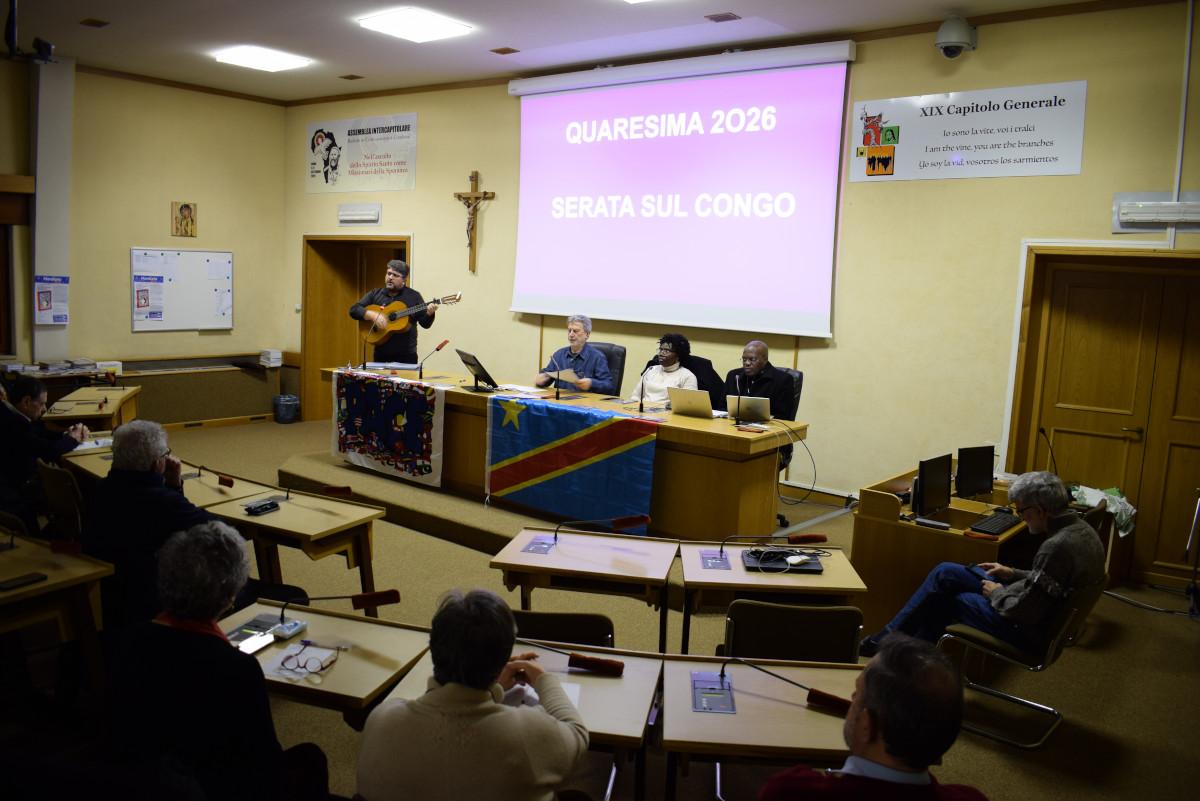
A Lenten Perspective
Lent is the time when the Church passes through the desert: a time of truth, purification and return to what is essential. For years the Congolese people have been living a kind of long historical Lent, marked by violence, exploitation and injustice. Yet Christian logic does not stop at the recognition of suffering: it looks beyond, towards Easter.
The message that emerges from this conference is not only one of denunciation — necessary though it is — but also of responsibility and hope. If the true diamond is not the mines but the people, and if light does not arise from possession of resources but from dignity that is protected and shared, then rebirth is possible.
Lent reminds us that transformation passes through the conversion of hearts: from the logic of exploitation to the logic of service, from resignation to shared responsibility, from indifference to fraternity.
This concerns international institutions, governments and civil society, but also each one of us.
Just as a cut diamond refracts light, so too can the Congo become: no longer a symbol of conflict, but of resilience; no longer a land to be plundered, but a space of reconciled relationships.
May this Lenten season enable us to see, beneath the wounds of history, the light that is already being prepared. For pressure is not the last word. For those who believe, the last word is always life reborn.