
Daniel Comboni
Comboni Missionaries
Institutional area
Other links
Newsletter
Kenya: West Pokot celebrates Franciscan jubilee

Thursday, July 16, 2026
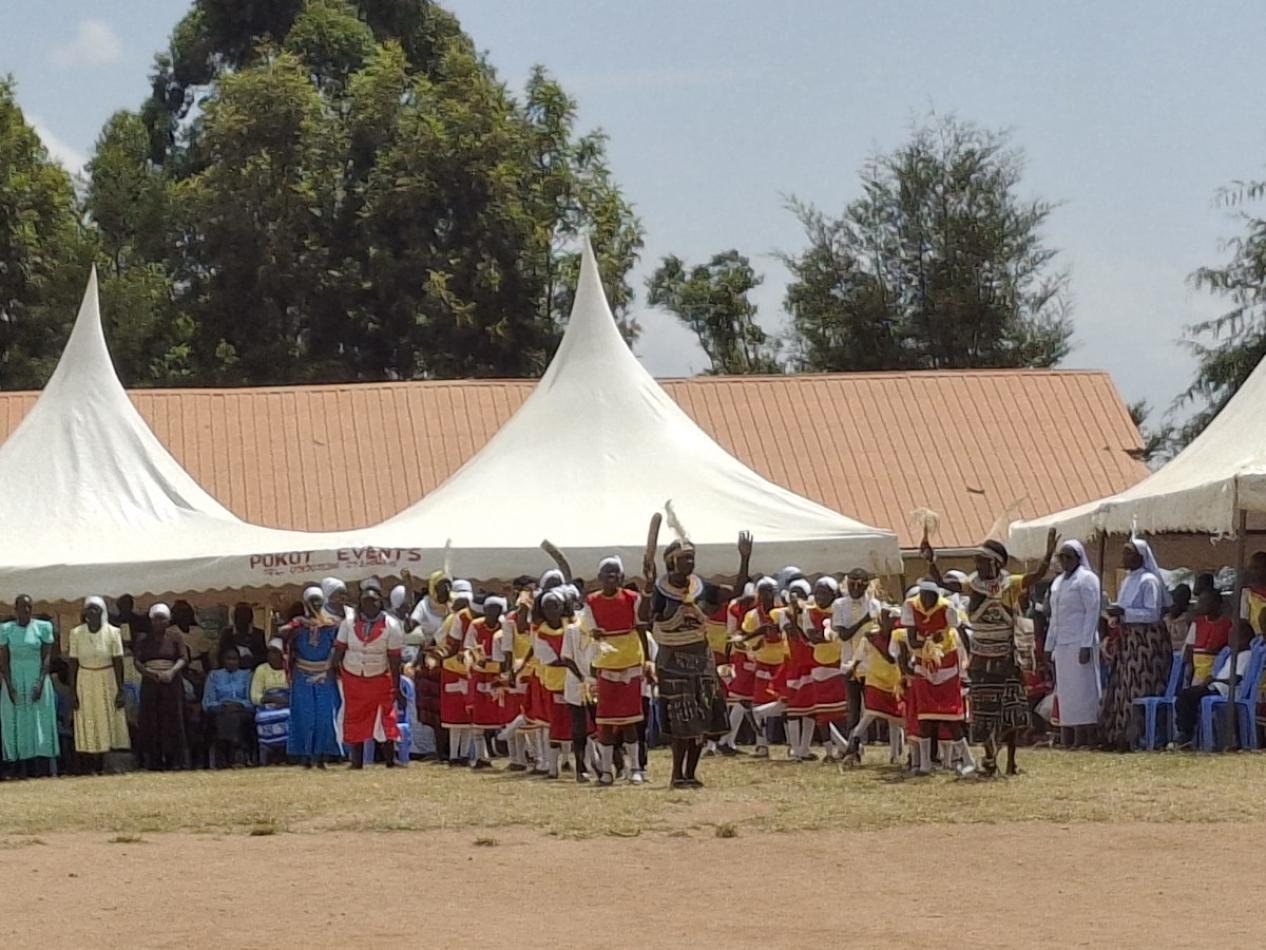
On Saturday, 11 July, celebrations began for the 800th anniversary of the transit of St Francis of Assisi in the parish of Kapenguria, among the Pokot people in Kenya. The Bishop of Kitale, Henry Juma Odonya, highlighted the themes of peace, fraternity, and care for creation. In the West Pokot region, all these themes are crucial and of great pastoral relevance, given the frequent conflicts with the Turkana, Karamojong, and Marakwet ethnic groups.
It was the day of St. Benedict, but there are no Benedictines in the diocese of Kitale, nor in the West Pokot region, both bordering eastern Uganda. However, we do have Franciscan Sisters of St. Joseph founded in Asumbi, and the Little Sisters of St. Francis. And more importantly, the Capuchin Friars who run the parish of St. Charles Lwanga in Kapenguria.
The parish became a Comboni stronghold when the missionaries arrived in Kenya in 1973; it was the hub that connected with Turkana and among the other five missions that existed in the Kitale diocese in the eighties: two to the north-west in the heat of the semi-arid zone where the pastoral Pokot live, and two others to the south-east in the cold highlands of the Cherangany hills, where the agricultural Pokot lived.
One has to mix verb tenses because things change: now there is agriculture everywhere, and some gold and other mineral prospectors, as well as an abundance of Merino sheep in the highlands and Friesian cows.
In the Comboni days, there were no paved roads, and the ravines were frightening. Back then, Fr. Antonio Guirau would spend five days in the highlands, exposed to freezing cold, travelling on his 250-horsepower Honda motorbike, rain or shine, mud or no mud. He had to sleep without showering, whether due to the cold or lack of water, I do not know. Or when Fr. Marco Canovi had to drive a Fiat Campagnola down the Pkopoch cliff without lights on a pitch-black, moonless night; only he could do that, both because of his mechanical skills and his reckless daring.
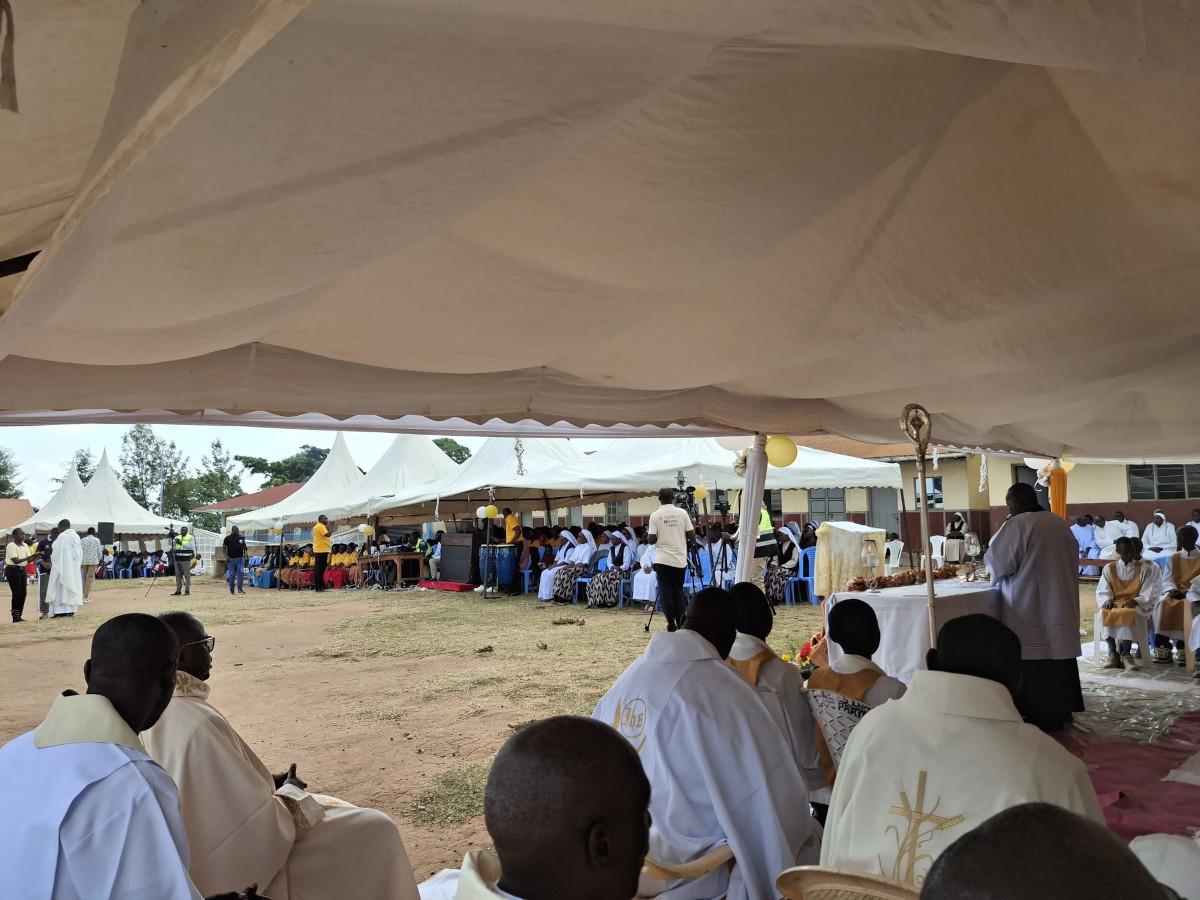
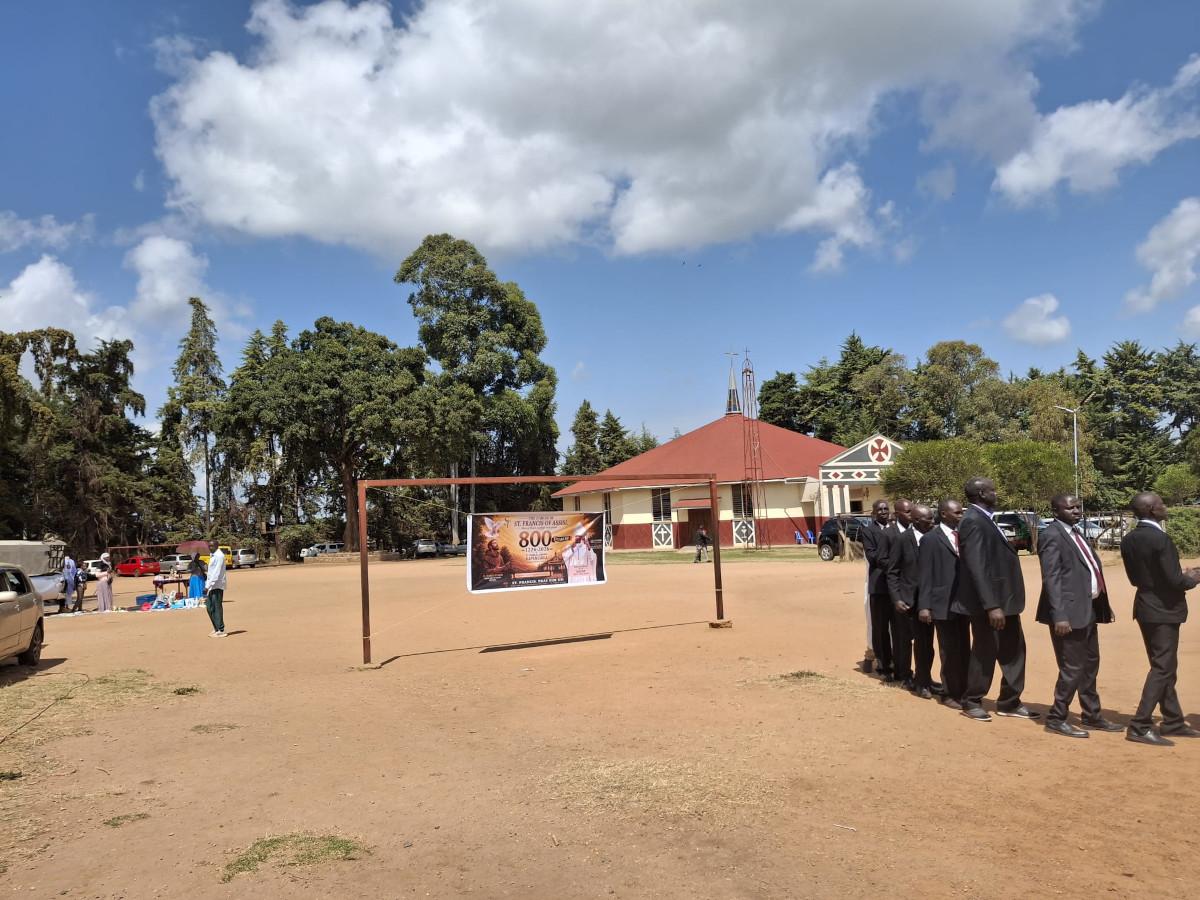
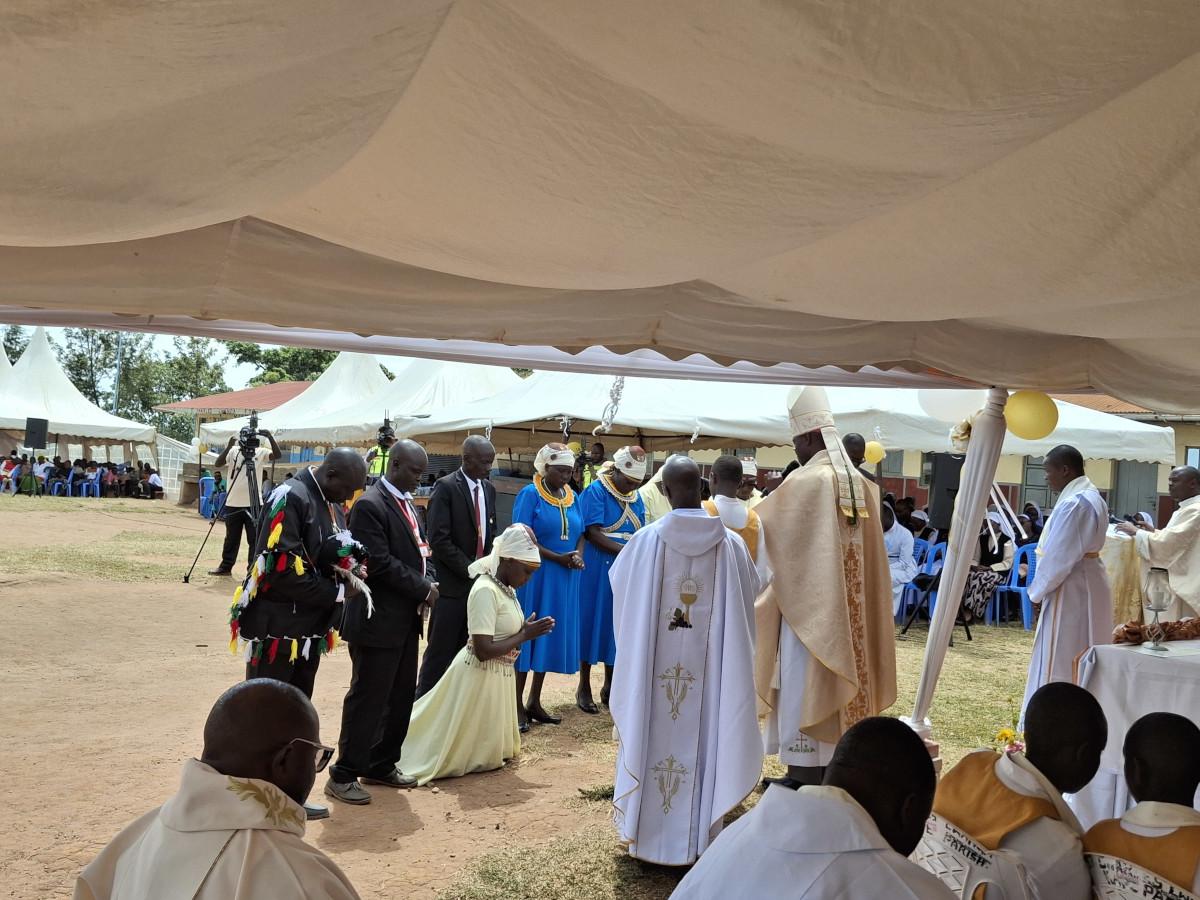
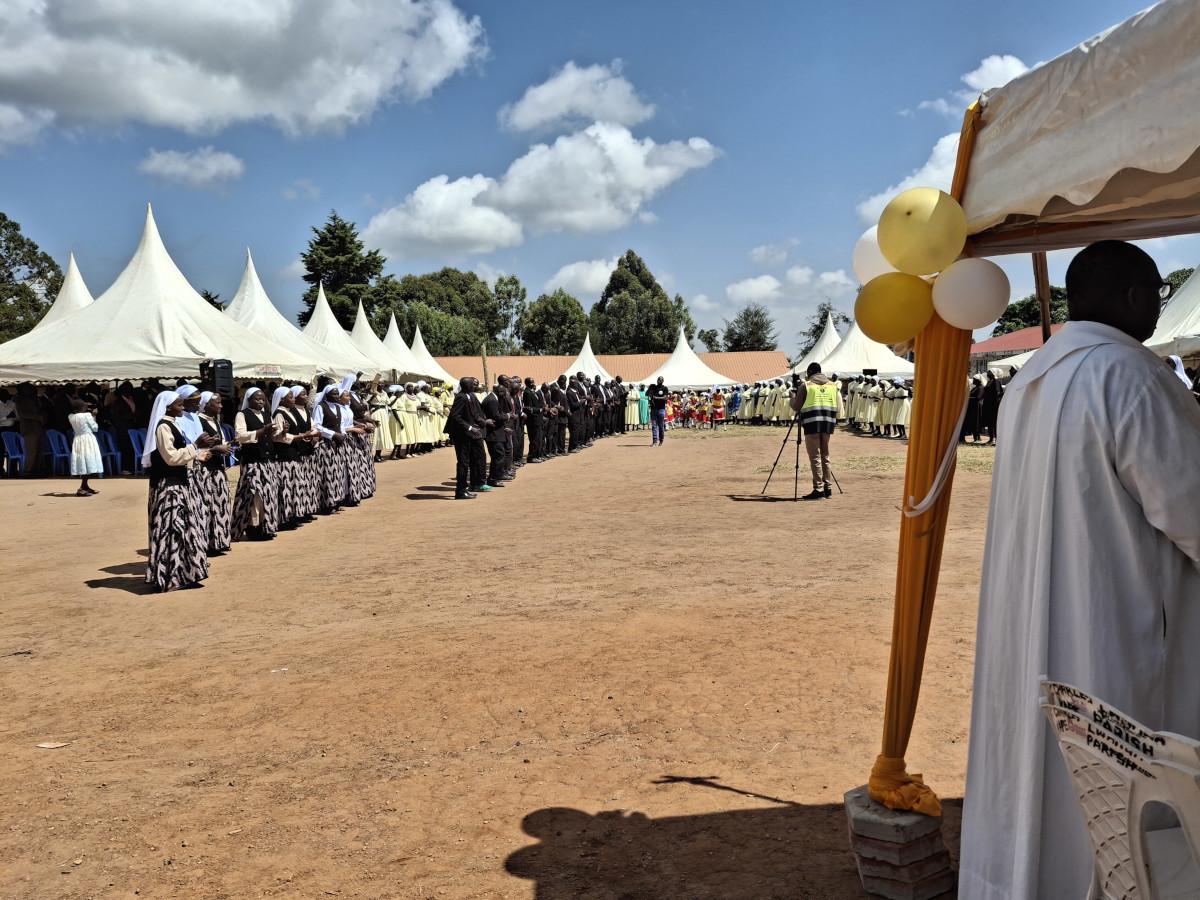
The celebration was not to remember the Comboni missionaries, but to celebrate St. Francis of Assisi and the faith of the people of the Pokot highlands. They welcomed the Catholic message very well and received with considerable naturalness—though not perfectly—the arrival of people from different ethnic groups.
It has to be this way: we are all Kenyans, all sons and daughters of God; no matter how we speak, what matters is that we understand each other and collaborate in love. A very Franciscan message.
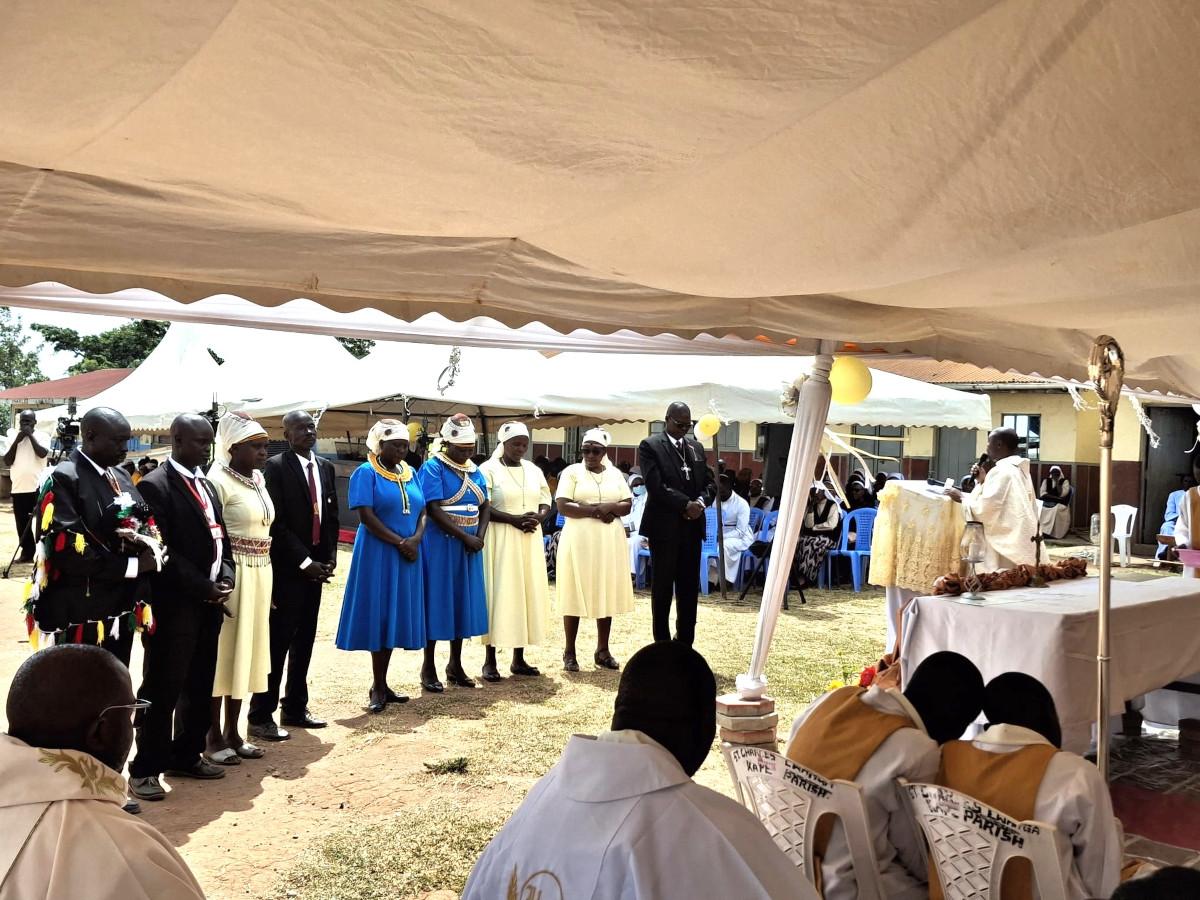
The celebration was presided over by our bishop, Monsignor Henri Juma, surrounded by a good number of priests and religious sisters, as well as lay associations (women and men), all dressed in a fairly uniform manner.
As is customary in these ceremonies, the children dance along with the singing, and some excitable individuals jump into the ring to make traditional-style harangues, in a way that one cannot tell if they are praises to the Lord or howls that embolden us and move us to prayer.
The homily was profound and focused on the virtues of St. Francis, whose name many know but not his life. That is why Bishop Juma emphasized the themes of peace, brotherhood, and care for creation; because in our Pokot area, there is a need for peace meetings on the borders with Turkana/Karamoja, or with the Marakwet. They are all semi-pastoral peoples, similar but not on good terms.
To cultivate peace, the bishops of their dioceses celebrate a Eucharist among the youth each year. Brotherhood must be learned by maintaining ecumenical relations with churches that respect you and with those that hate you.
Ecology must be put into practice so that chainsaws do not devastate the rainforests of the mountains, or machetes finish off the trees in the semi-arid plains... but what can be done? One has to eat, one has to pay school fees and for medicines. And to top it all off, this year we are facing a severe drought.
In his lengthy homily, long enough to be worthy of praise in Africa, the bishop reminded us of the presence of the Third Order Franciscans, all the Little Franciscan sisters of the area, and the Evangelizing Sisters who carry out pastoral work and other evangelizing activities in Kapenguria (these too were founded by the Comboni missionaries Fr. Marangoni and Monsignor Sixtus Mazoldi).
We were accompanied by a small group of consecrated Ugandan brothers of St. Charles Lwanga and another small group of catechists, only from the parish itself. Although in the diocese there are almost six hundred, they are laypeople and they also work on Saturdays... and even more so on Sundays. They cannot leave their families if they depend on them for their livelihood.
In the parish announcements, a list was made of the new parishes in the Pokot region. When the Comboni Missionaries arrived, there were six, three for them and three for the missionaries of St. Patrick (Kiltigans). Each in their own style, full of apostolic zeal and a desire for inculturation, living with the people and discovering their customs with appreciation and learning the language (those who could).
The emphasis was on the present, because the past is already history; that is why they stressed the institutional growth of parishes, without realizing that there is still much missionary work to be done and that there are pastoral challenges that must make us question ourselves so that the sheep do not escape from the fold of Jesus Christ.
It was a celebration for Francis and for the consecrated, which is why it was mentioned that the parish of Kapichpich, the one initiated by Antonio Guirao, leads in the number of consecrated women in the diocese. Everyone reminded the young men not to fall behind, neither in consecrated life nor in priestly life, because this field remains a challenge in the Pokot region.
Moving and realistic was the blessing given to the parents of the consecrated, because they had been generous in giving their sons and daughters to the service of the local Church. And the provocation: “If as a parent you feel envy of that blessing, it is up to you to foster vocations among your children.”
The conclusion of the ceremony came from the lips of the parish chairlady, reminding the bishop that this year there is a very severe drought, even for the green highlands and cornfields of the mountains. Will anyone come to their aid? She thanked him for the opening of two other parishes in the Kapenguria area. There are now 18, whereas there were only two when the diocese of Kitale began in 1998.
The jubilation cannot hide the challenges of the present, which the bishop also mentioned in passing: getting the shepherds to mix with the sheep, that the consecrated show the joy of the gospel in addition to the beauty of youth and of their habits.
The pressure of evangelical churches and the resurgence of movements of traditional African religiosity show that there is a bivalence in the continent, and in Pokot, between the new and the old, which only the holy Spirit can unify in truth and freedom.
While the celebration continued with songs and dances, my mind wandered distractedly, remembering the names of the missionaries who were at the foundations of the evangelizing feat of our predecessors: the piety of Fr. Dillon, the naturalness of Fr. Leo Staples (Lokomol), the methodical lessons of Fr. Antonio Dolzan, etc. Strange names for the readers, but not for the local people, although it was not appropriate to recall them because it was the feast of St. Francis in the Pokot land, where he should feel at home because it is mountainous and rugged like Umbria, in Italy.
Fr. Tomás Herreros Baroja, MCCJ