
Daniel Comboni
Comboni Missionaries
Institutional area
Other links
Newsletter
Brief history of the 38 years of presence of the Comboni Missionaries in Asia
Saturday, July 18, 2026
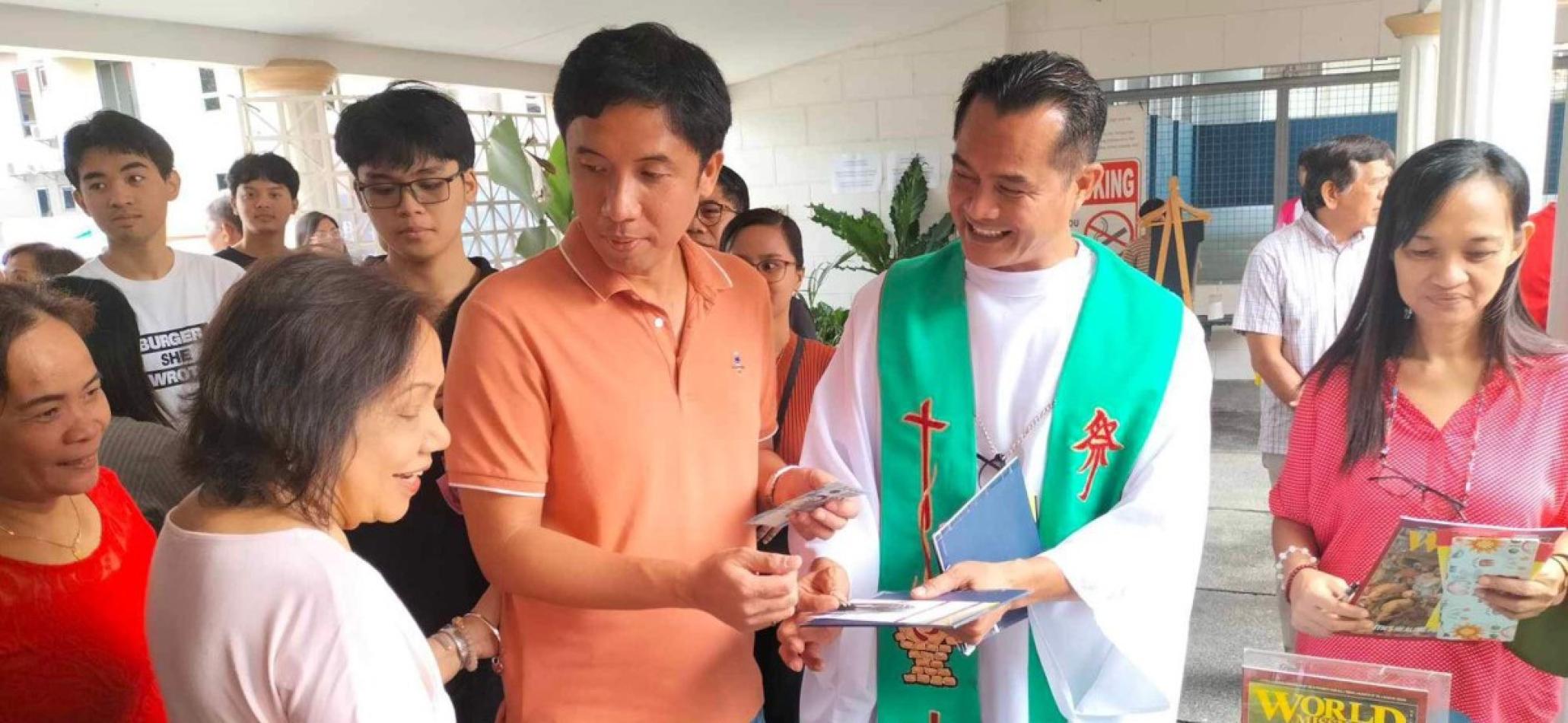
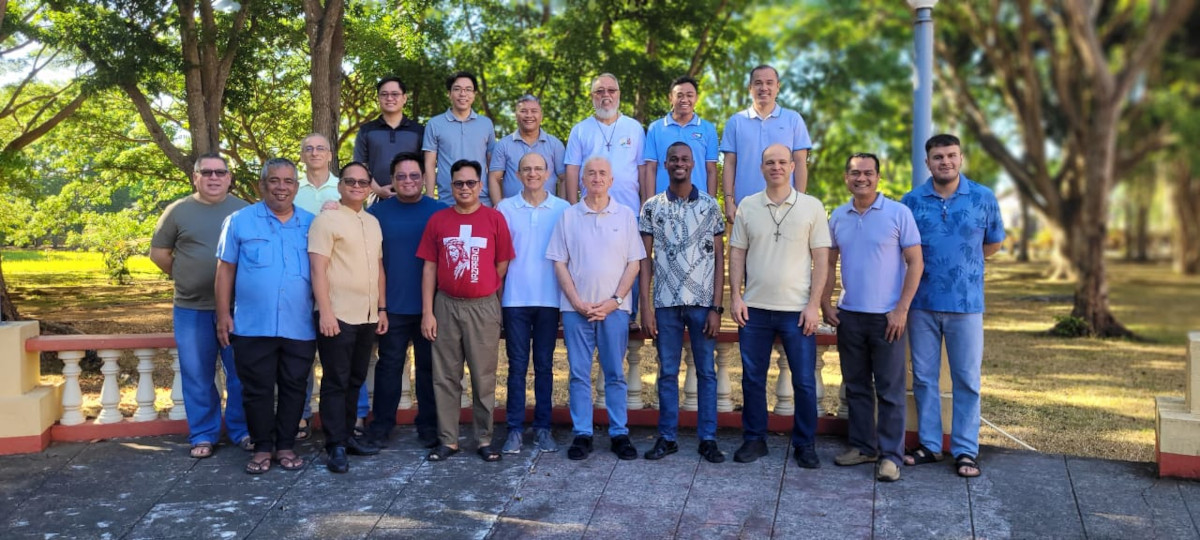
The Comboni Missionaries have been present in Asia since 1988, focusing on evangelization, vocational promotion, and the formation of candidates to missionary life, answering to the Church’s call to serve in Asia, the least evangelized continent in the world. [In the photo, padre Janito Joseph Aldrin Palacios]
In the Philippines and Vietnam, their efforts are concentrated on missionary animation, promoting vocations, and providing formation of candidates to missionary life. Meanwhile, in Macau, their primary focus is on first evangelization, reaching out to those who have not yet encountered the Christian faith.
The Comboni Missionaries established their presence in Asia in 1988, seeking to bring their missionary service, inspired by the charism of St. Daniel Comboni, to this cultural context. Their mission is rooted in the reality that Asia is home to the largest share of the world’s population, much of which has not yet heard the Gospel and faces significant socioeconomic challenges. Furthermore, with its rich diversity of world religions, Asia presented a valuable opportunity for fostering interreligious dialogue.
The idea of the Comboni Missionaries establishing a presence in Asia was first considered and received tentative support during the 1969 General Chapter, with further emphasis placed on this initiative at the General Chapters in 1975 and 1979. In the period leading up to the 1985 General Chapter, members of the General Administration undertook extensive travels, research, and consultations.
These efforts culminated in the 1985 Chapter’s definitive decision to begin missionary work in Asia. At that time, the General Chapter clarified that the main objective was evangelization first, while also recognizing the promotion of mission and vocation as essential aspects of the Comboni charism.
To move forward with this commitment, the General Council released two documents on December 3, 1987, titled “Opening to Asia” and a “Decree establishing the first Comboni community in Asia”, located in Metro Manila, the capital of the Philippines. This new group was set up as a “Representation of the Superior General,” operating directly under his authority.
First community
Initially, five confreres were appointed by the General Council to form the first community–four priests and one brother. Two priests and the brother arrived in Manila on January 4, 1988, and the remaining two priests joined them on July 11 of the same year.
By September 9, 1990, this group expanded into two communities: the Comboni Mission Centre, focused on mission promotion and publications (with the first World Mission Magazine issue released in March 1989) and serving as the Superior General’s representative’s residence; and the Daniel Comboni Seminary, dedicated to postulancy formation and vocation promotion.
Later, by decree of the Superior General and his Council dated October 9, 1992, with effect from January 1, 1999, the Comboni Missionaries in Asia were officially recognized as a Delegation.
This new Asia Delegation was entrusted to the intercession of the Japanese martyrs (including St. Lorenzo Ruiz, a Filipino) and St. Daniel Comboni, who had been inspired by these martyrs’ stories as a student. Further growth included the opening of a Novitiate house on September 9, 1993, in Calamba (diocese of San Pablo, Laguna province).
Outreach into China
The mission’s outreach into China began on January 8, 1991, with the arrival of the first confrere in Hong Kong, and was formalized with the establishment of the Hong Kong/Macau community on January 6, 1992, focused on learning Cantonese and engaging in initial evangelization among Macau’s Chinese population.
In 1997, three missionaries were assigned to Taipei to learn Mandarin. Following their language studies and cultural adaptation, they officially founded the Taipei community on March 15, 2002, with an initial focus on evangelization at Ren Ai Catholic Church in central Taipei.
That same year, the Macau community launched its missionary activity in Iao Hon, the northern area of the enclave, where the newly constructed St. Joseph the Worker Church was dedicated on May 1, 1999. Additionally, 1999 marked the start of Fen Xiang, an outreach initiative to Mainland China.
To enhance mission promotion efforts in southern Metro Manila, the Comboni Mission Centre relocated in 2002 to a newly constructed residence in Sucat, Parañaque City. The Delegate’s Residence was also moved there three years later.
The Novitiate in Calamba underwent several relocations: it was moved to the Daniel Comboni Seminary in 2004 and then to a newly constructed residence that replaced the old Delegation House in 2007.
That same year, a community was officially launched in Cebu to focus on mission and vocation promotion in the southern region of the Philippines. However, this community was suspended after three years due to staffing shortages and was formally closed in 2011.
In 2010, the Novitiate itself was temporarily put on hold, with novices being sent to the Continental Novitiate in Sahuayo, Mexico. On October 10, 2019, the Novitiate reopened at its former location on Roosevelt Avenue in Quezon City.
In March 2007, Macau saw the establishment of a second community, St. Zhao Rong, which was dedicated to outreach efforts in Mainland China. Eventually, on March 15, 2016, the two Macau communities were consolidated into a single entity, the St. Zhao Rong Community.
In November 2010, the Taipei community relocated to the working-class district of Wugu, where it began missionary service at St. Anne Parish. On July 23, 2014, it expanded its responsibilities to include the Huilong parish and its associated leper community. Later, on May 7, 2022, a confrere started serving at Holy Redeemer Parish in Yilan County.
Owing to a shortage of personnel and following thorough consultation, the General Council decided to temporarily suspend our presence in Taiwan. This was formalized by an official Decree of Suspension, which took effect on 8 March 2026.
The Comboni Missionaries began our presence in Vietnam in November 2012, with a confrere studying Vietnamese.
The first community, comprising three members, was established on July 26, 2015, to welcome Vietnamese candidates for vocation discernment, with the first arrivals at the Daniel Comboni Seminary in June 2016.
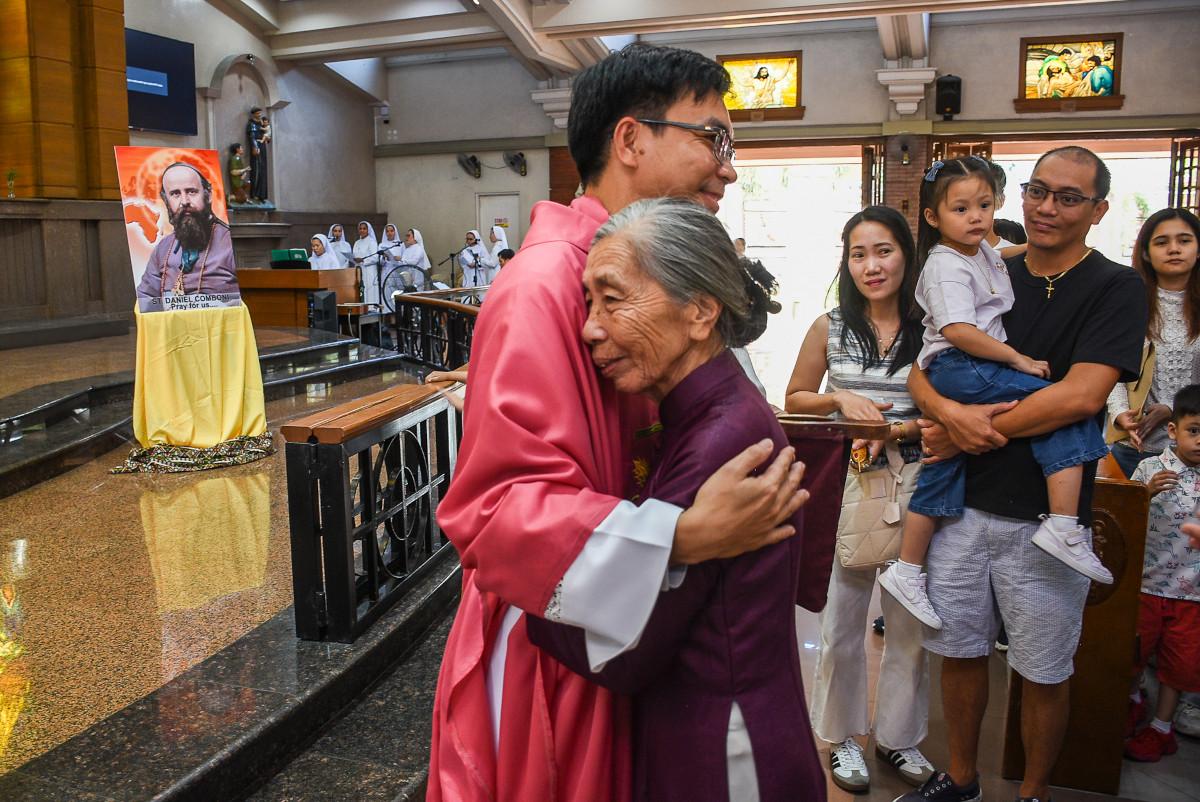
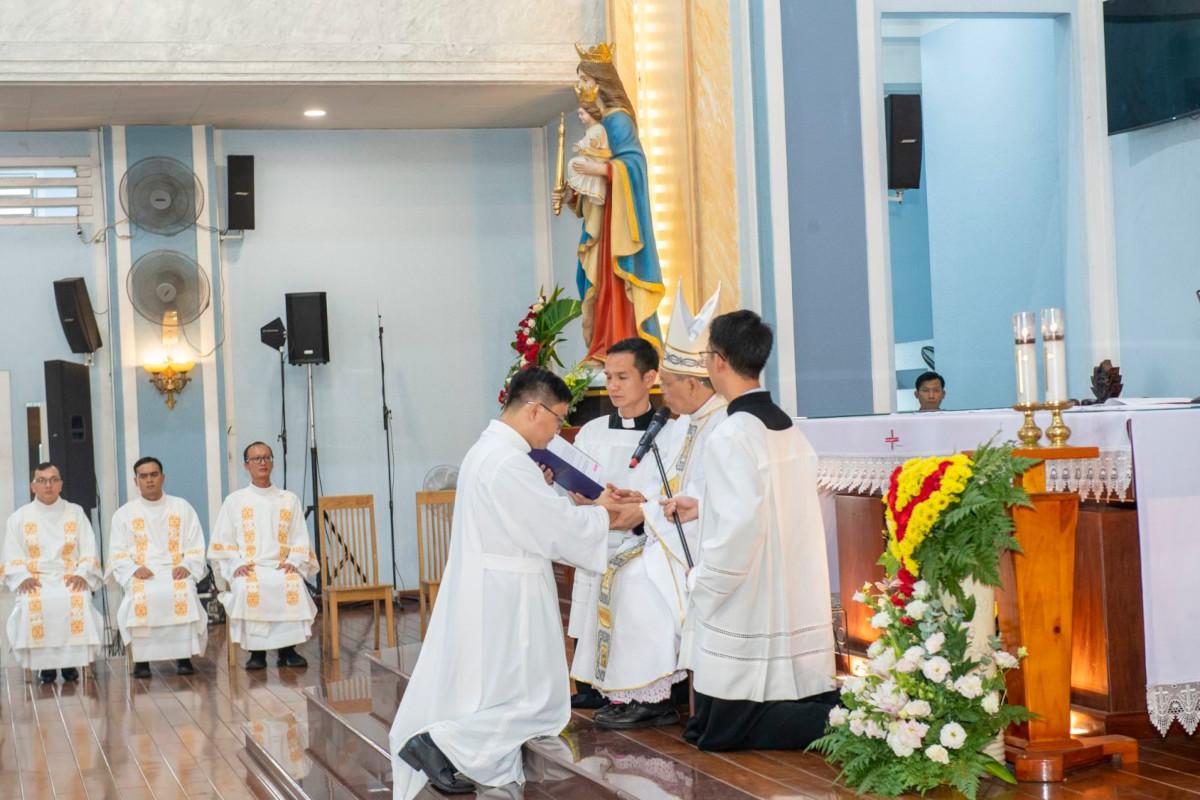
The first Vietnamese Comboni Missionary priest, Fr. Dang Khoa Nguyen Van Tien (Peter), was ordained on March 14, 2026, in Manila, and the second Vietnamese, Rev. Dang Thanh Sang (Dominic), was ordained deacon on May 27, 2026, in Ho Chi Minh City.
Pastoral care
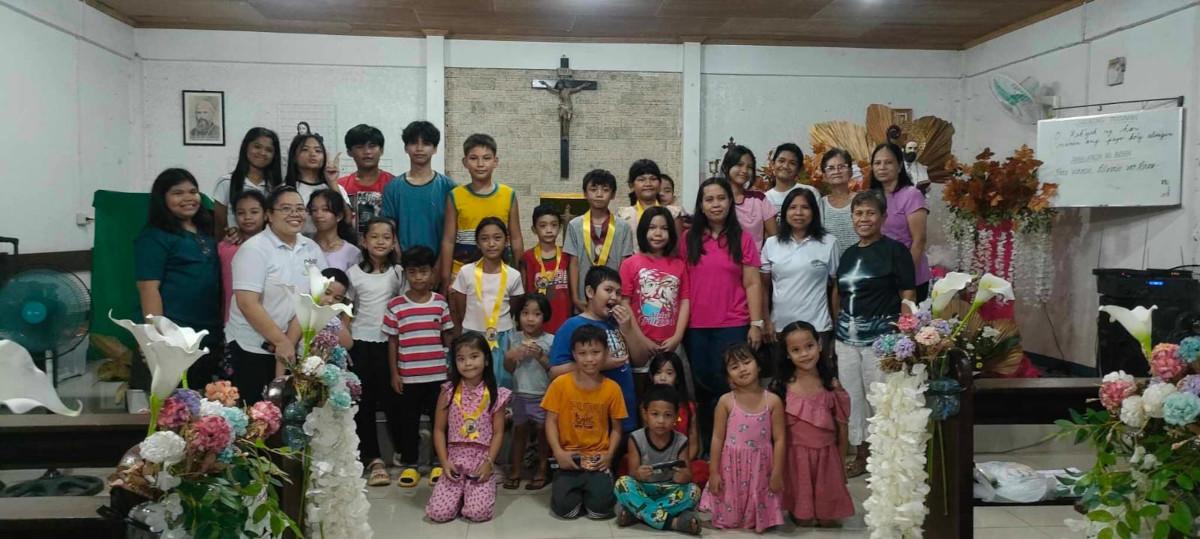
To further strengthen our work in the Philippines, particularly in pastoral care, vocation, and mission promotion, the Comboni Missionaries founded the St. Francis Xavier community in Bataan on March 15, 2022.
This new community was created to serve the Parish of St. Daniel Comboni in Limay, within the Diocese of Balanga. The parish covers the entire barangay of Duale, and some parts of the barangays Alangan, Reformista, and St. Francis 1 and 2.
Following additional discernment within the Delegation in alignment with forthcoming plans, and with the endorsement of the General Council, two young confreres have been appointed to Hong Kong. Their mission is to learn Cantonese in preparation for a future expansion of the St. Zhao Rong Community from Macau into Hong Kong, with the aim of serving the local church.
As Comboni Missionaries, we are devoted to returning to the core values of our mission (“returning to the essentials”), restructuring our circumscription, and enhancing our missionary responsibilities through the missionary requalification of our commitments.
Returning to the essentials implies prioritizing a deep, spiritual, and radical return to our foundational roots, centred on the Gospel and the charism of our founder, St. Daniel Comboni.
This “return to the essentials” also involves a shift towards personal conversion, community transformation, and a renewed dedication to the poorest and most abandoned, rather than merely focusing on activities, administrative tasks, or services.
Conclusively, the Comboni Missionaries, united with the universal Church, firmly believe that Asia stands as the principal frontier for the Church in the third millennium.
The continent’s increasing number of vocations, alongside its immense and varied population, makes it a pivotal region for the proclamation of the Gospel as the primary place of first evangelization among non-Christians (according to our Charism) and for fostering interreligious dialogue.
Victor Aguilar, MCCJ