
Daniel Comboni
Comboni Missionaries
Institutional area
Other links
Newsletter
Bongor, Chad and Comboni’s dream
Friday, July 31, 2026
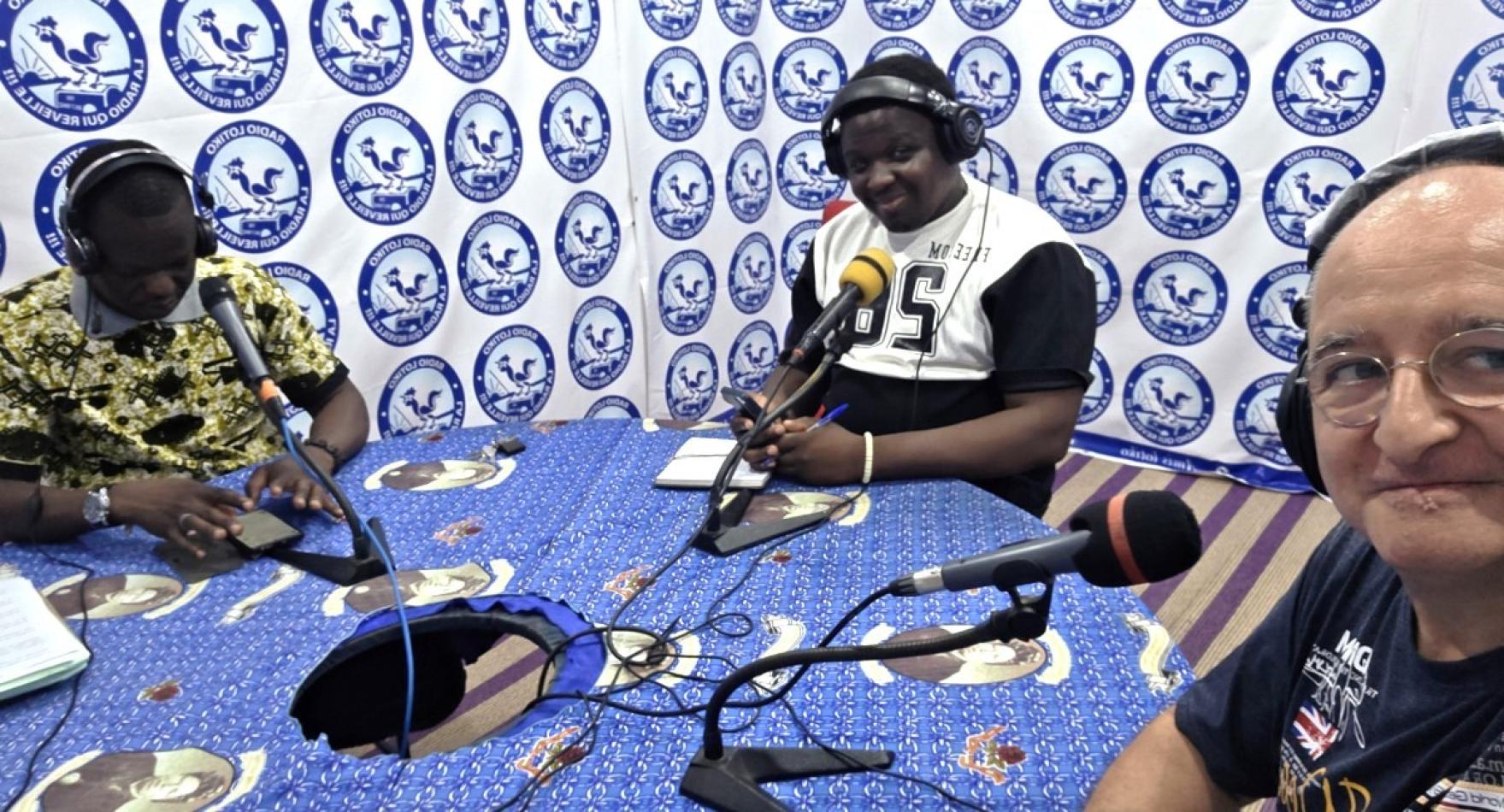
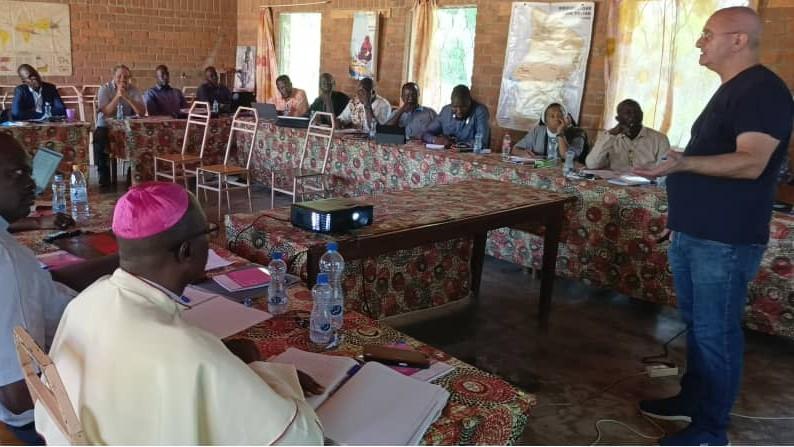
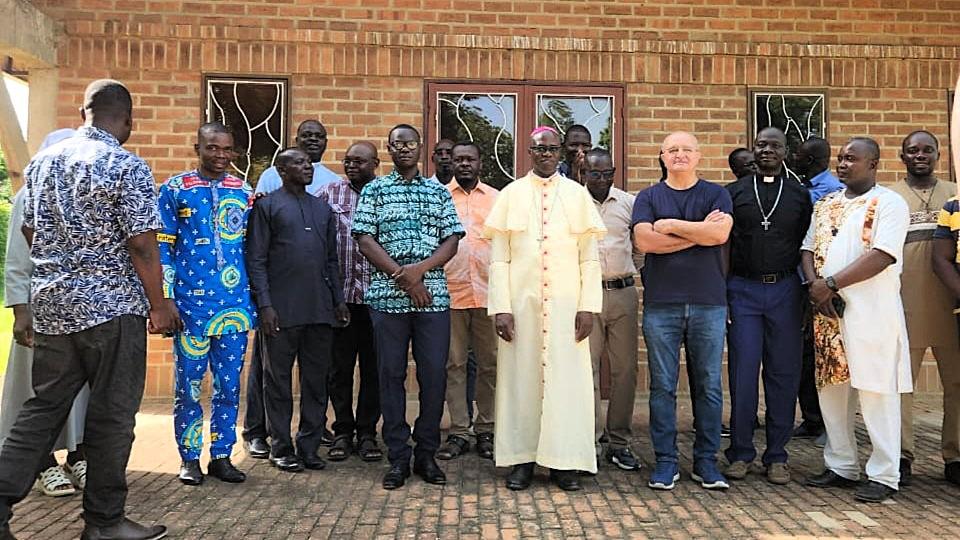
With the support of CREC International, the heads of Chad’s Catholic radio stations gathered in Bongor for the 2026 National Meeting of the Catholic Media Network of Chad. Alongside the bishops and the Chadian communicators stood the president of CREC International, Fr Fabrizio Colombo, a Comboni missionary: not a biographical footnote, but the key to everything that happened during those days.
A return, not a visit
“I come back to Chad with joy”: this is how Fr Fabrizio Colombo opened his address before Bishop Dominique Tinoudji, Bishop of Pala and president of the Episcopal Commission for Social Communications, before national coordinator Djimtamra Percy Séraphin, and before the directors, technicians and journalists of the diocesan stations gathered in Bongor as guests of Radio Terre Nouvelle.
That “come back” carries weight. The president of CREC International did not arrive in Chad as an outside consultant: he arrived as a Comboni missionary, a man of a missionary family with a long history in this land and on this continent — years shared, languages learned, radio stations switched on, recording studios built with very little. That is also the source of the frankness with which he admitted returning “with a concern: the time it has taken us to reach a definitive position and actually bring our Catholic media network into being.” A restlessness only someone who belongs to the story can afford to voice.
“Saving Africa through Africa”
The heart of his address was explicitly Combonian. Quoting the founder’s dream, St Daniel Comboni — saving Africa through Africa — Fr Colombo said he was glad to see it coming true “in your work and in your passion”, in a vision where African women and men are the true, and at times the only, protagonists of the continent’s present and future, and of this beloved Chad in particular.
This was no ceremonial quotation. Comboni’s Plan grew out of a precise insight: Africa is not regenerated by proxy, but through its own sons and daughters — trained, competent, responsible for their own institutions. Translated into the language of media in 2026, that is precisely what the participants in Bongor put on the table: stations that are capable rather than assisted, newsrooms that exchange content, a national coordination that belongs to Chadians and answers to Chad’s bishops, and a financial sustainability plan that reduces dependency instead of entrenching it.
Hence the sharpest sentence spoken in the hall: “This network project is not yet another large project designed to fill each of your stations with equipment. If that were all it was, I would not be here.” Yes, he explained, we are moving towards an audio and video technological shift that will bring every station up to the same level of resources — and that is the concrete commitment CREC International has taken on. But the goal is not the equipment: it is unity, in the spirit of UBUNTU, I am because others are. A spirit that speaks the same language as the “making common cause” with Africa that Comboni proclaimed in Khartoum before his people.
The medium is already the message
There is a second Combonian thread, less obvious but no less strong. Comboni was a communicator: he used the written word, appeals and publications to change the way Europe looked at Africa. Fr Colombo took up that legacy by quoting McLuhan — the medium is the message — to say that the very way the Church communicates is already proclamation. A network that shares programmes, events and information across every regionalism and every cultural or linguistic separatism is not a technical infrastructure: it is a visible form of communion, and it is already the Gospel before it even broadcasts it.
This vision met fully with the one set out by Bishop Tinoudji, who recalled that in a world marked by disinformation, division, conflict and hate speech, Catholic radio stations are not merely technical means of broadcasting but spaces of evangelisation, education and human promotion, giving a voice to those who have none. He publicly recognised in CREC International and its president a faithful partner, whose commitment “bears witness to a true missionary communion” and made possible both the national meeting and the finalisation of the project to strengthen and equip Chad’s Catholic media.
The decisions of Bongor
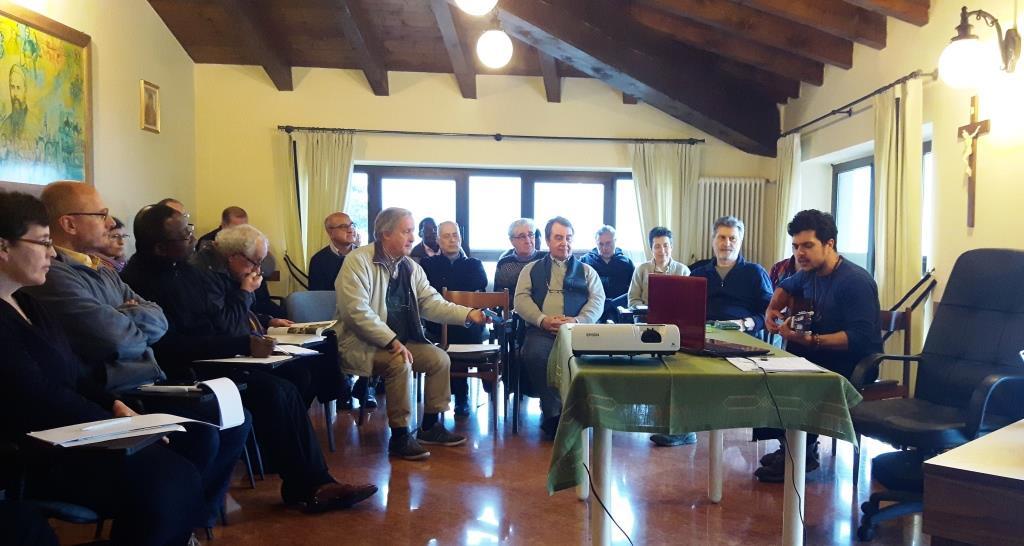
The sessions looked clearly at the situation of each station — strengths, difficulties, needs, and also the many initiatives already bearing hope — and set out concrete cooperation mechanisms: sharing radio productions, regularly exchanging news of national and diocesan interest, coordinating relations with partners, seeking new funding, and annual visits to the eight member stations. The meeting closed with the election of the new members of the network’s governing bodies and the adoption of resolutions to be forwarded to the Chad Bishops’ Conference as a roadmap for the years ahead, not least with a view to the centenary of the country’s evangelisation.
Bishop Tinoudji said he was convinced that, by remaining united and faithful to the commitments made in Bongor, the network can become a point of reference within ACERAC, the Association of Episcopal Conferences of the Central Africa Region.
A prophetic voice
In his closing words, Fr Colombo left the assembly both a mandate and a commitment. The mandate: “Let your communication also address the powerful and those who use violence and fear to dominate and repress. Like the prophets, be the voice of truth proclaiming that God does not love their deeds.” And further: “Work concretely on projects and on organizing your own sustainability, with creativity and courage, so as to become ever more independent.”
The commitment, made on behalf of CREC International: to represent the network and to see the project’s funding application firmly through to completion — a project placed, in his own words, “into the hands of God and of Christ the communicator”.
One hundred and sixty years after the Plan for the Regeneration of Africa, the method has not changed: not doing for but doing with. In Bongor, amid microphones and roadmaps, that dream simply changed technology.