
Daniel Comboni
Comboni Missionaries
Institutional area
Other links
Newsletter
Comboni Bishops: “It is from the heart that mission is born”
Tuesday, September 22, 2026
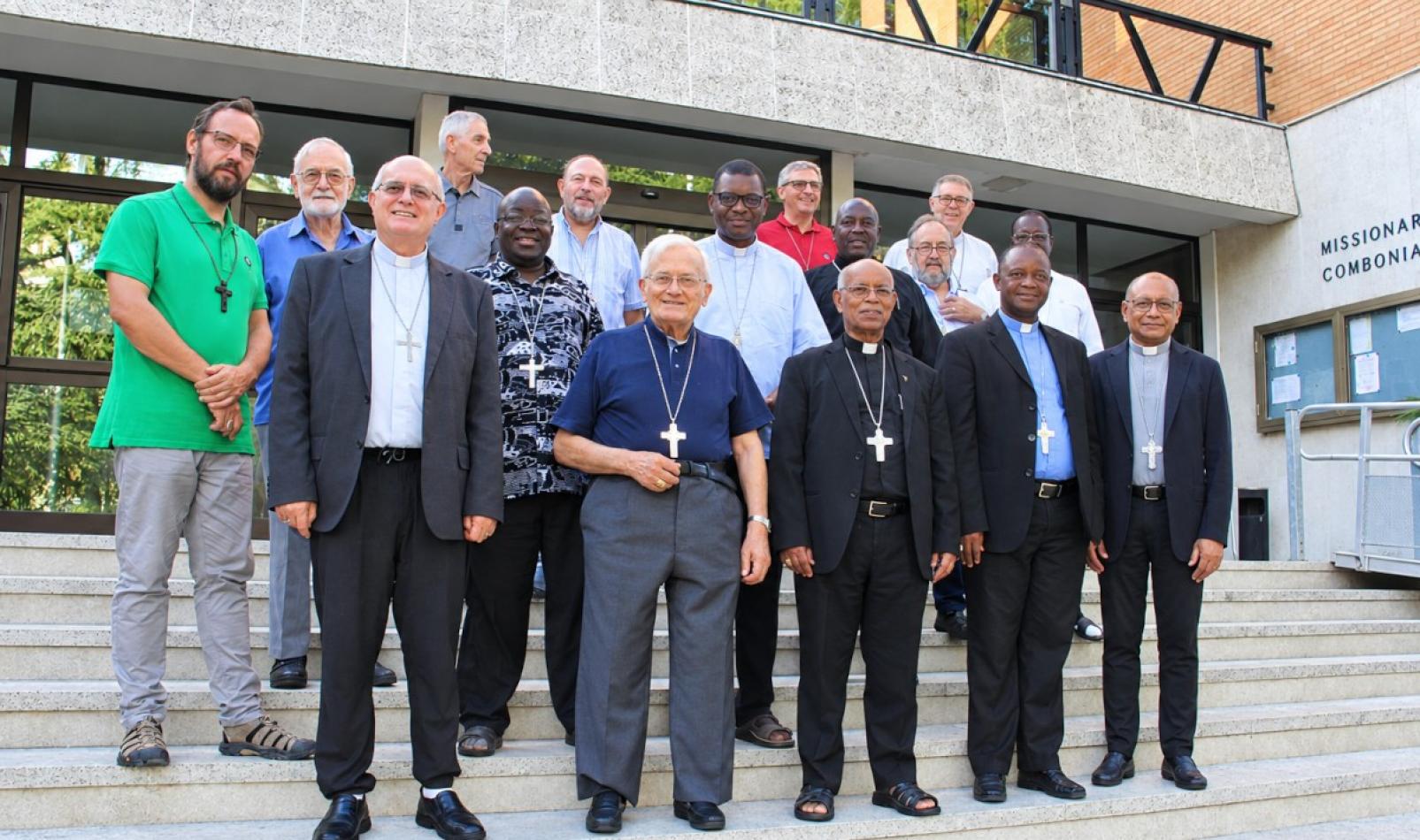
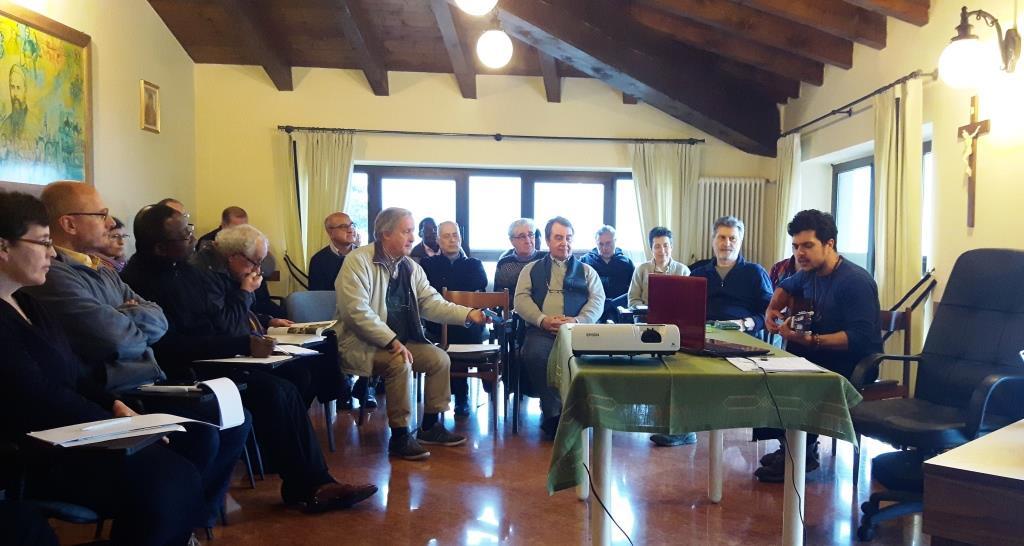
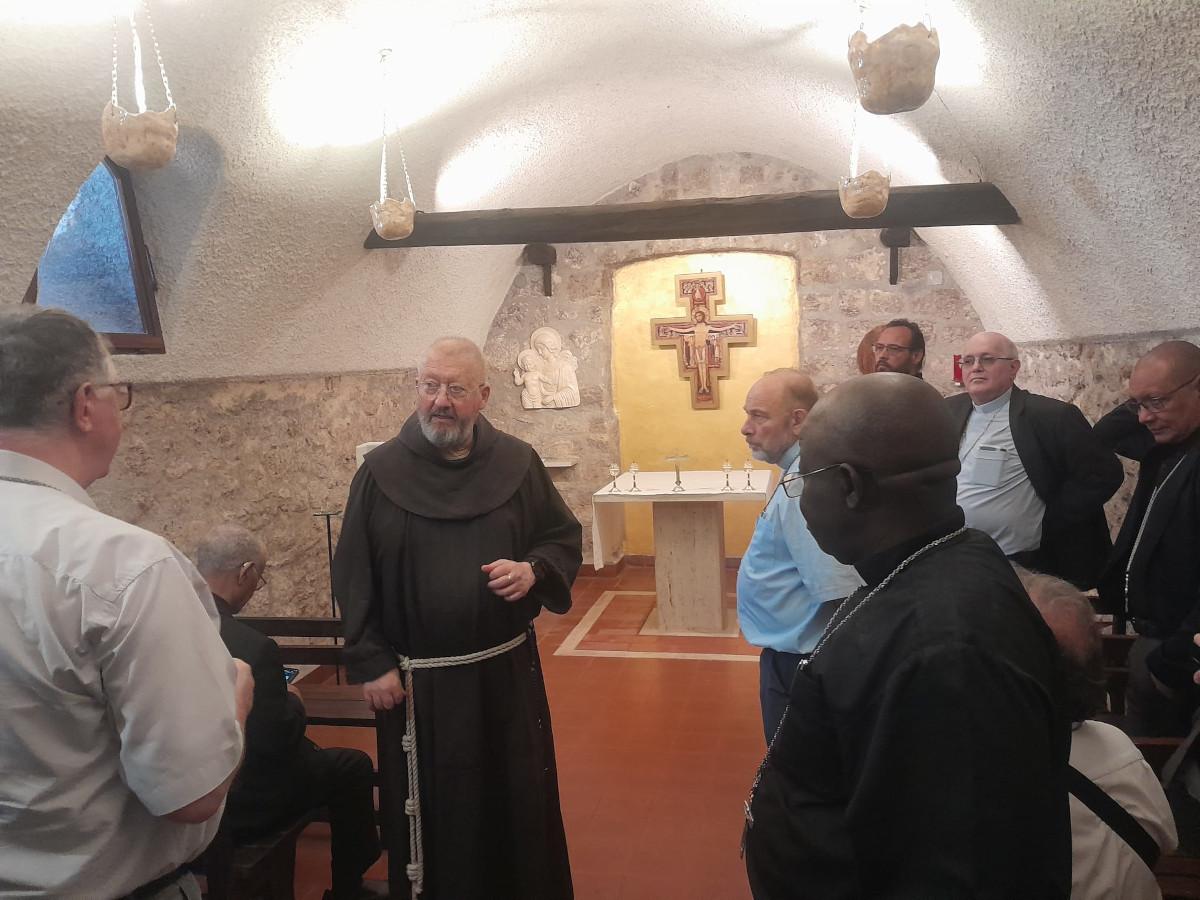
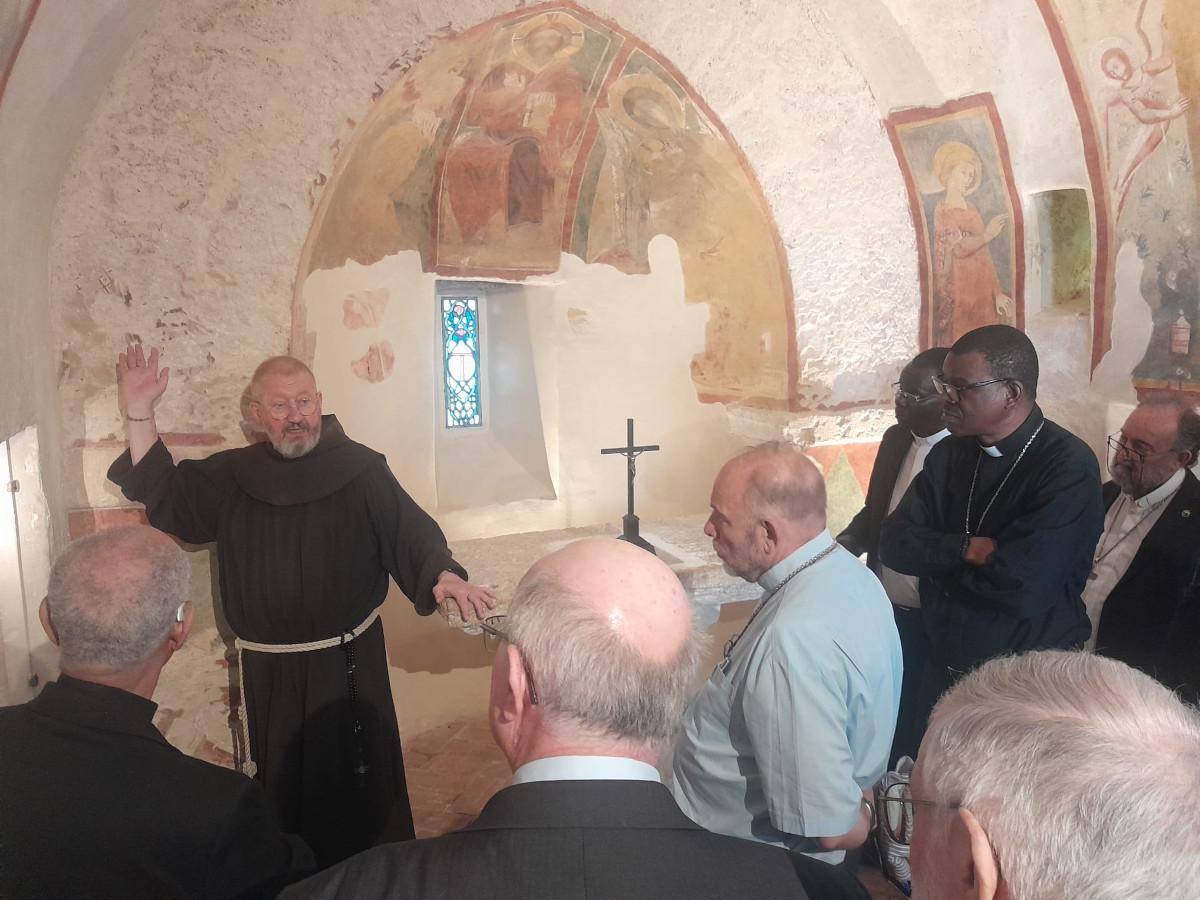
Sixteen of the 23 Comboni bishops serving the local Churches in Africa and Latin America met in Rome from September 16 to 21 for a meeting of formation and sharing, also leaving a message for the Comboni Family at this time of reconfiguration.
MESSAGE OF THE COMBONI BISHOPS TO THE COMBONI FAMILY
“When he saw the crowds, he felt compassion for them” Mt 9:36
Dear brothers and sisters,
we, the Comboni bishops, met at the General House of the Comboni Missionaries of the Heart of Jesus for a moment of ongoing formation and sharing. With this letter, we wish first of all to express our deep gratitude for this opportunity to meet and for the welcome we received at the General House. Being here, in the house that preserves the memory and journey of the Institute, allows us to share not only an institutional moment, but above all a Comboni fraternity that springs from the same missionary calling.
We wish to give thanks for the gift of missionary vocation in our Institutes, for the service that so many brothers and sisters offer to the Church on the different continents and, above all, for the witness of so many missionaries who, often in silence and in difficult situations, continue to live the charisma of Comboni faithfully, participating in the mission of Christ wherever the Church is called to be a presence, listening, reconciliation and hope.
We would like to share with you a word that seems particularly important to us at this moment in the life of our Institutes and the mission: the heart. Pope Francis, in Dilexit nos, invited us to return to the heart. Not as an inward-looking refuge, but as the place where the person rediscovers his or her unity, recognizes what truly matters and opens himself or herself to the encounter with God and with others. Pope Leo, with Dilexi te, has deepened this theme by speaking of the need to love the poor. Today, as always, the world needs a Church that sets no limits to love, that knows no enemies to fight but only men and women to love (DT 120). Love for the poor is the evangelical hallmark of a Church faithful to the heart of God (DT 103).
It is from the heart that mission is born. And perhaps precisely here lies one of the deepest challenges we face today: renewing mission means, first of all, allowing our hearts to be renewed. In a time of epochal change, our Institutes too are undergoing profound transformations and feel the need to rethink structures and ways of operating. Mission calls us to make courageous choices. But every reorganization acquires its true meaning when it arises from listening to God’s call and remains oriented towards the good of the mission, without ever losing sight of the good of each person.
For this reason, we must not simply ask ourselves: how can we continue to do what we have always done with fewer people and fewer resources? The deeper question is: what is the Holy Spirit asking of the Comboni charism today? What new form of mission? What renewed understanding of our way of being Church? Which structures are truly at the service of the Gospel and which, instead, risk becoming ends in themselves? The reorganization of our Institutes is therefore a necessary journey to be undertaken without fear and can also become a grace: an opportunity to return to what is essential and to allow the charism received from Comboni to find new forms, suited to the realities in which we are called to live today. We hope that this journey will take place in a spirit of synodality, through a renewed relationship between the local Churches and the Institutes of consecrated life, between priests and lay people, women and men, the elderly and the young.
Mission is participation in the mission of Christ. And a missionary Church is a Church that does not live for itself, but for others. For this reason, we need a renewed understanding of our way of being Church. We cannot proclaim reconciliation if our communities do not become places of reconciliation. We cannot speak of peace if we do not learn to preserve peace in our relationships. We cannot proclaim fraternity to a divided world if we ourselves do not become brothers capable of listening to one another, forgiving one another and supporting one another.
For this reason, we would also like to renew together an appeal for peace, disarmament and reconciliation. We live in a world marked by wars, violence, rearmament, polarisation and fear. In many of the places where missionaries are present, populations carry in their bodies and memories the wounds of conflicts. As a Church, we cannot resign ourselves to the logic of violence. And we missionaries are called to be artisans of peace. Disarmament concerns not only political and international decisions: it also calls for conversion of the heart and fosters a non-violent and peaceful disposition in relationships. It means disarming our hands, but also our words, judgments, fears and mistrust. A reconciled mission can become a seed of reconciliation.
During our meeting, we encountered another word that seems decisive to us: care. Care for ourselves, for our brother, for the ecclesial communities to which we are sent, together with care for our common home. Care is neither weakness nor withdrawal into ourselves, but loving attention to life. We are aware that care is an essential part of the ministry of a bishop; therefore, we ask the Lord for the wisdom and sensitivity necessary to be welcoming fathers and companions on the journey of our communities. The Church also needs missionaries who know how to care for their spiritual life, their humanity, their formation, the deepening of Comboni spirituality, their health, their relationships and their vocation. A missionary who does not care for himself risks, over time, losing the ability to care for others. We need to build communities in which everyone can feel welcomed, listened to and accompanied. We need to learn once again that our brother is not an obstacle to mission: he is part of the mission itself. And we need to care for creation, because in the beauty of the earth we can still recognise something of the beauty of God’s love.
Dear brothers and sisters, looking at the world with the heart of Christ, we no longer see merely problems to be solved, but people to love, communities to accompany in faith, wounds to bind up, and beauty to preserve. The times in which we live are not easy, but if our heart remains aflame with the love of Christ, then, even in our poverty, we will be hope for the world. Let us therefore ask the Lord to renew in us the missionary heart of Comboni. A heart capable of seeing, listening, making common cause with those who suffer and with those who rejoice, sharing their wounds and their hopes.
We assure you of our prayers and ask you to pray for us too, so that together we may serve the People of God with humility and courage.
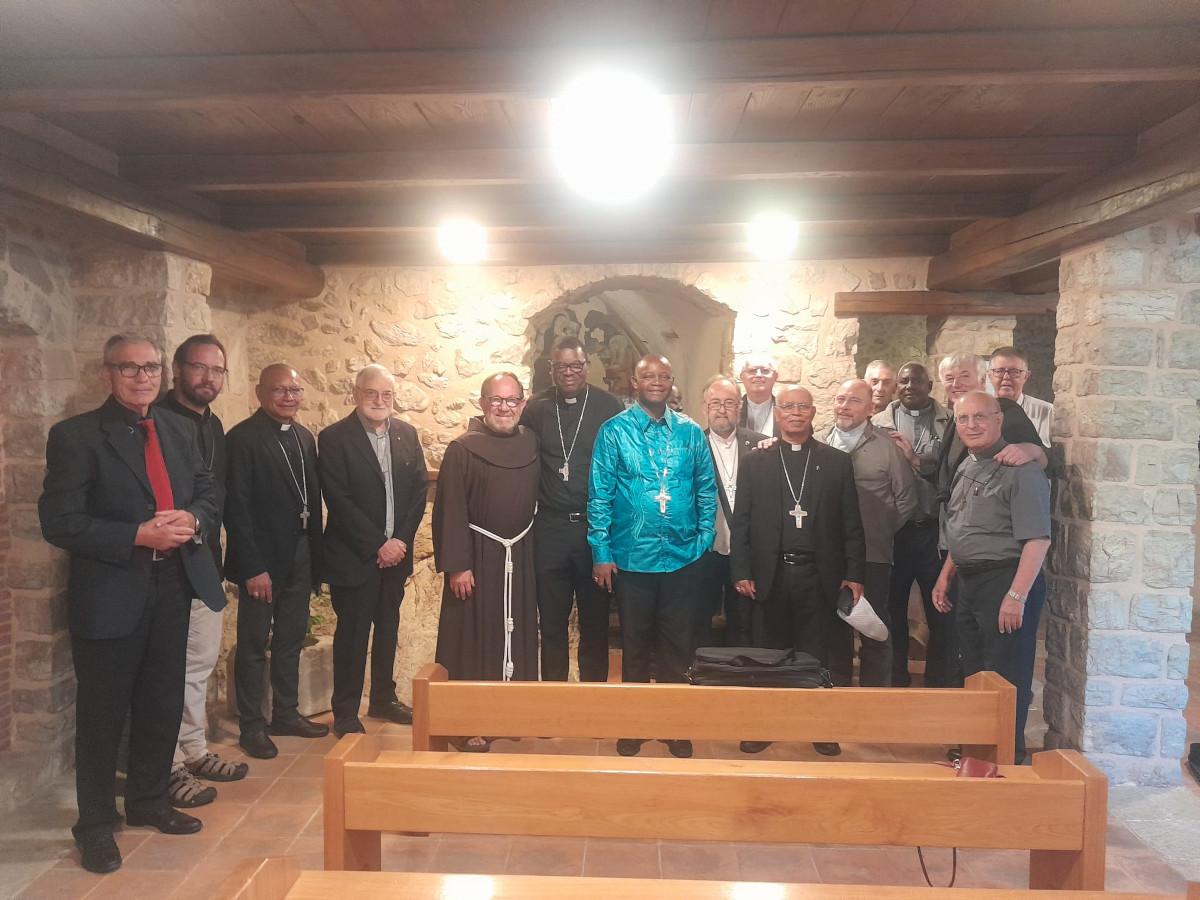
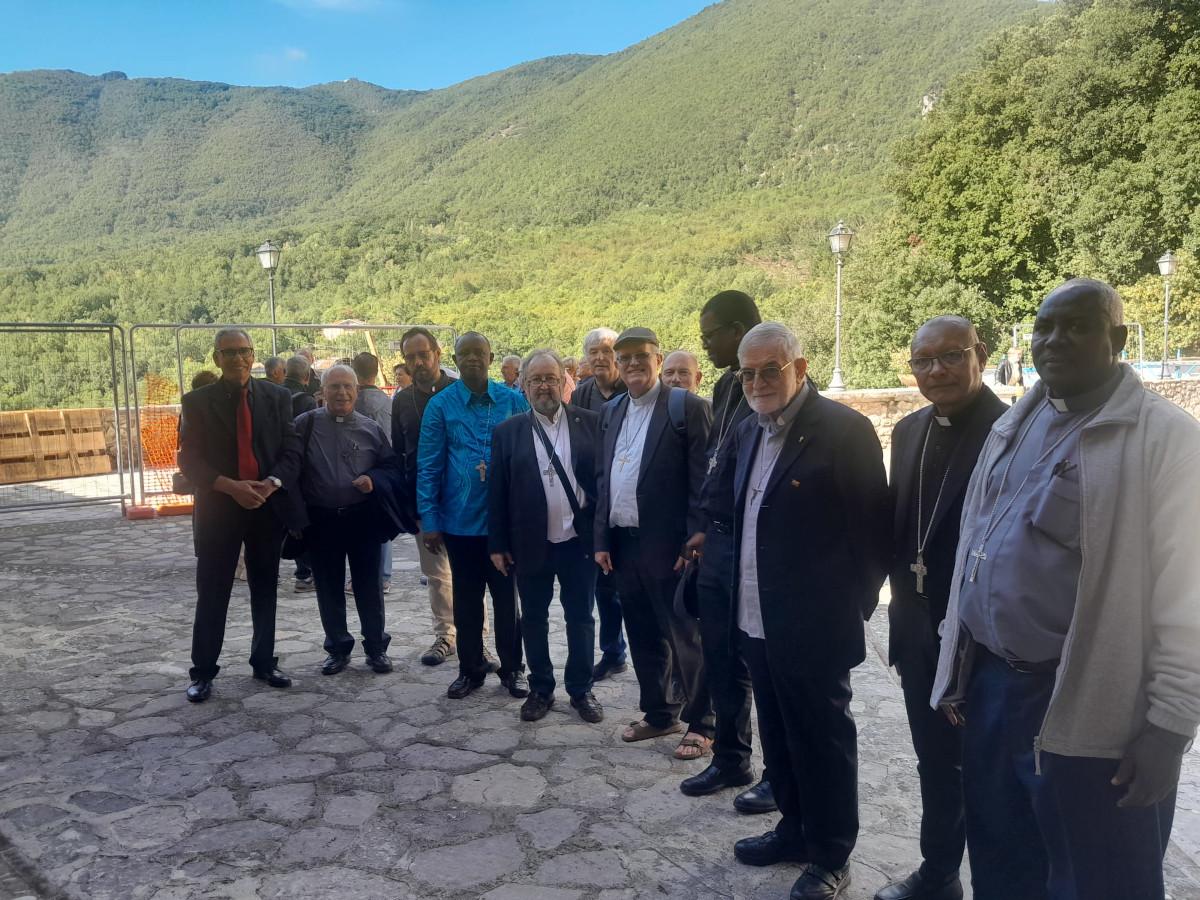
The Comboni Bishops