
Daniel Comboni
Comboni Missionaries
Institutional area
Other links
Newsletter
Brescia commemorates the prophetic legacy of Dom Franco Masserdotti
Monday, September 28, 2026
Brescia has commemorated the 20th anniversary of the death of Dom Franco Masserdotti, Comboni Bishop of Balsas, Brazil, with two Masses, a symposium and a gathering to remember his life and prophetic witness.
The victim of an ordinary road accident on September 17, 2006, when he was knocked down while cycling on a road in Balsas, Brazil, on a Sunday afternoon, Dom Franco Masserdotti was remembered in Brescia through three events.
The first was a Mass celebrated on September 17 in Concesio, presided over by Fr Mario Andrighetto, with the homily given by Fr Severino Perini, both of whom are missionaries in Brazil.
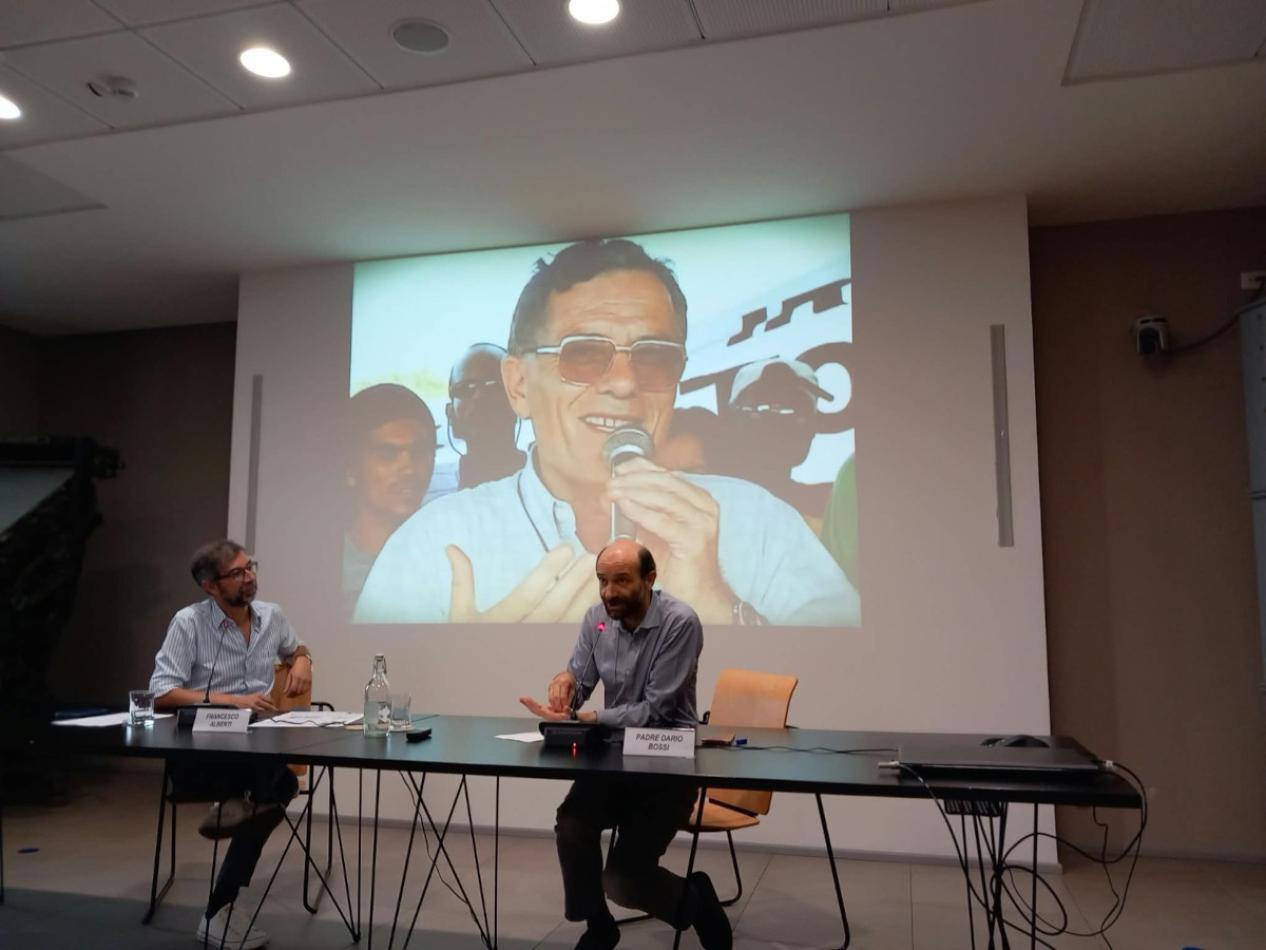
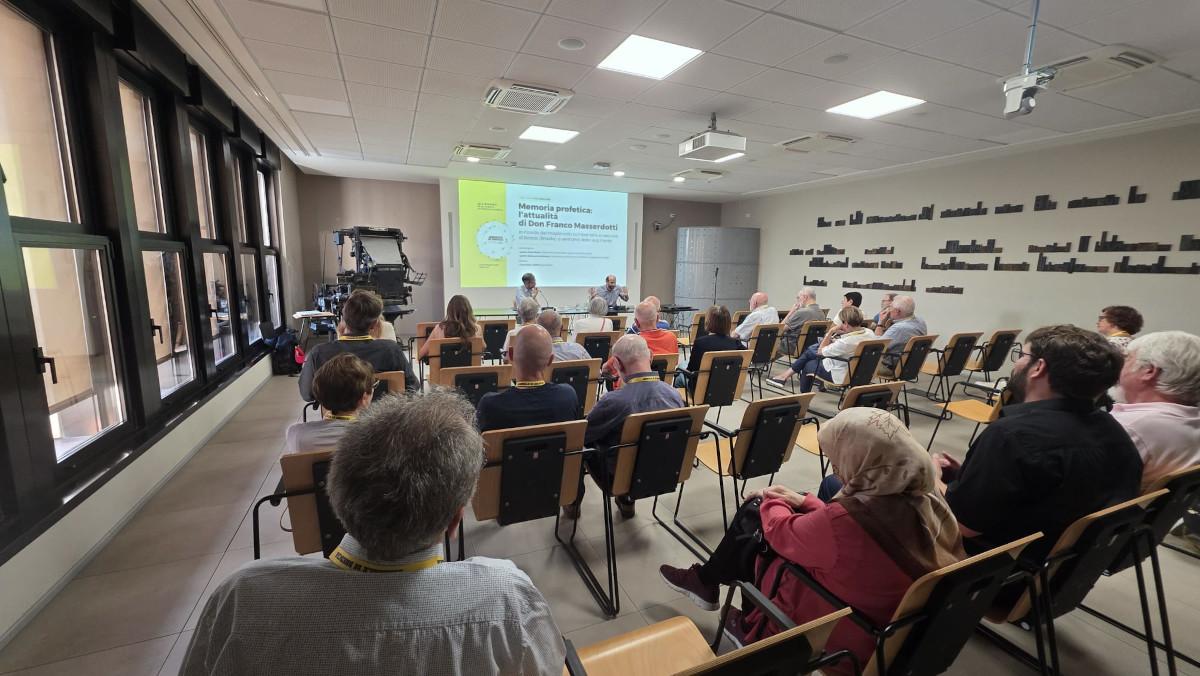
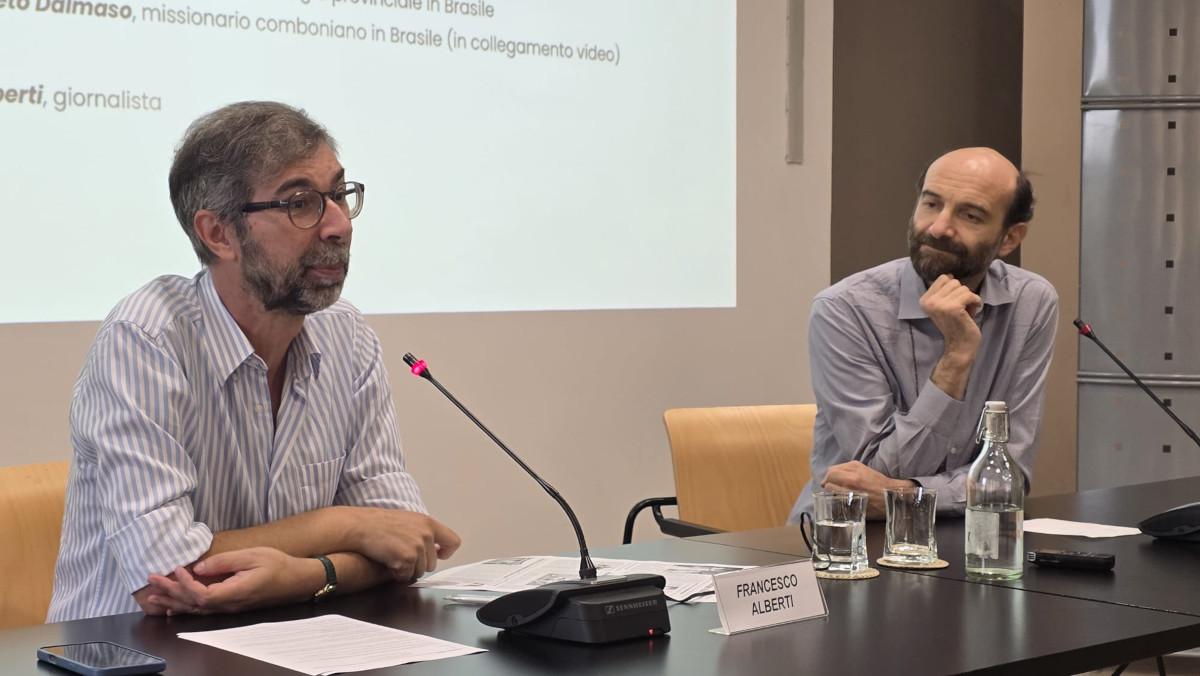
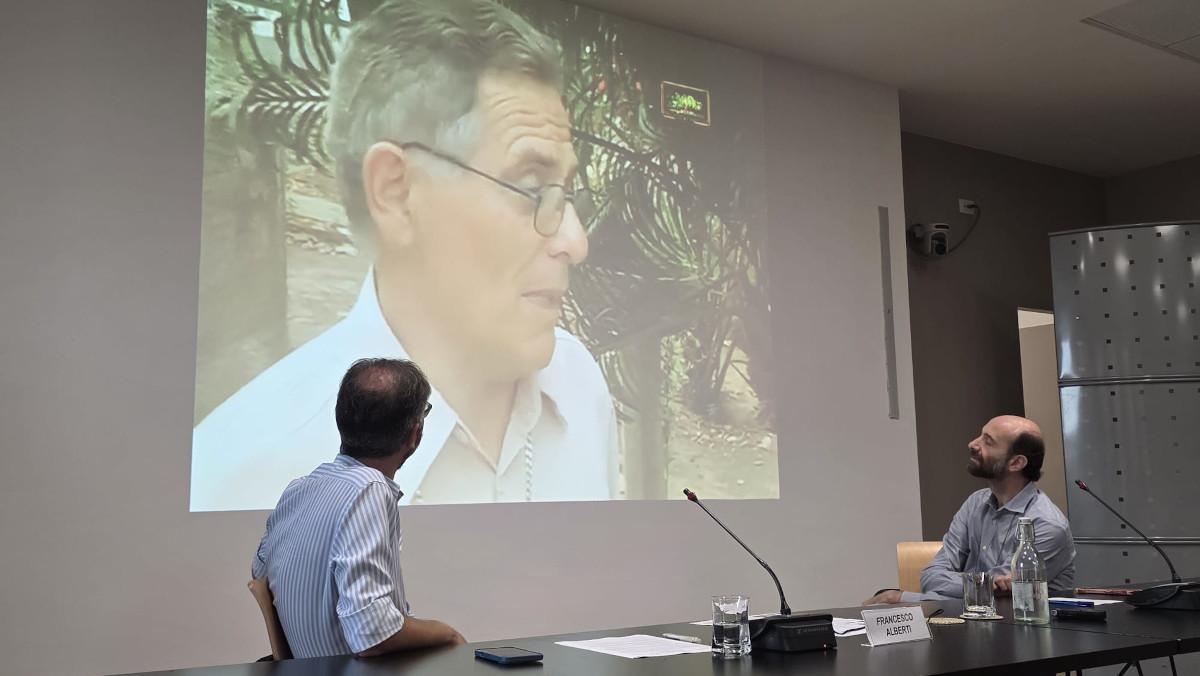
The second event, on Thursday, September 18, was a symposium hosted at the offices of the Giornale di Brescia entitled Prophetic memory: the relevance of Dom Franco Masserdotti today. Journalist Francesco Alberti was in conversation with Fr Dario Bossi and, joining remotely, Fr Mansueto Dal Maso, both of whom have extensive experience in Brazil and a deep knowledge of Dom Franco Masserdotti.
Dom Franco was described as a brilliant, pleasant and intelligent person, grounded in serious theological and sociological studies: a missionary in Brazil, lively and creative, a member of the Comboni General Council, a formator at the Comboni scholasticate in São Paulo and, finally, Bishop of Balsas.
Dom Franco was a missionary who lived among a people impoverished by injustice and who, even as a bishop, continued to uphold the Latin American Church’s preferential option for the poor, with great passion and at the risk of his own life.
His was a style of presence in front of, among and behind the people, marked by a simple, empathetic and courageous relationship. It almost seems that Dom Franco anticipated some of the expressions later associated with Pope Francis: a Church that goes out to the peripheries, smelling like the sheep, and a Church as a field hospital.
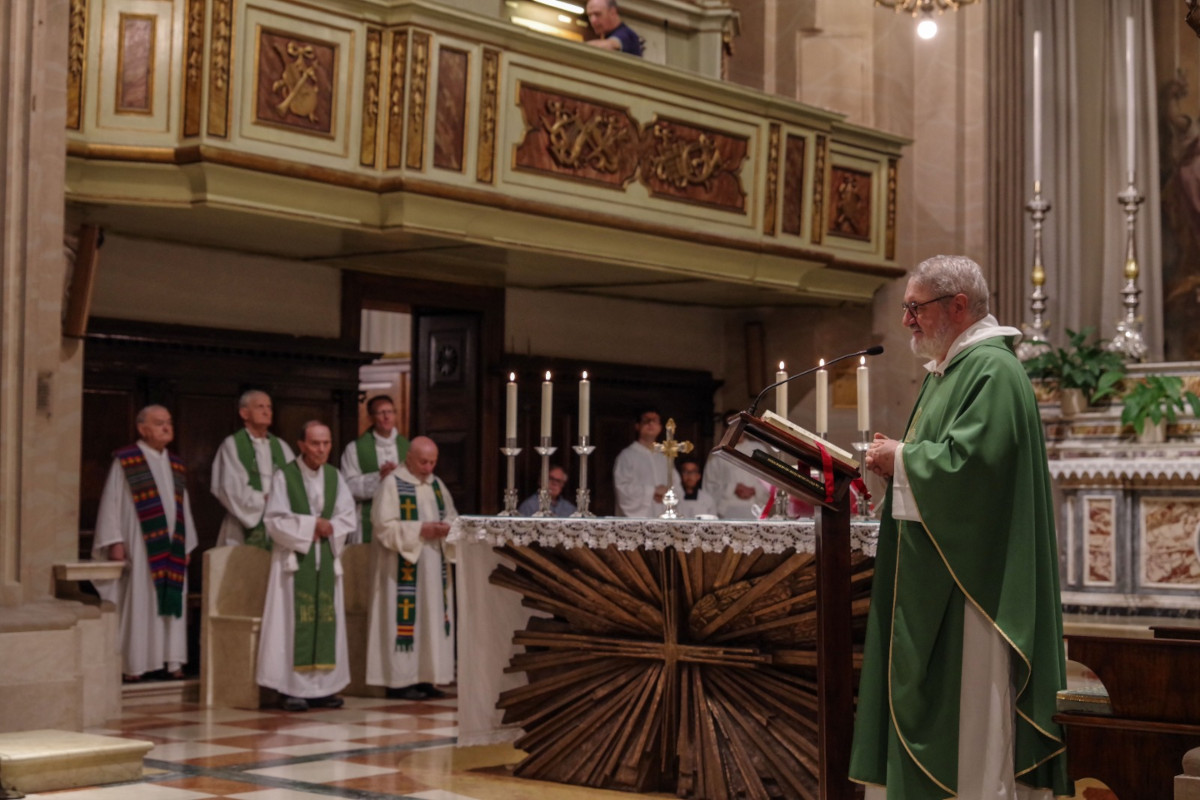
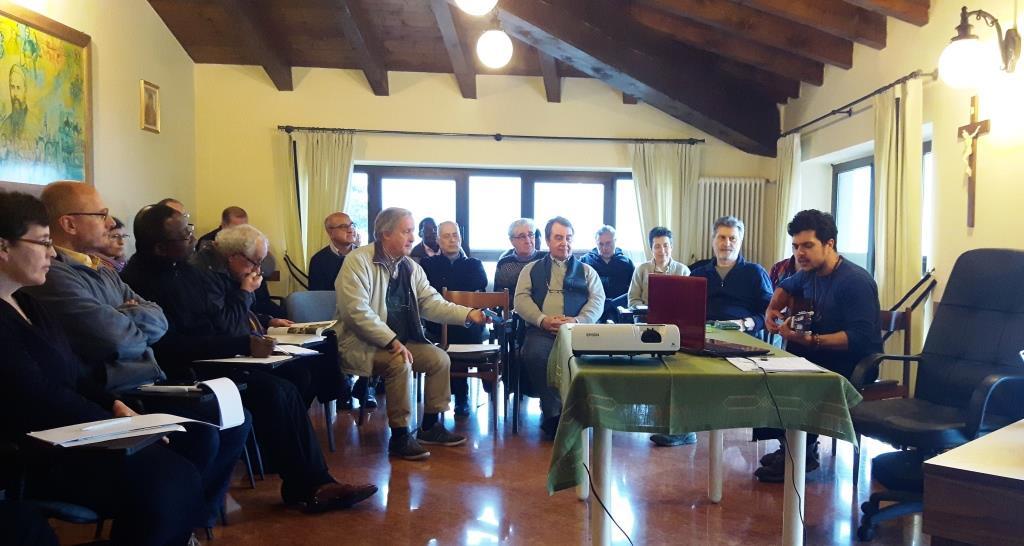
On Sunday, September 20, a Mass was celebrated in his home parish of Fiumicello (Brescia), presided over by Fr Dario Bossi, with around fifteen Comboni confrères present.
In his homily, Fr Dario highlighted the work Dom Franco carried out towards the building of the Kingdom of God, which he described as the growth of what is truly human. He summed up Dom Franco’s work with an image: when you encounter an impoverished man sitting on the bank of a river, you give him a fish to help him, but you also encourage him by giving him a fishing rod and, together with him, seek to clean the river of everything that is polluting it.
Towards the end of the Mass, his niece Federica gave a short address in which she described her uncle, Dom Franco, very well:
“Dom Franco was a direct person who spoke to the heart and left a good feeling in those who listened to him. He had a deep spirituality; he was charismatic yet simple, with an extraordinary ability to build relationships. He had a big heart, a youthful spirit and a sense of humour. His life was completely dedicated to serving people made poor, to dialogue and to the pursuit of justice.”
There was a good turnout for the Mass.
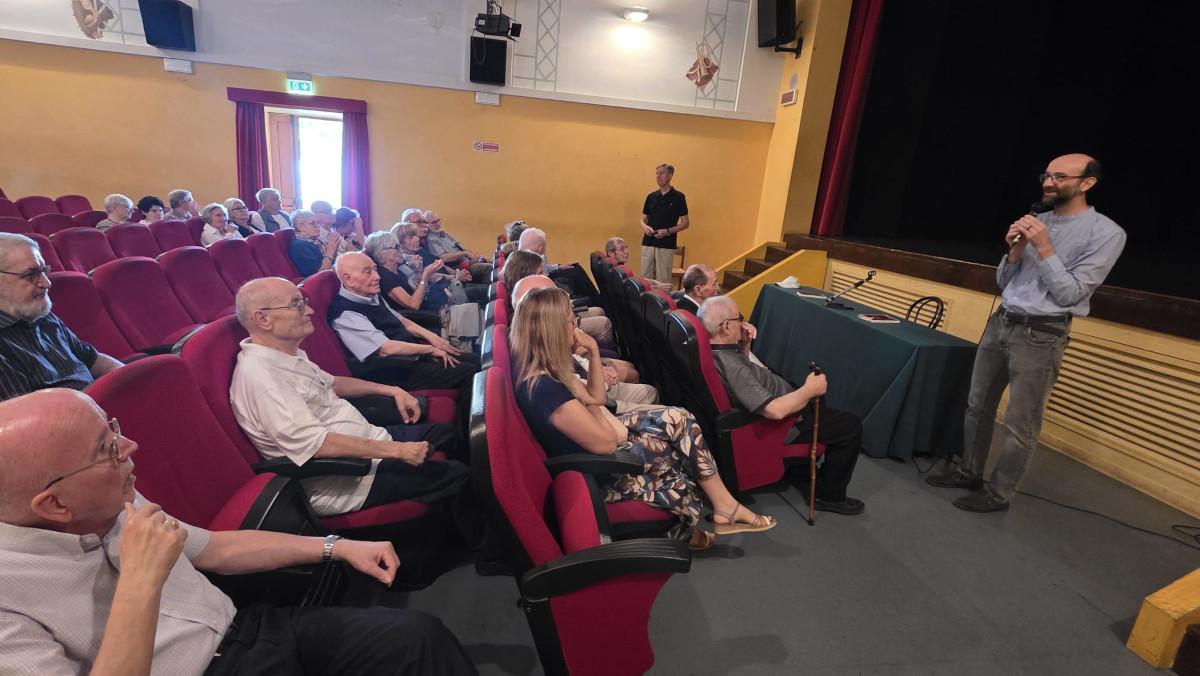
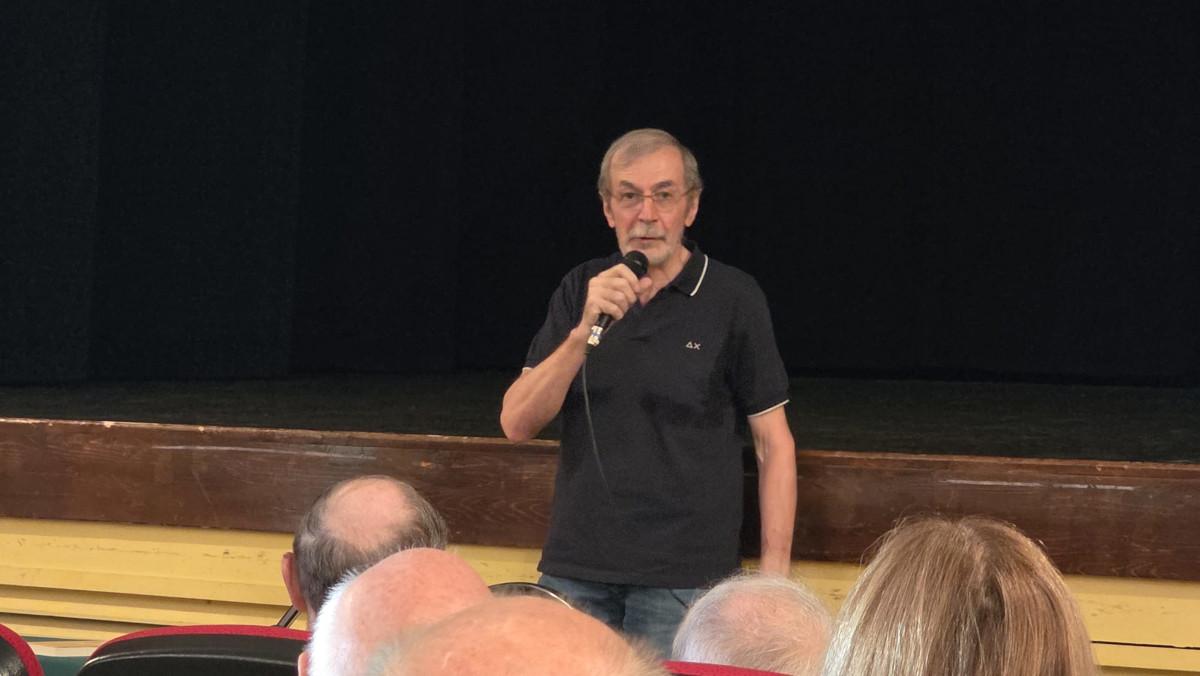
The Mass was followed by a gathering in the parish hall, where Fr Giovanni Munari, a Comboni missionary in Brazil, gave a moving and passionate account of Dom Franco’s life to a large audience. Among those present was a significant group of friends from Trentino who had always worked alongside Dom Franco and who continue today to support the mission in Brazil.
Fr Munari presented who Dom Franco Masserdotti was, and remains, through four distinct stages of his missionary journey: his years of formation; his first period of mission in Brazil; his second period of mission in Brazil; and Franco the bishop.
Dom Franco undertook his theological formation at a unique moment in the life of the Church: the conclusion of the Second Vatican Council. He subsequently studied sociology at the University of Trento, at the height of the student movements calling for active participation in society, in education and in politics. He experienced the ferment of a Church that wanted to change and place itself at the service of the world, in a university sociology environment marked by intense protest, alongside fellow students who would later be among the founders of the Red Brigades.
During his first period of mission in Brazil, he embraced the vision of a conciliar Church adopted by the bishops of Latin America, expressed in the Pact of the Catacombs and developed at the Medellín Conference. It was an exhilarating time of great hope, as the Church embraced the guidelines established by the Latin American bishops: the preferential option for the poor, Basic Ecclesial Communities and the lived experience of ecclesial ministries.
During his second period of mission in Brazil, Dom Franco found an entirely changed environment, with a Church that had come to a standstill after the choices made by the Latin American bishops were deemed “suspicious” by the Vatican. Through targeted interventions, the Vatican brought all these initiatives to a halt and effectively brought to an end much of the reflection that had taken place. Liberation Theology was also beginning to fade. Dom Franco, who had always sought to remain in communion with the Church, found himself torn in his obedience between these two very different visions of the Church.
Dom Franco was first appointed coadjutor to Bishop Rino Carlesi and then Bishop of Balsas. In addition to all his work in the diocese, characterised by a style of closeness to the people, he was asked to serve as the bishop responsible for pastoral ministry among Indigenous peoples, with whom he deeply identified.
One incident alone is enough to illustrate his commitment to Indigenous peoples. The Indigenous community decided not to take part in the 2000 March commemorating the five hundredth anniversary of the evangelisation of Brazil. Instead, they gathered separately in a place not far from the large official gathering. Dom Franco was with them.
At a certain point, the group of Indigenous people was intercepted by the security forces, who made a number of arrests. Dom Franco was among those arrested. An officer recognised him and decided to release him, but he refused, saying: “These are my people; I am staying with them.” In the end, after six hours, everyone was released.
Fr Munari’s presentation was warmly received and applauded, with the applause expressing at the same time appreciation for Dom Franco Masserdotti and an embrace of his message and witness of life.
Fr Gaetano Montresor, MCCJ