Daniel Comboni
Comboni Missionaries
Institutional area
Other links
Newsletter
A pilgrimage towards Santiago and South Sudan
Friday, October 16, 2026
Comboni missionary Father Daniele Moschetti walked the Portuguese Coastal Way of St James, setting off on 28 September from Matosinhos, on the outskirts of Porto, and arriving in Santiago de Compostela on 12 October, after a fortnight of pilgrimage. The journey is a preparation for his return to South Sudan, scheduled for 20 November, after eight years spent in Italy.
South Sudan is the youngest country in the world. Independent since 2011, it descended into civil war as early as December 2013. The 2018 peace agreement did not heal the wounds, and the population continues to live amid insecurity, displacement and fragile institutions.
It is there that Father Daniele will return, and it is to that people that he has dedicated every stage of his journey, like a prayer that never ceases. “Lots of prayers for all of you,” he wrote each evening from a different hostel. And whenever he found a church open, he attended Mass in Portuguese: “You can’t understand it, but it’s always good.”
Four nations in one boat
Maria Caianiello, a volunteer and collaborator with the Black and White Association in Castel Volturno, where Fr Daniele served, accompanied him on the journey. They were supposed to be three, but Lorenzo Mottola, a paediatrician, was unable to join them.
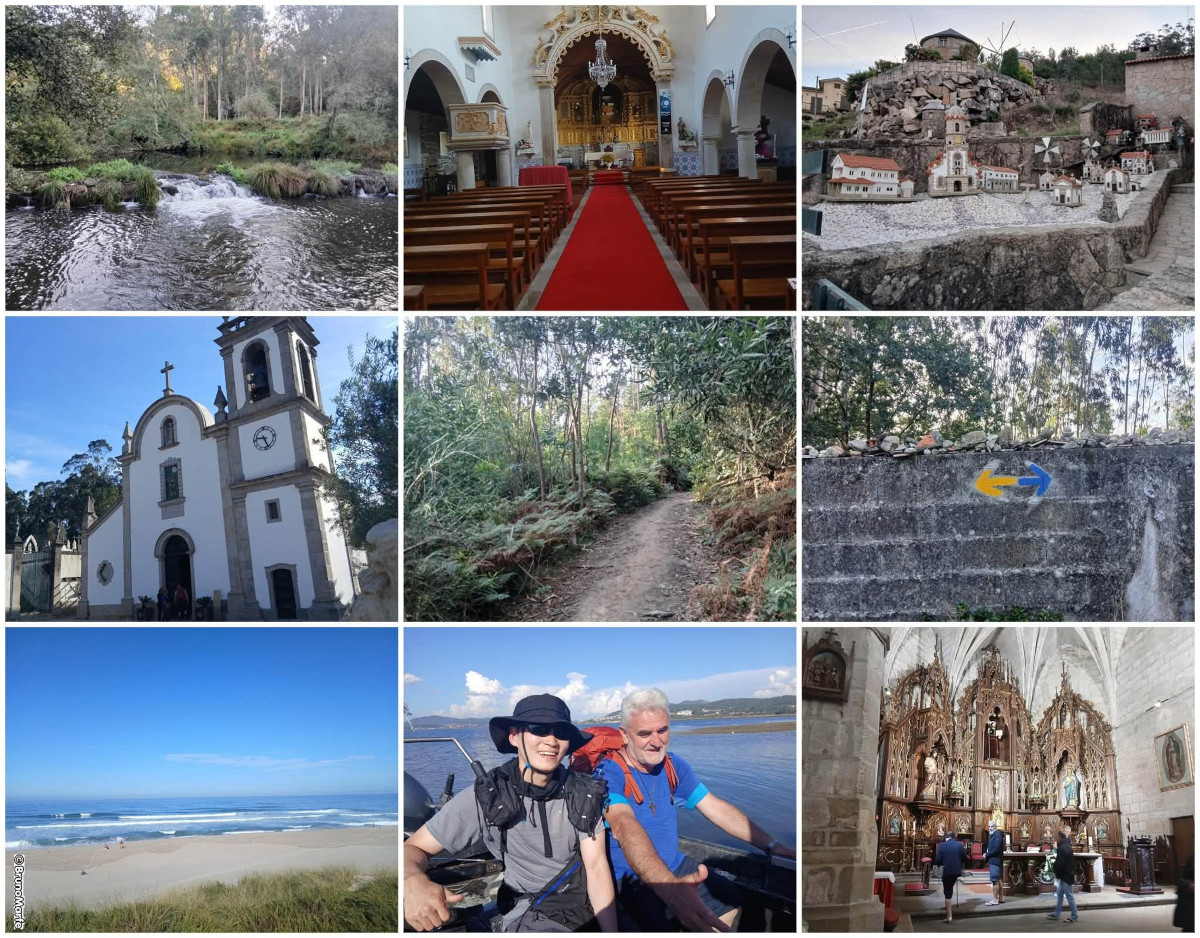
They set off with little: light rucksacks, a blister each, and the sound of the waves following them even when the path wound its way between the trees.
Then the road demanded more. One day, they walked 35 kilometres. When they arrived in Caminha, a small Portuguese border town, the municipal hostel they had hoped to stay in was closed for renovation, while all the private accommodation was fully booked. On the riverbank, a little boat was bobbing on the water, ready to take people across to the other side, towards Spain.
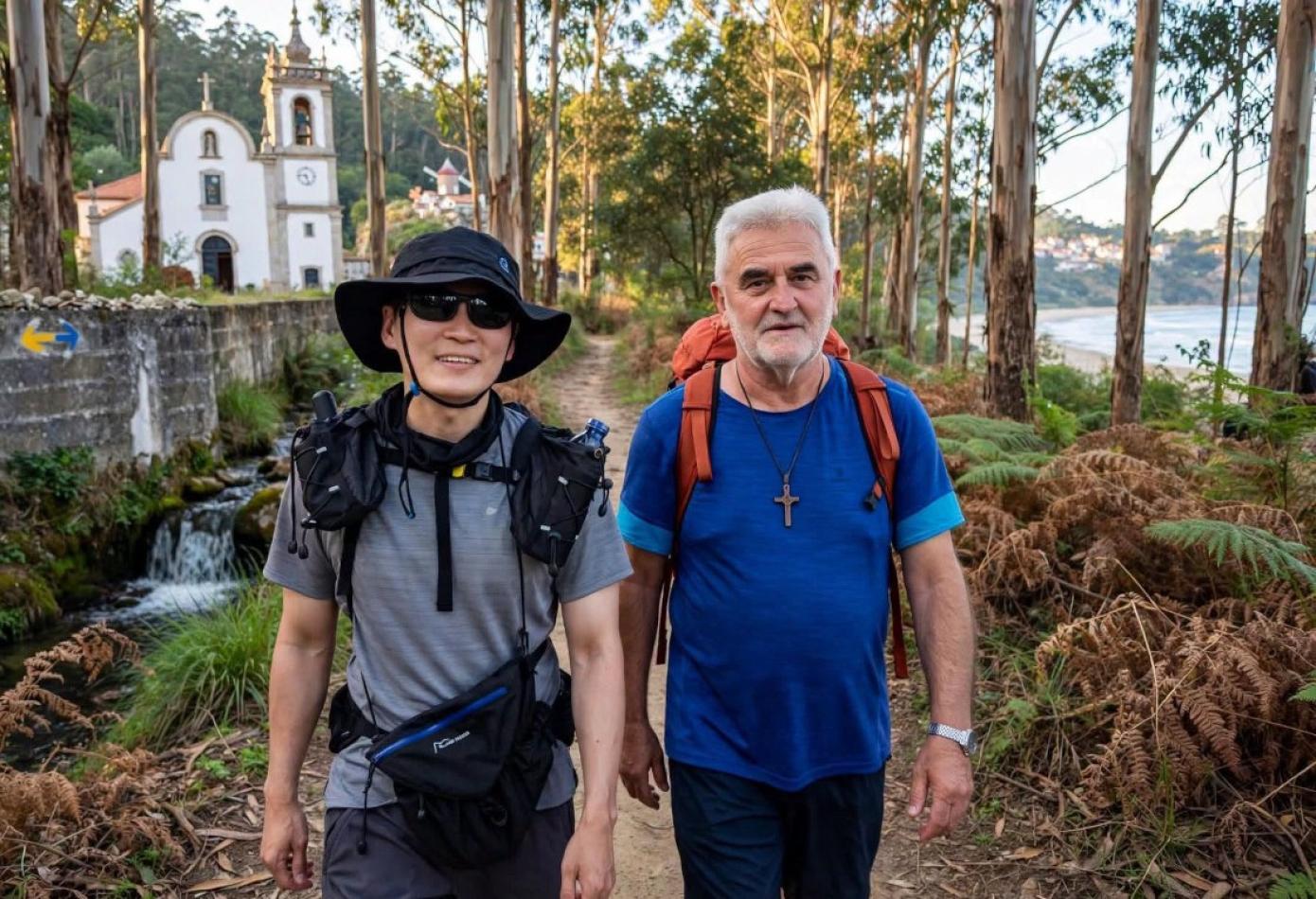
Six of them climbed aboard: two Dutch cyclists with their bicycles, a Korean man, Maria, the boatman taking them across, and a priest. Four nationalities in a boat that would have struggled to accommodate even two. In silence, they watched the water and waited for the opposite bank, yet they were still joyful: they would be able to get across the river.
On the other side, in A Guarda, another small town, this time in Spain, a seemingly endless climb awaited them.
Guardian angels and fellow travellers
There, exhausted, they met Avelino, an eighty-year-old man with a rather old car. The two looked at each other, wondering whether they could trust him.
“Look, I’m a priest,” the missionary said.
Avelino generously drove them to the hostel entrance, three or four kilometres further on, as though he had taken the climb upon himself.
“He wasn’t the only guardian angel,” the missionary says. There were others, nameless people who appeared when the yellow arrows disappeared and the road seemed to lose its way.
From the very first stage, they had met Walter, an elderly Belgian man. They kept running into each other everywhere, without arranging to meet, as though guided by some invisible hand: they always seemed to cross paths.
Walter listened attentively when Fr Daniele spoke about Africa. That evening was Maria’s birthday, and the celebration was shared with many others: their Korean companion, as well as Ukrainian, Croatian and Canadian friends, gathered around a cake and ice cream offered to the pilgrims. A simple celebration, one that nobody forgets.
The closer they came to Santiago, the more the paths filled with men and women carrying rucksacks, arriving from every corner of the world, all searching, as Fr Daniele writes, “for something, someone or Someone”. Believers, laypeople and atheists: each with their own struggles and questions.
He calls it “a true areopagus for the world”, a place where even strangers discover that they are brothers and sisters simply because they are walking in the same direction.
Between concrete and prayer
The route also passes through cities, and not all of them offer the same welcome.
Vigo did not win them over: fifteen- and twenty-storey buildings that seemed to go on rising indefinitely. “A city of concrete,” Fr Daniele says.
Pontevedra struck him differently: a city rich in history and charm, where Spaniards make the most of their squares alongside the pilgrims, and nobody seems to be in a hurry.
In the evenings, whenever they could, they went into a church for Mass. It almost always lasted twenty or twenty-five minutes, after which everyone left, without a reflection on the Gospel or a word for the pilgrims, who might have been hoping for a moment of guidance and deeper spiritual nourishment.
“Sometimes we feel that great opportunities are being missed,” the missionary confides, with the sadness of someone who knows how great the hunger for meaning can be in those who set out on a journey.
The Way of the Cross on the sea
A few days before reaching Santiago, the route took them onto another boat, very different from the first. It was full of pilgrims undertaking the spiritual route, retracing the journey that, according to tradition, St James’s body followed to Padrón before being carried to the Field of Stars.
Fr Daniele calls it a maritime Way of the Cross, unique in the world: a Way of the Cross stretching across the waves, among stone crosses emerging from the water.
It was 10 October, the feast day of St Daniel Comboni. A Comboni missionary walks differently when he feels beside him the spirit of someone who, long before him, gave his life for Africa.
The Obradoiro
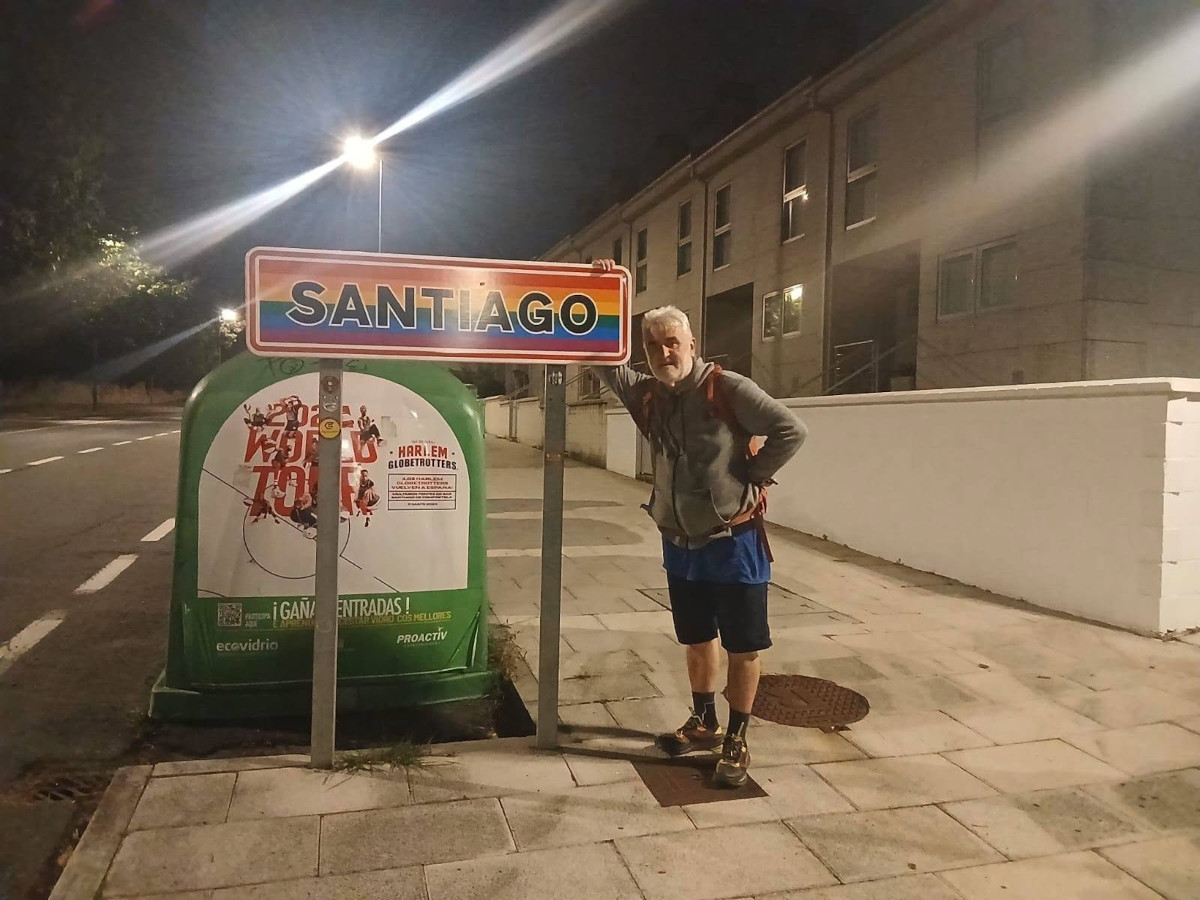
In Santiago, the cathedral awaited them, but first there was the final stage of the journey. That morning, they had set off at five or half past five, in the darkness, to reach their destination on foot.
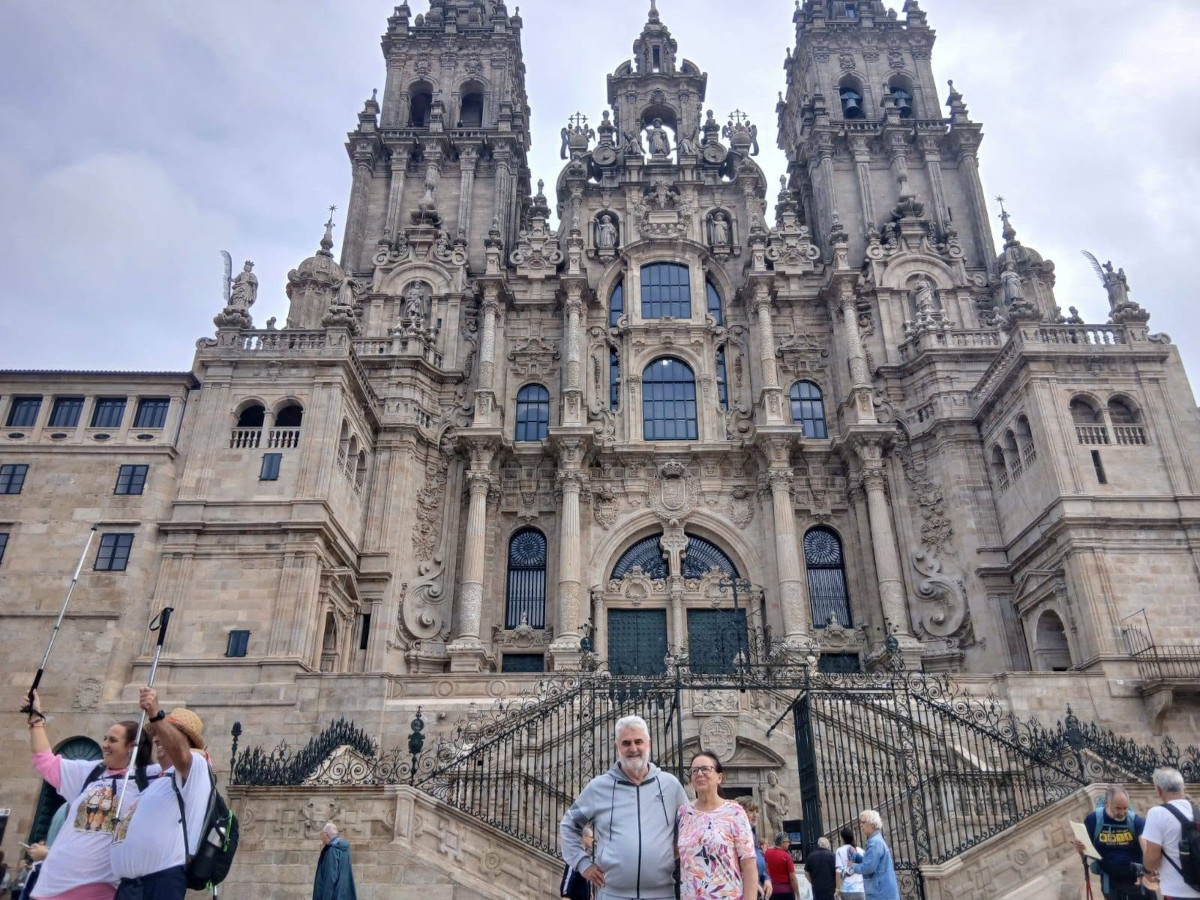
At 8.30 am, they arrived in Praza do Obradoiro, in front of the cathedral, and immediately afterwards went to the Pilgrims’ Reception Office to receive the Compostela, the certificate, the parchment that tells a pilgrim: you made it.
After the solemn midday Mass in the cathedral, at 1 pm they met outside the entrance to the Parador with pilgrims of seven different nationalities, sharing deeply personal stories.
There was more than food on the table: there was the sense of fraternity and solidarity that the pilgrimage brings, extending far beyond one’s own family to embrace the great human family, helping us rediscover the humanity present in every person in this world.
Later that afternoon, Fr Daniele and Maria wanted to celebrate with Galician cuisine: octopus (polbo), hake (merluza) and Santiago cake. In a way, they were celebrating on behalf of everyone, enjoying a cuisine they find fascinating in one of the most beautiful regions of Spain.
They raised a glass and remembered all those who had stayed at home: the sick, their friends at the Black and White Association, their Comboni confrères, the parish of Pescopagano, and all those suffering because of wars around the world.
Beginning again in Juba
The Way, Fr Daniele reminds us, does not end at the Obradoiro. For him, it means returning to Juba and beginning again, with a slower step and a higher gaze.
For everyone else who has made the pilgrimage, it means rediscovering and continuing their own journey in everyday life, wherever they may be, seeking to turn into daily practice what reflection, prayer, sharing and solidarity have sown along the way.
This applies not only to him, but to everyone: it is the shared journey they have made together.