Daniel Comboni
Comboni Missionaries
Institutional area
Other links
Newsletter
ACSE – A meeting frontier, a handcrafted laboratory of fraternity
Monday, October 26, 2026
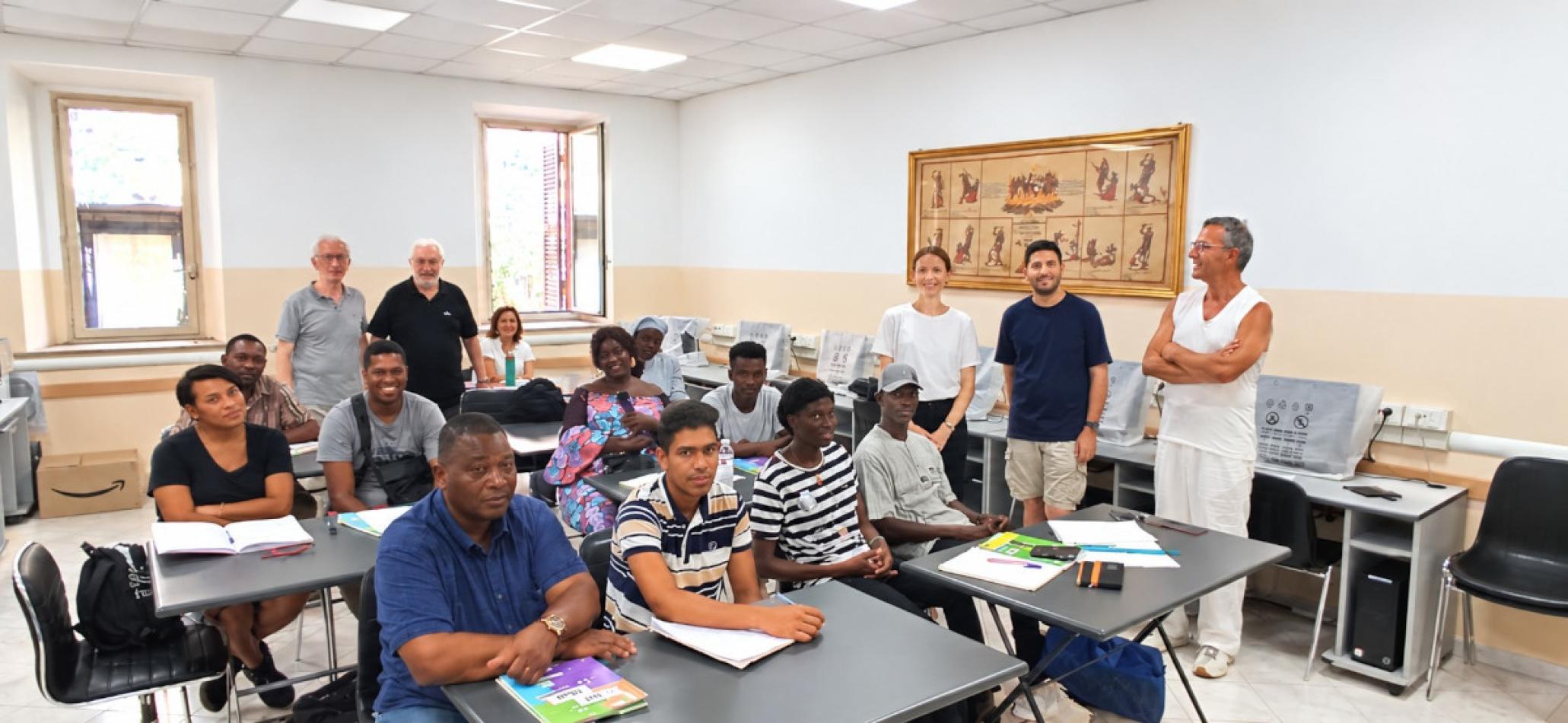
In the heart of Rome, the Comboni Association for Migrants and Refugees (ACSE) has been welcoming people from all over the world since 1969. A laboratory of fraternity where the culture of encounter is built, one gesture at a time, day by day.
The XXXV Immigration Report, edited by Caritas Italiana and Fondazione Migrantes and presented in Rome on October 18, is titled Confini e frontiere (“Borders and Frontiers”). These two words come up often when we talk about migration and are sometimes used as synonyms, though they are not.
Confine (border), from the Latin finis, indicates a limit, a line that delimits a space, a possession, an identity, a responsibility. It can become the place where it is decided who is inside and who stays outside, to the point of marking, at times, where the recognition of the other’s dignity ends. The border separates a “here” from a “there.”
Frontiera (frontier), from the Latin frons, instead evokes the idea of “looking ahead,” of the space that “lies before us.” At the frontier, people interact, meet and, at times, clash. But a face-to-face encounter is always possible.
If the border separates, the frontier creates relationship. The language of the border is made of words like pushing back, externalizing, repatriating, “remigrating” [returning to one’s place of origin], irregularity, building walls. At the frontier, by contrast, we speak of encounter. Citizens, families, third-sector workers, doctors and teachers inhabit it and practice there a quiet and laborious encounter, which the news often struggles to report, when it does not outright choose to ignore it.
Frontiers can turn into borders when welcome fails: that action which opens the door, helps people cross the threshold and makes it possible to live the “conviviality of differences.”
Promoting and living the culture of welcome
These words may sound like philosophy, but they become reality when they take on the faces and names of real people. This is precisely what the Comboni Association for Emigrants and Refugees (ACSE) tries to do and, above all, to live every day in Rome.
A short distance from Via dei Fori Imperiali and Via Cavour, in the historic Monti district, the ACSE headquarters has opened its doors since 1983 to promote and live the culture of welcome. That is now 43 years in a permanent location. But the association’s story begins much earlier, in 1969, with the pastoral intuition of Father Renano Bresciani. Since then, ACSE too has been, so to speak, “a migrant,” moving between different premises before arriving at its current one.
From around a hundred nationalities
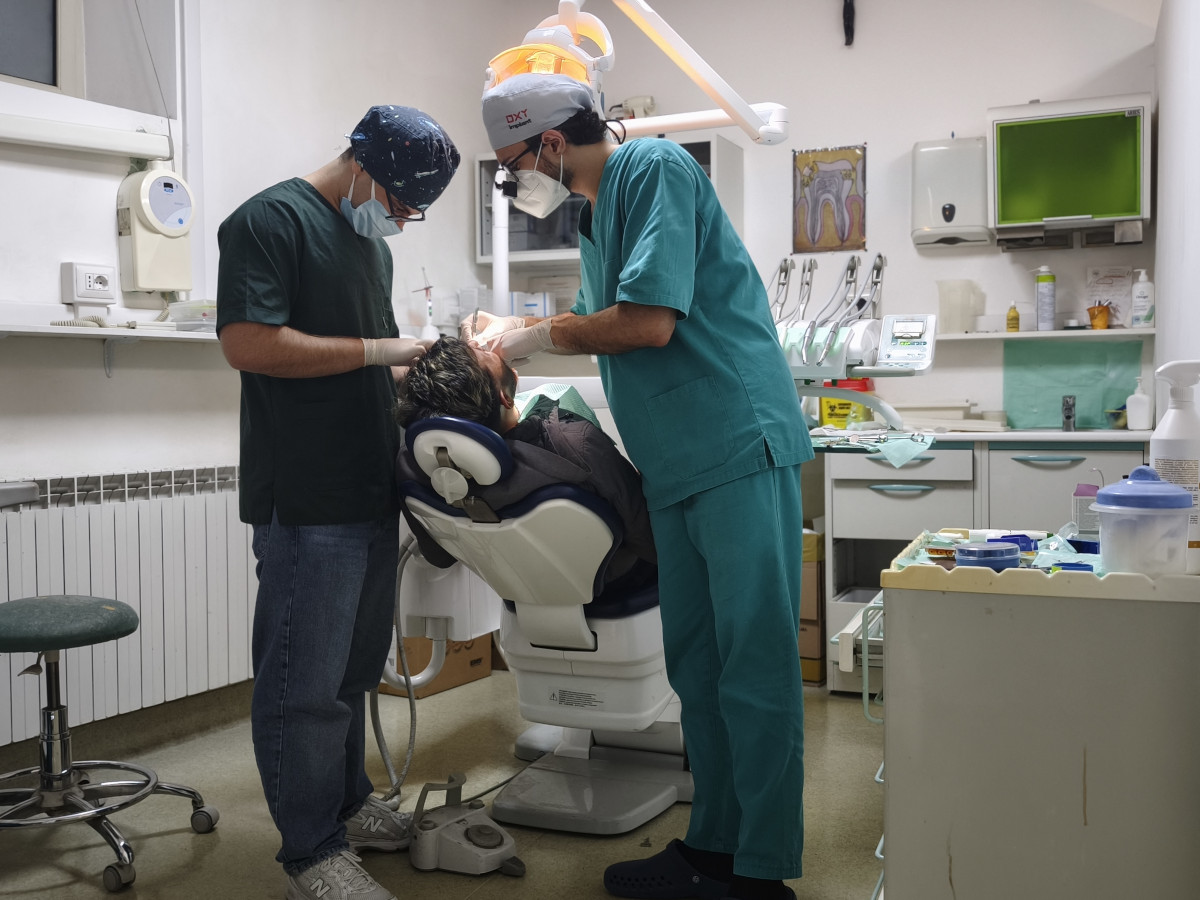
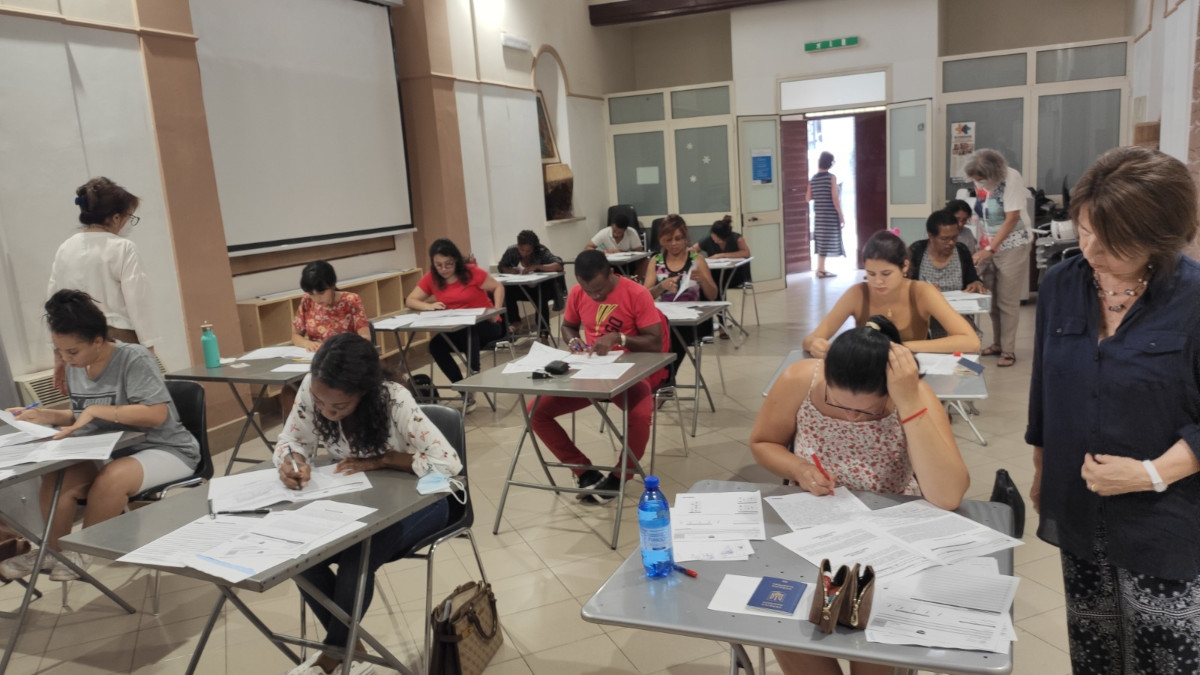
It is impossible to calculate how many people have crossed this threshold over the years to be welcomed and accompanied. Through Italian, computer and English courses, legal support, a dental clinic, weekly distribution of food parcels and scholarships, the association tries to respond to concrete needs and to offer opportunities for building one’s own future.
It is also hard to say how many nationalities have met at ACSE. Here we are helped by the archive of the dental clinic, which in 2027 will turn thirty years old: over the years, people from as many as 96 different nationalities have passed through it.
And since we are giving numbers, let’s add a few more. From September 2025 to today, the Thursday-morning volunteers have welcomed 692 people from 71 different countries. Men outnumber women. Requests mostly concern help studying the Italian language and dental care. As for nationalities, at the top of the list are people from Peru, followed by those from Ukraine, Bangladesh, Egypt, Tunisia, Sri Lanka, Morocco and many other countries.
Behind these numbers are people, stories, waiting and hope. And there are also the volunteers who make all this possible: women and men who dedicate time, energy, skills and personal resources to the activities that take place every day of the week. A commitment that sometimes involves a personal financial contribution as well.
A laboratory of fraternity
Thanks to them, ACSE becomes much more than an association: it turns into a laboratory where fraternity is lived and practiced.
There is no single recipe for fraternity. There are, perhaps, a few ingredients that cannot be missing: welcome, listening, absence of judgment, respect and recognition of rights.
But fraternity is above all a collective and handcrafted construction. Collective, because all of us are called to be protagonists in it through what we do. Handcrafted, because each person must put in something of their own: commitment, vocation, abilities, creativity and even imagination.
Fraternity is not built in the abstract, but through concrete gestures, daily relationships and a willingness to get involved. This is what the volunteers do, giving their time and putting their skills at the service of others.
Making common cause
One last reflection. I think ACSE is deeply rooted in the Comboni charism. It is so because Comboni brothers and sisters, together with lay people, try every day to carry forward Father Bresciani’s original project, adapting it to the reality of migration in Italy today.
But it is also so because the words of Saint Daniel Comboni, spoken in Khartoum on May 11, 1873, in his “programmatic homily” — “I make common cause with each one of you” — take concrete form every day in the style of service and in the activities ACSE offers.
Making common cause: perhaps this is the expression that best describes what happens every day in our association. People who differ in origin, history and culture meet, listen to one another and walk together. And, one gesture at a time, they build that fraternity which is not merely an ideal to be proclaimed, but a reality to be lived.
Bro. Antonio Soffientini, MCCJ