
Daniel Comboni
Comboni Missionaries
Institutional area
Other links
Newsletter
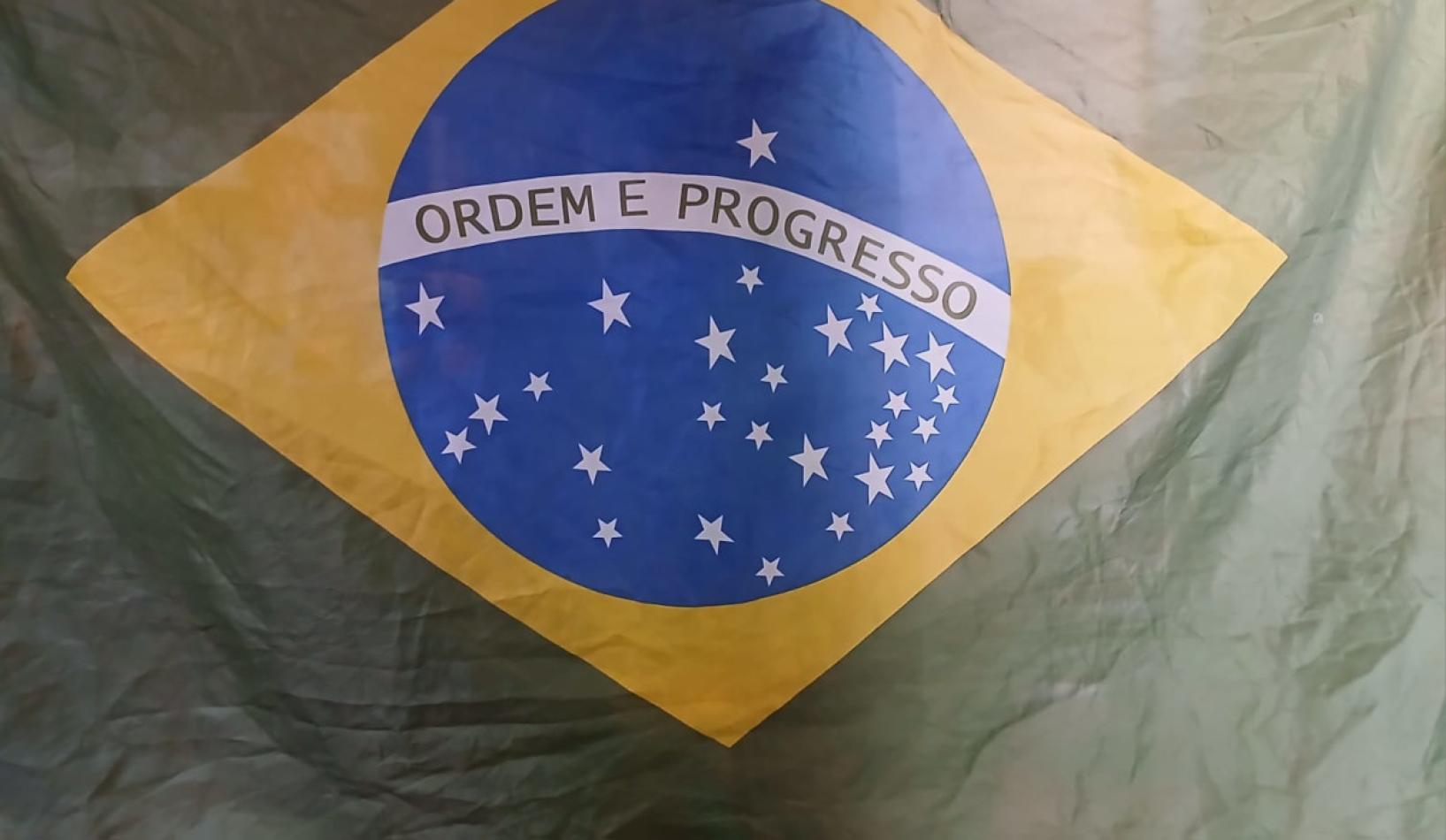
Brazil hands Lula his fourth term
Monday, October 26, 2026
Defying forecasts that gave the victory to Flávio Bolsonaro, Luiz Inácio Lula da Silva has been re-elected president, thanks in part to an impressive popular mobilization. For the 81-year-old, the challenge will be governing with a Parliament dominated by the far right.
In Brazil, after the first-round result on October 4, with Flávio Bolsonaro ahead by two percentage points and his party, the Liberal Party (PL), holding the largest number of seats in both the Chamber of Deputies and the Senate, the game seemed to be over.
Yet the response came immediately and forcefully from street demonstrations.
The first to mobilize were students from schools and universities in Brazil's major cities. Then, almost every day, came interventions from popular movements, support from nationally and internationally renowned artists, statements of backing from abroad, and public positions taken by more than fifty Brazilian bishops in defense of democracy.
All of this was accompanied by a new online strategy that involved millions of people, who became the protagonists of an innovative word-of-mouth campaign on social media.
The completely unexpected result was the victory of the ticket of Lula and his running mate, Geraldo Alckmin, by a margin of three and a half percentage points over their opponents (51.77% to 48.23%). That margin is even larger than the one by which Lula had defeated Bolsonaro senior, Jair.
It is a historic event: for the first time, a Brazilian president is heading into a fourth term, albeit non-consecutive (2003–2011 and then 2023–2026); for the first time, the first-round result was reversed in the second; for the first time, abstention was recorded at such a low rate (19%, a reduction of more than three percentage points compared to the first round).
In fact, much of the result is due precisely to this: the proportion of new voters mirrors the percentage increase in votes for Lula.
A vote marked by fear and manipulation
It was a vote strongly marked by fear.
In the case of Lula's campaign, it was the fear that, by also winning the executive branch, the far right would seize all the powers of the State.
The legislative branch is already under its control, while the next four appointments of justices to the Supreme Federal Court could give a political orientation to this important judicial body.
The vote had to overcome many forms of resistance and opposing pressure: the influence of the United States government, evidently an ally of the Bolsonaro clan; and the manipulation of Big Tech, in particular Meta, accused, on the basis of evidence considered clear, of having promoted pro-Bolsonaro messages during the election campaign and suppressed those favorable to Lula.
Then, on the day of the second round, came road-blocking strategies and failures in public transport service in precisely those voting areas most favorable to Lula.
The municipality of São Paulo kept 30% of its bus fleet off the roads; in the northeastern state of Bahia, a stronghold of Lulism, the Regional Electoral Court had the Transportation Secretary of Salvador arrested, accused of failing to provide public service on voting day.
And yet, it was precisely the Northeast, together with a significant recovery in the state of Minas Gerais and solid results in the major cities of São Paulo and Rio de Janeiro, that formed the core of the Workers' Party victory.
A Government with parliament against it
It will undoubtedly be a very difficult government, in permanent conflict with Parliament.
The alternative, however, would have been far riskier: the far right could have controlled both the executive and legislative branches, while also consolidating significant influence over the judiciary.
One need only consider that Flávio Bolsonaro, energized by the first-round result, had already begun making statements about possible constitutional changes to extend the length of the presidential term.
An amnesty for those responsible for the January 2023 coup attempt, including Flávio's father, sentenced to 27 years in prison in 2025, would have been one of the PL's first political initiatives.
The day after the proclamation of the final result, the uncertainty concerns precisely how the party and its supporters will accept defeat, or react to it. Perhaps there will be no new threat of a coup, but the risk of reactions outside the bounds of legality remains.
Bolsonaro has already announced that he does not accept the result, contesting the vote and calling for its annulment.
The challenges of Lula's fourth term
Two days after this historic result, Luiz Inácio Lula da Silva will turn 81. He will face the immense challenge of building a governing coalition and program capable of reconciling differences, maintaining a stable balance, resisting the temptation to isolate himself within the forces of the Workers' Party (PT) alone, and carrying forward an effective agenda.
The historic challenges remain those of social and racial inequality, environmental violence, the transformation of the extractive model, the never-completed agrarian reform, and the recognition of the many other Indigenous and quilombola lands that have been waiting for years.
With his fourth term, Lula presents himself once again as a bulwark against the expansion of the far right and of fundamentalisms across the Latin American continent.
His charisma as an international leader is also confirmed: amid the crisis of multilateralism, Brazil retains the moral authority to convene alliances and promote international processes capable of reopening windows for change.
It nonetheless remains a divided country, still to be won over, uncertain about how the losers of the election will react and whether that reaction will remain within the bounds of legality and democratic respect.
In the medium and long term, a project of socio-environmental justice, pluralism, and cultural vitality remains to be written, driven by new leaders whom we hope will emerge, through various political representations, over the course of this term.
Dario Bossi, mccj - Nigrizia