Daniel Comboni
Comboni Missionaries
Institutional area
Other links
Newsletter
Transmitting the faith in the context of the epochal change
Wednesday, November 18, 2026
The Vatican Dicastery for the Doctrine of the Faith published recently an extensive document titled “Venite ad me: Considerations on the Transmission of the Faith in an Epochal Change”. Comboni Fr John Ikundu, Secretary General for Evangelization, presents a schematic global view of the text.
The document offers a series of Considerations of the Dicastery for the Doctrine of the Faith on the transmission of the faith in the context of the epochal change.
Its purpose is to relaunch to the entire ecclesial community the invitation to a renewed impetus in the proclamation and transmission of the faith, placing Jesus Christ at the centre and helping people to live a personal relationship with Him.
It also intends to offer reflection and suggest concrete paths for a proclamation of the kerygma capable of awakening or reviving the experience of faith, especially in those who are far away or have not yet known Christ.
It is a text that aims to stimulate ecclesial reflection and pastoral commitment, remaining open to further study and development.
The transmission of the faith on different continents: challenges and lights
Europe
Challenges:
Advanced secularization, crisis of generational transmission, families that no longer transmit the faith, individualism, privatization of the faith, legislative secularism, digital culture that absorbs more than faith. In Eastern Europe, the interruption produced by totalitarian regimes weighs heavily: faith has often passed from grandmothers to grandchildren without the middle generation.
Lights:
Requests for Baptism of young people and adults, conversions and returns to the Church are growing, especially in France; faith emerges as a conscious and free choice, accompanied by welcoming communities. The testimonies show paths of rediscovery through family, liturgy, beauty, social media and charity.
North America, Australia and New Zealand
Challenges:
Media and public culture shapes the way of thinking more than faith; secularism limits the public presence of faith; widespread religious indifference even among the baptized.
Lights:
Welcoming parish communities, catechumenal paths, testimonies of couples and adults who approach the faith through marriage, accompaniment and concrete witness.
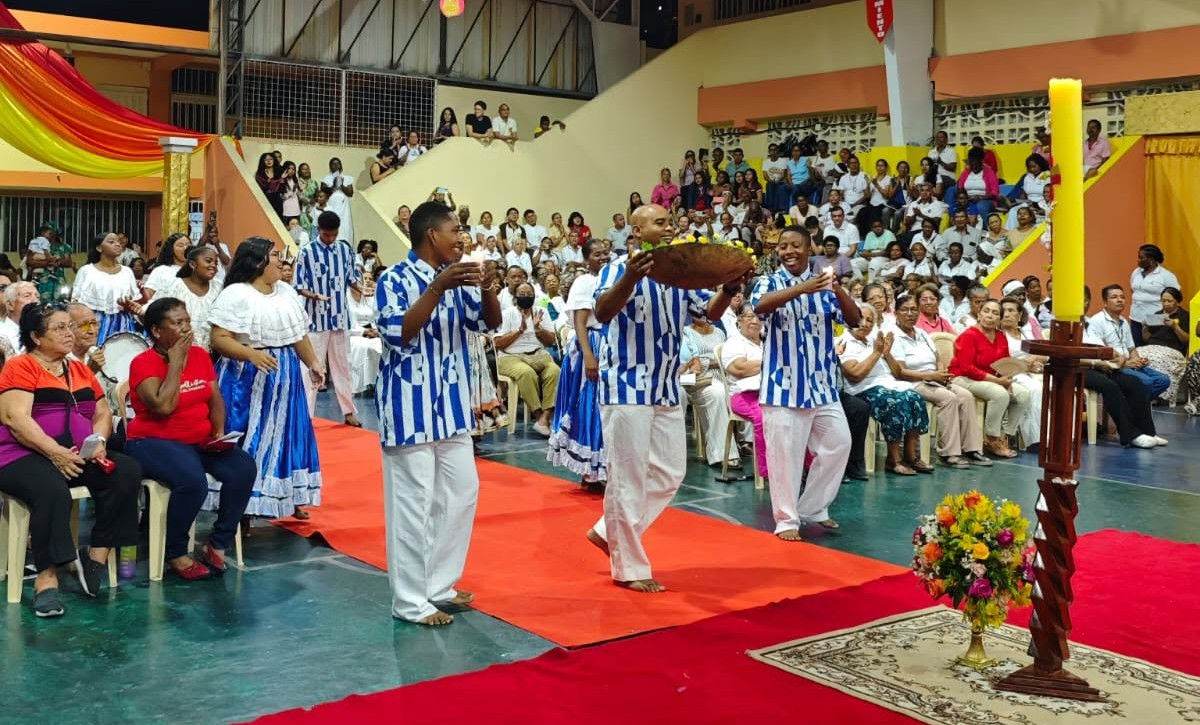
Latin America and the Caribbean
Challenges:
Breakdown of continuity between family, school, culture and ecclesial community; weakening of catechesis and sacramental practice; grandparents often make up for parents; in some areas Baptism is postponed to adulthood; faith is no longer “automatic”.
Lights:
Strong popular piety, the role of grandparents, ecclesial communities, testimonies of conversion and rediscovery through the Eucharist and family accompaniment.
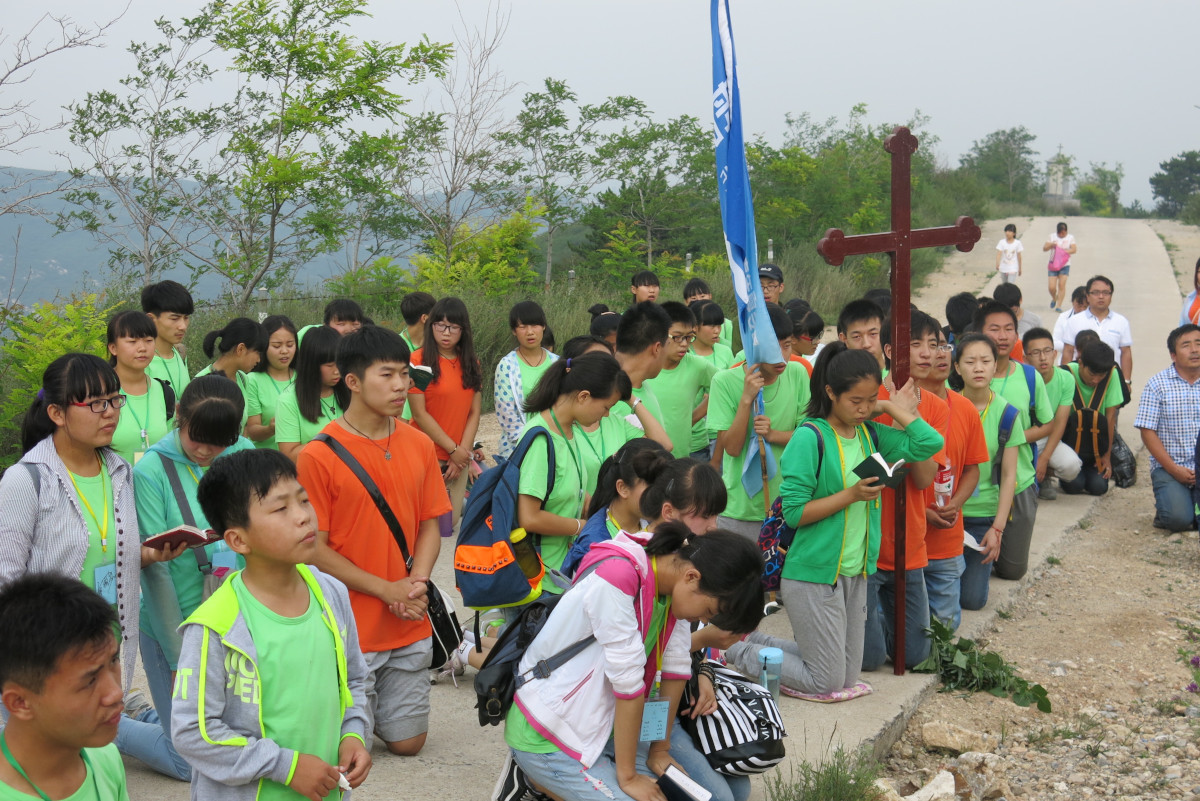
Asia
Challenges:
Christianity, often a minority; secularization and individualism in technologically advanced areas; priority given to career and professional training (Korea, Malaysia, Singapore, Brunei); contexts with a Muslim majority (Bangladesh); marriages between people of different religions hinder transmission (Japan); legacy of Soviet regimes in Central Asia; need for inculturation and narrative languages.
Lights:
Christian communities with a strong identity, capable of resisting even in hostile contexts; opportunities to move from a sociological belonging to a personal and conscious choice; testimonies of welcome, charity and encounter (Vietnam/Malaysia, Japan).
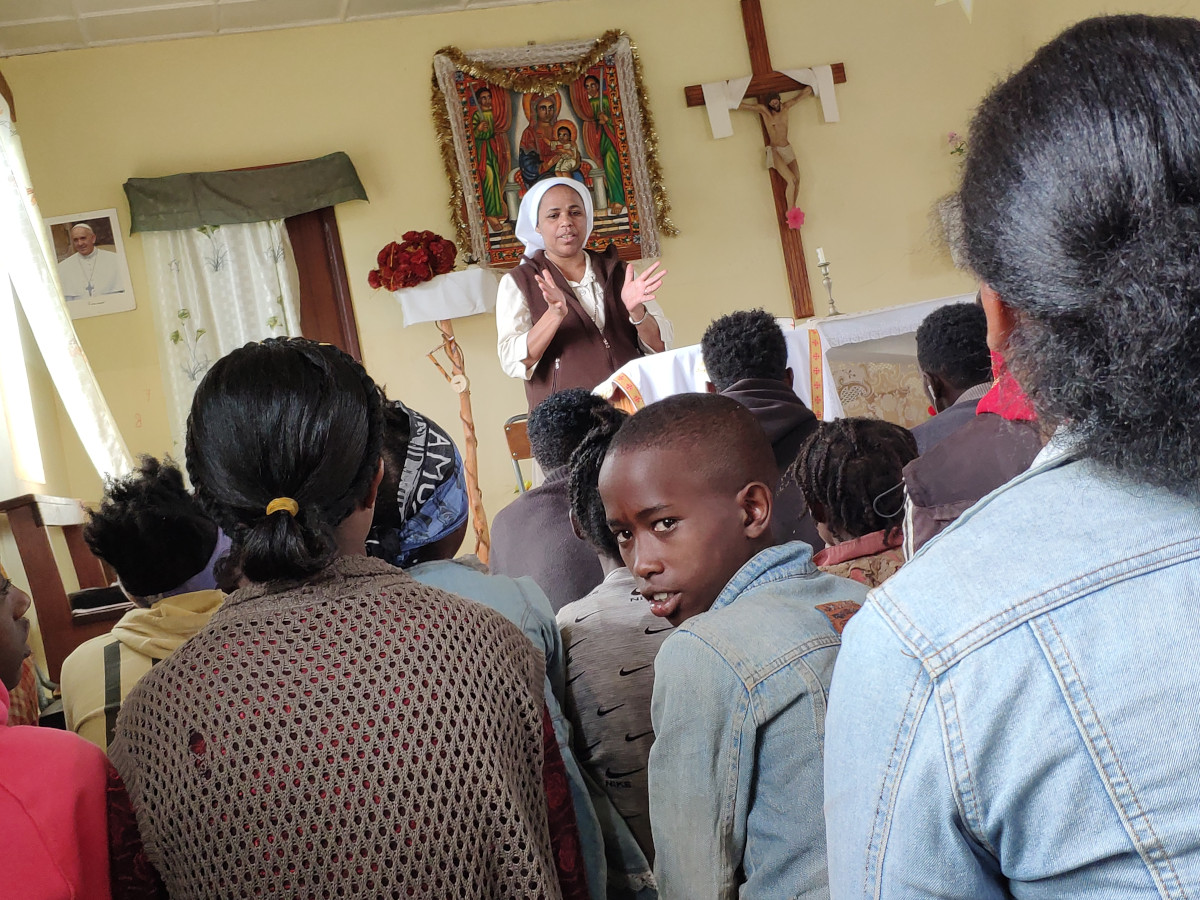
Africa
Challenges:
Secularization of customs especially among urban youth; inculturation not fully realized and sometimes superficial faith; competition of religious movements with the “Gospel of prosperity”; return to traditional and esoteric practices; fundamentalist and Islamist pressures; persecutions.
Lights:
Christianity remains important in many regions; indigenous clergy as models and guides (Nigeria); “Small Christian Communities” as places of prayer, catechesis and community life (Tanzania); communities lived as families; the ability to respond also to the concrete needs of people.
Common trait
The transmission of the faith is no longer guaranteed by cultural or family belonging. Digital culture, individualism and fragmentation affect everywhere. However, the Spirit raises up new opportunities: more conscious faith, conversions, credible witnesses.
The transmission of the faith
Ways and methods of transmitting the faith
-
- Centrality of the kerygma: the fundamental proclamation is “Jesus Christ alive loves you and gave his life to save you”. It is not a simple doctrine, but an event that provokes an experience of faith: proclamation, interior experience, journey of knowledge and love of Christ.
- A “performing” proclamation: it must touch the heart, not just inform; it must make the heart burn as at Emmaus. Catechesis must be renewed in a kerygmatic sense and not reduced to notions.
- Language: closeness, listening, disinterested love, relationality, narrative style; avoid only scholastic, dogmatic or moralistic language. Faith is communicated “from person to person”.
- Attraction, not proselytism: the Church attracts because Christ attracts; strength is charity, not conquest.
- Accompaniment: friendship, listening and sharing groups of the Word, lectio divina, narrative methodologies, pastoral care of adults, accompaniment in the passages of life (baptisms, weddings, funerals).
- Liturgy and mystagogy: the liturgy is a performative place of transmission; education in liturgical language, conscious participation, care of celebrations.
- Beauty and art: music, literature, art as languages that reach the heart and make the Gospel perceptible.
- Popular piety: expression of the inculturated Gospel; pilgrimages, confraternities, popular devotions as channels of faith.
- Charity and volunteer work: the witness of charity opens up space for proclamation; the poor are a “family matter” for the Church.
- Catholic schools and universities: places of first proclamation, formation and encounter with the faith, especially where Christianity is a minority.
- Digital: opportunities for evangelization, but also risks of disembodied faith, “do-it-yourself”, disinformation and manipulation. It requires discernment.
- Inculturation: the Gospel must be incarnated in cultures; faith that does not become culture is not fully lived.
- Ecumenism: not an alternative to proclamation, but a dimension of mission; the search for unity makes the proclamation of the kerygma more credible.
Area of transmission of faith
-
- The family: the first and most essential place; the faith is transmitted “in dialect”, with the language of domestic love, through prayer, gestures, example, blessings, feasts, popular piety. Today this place is often in crisis and should not be taken for granted.
- The ecclesial community: catechesis, sacraments, participation in community life, charity, synodal journey, Bible groups, welcoming the new faithful.
- The liturgy, especially the Eucharist: the beating heart of ecclesial life; lex orandi, lex credendi; a place of memory, communion and transformation.
- Friendship and personal relationships: a privileged space for witnessing, supporting and sharing the faith.
- Catholic schools, universities and institutions: places of contact with the Church, especially in minority contexts; the school as a place of search for truth and meaning.
- Digital environments and social media: new areopagus, with opportunities and ambiguities.
- Popular piety, shrines, pilgrimages, confraternities and major events: places of belonging and spiritual search, especially for young people.
- The places of suffering and marginality: prisons, hospitals, suburbs, volunteering, migration; proximity becomes proclamation.
The value of witness in the transmission of the faith
Faith is transmitted by contact, like a flame that ignites another flame. The Church is credible not primarily because of her speeches, but because of the holiness, closeness and charity of her members. The document articulates witness in three dimensions:
-
- Witness to holiness: holiness is “the most beautiful face of the Church”; it is the ordinary call of every Christian, lived in daily occupations. Examples: St. Francis of Assisi, St. Teresa of Calcutta, St. Charles Acutis...
- Witness of proximity: hospitality, kindness, listening, meekness, tenderness; helping people to reread their own history within the history of salvation; being close to those who suffer with gestures and words of faith.
- Witness to the preferential option for the poor: the poor are not only a social problem, but a “family issue”; concrete charity makes God's love visible and opens us to the Gospel. The example of Myanmar shows that silent closeness without religious distinctions raises questions and a desire to deepen the faith.
Testimony makes the message “life lived”: to be an apostle is not to carry a torch, but to be the light. The testimonies from various local churches show that grace acts in ordinary events: bereavement, family crises, prisons, social media, beauty, charity and acceptance. In all of them, faith is reawakened through concrete encounters, accompaniment, prayer, the Eucharist and community.
The document uses the image of the Easter Vigil: from the single flame of the Paschal candle, the candles of the faithful are lit, which in turn transmit the light. Christ is the true light; believers are entrusted with the task of transmitting it to the new generations, with witness and prayer, under the action of the Holy Spirit and with the protection of Mary, Teacher of the transmission of the faith.
Fr. John Ikundu, mccj