
Daniel Comboni
Comboni Missionaries
Institutional area
Other links
Newsletter
In Pace Christi
Mosca Carlo
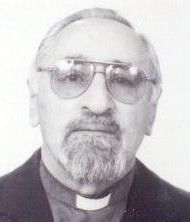
Bro. Carlo Mosca (16.04.1929 - 15.03.2007)
Bro. Carlo Mosca, born in 1929 at Erba, Como, at 17 years of age entered the Comboni Missionaries and completed his novitiate, first at Venegono and then at Gozzano. He took temporary vows in 1949 and perpetual vows in 1955. Sent first to Troia in charge of the house, a year later he left for South Sudan and the mission of Mupoi, where he worked mainly as a carpenter. Back in Italy, he taught the trade to the Brother candidates at Pordenone. In 1963 he returned again to the missions, this time to Rungu, Congo, as a teacher at the technical school. When the Simba revolt breaks out, with his fellow missionaries he surrendered to them to avoid reprisals against the people who were accused of sheltering the missionaries. Taken by the Simba to the bridge on the river Bomokandi, they were shot. Bro. Carlo survived miraculously. Later, rescued by the Belgian paratroops, returned to Italy. He was assigned to Brescia and, two years later, in 1967, to the missions of Central Africa. In 2004 he returned to Italy for health treatment and was sent to the Ambrosoli Centre in Milan. Here, on 15 March 2007, Bro. Carlo died. He was interred in the tomb of the Comboni Family at Brusuglio di Cormano, near Milan.
Fr. Fermo Bernasconi writes: “We knew that lately Bro. Mosca’s health had deteriorated, nevertheless we were saddened by his loss. Bro. Carlo was part of the first group of Comboni Missionaries who arrived in Congo. Bro. Carlo was sent to the mission of Rungu as a technical instructor.
“A year after his arrival, the Simba revolt broke out. The Comboni and Dominican missionaries of the area decided to give themselves up voluntarily to the rebels who were searching for them, in order to avoid reprisals against the local people, especially against the teachers and the catechists, accused of hiding them. On 1 December 1964 the missionaries were taken to the Bomokandi bridge and shot. Bro. Carlo was wounded and played dead. He was thrown with the others into the river. Later he waded out and wandered in the forest, receiving no help from the people who feared reprisals: someone even tried to poison him. Again captured and taken to Mungabere, he was freed by the Belgian paratroops and finally brought back to Italy.
“Sometimes Bro. Carlo would return to Rungu and show us where he used to hide and the bridge on the river Bomokandi, giving us a detailed account of what happened on that first day of December. I remember him well with great affection, right from the time when I was still a boy; he came to Rebbio seminary after returning from the Congo. I met him later when we were both in Brescia and he told me that sometimes those dreadful dreams would wake him during the night. He always made me think how the mission may require the gift of one’s own life, not out of heroism, but out of love!
“We all remember him as one of us, especially for what he did when, with his confreres, he gave himself up freely, like Jesus at the moment of his passion. Bro. Carlo is a true witness for us, to his intercession we entrust our mission, the people and the Church of Congo which, only now, is emerging from another long drawn-out war.”
Bro. Carlo Mosca himself has told us what happened on that 1st December 1964: “The officer had us board a lorry. He brought us across the river and then returned to the bridge. The Simbas made me alight from the lorry and ordered me to sit on the ledge with my back to them. A brisk order: ‘Let me see your face’. Before I could turn around I heard an explosion that felt like a blow on my left shoulder. My arm bent backwards and I managed to let myself fall to ground and lie there as if dead. I followed all that happened as the other five missionaries were shot: three Belgians and the two Comboni Missionaries, Fr. Lorenzo Piazza and Fr. Evaristo Migotti. [...] I could feel the blood flowing from my wound, but my mind remained clear. Having carried out the murders, they dragged us by the feet to the centre of the bridge and threw us into the river. I was the last: I had heard the five splashes of the bodies thrown into the river. Flung over the bridge, I felt my feet touch first the water and then the stones. I clung to a pillar as I fought against the current. My cassock seemed tied round my feet, so I took it off. The rebels finally left. For some time I could not decide which direction to take. When I did, I climbed the river bank and set out for the forest.”
Bro. Luigi Salbego writes: “Bro. Carlo was an only child and when he decided to join the Comboni Missionaries his father said: ‘Think about it, and if you do decide to go, don’t turn back’. Bro. Carlo greatly resembled his mother and often spoke of her. His mother was proud of that son of hers whom she went to visit with a cousin even in Africa. The latter often came to visit Bro. Carlo at the Ambrosoli Centre of Milan.
“Bro. Carlo was a carpenter by profession, but could turn into a mechanic when necessary. Everyone knows the story of the Simba and all that happened to him and his four murdered confreres. Bro. Carlo did not like to play the part of the hero and was able to cleverly switch to other topics. Besides, those memories were painful for him and sometimes kept him awake at night.
“When he came back to Italy, he was placed with the confreres working with the GIM. He was not one to give talks, but his witness gave rise to more than one vocation and some of these attended his funeral. In Rome, he worked at different times in “Ufficio Viaggi”, first in Via Laurentina and then in San Pancrazio.
“His love for Africa brought him to Central Africa and he was one of the first three confreres in Bangui. The work he had to do was like that of the pioneers, but his character and personality helped him to adapt and to learn what he had not studied, such as the work of bricklaying. The needs of the place and the trust of the confreres set him to work. Here are a few of his buildings: the Nuntiature, the Provincial House, the house of the Comboni Missionary Sisters, the Sisters’ house at Damarà and at Mongoumba, the mission house at Tokoyo (Bangassou), the chapels at Boganda e Ndolo, the Comboni postulancy and many more.
“He did not approach his workers like a ‘boss’. He would make believe to be angry, but always ended up laughing and sharing a cigarette even with the least cooperative of them. Though very busy with practical jobs, he never forgot his spiritual duties. He was a man of prayer. He was not one to parade about the altar, but often did his best to provide liturgical aids worthy of the liturgical service and of the sacred place.
“Bro. Carlo was well identified with his vocation as a Comboni Brother and so he was happy in every situation. There were never so many concelebrants as at his funeral Mass in our church of Our Lady of Fatima: nearly forty priests. This, too, was a sign for all of us”.
Da Mccj Bulletin n. 236 suppl. In Memoriam, ottobre 2007, pp. 18-23.