
Daniel Comboni
Comboni Missionaries
Institutional area
Other links
Newsletter
Pectoral cross of Mons. Comboni
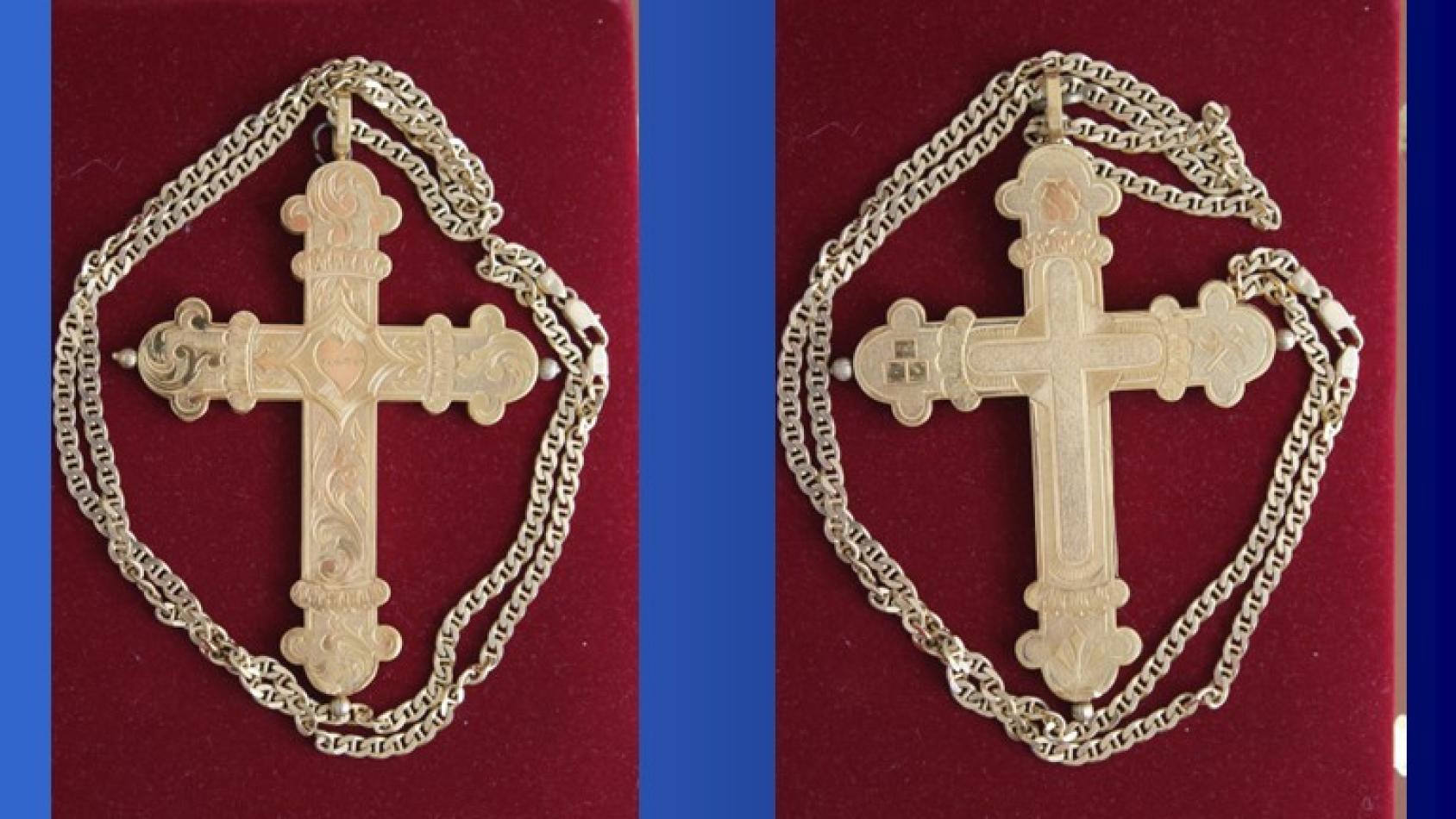
We wish to inform you that there is the possibility of ordering an exact imitation of the "brass cross" used by Comboni

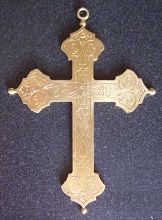 CARATTERISTICHE
La Croce è in ottone
Dimensioni: mm. 110x72x4
Peso: gr. 60
· È leggermente più sottile dell’originale
· Impreziosita da fini incisioni, dalla sua proporzione e formato
· Ha un trattamento antiossidante
· Prezzo previsto € 11,00 (anche meno se le ordinazioni sono parecchie)
· Far pervenire le ordinazioni entro il mese di agosto 2005 a:
Fr. Genesio Maroso che si trova a Padova, e-mail: genesiomaroso@hotmail.com
· La consegna è prevista per la fine dell’anno in corso.
Per favore, inviare le ordinazioni a Fr. G. Maroso, non qui alla Curia di Roma. Grazie.
P. Giuseppe Sandri
(segretario generale)
DANIEL COMBONI WITNESS OF HOLINESS AND MASTER OF MISSION
A Letter from the three General Councils
of the Comboni Institutes
on the occasion of the canonisation
of the Founder Daniel Comboni
THE BRASS CROSS

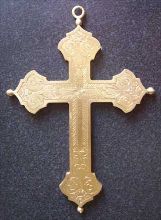 After Daniel Comboni’s death, according to the testimony of his second cousin Eugenio, “A missionary came from Africa to comfort Monsignor’s father and gave him a pectoral cross made of brass. It was Monsignor’s battle cross, as he called it. The cross he normally wore, as he kept the valuable one given to him by Pius IX out-of-the-way, in the event – he used to say – St. Joseph got a cold, in which case he would have sold it. I personally heard don Daniele say this. After the death of Signor Luigi that brass cross came into my hands. I keep it as a precious memento and I would not like to depart of it” (P. II, p. 1235).
With the brass cross constantly hanging from his breast, Comboni, without having to use words, makes us understand the essential element of his missionary holiness: his authentic approach and the radical evangelical direction of his life that kept him moving on in his ideal. It seems that Comboni never had to sell his valuable cross, because the brass cross did well enough for him, symbol of an entirely new strategy of liberation and regeneration of people and of society in line with the ideals of the Kingdom. For us, in the Comboni family, it is a legacy which challenges us even today.
And so it is not unbecoming to look at that cheap brass cross and hold it ideally in front of us as a most precious relic, as a sign of his fidelity to mission and an incentive to our fidelity, a sign of the continuity of the work in his person and a pledge of a great missionary family, which counts among its own Antonio Maria Roveggio and Marietta Scandola – whose death’s centenary occurs on the 1st of September this year –, the missionaries caught up in the Mahdia, Bernardo Sartori, Giuseppe Ambrosoli and many others.
The brass cross will always tell us that with simple and unshakeable faith, sweat and healed or open wounds, with the poor and with poor means, we can always hope for a new springtime of evangelisation. From here on, all that we are and do as members of the Comboni Family, should be scrutinised in the light of that cross. “…The works of God, and above all those of the apostolate, must travel along the royal way of the Cross and of martyrdom” (W 5666).
Rome 1st September 2003