
Daniel Comboni
Comboni Missionaries
Institutional area
Other links
Newsletter
Father Opargiw’s Visit to the Lusaka Novitiate
Thursday, January 22, 2026
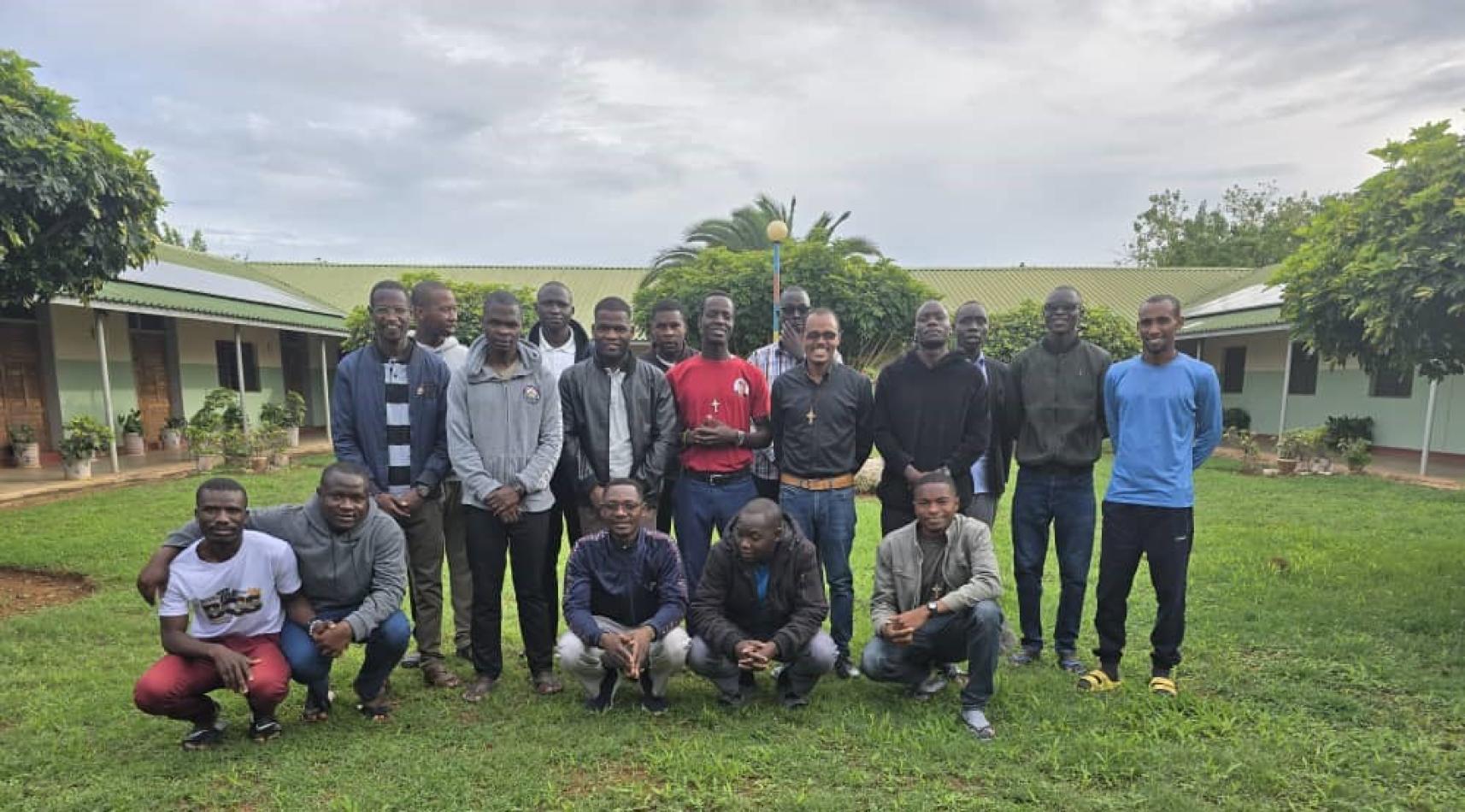
From 12th to 18th January 2026, the Bauleni-Lusaka Novitiate of the Comboni Missionaries welcomed Father John Baptist K. Opargiw, a Comboni missionary from Uganda, Provincial Superior of South Africa and Coordinator of APDESAM. The novitiate community is composed of seventeen novices, from nine countries, and two formators: Father Kiwanuka Achilles Kasozi, novice master, and Father Fene-Fene Santime Augustin, socius.
Father Opargiw’s visit is part of the ongoing process of integral formation, aimed at deepening the understanding of the Comboni charism and strengthening knowledge of the Code of Conduct as a fundamental tool for missionary life today. The visit was structured around three main educational moments – a spiritual retreat, a reflection on the Comboni charism and a workshop on the Code of Ethics – complemented by moments of encounter and dialogue with the formation community.
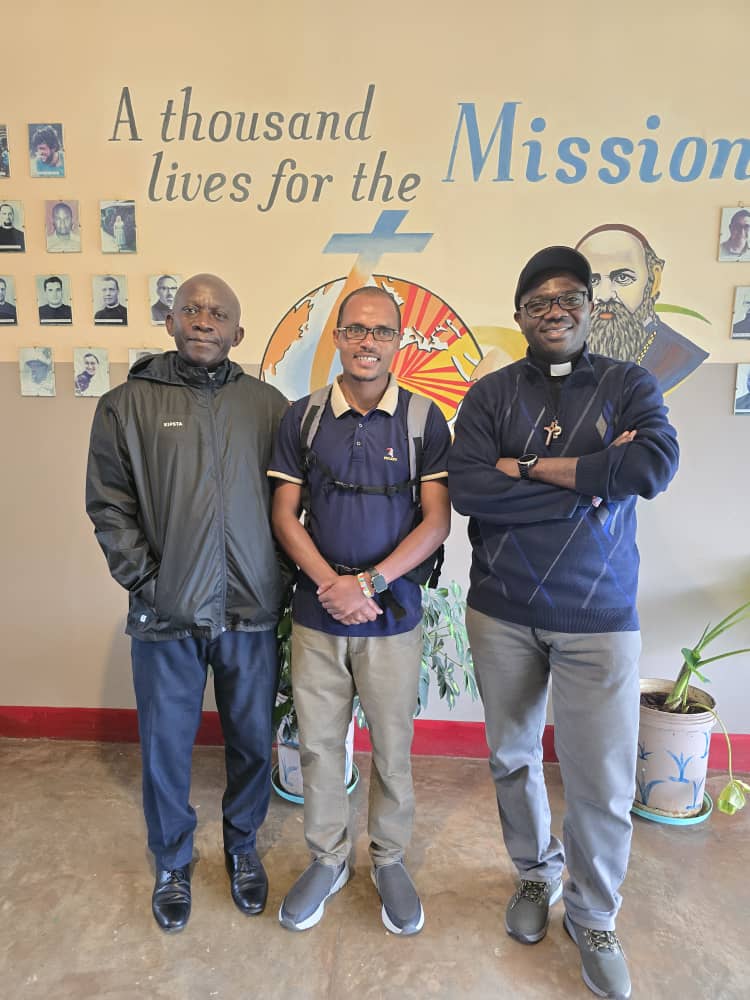
Recollection day focused on awareness and interior truth
On the morning of Tuesday, 13th January, Father Opargiw led a spiritual retreat, inviting the novices to a process of self-awareness and inner truth, emphasising that authentic spiritual growth begins with honesty before God and oneself. Attention was given to personal feelings, inner movements, motivations, relationships, and apostolic attitudes. Through guided reflection, novices were encouraged to examine their interior state, the quality of their prayer, emotional maturity, use of time, interpersonal behaviour, and ability to live responsibly in community.
Two biblical texts provided the framework for the retreat: Jesus’ invitation to his disciples: “Come away to a deserted place and rest a while” (Mk 6:30-32), and God’s question to Adam: “Where are you?” (Gen 3:9). These texts became calls to silence, interiority, and availability to God’s transforming presence.
Father Opargiw emphasised that spiritual life is shaped not by extraordinary experiences, but by daily fidelity, attentiveness to God’s presence, and a growing passion for Christ and for people. The retreat was welcomed with openness and gratitude, as a space for discernment and renewed vocational awareness.
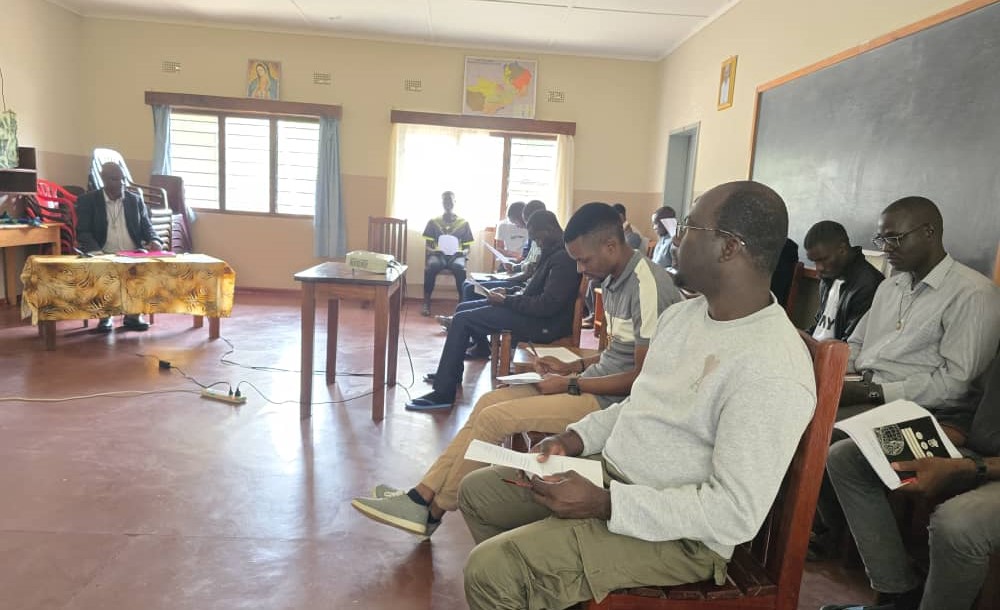
Deepening the Assimilation of the Comboni Charism
The afternoon of the same day was dedicated to a sharing on the Comboni charism. Presented as a living gift of the Spirit, charism has been described as an experience first lived by Saint Daniel Comboni and continually embodied throughout history. The novitiate has been defined as a privileged theological and spiritual space during which this charism must be deeply rooted and internalised.
Father Opargiw recalled the essential elements of the Comboni charism: total dedication to God, missionary orientation ad gentes, ad pauperes and ad vitam, and the experience of the Cenacle of Apostles, understood as a school of fraternity, prayer, shared responsibility and availability for mission. At the heart of all this is the christological dimension of charism, rooted in contemplative openness to God and expressed in active missionary commitment. The Heart of Jesus was presented as a source of compassion, availability and self-giving love.
Special emphasis was placed on the relational dimension of missionary identity. Referring to the Cenacle of Apostles experience, Father Opargiw underlined the shift from the Cartesian Cogito, ergo sum (‘I think, therefore I am’) to the African wisdom Cognatus, ergo sum (‘I am related, therefore I am’). He emphasised that missionary identity is fundamentally relational, lived in communion with God, the community and the people to whom one is sent, particularly those on the frontiers and existential peripheries. The novices welcomed this reflection with interest, recognising the challenge and richness of living the Comboni charism as a communal, intercultural and missionary vocation.
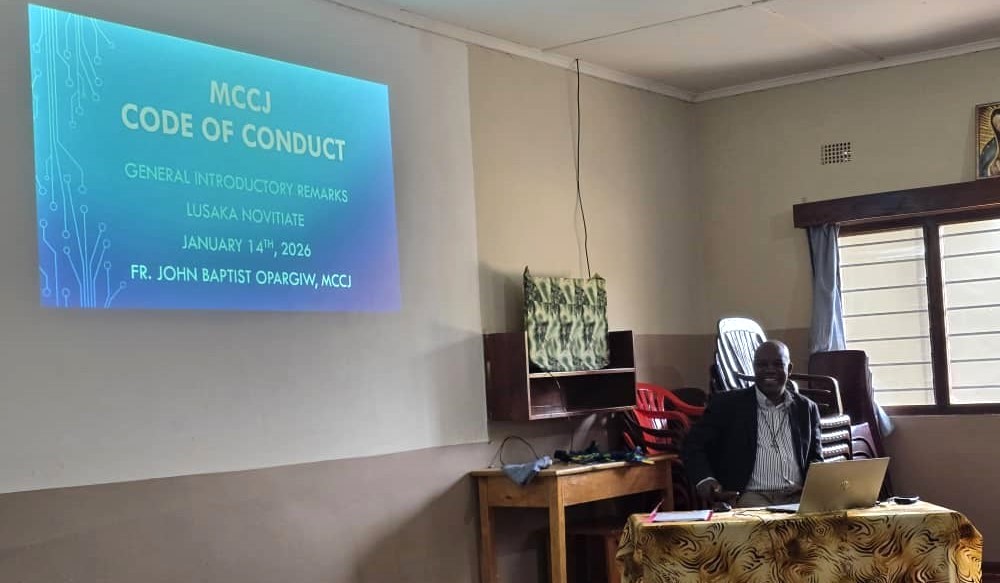
The Code of Conduct as a path of conversion and missionary credibility
Wednesday, 14th January, was dedicated to a workshop on the Code of Conduct, with the participation of both the novices and confreres from the Lusaka zone. Father Opargiw presented the historical development of the Code, emphasising how its evolution from 1997 to the 2025 revision reflects the Institute’s growing awareness of ethical, pastoral and institutional responsibility. He added that the document is not just a set of rules, but a path of conversion, fidelity to the Gospel and integrity in ministry. Its objectives are to promote a responsible missionary culture, to encourage mutual care and to ensure fair and transparent responses to situations of abuse, misconduct or scandal.
The workshop highlighted the theological, spiritual and canonical foundations of the Code, rooted in the Gospel, Canon Law and our Rule of Life. Attention was given to relationships as a mission, safeguarding policies, to disciplinary measures, and to the values of integrity, accountability, honesty, and transparency.
Both novices and confrères expressed appreciation for the clarity and realism of the presentation, recognising the Code of Conduct as an essential tool for personal accountability, healthy community life, and credible missionary witness today.
At the end of the workshop, the four Comboni missionaries present (fathers Achilles Kiwanuka, Augustin Fene-Fene, Simon Agede and scholastic Phiri Charles) formally signed the form accepting the Code of Conduct. The signed documents were handed over to Father Simon Agede, provincial councillor responsible for the Lusaka zone, who will subsequently forward them to the provincial superior, so that they may be included in the respective personal files of each confrère, in accordance with the procedures of the Institute.
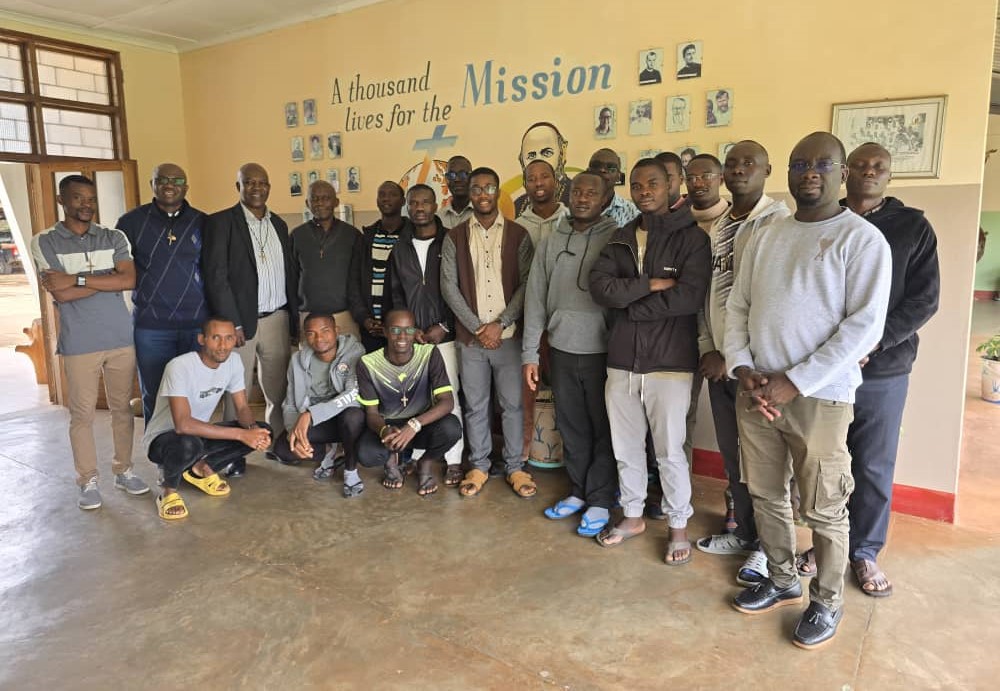
Fr. Augustin Fene-Fene Santime, mccj