
Daniel Comboni
Comboni Missionaries
Institutional area
Other links
Newsletter
Mission amid sirens and missiles – Life persists
Sunday, March 1, 2026
Iranian missiles in the skies over the Judean Desert do not frighten the missionaries who wish to share in the lives of Palestinian Bedouin women in times of conflict. “Since this morning, after Mass, we have heard the sirens. Even so, we went out to the desert. For several days now, Bedouin communities have suffered settler incursions. We could not stay away. We wanted to be present”, recounts Sr. Cecilia Sierra, a Comboni Missionary Sister in the Holy Land.
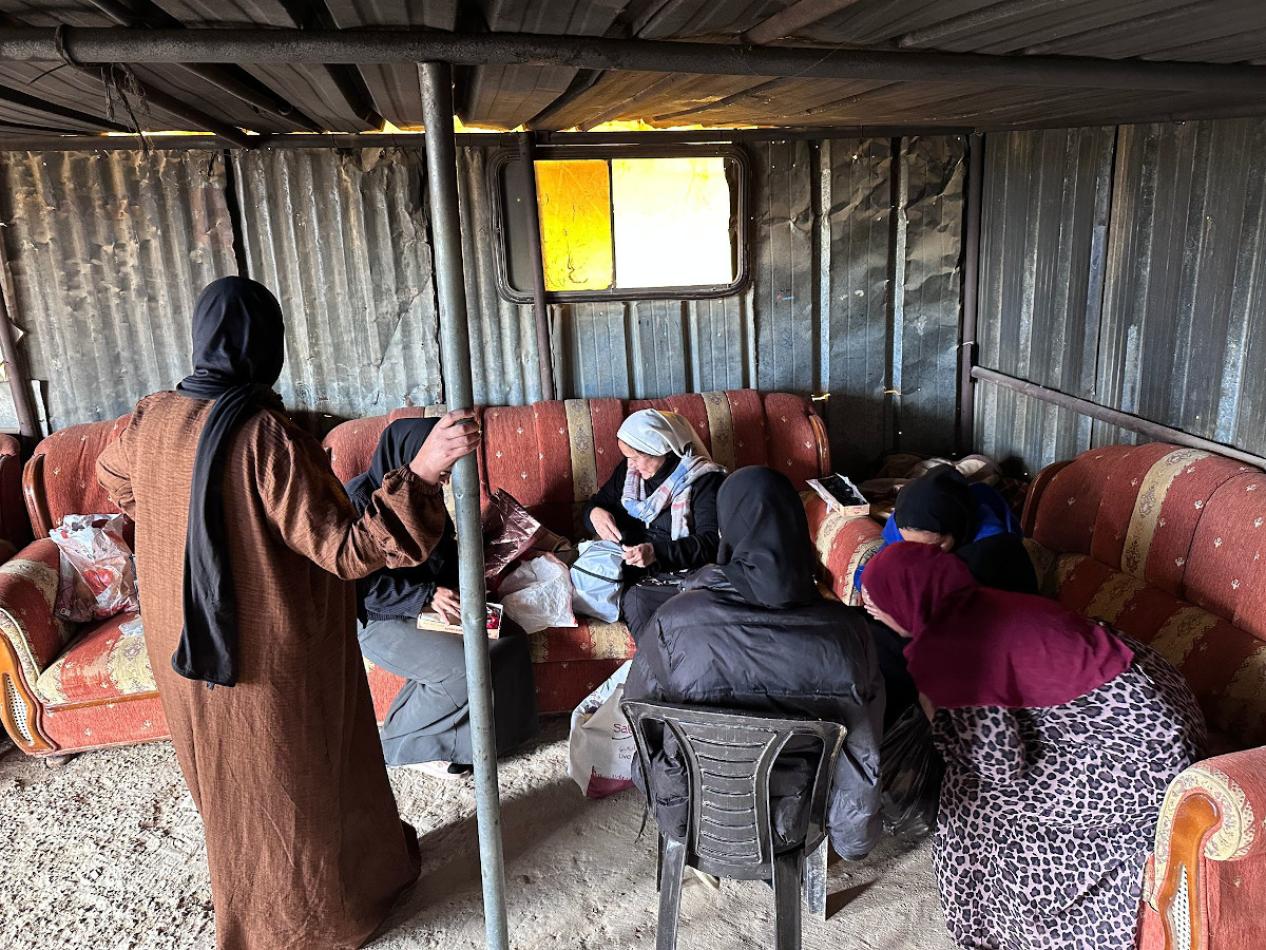
Since this morning, after Mass, we have heard the sirens. Even so, we went out to the desert. For several days now, Bedouin communities have suffered settler incursions. We could not stay away. We wanted to be present. To bring fabrics, zippers, threads: small, tangible signs to sew bags, to learn, to not give up.
This is not merely about “women's empowerment”. It is daily bread. It is the sustenance of a wounded family economy, where often women are the only ones who can contribute to the household.
To learn, in times of conflict, is much more than acquiring a skill: it is keeping the mind alive, igniting creativity when everything seems to fade away. It is survival. It is resilience woven stitch by stitch.
Almost thirty women were waiting for us, surrounded by so many children.
Beneath a community space made of thick, worn blankets, which offer some protection from heat and cold, we shared words and silences. They told us what had happened in the previous days, when the first missile blasts shattered the desert's silence.
Suddenly, new whistles. More missiles.
The children run to see. For them, there is no difference: inside or outside is the same. There are no shelters. No refuges. One hundred percent vulnerable.
We stayed with them, sharing the same exposure, the same uncertainty hanging in the air.
On the way to another village, more explosions, closer now. The sirens from the settlements continued to wail. The Bedouin women, almost impassive, as those who have learned to live alongside the unimaginable.
“Are you going to hide under the bed?” we joke with Aisha, who loves to sleep.
We laugh, knowing that her “bed” is a thin mattress and that her zinc-sheet house offers no protection whatsoever.
On the return journey, the road to Jerusalem and the settlements was almost empty.
In the neighborhood of Al-Azareya, on the other hand, life continued as usual.
Staying home changes nothing. In Palestinian villages and towns there are no shelters. Life goes on. People work. People live.
It is Ramadan. Those who have fasted since dawn will seek what is needed for iftar, the evening meal. Life persists, even under the sirens.
And we, at home, in prayer. Waiting.
With the awareness that this may be only the beginning of something that will make even more fragile the lives of those who already live under siege and in precariousness.
It is Ramadan.
It is also Lent.
Sr. Cecilia Sierra
Comboni Missionary Sister from Mexico