
Daniel Comboni
Comboni Missionaries
Institutional area
Other links
Newsletter
World Day of Prayer for the Care of Creation: September 1, 2026
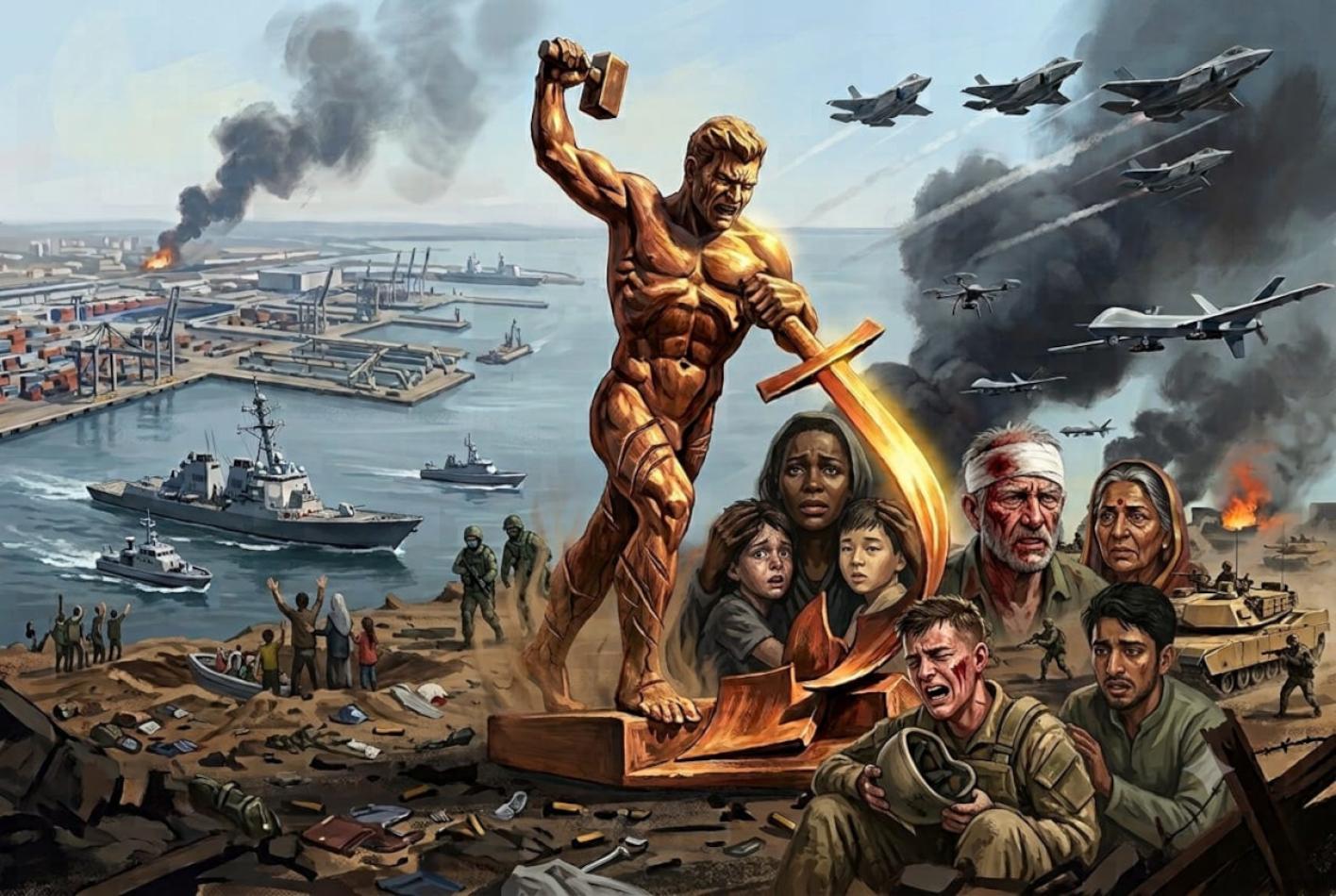
“The true tools for building peace are not weapons of destruction, instead they are truth, dialogue, patience, goodness, justice, mercy, understanding, care and love. These flow from hearts shaped by the Gospel and sustained by God’s grace. Only these qualities possess the power to transform individuals, renew communities and heal the wounds of our world.” [Photo AI]
Message of Pope Leo XIV
“They shall beat their swords into ploughshares and their spears into pruning hooks.”
(Isaiah 2:4)
Dear Brothers and Sisters,
Our Lord Jesus Christ came so that we might have life and have it in abundance (cf. Jn 10:10). This gift of life lies at the very heart of our mission as disciples and of our shared calling to build a civilization of love. As we observe this World Day of Prayer for the Care of Creation, we are once again invited to contemplate the gift of life and to cherish the earth that sustains it, for they are tangible ways of offering praise to our Creator.
Today, we are witnessing many crises and much human suffering. At the same time, it seems that the disruption to the harmonious balance of creation is accelerating. These phenomena are not unrelated; they are a single plea for healing and peace arising from a wounded world.
The God of life, revealed in Jesus Christ, offers a peace that the world cannot give: “Peace I leave with you; my peace I give to you” (Jn 14:27). This peace is neither superficial nor fleeting; it flows from the enduring love of Christ and his care for every human person.
Yet this promise of peace stands in stark contrast to the realities we see in many parts of the world. The prophet Isaiah spoke of a time when nations “shall beat their swords into plowshares” (Is 2:4), transforming what destroys life into what sustains it. But today, we too often witness the very opposite, as efforts continue to be directed toward violence and war.
War leaves wounds that extend far beyond the battlefield. It claims lives, tears families apart and forces millions to flee their homes, thereby deepening fear, injustice and division (cf. Gaudium et Spes, 77-82). War also leaves behind social and ecological destruction that endures for generations. Moreover, the interaction between armed conflicts and environmental degradation often creates a vicious cycle, which destroys ecosystems, contaminates essential resources, such as air and water, and undermines food security. This fuels poverty, inequality, and new social tensions that can contribute to the emergence of further conflicts.
What is more, war creates wounds that damage the whole fabric of life, harming not only individual persons and communities, but also their broader network of relationships with the whole human family, and their harmony with creation. It reveals a deeper failure to live in God’s image and likeness, to respect life and to care for the earth entrusted to us. This is not only a political failure, but also a moral and spiritual one. Rooted in distorted desires and the misuse of human freedom and power, war stands as a counter-witness to the Gospel of peace.
The above-mentioned crises call not only for responsibility but also for a conversion of heart that will bear fruit in a deeper fidelity to God, love of one another and respect for the gift of creation. Indeed, the discord we see in the world, such as violence, injustice and ecological degradation, is not simply the result of flawed systems or structures; it is a “symptom of the deeper dichotomy that is rooted in humanity itself” (Gaudium et Spes, 10). In fact, the human heart is the place where the deepest struggles unfold and our fallen condition reveals itself. It is not merely the seat of emotion, but the center of the person — the place where reason, desire, will and conscience converge. It is here that we wrestle with the contradictory desires within us between love and indifference, truth and illusion, justice and injustice (cf. Jas 1:14–15). The wounds of war and the degradation of the earth, then, are profoundly linked to the condition of the human heart. The conflicts that torment humanity are in many ways the outward expression of interior discord and division. When the heart is distorted, relationships suffer, and the structures we build begin to reflect that disorder.
Pope Benedict XVI reminded us that “the external deserts in the world are growing, because the internal deserts have become so vast” (Homily for the Solemn Inauguration of the Petrine Ministry, 24 April 2005). This calls us to recognize that, in some way, what is broken around is also broken within us. In order to build a peaceful society, therefore, we must not only reform structures but also renew our hearts. The deep-set causes of conflict and the exploitation of creation stem from an ethical and cultural crisis, including the loss of a sense of limits, the desire for domination, the pursuit of immediate profit, and the inability to recognize the God-given dignity of each human person.
The prophetic call to “beat swords into ploughshares” (Is 2:4) is therefore not only a vision for nations, but a call to each person. It invites us to transform harm into life. Yet this transformation cannot be achieved through external change alone. It requires, through cooperating with God’s grace, a deeper personal and collective conversion — a returning to God, who will reorder our desires, heal our wounds and help us grow in virtue.
Without this inner transformation, peace will remain fragile and short-lived. But where hearts are renewed, new possibilities begin to open. What has been used for destruction can be redirected toward life, toward the care of the poor, the nourishment of the hungry, and the safeguarding of creation. This is the path of authentic ecological conversion, where the effects of our encounter with Jesus Christ become evident in our relationship with the world around us (cf. Francis, Laudato Si’, 217). Peace, then, begins in the heart and flows outward to our relationships, communities and the broader world.
Although the challenges before us are enormous, God does not leave us without the means of healing and transformation. In place of the weapons of war, the God of peace grants us the strength to heal, to reconcile and to build a civilization of love. In this way, we are called to safeguard the many “ecosystems” entrusted to us: the ecosystems of creation, of human relationships and of the human heart itself.
Let us imagine a world in which the energies currently invested in war are directed toward integral human development, to overcoming poverty, protecting human dignity and reconciling divided peoples. Such a vision reflects faith in the coming of God’s Kingdom.
The true tools for building peace are not weapons of destruction, instead they are truth, dialogue, patience, goodness, justice, mercy, understanding, care and love. These flow from hearts shaped by the Gospel and sustained by God’s grace. Only these qualities possess the power to transform individuals, renew communities and heal the wounds of our world.
Dear brothers and sisters, the path before us is clear, though it is not easy. We are called to allow our hearts to be renewed, so that we might seek peace and care for creation. Scripture tells us to guard our hearts, for everything we do flows from them (cf. Prov 4:23).
If we take up this task with humility and faith, we will become collaborators in God’s work of renewal. We will move, slowly but surely, from desert to garden, from division to communion, and from violence to peace.
May the Lord grant us the courage to walk along this path, so that in our time, swords may indeed be beaten into plowshares, and the promise of the Gospel may take deeper root in our world, and the peace of Christ may reign over all of creation.