
Daniel Comboni
Comboni Missionaries
Institutional area
Other links
Newsletter
Combonis in Asia: Crossing the threshold
Wednesday, September 30, 2026
In our daily life, we cross various kinds of thresholds and at times, we may unknowingly enter an unchartered territory. This is what happened to us in this story.
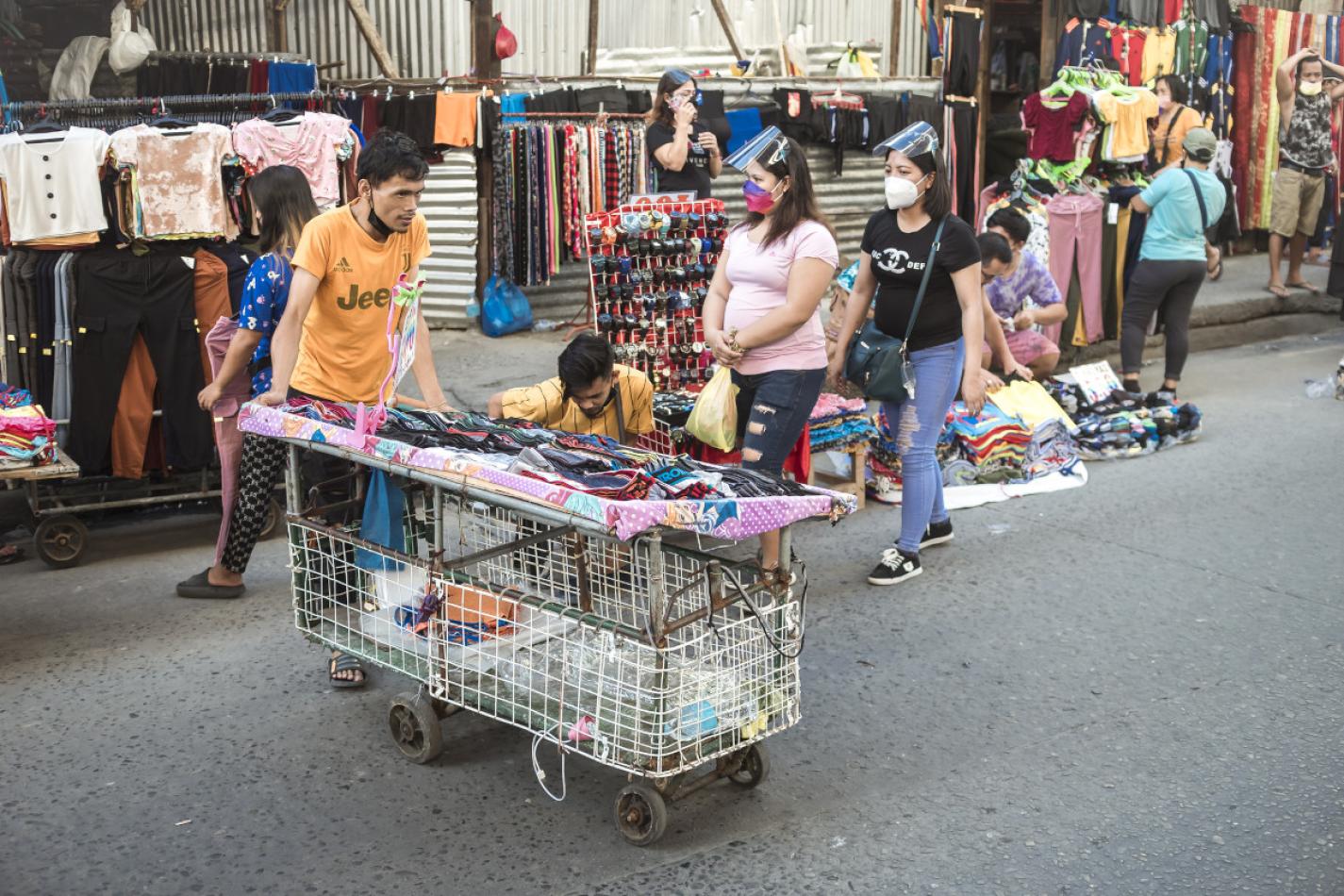
One evening, John approached Michael, one of our novices, and asked for some amoxicillin. The following morning, as I went with a friend, a doctor, we met him while pushing his kariton. She asked him to remove the handkerchief with which he had bandaged his right hand. The annular finger had more than doubled in size, and the thick rings he was wearing looked as if they were strangling ‘the neck of a balloon!’
It was evident to her that such a level of infection required immediate medical attention, but it seemed that getting a proper pair of shears to cut the rings was John’s priority, nothing else! After some bargaining, he agreed to go to the hospital. The rings were removed, and he got the first dose of antibiotic.
This in itself would not look so unsettling. But to him, who did not remember the last time he had entered a health centre, to get three injections within a few minutes and to hear that he was about to spend a night inside meant that we had crossed the red line! He waited for the right moment and then sneaked out swiftly from the hospital.
When Michael and I found John, I began to inquire from him what had happened. He rose a bit from his ‘cardboard-mat’ and in a direct way replied, “The rings were removed, the chu-chu pain (throbbing pain) is gone, I’m OK now, thank you, Father!”
And after lying down again, he turned his face away from me. As I was insisting that it was necessary to go back to the hospital for the treatment, a jeepney driver, who was resting nearby and heard our heated discussion, came forward and told him squarely, “If you don’t go back to the hospital, you will die here!”
Apparently, those strong words shook him more than the fact that the doctor had also arrived. He lazily got up from his mat, looked around, and caught sight of his wife, who in the meantime had been listening to us, then hesitantly told her that he would go back to the hospital.
Drama
The woman became upset, mumbled something, got the child, and then briskly moved away. John was quick to catch up with her, persuaded her to come back and tried to explain that he would be away just for a while. However, she was not convinced by that and ran away again. John caught her again and brought her back almost by force.
When the drama had faded away, he shrugged in resignation and said, “Father, I cannot go!”
Then it was the doctor who began to remonstrate, and I managed to calm her down with an offer: “We will get an oral antibiotic and make sure that he takes it at the right time!” She insisted that the infection was acute and it would take much longer to heal. Yet I was adamant, and finally, though reluctant, she accepted.
For one and a half weeks, three times a day, Michael and I took turns administering the medication. The first two days, when the pain was still acute, everything went smoothly. However, when he began to feel better, things changed. One day, at dawn, as I reached his place, I found everyone still asleep, but John was missing.
His companion, as he woke up, informed me that he had gone to the market to look for scraps. Though a bit concerned, I took it as a good sign and went to look for him. After a while, I found him pulling a heavy sack and holding a cup of coffee with his sick hand. He smiled at me and said with satisfaction, “I am feeling better, Father!”
Crossing thresholds
As I shared the experience with Michael, we realized that from that moment on, we had to be the ones to respect his plans and accept that John had to fend for his family. The course of antibiotics did its job; we added a few days of medication, and finally we left the dressing kit with him so that he could continue on his own until the complete healing.
During those days, John and we certainly crossed several thresholds, some knowingly and others unknowingly, some freely and others under compulsion. All this, despite our best intentions, was very hard for John and his family to accept, and in the process, we saw that our priorities differed: we were first concerned about his health, while they wanted their freedom.
Indeed, the fact that people like John have no fence or doors around the place where they stay, sleep on a piece of cardboard under a veranda, does not mean that they have renounced any private space or personal boundaries. We did trespass on such limits, and John and his family, in a dignified way, let us know.
Pierpaolo Monella, MCCJ