Daniel Comboni
Comboni Missionaries
Institutional area
Other links
Newsletter
Uganda – A vocational school to build a future for young people
Wednesday, October 28, 2026
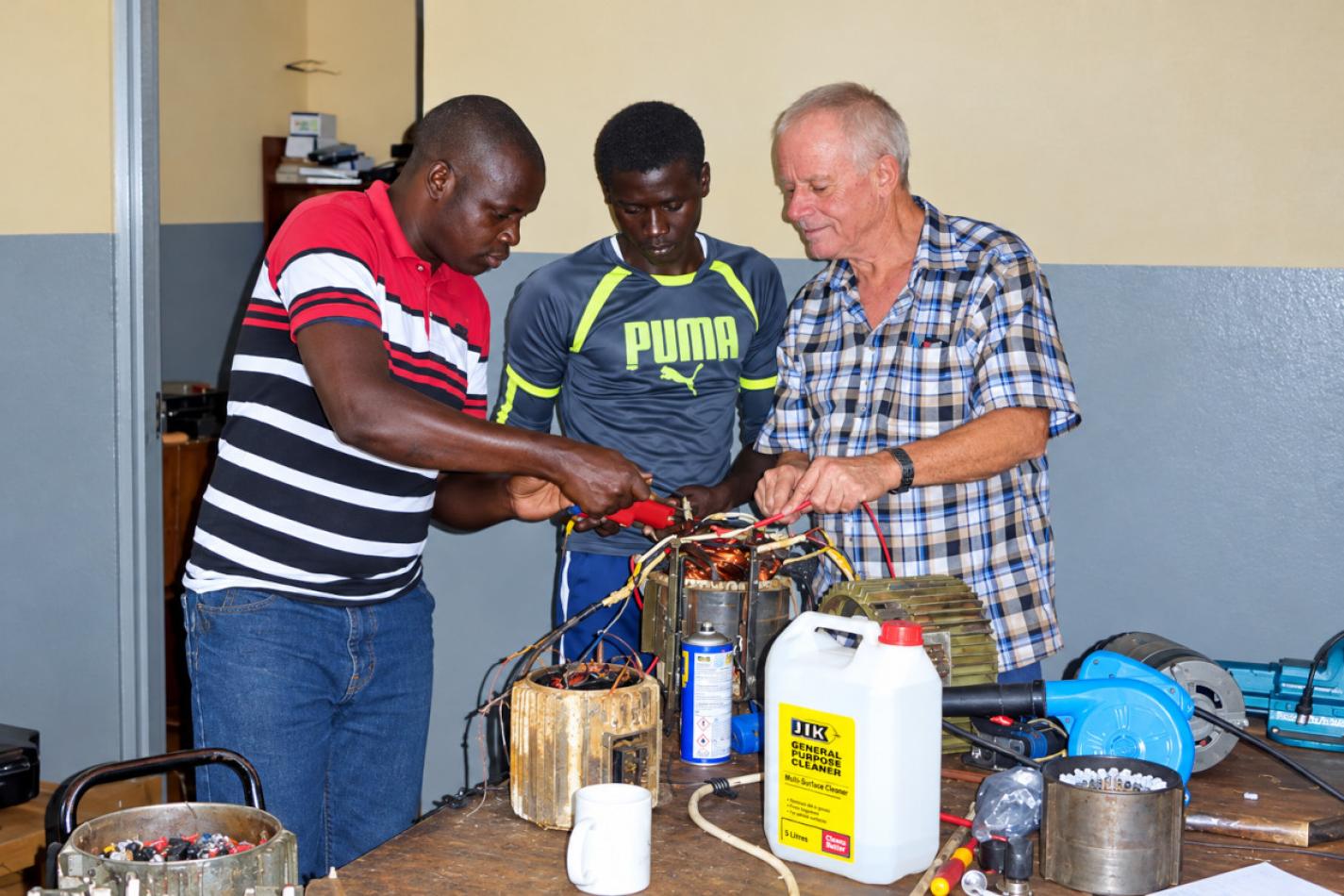
Comboni Brother Konrad Tremmel has spent many years promoting vocational training in Africa. After working on projects in Kenya and Malawi, he now leads a vocational training school in Layibi, northern Uganda, aiming to equip local people to take over its management despite numerous challenges.
The number of trainees at our vocational school regrettably fell sharply this year because many young people can no longer afford the tuition fees. We will be able to help some of those already in their final year of training as far as possible, using the donations we receive.
However, there are growing complaints because parents simply cannot afford the high cost of vocational training. As other technical schools charge lower fees, we too have been forced to reduce ours. Nevertheless, our technical training is undoubtedly more effective than that offered by other schools, as it places greater emphasis on practical skills, although this also means higher costs.
An alternative training programme
For those without a recognised school-leaving qualification, we have developed an alternative training programme offering courses in carpentry, metalworking and bricklaying. This programme is aimed primarily at young mothers and young people with minor disabilities or who have experienced trauma.
We continue to support this type of informal training partly because it costs much less and enables us to reach, above all, disadvantaged sectors of society who are in particular need of our support. Given the high levels of poverty in Uganda, these educational pathways are also an attractive option.
A large number of trainees benefit from this opportunity. This form of training is also funded predominantly by local organisations. Most of those who receive vocational training in this way subsequently find employment in local industrial businesses.
This gives many young people better prospects for shaping their future and enables their families to earn an income of their own, helping them to break the cycle of poverty. However, this type of apprenticeship, which lasts only a few months, can of course never replace a comprehensive two-year training programme.
Unfortunately, we are experiencing increasing difficulties with the government authorities. Their officials do not take their responsibilities seriously and lose important documents that we have submitted.
For the past year, training in some of our technical skills, such as bricklaying and plumbing, has no longer been officially recognised, even though we have been teaching these subjects at our school for many years.
In practical terms, this means that our trainees must enrol at another government school to sit their examinations, which is both expensive and time-consuming for them. Private schools such as ours are no longer tolerated by the government, and we will therefore probably have to look for alternatives.
It is quite clear that the government resents the fact that private schools generally have better facilities, enjoy a good reputation among the public and are therefore much more popular.
And because technical training at these institutions is also far more effective than that provided by government schools, the government is fighting us by every means at its disposal.
Several major contracts
Despite these obstacles, this year we have once again undertaken several major contracts in the production workshops attached to our school.
Among other projects, we renovated the kindergarten of St Bakhita in Gulu. We manufactured equipment and furnishings for the diocesan seminary in Alokolum and for the hospital in Matany, and supplied school furniture to St Clare’s children’s home in northern Uganda.
Our trainees and staff have begun building residential houses and have carried out preparatory work for the construction of a laboratory in Omiya Anyima, Kitgum. Construction of the laboratory has now reached an advanced stage.
All these projects help our school generate a better and more reliable income. They also give us the opportunity to pass on our expertise to local industry and provide our trainees with valuable practical experience.
I would like to thank everyone back home whose donations support our efforts to build a better future for the people here.
Bro. Konrad Tremmel, MCCJ – Comboni-Missionare