
Daniel Comboni
Comboni Missionaries
Institutional area
Other links
Newsletter
In Pace Christi
Giana Carlo
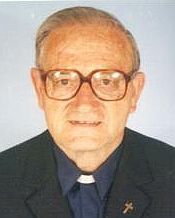
His family was one in which the renewal of Christian life promoted by the holiness of Cardinal Charles Borromeo was most visible in the education of children. In Chiuro, Valtellina, Como diocese, Charles was received as a gift of God when he was born on 1 October 1937. It is probably due to the care his family put in educating him, that the call to the mission found in Charles a fertile ground and, tilled as it was by prayer and devout affection toward the Lord, could manifest itself and grow.
It was certainly no surprise, actually joy for the parents, to see their son finding, early in life, his way into the Comboni minor seminary in Rebbio first, in his own Diocese, and then a bit further away, in Crema.
Some of the unfolding Plan of God in his life came to a sharp turn at the end of the Canonical year of novitiate in Gozzano, Italy, when Carlo was asked to complete is Novitiate in Monroe, Michigan, where more distance was put between his family and him, as he was now on the definitive course of Comboni Missionary commitment as he vowed on 9 September 1956, even adopting for himself the new name of Carlo-Maria. His formation continued through the years of philosophy and theology in Cincinnati, Ohio, till the priestly ordination on 22 December 1962 in Cincinnati. He was ready by then, well trained also for a commitment in North America where his friend and confident Fr. Charles Busetti would have liked to have him assigned, but there was instead a pressing request from the Comboni College of Asmara in Eritrea to have Comboni Missionary teachers.
His first years in Asmara
It was not the best assignment Fr. Giana could have desired but he was sure that God wanted him there in the mission and he gladly switched continent. In this new assignment, his academic and professional preparation was always up to date, his efficiency, clear statements and vision for the future won for him the respect of people, even when he was a bit demanding, and he was respected and appreciated particularly by the parents of the students in his role of warden of the secondary classes. Perhaps he was feared by some students, but also respected as one who was unflinching in following what was right and just. It was not easy going to be teacher and director at the Comboni College in Asmara during the years of civil war, revolution and dramatic changes during the 18 years he spent there. He didn’t complain of his ‘dry’ missionary field because he knew in faith that the Lord was working through him and if it pleased Him, He would prepare Him for future works.
Writes Fr. Pietro Ravasio: “Fr. Giana was sparing in his words, he had an excellent control when criticising, in spite of his young age. In particular he was living with joyful faithfulness his first mission experience. He had been entrusted with the Comboni College at a very difficult time, a responsibility he held until 1979. Some of his attitudes could have appeared tough, as he required strict discipline and transparency in running the College. In his heart, though, he always paid great attention to the people, to their needs and, whenever possible, he tried to provide for them what they needed.”
His own confreres had to admire his dedication, his faith, his love of obedience, his fidelity to religious life, his application at work and his spirit of sacrifice at the same time that, as it happens, they were tempted to criticize what they thought it was a too rigid discipline he had imposed on himself. He himself was very conscious of the role the mystery of the Cross plays in the life of a Comboni Missionary and was reminding himself and, by way of witnessing, also others, that the missionary service of the Kingdom of God can be very demanding.
His work among the Gujji population
Abba Giana, as he came to be called, was not totally ignorant of the Tigrigna language, but he did not want to boast of his knowledge, also because, as soon as he could, he took part in a course to learn Amharic to facilitate his possible work in Southern Ethiopia. In fact, after attending a renewal course in Rome, in 1981 he is found working in the mission of Qillenso.
The station of Qillenso, among the Gujji population, who are part of the wider Oromo group, the major ethnical group in Ethiopia, had been initiated four years earlier by the efforts of Fr. Bruno Lonfernini and Sr. Celinia Cominelli, when Mgr. Gasparini was still Apostolic Administrator of Awasa.
Fr. Giana was immediately committed to learn the Gujji language, to visit systematically the Christian communities and various groups of people sympathetic with Christianity; he also, together with other confreres contributed to the needed liturgical translations and to the translation of parts of the Bible, working unceasingly and praying along all the ways he was traveling, most often on foot, so much so that he can be considered cofounder of the Catholic Church among the Gujji, particularly the Gujji Uraga whose forests, valleys and mountains became as familiar to him as the Alps around the town Chiuro, where he lived as a boy.
His vision of the local Church was one of communion
Here we have again Fr. Ravasio’s testimony: “In 1979 Fr. Giana left for the Vicariate of Awasa. He was assigned to the new mission of Qillenso, started by Fr. Bruno Lonfernini, which was in an area that was inhospitable and far from Awasa. He worked among the Gujji in a heroic way. What I am saying has been related to me by a confrere who was an eyewitness. From this initial mission, Fr. Giana began to explore the area to find a more populated place for a future and more meaningful presence. All this meant gruelling marches on foot for tens of hours in that region full of mountains and of numerous valleys without roads. He used to be away for days. But it was from these explorations that Haro Wato, the present large mission and the one that better represents the Gujji people, was started. We can reasonably come to the conclusion that Fr. Giana thought that we were not to limit ourselves to the evangelisation of one people and culture, namely that of the Sidamo.
The Awasa Vicariate, in fact, included within its boarders various language and cultural groups, like the Gujji, the Ghedeo and the Darasa, just to mention the main ones. I believe that Fr. Giana’s prophetic work is an invitation, especially to the Sidamo priests, to make themselves available, so that they also may become ‘missionaries’ to other language groups around them.”
Other commitments
During his 12 years among the Gujji people (1984-1986) Fr. Giana had also to find time to serve his confreres as vice-provincial. His election to provincial superior of EE for two straight terms, from 1993 to 1998, did not come as a complete surprise to him, but it meant certainly quite a change from the humble missionary apostolate among the Gujji to a more visible and often unrewarding service out of the town of Addis Ababa, by now a bustling and fast changing city that was finding new vitality once the excesses of the Red Revolution were over. The mission that he loved, back in the Vicariate of Awasa, and in fact all the Comboni Missions in the province, were suffering from lack of personnel, the difficulty of reviewing the commitments and of coping with too many things. Fr. Giana managed to involve the confreres in the process by visiting often the communities and by participating in as many meetings as it was necessary.
Working more directly for the Awasa Vicariate
After the end of his mandate, Fr. Giana spent some time for renewal and ministry in Italy. It then seemed he was up for assignment to a different province, maybe the very NAP that knew his qualities since the time of his studies there. He was, though, very relieved when he was told that he could return to the EE province. In fact he was already there by the middle of 1999 as vice-novice master in Awasa, besides being caretaker of the Awasa Vicariate Administration when Fr. Franco Mastromauro’s left for the LP.
Now Abba Giana is ready to assume his new role as Coordinator of the Awasa Catholic Secretariat; he is ready to perfect the study of the Sidamo language too; he has all the qualities he needs: experience, acquaintances, administration ability; he commands the respect of the civil authorities, the trust of the religious and clergy working in the Vicariate. In fact he organizes a working system of accounting that will continue for a long time.
The illness
Throughout these years, Fr. Giana suffered from tension and strain, as he often had no one to confide with. During the 2006 holidays in Italy, he is diagnosed with stomach cancer and quickly operated on 18 August. Two months later he is back to Ethiopia with the permission of his doctors, but only for ten days, that is the necessary time to renew his work permit. He is scheduled for further treatment in Milan, Italy, where the Comboni Missionaries have a well equipped Center for confreres who need medical attention and a caring community. He is not far from the town of Chiuro and the house of his sister and brother and he can often be with them.
The chemotherapy proceeds regularly and produces promising fruits of a speedy and lasting recovery, so much so that in January 2007 he can return to Ethiopia for three months, which he spends in hard work, putting in order the administration of the Vicariate. When he is scheduled to go back to Milan for checkups and treatment, he feels and looks tired. The illness prevails on a body that would not react any more to the cure, a body that had been disciplined and had been already offered, as it were, together with the Sacrifice the Eucharist which Fr. Giana liked to celebrate for as long as he could.
What impressed his confreres, his relatives and his visitors during the last months, was the deep peace that possessed him in the midst of all the anxieties that he might have had about his health and his unfinished work. The process of dying was cut short from the very beginning with much trust in the Lord and readiness to do God’s will. His religious life became as simple as that of a novice in the fervor of his love and total trust in the Lord. This was the source of Abba Giana’s peace of mind. His prayer was often offered through the intercession of the Mother of Christ, who was certainly at his side at the hour of his death.
His life on earth was concluded by a peaceful death on Sunday 20 January 2008, feast of the Baptism of our Lord, a great solemnity in Ethiopia. As Abba Giana died in Italy, his relatives asked that his remains be buried in Italy, in his native little town of Chiuro.
(Fr. Sisto Agostini, mccj)
Da Mccj Bulletin n. 238 suppl. In Memoriam, aprile-luglio 2008, pp. 46-51.