
Daniel Comboni
Comboni Missionaries
Institutional area
Other links
Newsletter
In Pace Christi
Acedo García Fernando
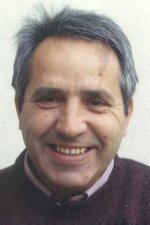
Bro. Fernando Acedo García (11.03.1942 – 26.06.2008)
At midday on Wednesday, 26 June 2008, Bro. Fernando Acedo Garcia returned to Teticcia mission (Ethiopia) after spending two days travelling to and from Addis Ababa and Awasa. On his arrival, he went to work for a few hours in the vegetable garden. At around 3pm the superior, Fr. Paolo Paoli arrived and they spoke together about the journey. Fr. Paoli advised him to go and have a rest as he must surely have been tired. Unusually, as he never took an afternoon rest, Bro. Acedo agreed to do so and went to his room.
An hour later someone was looking for him and Fr. Paoli knocked on his door, receiving no answer, and thought he must be asleep. The next morning, not seeing him up and about, Fr. Paoli again went to his room where he found the Brother on the bed, cold and rigid. He had probably died the day before, soon after he went to his room. His heavenly Father had called him to his eternal rest. He was 67 years of age and had never been ill.
The funeral took place on the following day, Saturday 28 June, at Teticcia mission. Three thousand people thronged the grassy area in front of the parish church, something unheard of previously. Bro. Fernando was very popular in the area, not only on account of his agricultural work and the chapels he built, but especially for his friendly approach to everyone. He even gained the friendship of the traditional Sidamo chiefs: he was, in fact, the only one to have been allowed to photograph some of their traditional religious rites. Even though he often went to other missions, including South Sudan, for construction work, he considered Teticcia mission his real home. He worked there for 17 years and there he was buried, near the church and alongside Fr. Gualberto Bormolini. God granted him an uncommon funeral, perhaps because he was an uncommon missionary.
In itself, his missionary life shows nothing extraordinary. Fernando was born on 11 March 1941 at Don Benito (Spain), to a family of small farmers. For him, farming was not just a duty, but a passion and a way of life. He took the sufferings and hardships of life in his stride, with great simplicity.
In 1963, at the age of 22, he joined the Comboni Missionaries by entering the novitiate at Corella and later at Moncada.
He took his first vows on 1 May 1966 and was appointed to Moncada house. He worked on the building of various houses in the Spanish province. He was appointed to Ethiopia in 1974, but spent a while in the Togo-Ghana-Benin province while waiting for his visa. He at last reached Ethiopia in 1977. His first mission was that of Dilla, in Awasa Vicariate, where he was able to exercise his expertise in agriculture. He also taught some classes and put the theory into practice with the students, introducing hitherto unknown cultivations.
After two years he was transferred to the Awasa procure. It was the time of the Marxist dictatorship of Menghistu Hailé Mariam and it was very difficult to find supplies for the missions. He would travel two or three times a week to Addis Ababa with his lorry, a journey of 275kms each way, to buy essential supplies and distribute them to the various missions. He worked in that office for eight years and was sent to Teticcia mission in 1987 where he could again take up his agricultural work with the students: the mission vegetable garden was soon full of all kinds of vegetables.
In 1993 he returned to Spain for a period of rotation. That same passion which helped him work so well in the mission he now employed in giving missionary witness in Spain. His witness was not very theological or eloquent but it was so full of life that, even now, after many years, many remember him with great affection from the time he visited schools and parishes. In 1997 he returned to Ethiopia, to the mission of Teticcia, so dear to him, and stayed there until the end.
It is not Bro. Fernando’s missionary life in itself that is so extraordinary but the way in which he lived it. For the sake of brevity, it is enough to comment on seven key words which Fr. Tesfaye Tadesse Ghebresilasie, the provincial superior, used at the funeral to describe his life.
- Prayer: Bro. Fernando began his day very early with at least an hour of prayer. It is superfluous to add that this gave the tone to the rest of the day. He was scrupulously faithful to community prayer.
- Work: his working days were long, hard and many without much thought given to rest or food.
- Simplicity: his personal necessities, whether concerning dress, food or personal possessions, were minimal. Photography was the only field which prompted him to spend any money. It was money well spent as his photos and videos are a treasure house of anthropological material for the study of the Sidamo customs.
- Transparency: Bro. Fernando always spoke his mind and judged situations according to the values he lived by. This led to his being sometimes one-sided and harsh, but once he had said what he thought, he immediately returned to his attitude of friendship and openness towards all.
- Generosity: this was the word most used at his funeral when referring to Bro. Fernando, both by those present and those who sent messages of sympathy. He was willing to go to any length to accomplish whatever service was asked of him. He put his whole heart into his work and did it with the best of intentions. If there were some inevitable misunderstandings, he never bore any ill will and soon was back to his old self.
- Happiness: Bro. Fernando brought constant happiness with him, a joy which he had inside himself, the fruit of his total identification with his missionary service. He was one of the main entertainers at community gatherings and celebrations. His jokes were never in bad taste, though perhaps a bit naive, but it was the way he told them that made them entertaining.
- Friendship: Bro. Fernando was an outgoing and affectionate confrere. Everyone regarded him as their friend. He could be a bit rough at times, especially with the workers, but he would immediately have a laugh with them and he would show them small kindnesses to compensate.
- Books: even though may seem unlikely in one who had not spent many years in school and was engaged in manual work every day, Bro. Fernando was an avid reader. He read many books, on spirituality and other topics. He also wrote many letters, all by hand, as well as many articles, especially on the Sidamo culture, some of which were published by Comboni magazines.
In the summer of 2007, while on holiday in Spain, he went to visit his companion from Teticcia mission, Fr. Ivo Martins do Vale, who had gone to Portugal for health reasons. While together in the chapel, Bro. Fernando said to him: “Before asking for your blessing, I want to give you mine, as a Brother”, which he did. Now, we ask him to include in his “brotherly blessing”, the entire province of Ethiopia and the whole Institute.
(P. Juan Antonio González Núñez).
Da MCCJ Bulletin n. 239 suppl..In Memoriam, ottobre 2008, p.28-36.