
Daniel Comboni
Comboni Missionaries
Institutional area
Other links
Newsletter
In Pace Christi
Santinoli Antonio
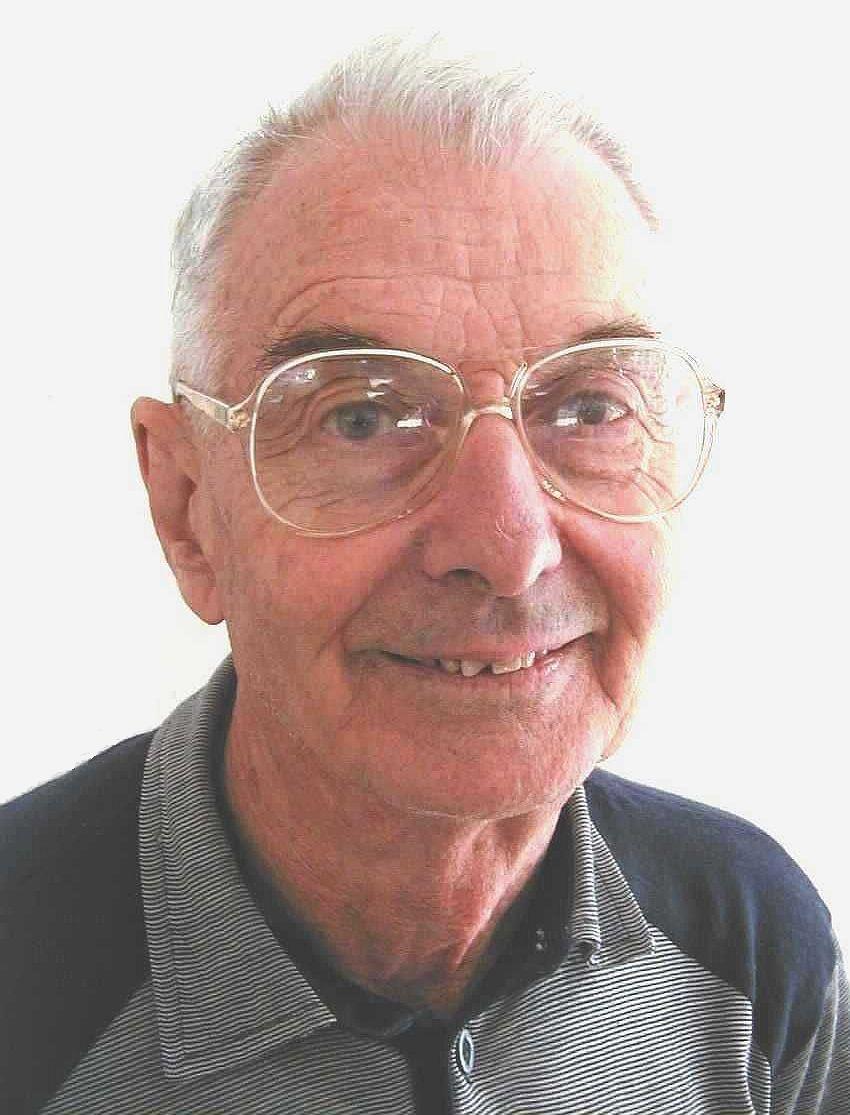
Fr. Antonio Santinoli was born at Valli del Pasubio (Vicenza) on 16 June, 1923. He joined the junior seminary at Brescia and completed middle school before completing his secondary education at Padua. He entered the novitiate at Venegono where he took his first vows in 1942 and perpetual vows in 1947. He began his scholasticate ain Rome but had to move to Rebbio for a year and a half because of the war. In 1975 he again took up his theological studies at Verona Mother House and was ordained priest on 6 June, 1948. After his ordination he was sent to Thiene for a couple of years and was then appointed to South Sudan (1951).
Fr. Antonio worked for 13 years in Sudan, first in the parish of Torit and then at Isoke, Okaru and, for seven years, at Loa. It was a period of growth, at once both hard and fruitful, of numerous Christian communities and of the whole of Sudanese society. The desire for political independence was reinforced by opposition to Islamisation promoted by the government of Khartoum. The rebellion against the North became organised and took up arms. The government, in trying to put a stop to and control the Church, took increasingly restrictive measures and in 1965 ordered the expulsion en masse of all foreign missionaries from the South.
For this reason, Fr. Antonio had to leave Sudan and return to Italy. Having completed the renewal Course in Rome he was appointed to Uganda. For a short time at first he was sent to Palabek, and then to the Madi zone where he stayed for many years, entering deeply into the culture of the people.
Fr. Giuseppe Filippi, provincial of Uganda, wrote: “The first lines indicating his presence in Uganda are to be found in his file carrying the date of January, 1968, when he was bursar of the little seminary (for Sudanese candidates) set up by Mgr. Mazzoldi at Pakele, West Nile. It is interesting to read the correspondence with the provincial of the time where the most frequent theme is that of the shortage of personnel. It seems to be a Comboni constant to want to do more than is humanly possible.
In 1971, during his holidays, he did a brief updating course in Rome which left him full of enthusiasm. But, at the same time, he began to feel a foreigner in his own country due to the new ideas circulating and the attitudes of people which left him confused. At that time he was asked to go to England to work in formation; instead, he ended up in Crema where he stayed until June, 1972. He then returned to Uganda and the mission of Moyo (1972 – 1979). It was a time when a number of Comboni Brothers were thinking of seeking ordination, something that Fr. Antonio does not seem to have encouraged, if we are to go by his analyses and evaluations.
Fr. Antonio spoke with increasing frequency of the effects of the dictatorship of Amin, stressing how the structures left by the colonial government were rapidly deteriorating and causing the missionaries to change their lifestyle and busy themselves with water pumps and the like. These new difficulties forced the province to set up enlarged communities but this idea soon showed its limits due to the great distances and variations in methodology.
In 1978 Fr. Antonio asked to join Fr. Giovanni Marengoni, then at Nadiket, Karamoja, as superior of the new Institute of he Apostles of Jesus, founded by Mgr. Sisto Mazzoldi. Permission was granted in early 1979.
In 1983 he returned to pastoral work at Ajumani, still among the Madi, and in 1988 at Koboko.
Three years later, in 1991, he went back to Fr. Marengoni and the Apostles of Jesus, in Nairobi”.
Together with Fr. Marengoni, Fr. Antonio spent four years at Rongai as spiritual director. He then spent some time in the parish of Sololo (1995-1999), on the border with Ethiopia, and then at Marsabit for four years and again, briefly, at Sololo. In June, 2004, he had to return to Italy for health reasons. He spent his last years at Verona and at Arco. He died in Verona on 14 February, 2009.
Fr. Romeo De Berti wrote from Kenya: “We are gathered round the altar and the coffin of Fr. Antonio to accompany him with our prayers to the home of the Father. We remember him as one who attached great importance to prayer, both community and personal, and as a missionary deeply committed to his ministry both in the seminary and in his mission of Marsabit”.
Da Mccj Bulletin n. 241 suppl. In Memoriam, luglio 2009, pp. 42-45.