
Daniel Comboni
Comboni Missionaries
Institutional area
Other links
Newsletter
In Pace Christi
Bandera Gian Paolo
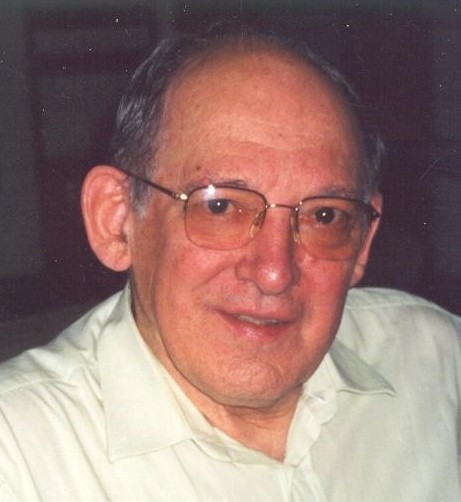
Fr. Gian Paolo Bandera was born at Busto Arsizio, in Varese province, on 5 May, 1922. After the novitiate in Venegono and the scholasticate in Verona, he was ordained priest on 6 June, 1948, at the age of 26. he spent his first 13 years of priesthood in Italy, mostly as a spiritual director. He was then appointed to Brazil where he spent about forty years.
He arrived in Brazil in 1962, when the province was investing heavily – mostly due to the pressure exerted by the provincial of the time, Fr. Rino Carlesi – in the formation of the youth and in seminaries. The state of Espírito Santo, an area with high immigration from Italy, was seen as the ideal place for sowing the seeds of missionary vocation. Fr. Paolo seemed the man for the job. With the depth and intensity of his interior life, he seemed an ideal spiritual father, essential for such structures. In fact, after a year at Conceicao da Barra, in the north of the country, getting to know the situation in Brazil, he was sent, in 1963, to the newly-built seminary at Ibiraçu. Everything was just starting and the seminary was opening its doors (it was officially opened in 1964) and there were great hopes and expectations: even a special visit by the Superior General, Fr. Gaetano Briani, was arranged. There was much enthusiasm for that project. Paolo, instead, realised that all was not well and stayed there only a year. He was not at ease. It was a seminary with too many structures and a formation that was too European in an environment that had little to do with Europe. He asked to go elsewhere. His place was taken by Fr. Pietro Bracelli who, at that time, was very close to him, especially in the years when he was provincial of the South. Fr. Paolo was sent to Mantenópolis, a parish in that same state but in a difficult area and a traditional style, with little evangelisation and much use of the sacraments. He stayed there for three years, 1964 – 1967. In 1968 we find him at Gerônimo Monteiro, in another seminary which was opening its doors and reproducing the difficulties of Ibiracu. From 1969 to 1971, he stayed at Sao José do Rio Preto, in another seminary, the fourth planned by Fr. Carlesi in just a few years. Fr. Carlesi held that this was the way to consolidate the Comboni presence in Brazil. History shows he was mistaken and Fr. Paolo knew it deep down. From 1972 to 1976, he worked at Rio de Janeiro, in a college run by Sisters where he was spiritual assistant and could receive friends and relatives of the confreres who came to visit their sons or relatives. However, here again he was not comfortable. Then he is to be found at Gerônimo Monteiro, at Água Doce, in Brasília, in São Paulo, again in Brasília, at the Curia in Rome, at São José do Rio Preto, once more in Italy, then at São Mateus, again in Brasília, at Belo Horizonte, Lages, Porto Velho, Curitiba, Pedro Canário, São Paulo and, from 2004 onwards, in Italy.
This is how Fr. Paolo was. A man of enormous humanity and great spiritual riches but also a restless man, as is shown by his many changes of community. The confreres knew of these difficulties of his but welcomed him willingly because he never created problems in community. On the contrary, he was very attentive to the needs of all. He liked to take care of supplies and practical things in the house. He would go to the market, take care of the catering and cleaning. He did this with exemplary dedication. He always wanted the rooms in order, the chapel taken care of and the kitchen well supplied. Food had to be carefully prepared. He believed that the care of the house, the food and other small things were what created community. He was visibly disturbed by superficial relationships and especially by carelessness or lack of communication that prevented guests being properly received.
Even though he was not a front line man, Fr. Paolo was, within the group of the Comboni missionaries of the area, one of the more open persons, something admitted by those who insisted most on renewal. He was honest and correct. The people appreciated his simplicity and generosity as well as the quality of his pastoral service. He never improvised a homily or a celebration: he wrote everything down, even if he did so for just a few people in the community.
These were the traits that made him appreciated and loved by all. When he began to be deaf he kept to himself even more than before. He felt very bad about this problem. He knew he could no longer follow a discussion. He asked to be excused from meetings, especially in the community and with the people.
He was always most comfortable at home among his books, domestic matters, in the libraries and archives, cataloguing documents, helping to organise paperwork, even if only to facilitate the work of those who needed those papers. This was his main work since 2004, in Roma and in Verona.
(Fr. Giovanni Munari)
Da Mccj Bulletin n. 251 suppl. In Memoriam, aprile 2012, pp. 25-30.