
Daniel Comboni
Comboni Missionaries
Institutional area
Other links
Newsletter
In Pace Christi
Benetazzo Stelvio
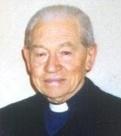
Fr. Stelvio Benetazzo, the son of Giuseppe Benetazzo and Agnese Maria Lovato, was born in Saonara, in the province of Padua, the first child of a large family. He attended the church and oratory and grew up in a climate of faith and commitment to his studies. This was the environment where the call to mission took root in him.
All through the night of 11 May, 1941 – Fr. Stelvio wrote in his autobiography – heavy rain caused floods over much of the region of Venice. In the morning, Stelvio set out on his bicycle, as usual, to go to Brusegana where he was in the third year of middle-school, a journey of 18 km. A wide, deep ditch to the left of the road had filled with rainwater. A strong gust of wind forced him into the ditch and Stelvio had to struggle to stay afloat. He began to call for help as he desperately tried to find something to hang on to. He uttered a prayer from the heart: “Lord, save me and I will be yours forever. A local boy heard his cries and rescued him. Stelvio was thirteen at the time and that adventure marked the beginning of his vocation.
In September, 1942, a Combonian priest visited the parish of Saonara to preach a Mission Appeal. Stelvio was very impressed and subscribed to Nigrizia. On 25 September, 1947, with the consent of his parents, he left home to start his novitiate in Florence. He took first vows on 9 September, 1949, and moved to Rebbio a few days later; he took perpetual vows on 9 September, 1953, and was ordained priest on 12 June, 1954, in the crypt of Milan Cathedral. On 17 June, the feast of Corpus Christi, he celebrated his first Mass in his parish church.
Fr. Stelvio was immediately appointed to Uganda but first he had to go to England to learn English. He spent six months in Stillington and a further six months in London. At the end of August, 1955, he returned to Italy to spend some time with his family and prepare to go to Africa.
His first mission was Morulem in Karimajong district among the Labwor tribe. The mission, founded just five years earlier, had two thousand Christians and there was no shortage of work. His first concern was to learn the local language. He had little time at his disposal for study but, visiting the catechumens and spending time with the workers, provided ample opportunity to practice his language skills.
At the end of December, 1957, he left Morulem for Aduku, among the Lango people, where he could only stay for five months as the climate was harmful to his health. He then moved to Kalongo on 1 May. Fr. Giuseppe Ambrosoli ordered a chest x-ray that showed signs of tuberculosis for which he immediately received treatment.
On 7 October, 1958, he returned to Morulem as superior and Parish Priest.
In 1963, Fr. Stelvio and Sr Rosa Lucia Vinco, who had worked at the leprosarium of Alito, trusting in Divine Providence started a small leprosarium in some temporary huts next to the dispensary. After a few years they had a state-of-the-art leprosarium that could house up to three hundred patients. Next came a maternity hospital. The missionaries succeeded in obtaining permission from the government to avail of a well with a strong flow of clean water in sufficient quantity for the needs of the mission, the schools and the leprosarium. In September, 1975, Fr. Stelvio returned to Italy for his holidays and to take part in the Renewal Course in Rome.
In May, 1977, he was again appointed to Uganda and went to Gulu, to the parish of the Holy Rosary, where everything from the environment and people to the work and the life-style was completely different. In a short time, however, Fr. Stelvio had settled-in fairly well and devoted all his time to pastoral ministry. He took on the work of teaching religion to the girls of a vocational school belonging to the parish. Each evening, he would visit the sick in the government hospital. Twice a week he would go to the prison: on Sundays to celebrate Mass and on Wednesdays to impart religious instruction to the prisoners. Once a month he visited the sick in their villages and brought them the sacraments. He was often called to assist the dying. Increasing numbers of people were victims of the scourge of AIDS, many of them were young people.
In late 1999, Fr. Stelvio went to Italy to work in the Curia as spiritual director of “Mater Ecclesiae” College in Castelgandolfo. It was a branch of Propaganda Fide set up to receive catechists from the missionary world of Asia, Africa, Latin America and Oceania. There were about a hundred in all, both men and women, mostly lay-people but also some religious, who followed a formation course of three years at university level. Fr. Stelvio went to Castelgandolfo on 2 May, 2000. The students believed he was a saint and he was very fond of them, welcoming, counselling and helping all who needed him.
In 2005, for health reasons, he was transferred to the Ambrosoli Centre in Milan where he passed away on 31 October, 2016.
Da Mccj Bulletin n. 270 suppl. In Memoriam, gennaio 2017, pp. 153-161.