
Daniele Comboni
Missionari Comboniani
Area istituzionale
Altri link
Newsletter
In Pace Christi
Walter Charles
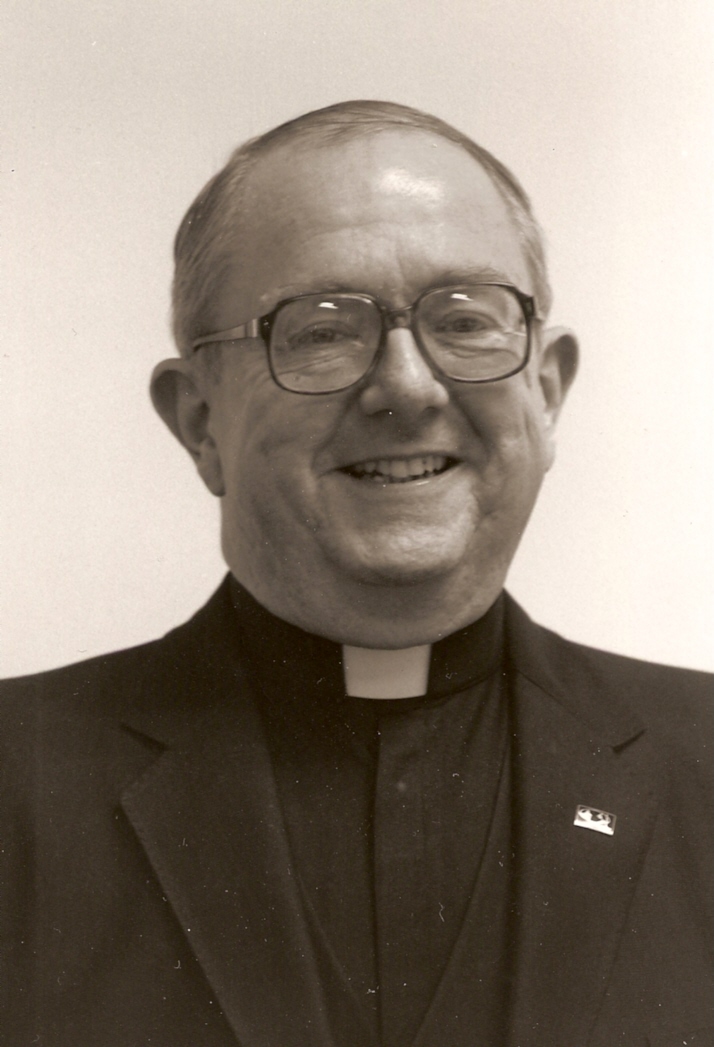
Charles S. Walter’s journey through life was an international and multicultural experience, lived brilliantly in the service of the Church and the missionary congregation he deeply loved.
“I know I speak for all of you when I say that he will be missed,” wrote Fr. Brian Quigley, who succeeded Fr. Charles as provincial superior of the North American Province (NAP) in 1986. “Fr. Charles’s years of dedicated service to the province, coupled with his keen perception and clear leadership, launched us into the 21st century.”
Fr. Charles Walter’s youth
Born in Grafton, West Virginia, Fr. Charles was the first child of Sebastian J. Walter, a wholesale bakery co-owner, and Mary MacDonald Walter, homemaker, who came from Cambridge, Massachusetts. His parents guided him and his brother George to a deep belief in Christ, in a region where Catholics were few and endured the bigotry of their neighbors. His father, aunts and uncles owned G-B Bread. Some neighbors refused to buy their bread because they knew the family was Catholic. This early introduction to life on the margins influenced Fr. Charles greatly.
Grafton is in the coal-mining region of West, Virginia. The people had a very tough existence, especially before John L. Lewis organized the miners’ union. Fr. Charles talked about his early school days at St. Augustine Parish School in Grafton. “I remember the teacher of World History telling us about colonization around the world,” he said. The teacher was a young Sister of Divine Providence. “She said that we didn’t have to go to Africa to find colonies since West Virginia was a colony of the wealthy mine owners who live in New York and get the lion’s share of the profits, leaving little for the poor, tireless workers.”
After completing eight years of primary school in just seven, Fr. Charles entered Sacred Heart Minor Seminary near Cincinnati, Ohio in 1953. Throughout his years of formation, he distinguished himself as an extremely gifted and intelligent student. Indeed, during his life, his ability to analyze and summarize problems was well known and respected.
The years of formation
Fr. Charles had a wry sense of humor. He could cleverly twist a word to express irony or mockery that others would understand when he would smile. While lying on his bed, consumed with cancer, he told the provincial superior, Fr. Dennis William Conway, “God has a sense of humor. He has given me peace about my death, because that’s the natural course of things, but it still drives me crazy when they bring me cold mashed potatoes.”
His Comboni spirituality characterized him fully and he nourished it in Monroe, Michigan during the novitiate from 1957-59. After this, he obtained a Bachelor of Philosophy degree from San Diego University in 1962; he studied theology in Rome from 1962-66, graduating with the degree of Sacra Theologia Licentia (STL).
In South Africa
After ordination in 1966, his first mission assignment was teaching at Sacred Heart Seminary in Cincinnati. Two years later he was part of the second group of Filii Sacri Cordis Jesu (FSCJ) sent to the diocese of Lydenburg, Witbank, in the Republic of South Africa where he served with the Missionarii Filii Sacri Cordis (MFSC). Other FSCJs were sent to collaborate with the MFSCs in Peru. The MFSC (German) and FSCJ (Italian) branches of the Comboni Missionaries that had separated in 1923.
These efforts at collaboration preceded the Reunion Study Commission established by the 10th General and Special Chapter in 1969, which paved the way for the reunification of the two branches of the congregation in 1979.
The General Chapters
The 10th General and Special Chapter called Fr. Charles along with Fr. Julian Gallache and Fr. Peter Magalasi as observers. Each priest, an American, a Spaniard, and a Sudanese respectively represented a nationality not already present among elected chapter delegates That was Fr. Charles’ first experience of a General Chapter. He was subsequently elected delegate to the 11th, 13th, and 15th General Chapters and was a member ex jure of the 12th. In these meetings Fr. Charles was appreciated for his understanding of procedural rules, but also as someone who challenged and questioned issues of mission and religious life in order to move the congregation forward.
Back home
In 1974, Fr. Charles returned to his home province as superior of the community of Yorkville, Illinois. It was at this time he wrote the proposal for a new international scholasticate associated with Catholic Theological Union at Chicago (CTU). The provincial council approved his proposal and when he was elected delegate to the XI General Chapter he took with him his confreres’ enthusiasm for the new house of studies. After the members of the General Chapter elected him to the General Council, he saw the proposal through to its conclusion.
In Rome
From 1975 to 1979, Fr. Charles served as an assistant general at the international headquarters in Rome. During these years he used his considerable skills and talents to foster a new style of government originally introduced to the Institute by the General and Special Chapter of 1969 and the Chapter Documents. The principles of collegiality, decentralization, and subsidiarity shaped this new style.
Although Fr. Charles was not one who singled out an achievement of which he was proud, he was particularly grateful for the opportunity he had to encourage, at an administrative level, the reunification of the MFSC (German) and FSCJ (Italian) branches of the Comboni Missionaries. For Fr. Charles, it was like a happy conclusion of his first mission assignment in 1968 to the diocese of Lydenburg. It coincided with the end of his tenure on the General Council.
Provincial superior
A new chapter in his life began with his election as provincial superior of the NAP in the 1980. Fr. Charles was the youngest provincial superior in the congregation at that time. With his council he achieved several goals; among them, a new provincial directory and plan of action and the opening of a vocational center for Spanish-speaking candidates at Casa Comboni in Los Angeles.
He and his council had to deal with a “turning point” in the province because of the decrease in personnel and a General Council unwilling to assign new personnel because of numerous crises of vocation, believing a “higher spirituality” was needed in the NAP, because “among the provinces [it is] the most deeply embedded in a secularized society,” according to the General Council.
Fr. Charles and his council discussed this issue and their response reads: “it is very difficult to assess and make judgments on a culture and society that are very complex realities of which the General Council has only a limited experience, and the problem of the NAP should be seen in the general context of the society, where personal crises do not seem to be limited to one nationality or province.” This argument did not seem to convince the General Council and this prevalent attitude overshadowed the achievements of his tenure as provincial superior.
By character, Fr. Charles was extremely introverted. Whenever possible he would delegate the social responsibilities incumbent on the provincial superior. He preferred reading and studying, emulating as example Fr. Archimede Fornasari.
After his service as provincial of the NAP, the next chapter in Fr. Charles’ life unfolded in Peru from 1988-1994, first in Arequipa as a pastor, and later in Lima as a teacher.
At the CTU and
As brilliant as Fr. Charles was, self-doubts often got in the way of his creativity. It wasn’t until the lasts few years of his life that he found some peace from the demon of self-doubts. Fr. Charles earned the degree of Doctor of Ministry and was an adjunct professor at CTU. He was also the associate director of the Chicago Center for Global Ministries. His specialty was in intercultural formation programs. He thoroughly enjoyed his assignment as a teacher at CTU.
Towards the end, when his strength was failing him, his faith was still deep and growing stronger. He parted with the words: “God be with you.”
The journey to life, through death, is always a personal one and so it was for this very complex person we called Fr. Charles. Fr. Donald Senior, President of CTU wrote that Fr. Charles: “faced the threat of terminal cancer with extraordinary courage and peace. May God now grant him the fullness of that peace in eternal life.”
Though it was sad to bid him farewell, Fr. Charles was happy that death met him in Chicago, a big city far from the narrow confines of the small town where he was born. His inquisitiveness and spirit were larger than life in Grafton. Fr. Charles was happy that death found him faithful to his God and to the Comboni Missionaries.
Fr. Paul Donohue, mccj
------------------------
P. Charles Walter. La vita di P. Charles S. Walter è stata un’esperienza internazionale e multiculturale, brillantemente vissuta al servizio della Chiesa e dell’Istituto missionario che ha profondamente amato.
“So di parlare anche a nome di tutti voi nel dire che ne sentiremo la mancanza” scrisse P. Brian Quigley che seguì P. Charles come provinciale della NAP nel 1986, “gli anni di grande servizio di P. Charles alla provincia, la sua profonda percezione e chiara guida ci hanno lanciati nel 21° secolo”.
P. Charles nacque a Grafton, West Virginia, figlio maggiore di Sebastian J. Walter, co-proprietario di una panetteria all’ingrosso, e di Mary MacDonald, casalinga proveniente da Cambridge, Massachussets. I genitori educarono lui e il fratello George ad una fede profonda in un contesto in cui i cattolici erano pochi e bersagliati dalla bigotteria dei vicini. Alcuni dei vicini si rifiutavano di comperare il pane alla panetteria del padre, degli zii e delle zie, perché sapevano che la famiglia era cattolica. Questa prima esperienza di emarginazione lasciò un segno profondo nella sua vita.
Grafton è nella fascia mineraria del West Virginia. La gente aveva vita dura, specialmente prima che John L. Lewis organizzasse il sindacato dei minatori. Parlando dei suoi primi anni di scuola P. Charles diceva: “Ricordo cosa diceva la maestra di storia sulla colonizzazione nel mondo”, la maestra era una giovane suora della Divina Provvidenza, “Non c’è bisogno di andare in Africa per trovare le colonie. Il West Virginia stesso è una colonia dei ricchi proprietari di miniere di New York che si prendono quasi tutti i profitti, lasciando quasi niente ai poveri, sfiniti minatori”.
Completati in solo sette anni i primi otto anni di scuola primaria alla parrocchiale di St. Augustine di Grafton, entrò nel 1953 nel seminario del Sacro Cuore a Cincinnati, Ohio. In tutti i suoi anni di formazione si distinse come uno studente estremamente quotato e intelligente e dotato di un contorto umorismo! A letto, consumato dal cancro, diceva al provinciale, P. Dennis Conway: “Anche Dio fa dell’umorismo! Mi dona la pace nei confronti della morte come normale corso degli eventi, ma mi lascia ancora andare in bestia perché mi portano il purè freddo!”
Fece il noviziato a Monroe, Michigan dal 1957 al 1959 e ottenne poi il baccalaureato in filosofia dalla San Diego University nel 1962. Studiò teologia a Roma dal 1962 al 1966, conseguendo la Licenza in Sacra Teologia.
Dopo l’ordinazione nel 1966, il suo primo incarico fu come insegnante nel seminario di Cincinnati, ma dopo poco meno di due anni fu assegnato alla diocesi di Lydenburg-Witbank in Sudafrica dove rimase fino al 1973. Questa esperienza fu interrotta per 9 mesi quando fu eletto dalla NAP come osservatore al 10° Capitolo Speciale a Roma. Quella fu la sua prima esperienza ad un Capitolo Generale. Fu poi eletto delegato ai quattro successivi Capitoli Generali.
Dal 1975 al 1979 P. Charles fu assistente generale alla curia generalizia di Roma. Durante questo periodo collaborò per l’apertura degli scolasticati di Chicago e Innsbruck. Come membro del Consiglio Generale ratificò la riunione del ramo tedesco e italiano dei Missionari Comboniani che si erano divisi nel 1923.
Negli anni 1980, P. Charles fu eletto superiore provinciale della NAP, divenendo, al suo tempo, il superiore provinciale più giovane della congregazione. Tra gli obiettivi raggiunti dalla sua amministrazione sono: un nuovo direttorio provinciale e piano d’azione e l’apertura di un centro vocazionale per candidati ispanici alla Casa Comboni di Los Angeles.
P. Charles conseguì il dottorato in Ministry e fu professore aggiunto alla Catholic Theological Union di Chicago (CTU). Era anche direttore associato del Chicago Center for Global Ministries. La sua specialità erano i programmi di formazione interculturali.
Alla fine, quando ormai le forze gli venivano meno, se ne è andato con l’augurio: “Il Signore sia con voi”. Il presidente del CTU, P. Donald Senior ha scritto che P. Charles: “Affrontò la sua malattia con straordinario coraggio e pace. Che il Signore gli conceda adesso la pienezza di quella pace nella vita eterna”.
Da Mccj Bulletin n. 220 suppl. In Memoriam, ottobre 2003, pp. 142-147