
Daniel Comboni
Comboni Missionaries
Institutional area
Other links
Newsletter
Resurrection from Below: Easter Faith amid Mining Struggles in the Brazilian Amazon

Sunday, March 29, 2026
Holy Week, which opens with Palm Sunday, is the most profound expression of the maturation of Jesus’ faith and vocation. In the first stage of his mission in Galilee, Jesus was convinced that the Kingdom of God was near and that it was already possible to create new relationships of community and human solidarity capable of transforming history.
This stage can be compared to the so-called “triumphal entry into Jerusalem.” Riding on a colt, in contrast to the horses of triumphant Roman emperors, Jesus’ prophetic gesture announces a new way of entering the city and living in the polis. It is a new political vision, grounded in service rather than power and violence.
Yet, during Holy Week, betrayal, denial, abandonment and loneliness soon appear, followed by arrest, violent torture, and death imposed by the State. Jesus walks another path — deeper and more mysterious, harsher and seemingly defeated — toward salvation, so that all may have fullness of life: “He made himself nothing by taking the very nature of a servant (…) becoming obedient to death — even death on a cross” (Phil 2:7–8). The utopia of the Kingdom passes through self-emptying; victory begins from below and from within.
In Maranhão, an Amazonian region in northeastern Brazil, the Justiça nos Trilhos (Justice on the Rails) network lives daily the disproportion of the struggle and the distance between the dream of the Kingdom and a reality marked by death. Indigenous, Afro-descendant, peasant and fishing communities, as well as residents of urban peripheries, suffer the impacts of mining in the heart of the Amazon and of the infrastructure that transports iron ore across their territories and lives.
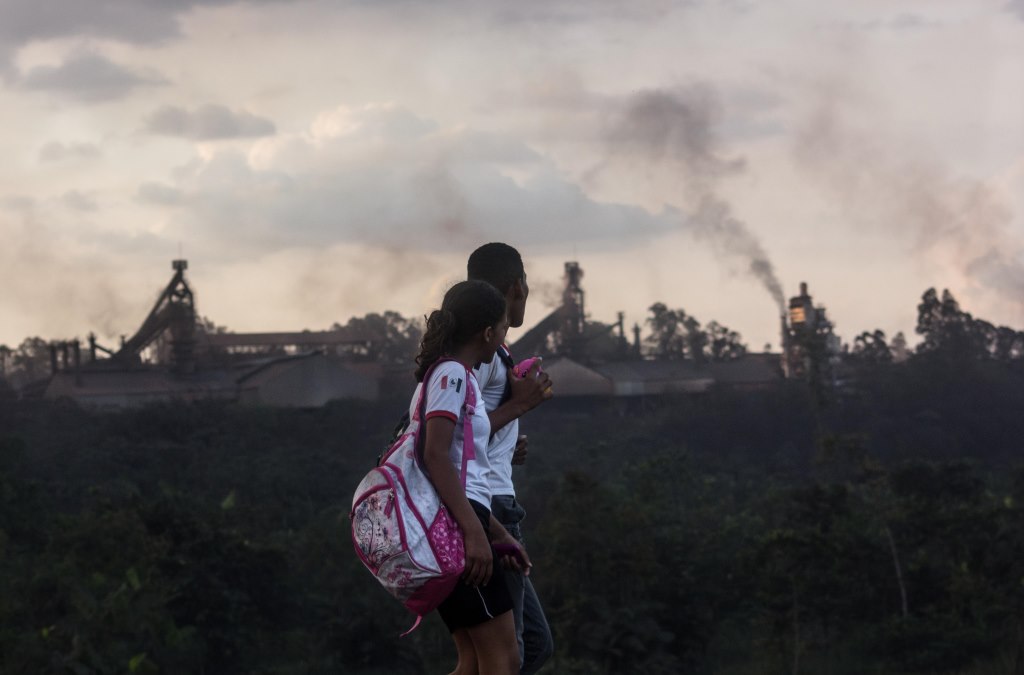
As a network, these communities dream of a new time, in which relationships with all creation may return “to the tracks of justice”. They long for an economy based on the sharing of goods, rather than plunder, export-oriented exploitation, private enrichment, and violent public impacts.
In their cry of denunciation, Psalm 22 resounds — the psalm whispered by Jesus on the cross, with an anguished sense of abandonment and deep trust in the Father: “Roaring lions open their mouths wide against me. They divide my clothes among them and cast lots for my garment”. In these words, we can see a painful parallel with the territories of peoples plundered by the voracious jaws of mining.
Thus, the communities of Maranhão endure a continuous experience of passion and death, of broken dreams and fragile struggles. Where, then, is the resurrection, hidden “from below and from within”?
We are inspired by the words of the late Mr. Edvard, a much-missed leader in the mining-impacted community of Piquiá. He used to call mining and steel companies “iron dragons”, and stated: “The beauty of our struggle is that we do not grow weary; and whenever there is a defeat, we respond with even greater energy and conviction.”
Resurrection means remaining standing beneath the cross, as the women did (John 19:25), without bowing one’s head before imperial power or religious mockery. Resurrection is found in the communities of Maranhão, which remain firm in resistance, united in networks, continuing to dream and to demand justice, even as their territories continue to be threatened.
Standing, even while weeping, we hear again the voice of Jesus, who calls and sends us to meet him—alive and on the move—in the Galilees of the peoples.
Father Dario Bossi,
Comboni missionary and member of Churches and Mining Network