
Daniel Comboni
Comboni Missionaries
Institutional area
Other links
Newsletter
Mozambique: Where the Gospel Continues to Journey Along Long Paths
Tuesday, July 15, 2026
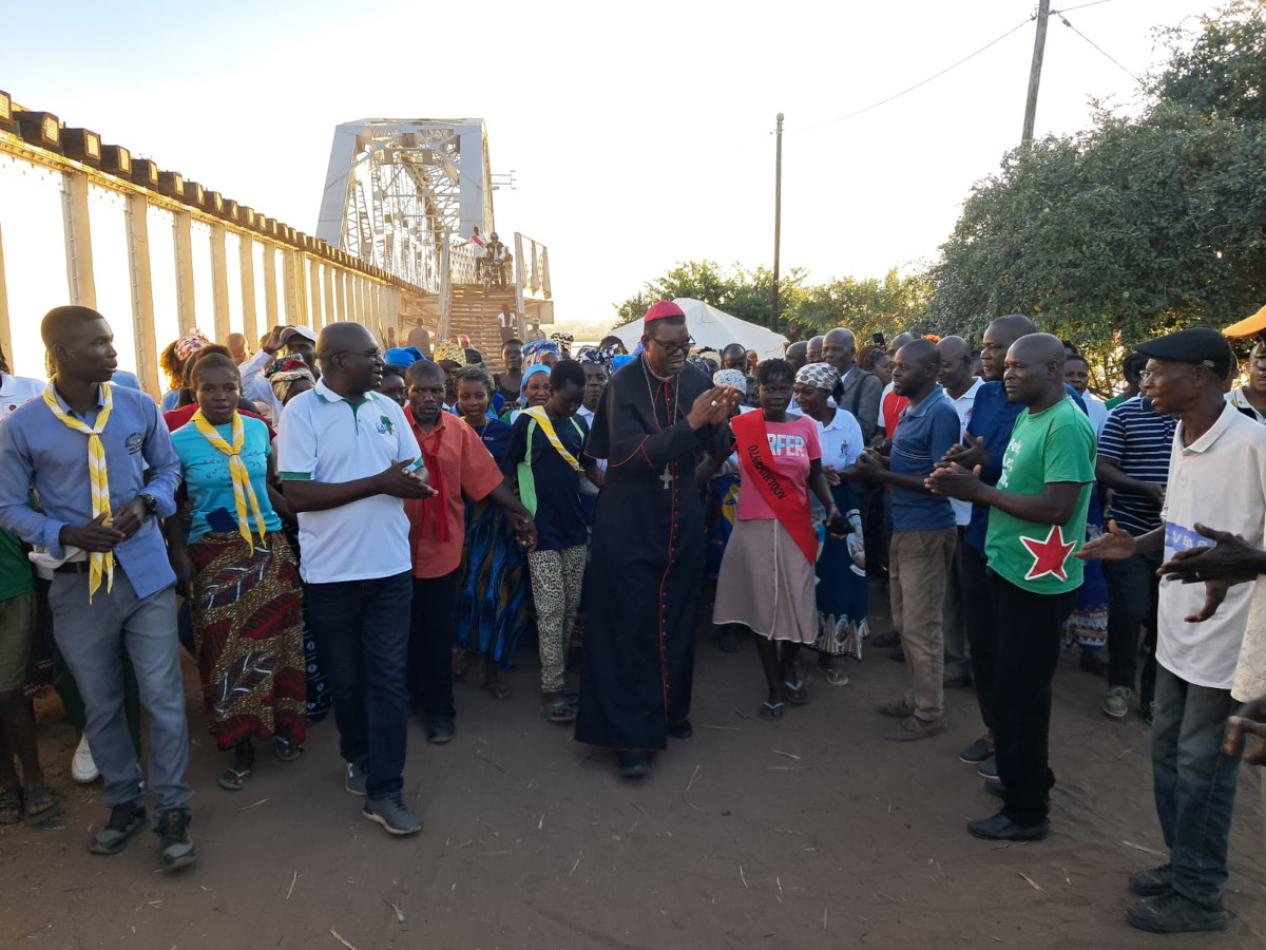
Five months may seem like a short time. But they are enough to discover a vibrant local Church, an extraordinary people, and the challenges that continue to mark the evangelizing mission in Caia. This is the conviction of its bishop, Mgr. António Manuel Bogaio Constantino, MCCJ, initially ordained auxiliary bishop of Beira on February 19, 2023, later appointed bishop of Caia on February 25, 2026, and apostolic administrator of Beira on June 12, 2026.
When I arrived in the Diocese of Caia, in the center of Mozambique, I knew I would find a missionary Church; in fact, I already knew a part of this vast territory because I travelled through it as auxiliary bishop of the Archdiocese of Beira. However, I did not imagine the human, geographical, and spiritual dimension of this mission.
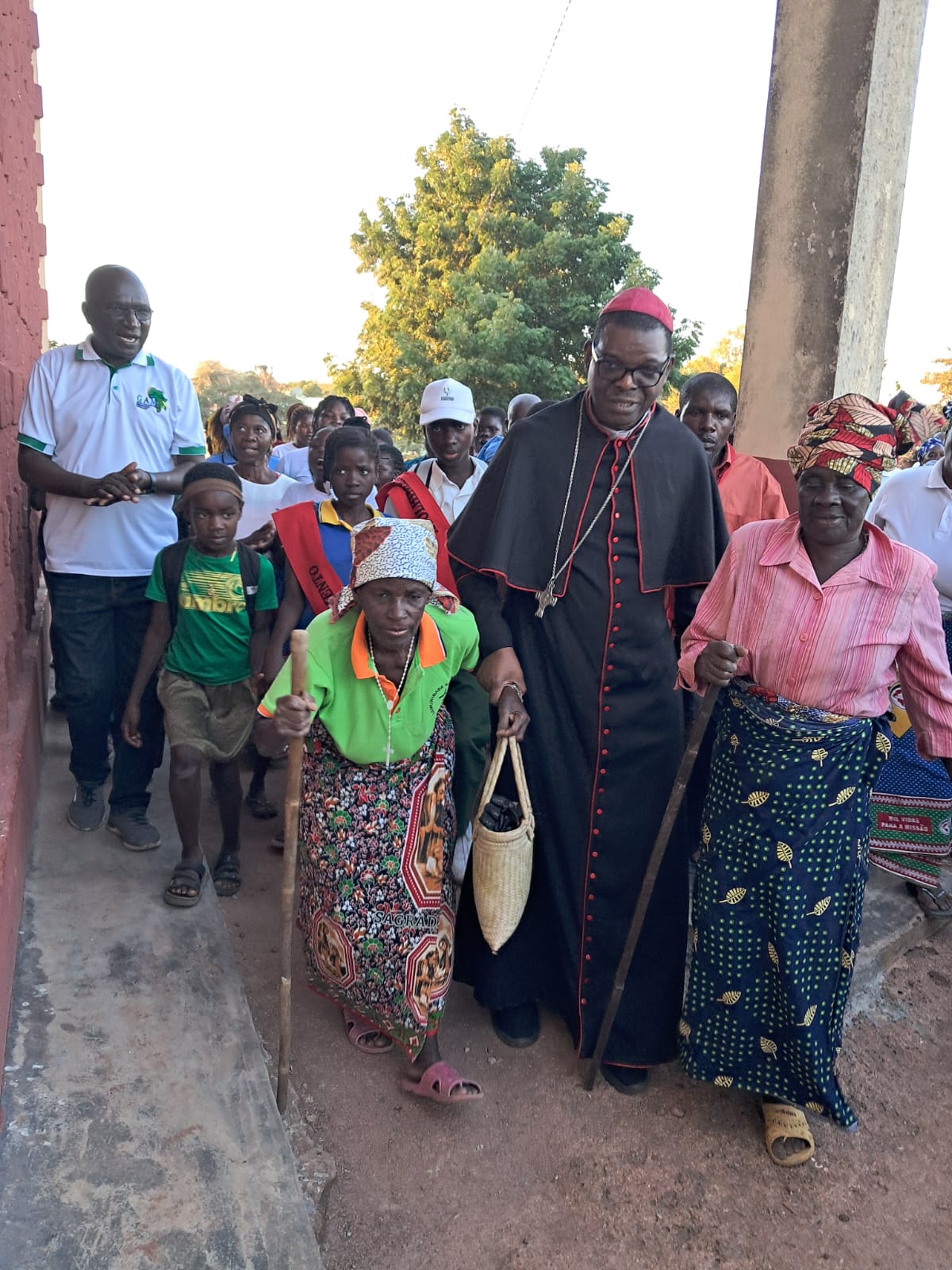
In these first five months, I have travelled hundreds of kilometres on dirt roads, visited isolated communities and old missions, and met Christians whose faith remains alive despite the enormous difficulties of daily life.
The Diocese of Caia is one of the most challenging in Mozambique. It spans almost 55,000 square kilometres, encompassing vast rural areas with hundreds of small communities in the Zambezi River valley. Many are far from the parish headquarters and receive a priest’s visit only a few times a year. Distance, however, has never extinguished the hope of these communities.
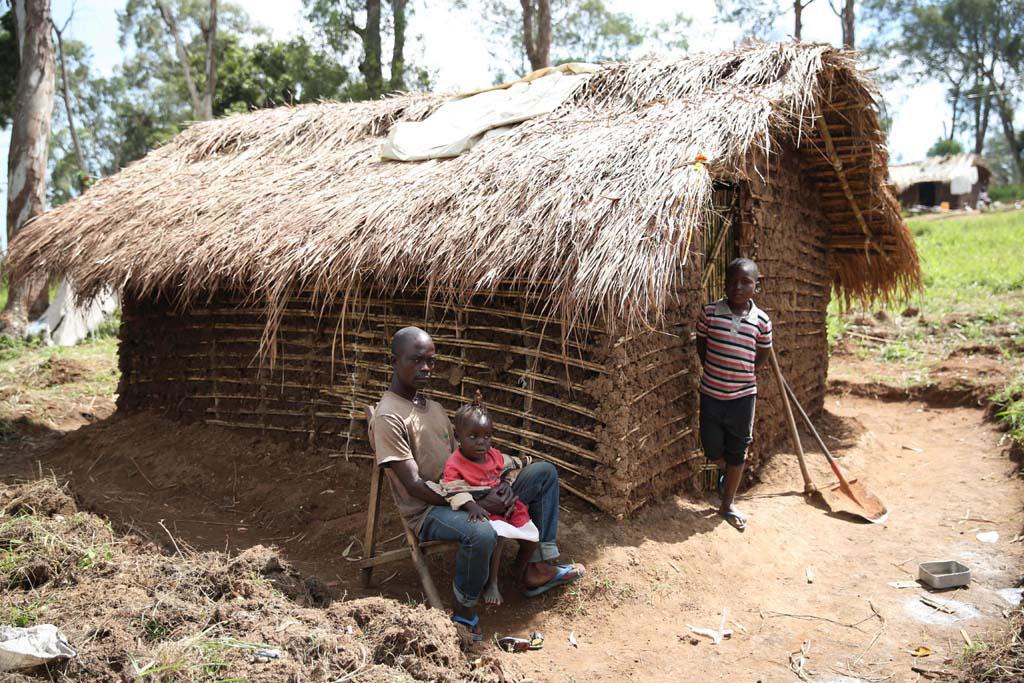
Here, evangelizing means travelling for hours along sandy paths, crossing flooded areas during the rainy season, and sometimes interrupting the journey because there is simply no road left. There are localities where a car or motorcycle is no longer sufficient; the only way is to continue on foot to reach the families awaiting the celebration of the Eucharist, the baptism of their children, or a word of hope.
A demanding geography, an extraordinary faith
Geography profoundly shapes the life of the diocese. Great distances, limited infrastructure, and difficult access make every pastoral visit a true adventure. During the rains, many communities become isolated. A journey of a hundred kilometres can turn into a full-day trip. But it is in these places that we find some of the most vibrant communities in the diocese.
The faithful organize themselves, are diligent in attending Sunday celebrations, teach catechism, accompany the sick, and preserve community life, largely thanks to catechists and lay leaders, the true pillars of first evangelization. They keep the flame of faith alive.
The Zambezi: obstacle and bridge
No reality symbolizes this diocese better than the majestic Zambezi River.
At first glance, it seems to divide the territory and hinder missionary work. Crossings require time, organization, and resources. At certain times of the year, travel becomes even more difficult.
But the Zambezi also unites the diocese.
Along its banks, communities were born, ancient missions developed, and a common history of evangelization was built, which remains to this day.
The river nourishes the land, sustains thousands of families, and reminds us daily that the mission of the Church, like its waters, never stops flowing.
Revitalizing the ancient missions
The Diocese of Caia holds an extraordinary missionary heritage dating back to the 17th century. Many of the missions are old and played a decisive role in evangelization, education, and human development.
Today, some show the weight of time: buildings in need of rehabilitation, infrastructure requiring modernization, and pastoral centres asking for new resources to meet current needs.
However, restructuring these missions is much more than restoring walls. It is also about restoring their capacity to train catechists, welcome youth, serve families, and continue proclaiming the Gospel to new generations.
A diocese that continues in first evangelization
Despite the long presence of the Church in this region, many areas of the diocese face the unique challenges of first evangelization. This reality demands creativity, perseverance, and a constant presence among the people. It also requires human and material resources for the mission to grow.
Every new chapel built, every Bible given to a catechist, every vehicle that reaches an isolated community is much more than a material investment. It is the possibility of proclaiming Christ where He is still little known.
Missionaries: a presence of hope
In these five months, I have met men and women whose dedication deeply impresses me. Priests, men and women religious, catechists, and countless laypeople travel long distances daily to serve communities. They work in evangelization, accompany families, promote education, visit the sick, and help populations face social and economic challenges.
The mission in Caia is not done merely with words. It is done with presence, closeness, service, sacrifice, and dedication.
Walking together
Looking back at these first five months, I have a deep conviction: Caia is a diocese poor in resources, but extraordinarily rich in people. God continues to act through the simplicity of the most humble. Despite the difficulties, a living, missionary, and hope-filled Church is growing.
We are still in the process of strengthening the formation of catechists, recovering missions, supporting priests, building small chapels, and keeping the Church’s presence alive in the peripheries. This will be the second stage.
None of this would be possible without the generosity of so many people scattered around the world who pray and give a part of themselves so that we can reach places where distances seem impossible.
On behalf of the communities of the diocese, I offer a word of profound gratitude to all who have collaborated with us. Every gesture of solidarity is transformed here into concrete hope. Every contribution helps us to continue this mission that forges difficult roads, overcomes the distances of the Zambezi valley, and brings the Gospel to the most remote villages.
We are still at the beginning. However, one certainty remains: Christ continues to go before us in every community and calls us to be a Church that is close, missionary, and committed to the future of this people.
+Dom António Constantino, MCCJ
Bishop of Caia and Apostolic Administrator of the Archdiocese of Beira