
Daniel Comboni
Comboni Missionaries
Institutional area
Other links
Newsletter
Proclaiming the Word is the disciple’s first task
Friday, September 4, 2026
The success of the disciple’s mission depends entirely on the power of Jesus’ Word. If the disciple relies on himself, the catch is unsuccessful; if, instead, he trusts in Jesus’ Word, the catch is abundant.
The Power of the Word
In this brief reflection, I would like to draw on a passage written almost ten years ago by the great Don Bruno Maggioni.
Rather than focusing on the calling of the disciples, as Mark and Matthew do in the parallel passages, Luke prefers to concentrate on the power of the Word (5:1–11).
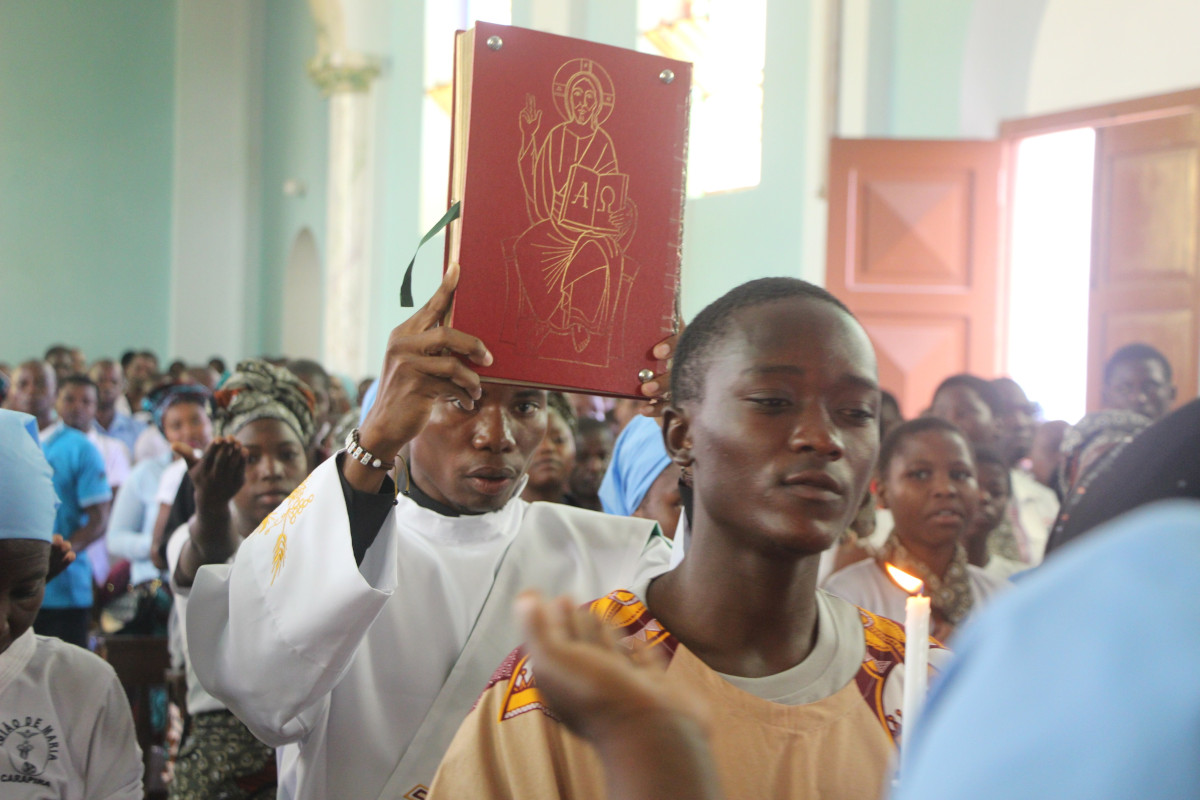
Proclaiming the Word is the disciple’s first task, as the opening scene already suggests: Jesus, sitting in Simon’s boat, proclaims the Word to the crowd that has gathered to listen to him.
The success of the disciple’s mission depends entirely on the power of Jesus’ Word. If the disciple relies on himself, the catch is unsuccessful; if, instead, he trusts in Jesus’ Word, the catch is abundant.
“At Your Word I Will Let Down the Nets”
Peter’s response to Jesus’ command — “At your word I will let down the nets” — certainly expresses great obedience, but also — and perhaps even more so — great trust.
This trust leads Peter to obey a command from Jesus which his own experience seems to show is absurd and pointless. “My dear Jesus, perhaps you do not realise that you do not fish at night, and it is already morning. Now all we can do is pull the nets out onto the shore and mend the places where they have torn. I do not deny that you may know something about carpentry; but you certainly know nothing about fishing. There are no fish here today… We have worked hard all night and caught nothing.”
And yet Peter trusts in Jesus’ Word, despite all the evidence that might have led him to do the opposite.
Faith in the Missionary Community
For Luke, the disciple is the one who embarks upon a missionary way of life. The implications at this point may be many. But at least one is indispensable: in its missionary effort, the Christian community must be rich in nothing but faith in the Word of God. It must rely on nothing else; it must seek nothing else, even under the pretext of using other means in the service of the Gospel.
And Peter does precisely this: he trusts in Jesus’ Word: “At your word, I will let down the nets.”
I believe that Peter looked at the great crowd standing on the shore of the lake, expecting little smiles of compassion, shaking heads and sarcastic remarks. Perhaps someone had already shouted to him: «Simon, what are you doing?»
Peter does exactly what Jesus’ Word tells him to do, and he experiences the power of that Word.
Encountering the Lord: Amazement and Self-Knowledge
His first reaction is one of great amazement, and he suddenly becomes aware of his own unworthiness: “Go away from me, Lord, for I am a sinful man”.
Encountering the Lord means, at one and the same time, coming to know him and coming to know ourselves.
The disciple must not ignore his own sin and weakness, his own limitations; on the contrary, he must be lucidly aware of them. But he must also believe that the power of God can triumph over sin and weakness.
And so Peter chooses the Master, even though he feels himself to be a sinner. He makes his choice, trusting in the Lord who speaks two beautiful words to him, words that we too should hear more and more: “*Do not be afraid.” *Our weakness is overcome by the power of God.
Leaving Everything to Follow Jesus
The passage concludes by emphasising the radical nature of their detachment. James and John are also there with Peter. And Luke notes: “They pulled their boats up on shore, left everything and followed him” (v. 11).
Our passage presents the birth of the first group of disciples, the gathering around Jesus of the ecclesial community: these are men who follow him with radical commitment!
This emphasis is entirely consistent with the spirituality of the third Evangelist. Luke, in fact, habitually stresses the radical nature of detachment, even drastically so, whenever he speaks of the conditions for discipleship. Stark poverty, not merely poverty in spirit.

The Radical Demands of the Gospel
A few examples:
“Sell your possessions and give to the poor. Provide purses for yourselves that will not wear out, a treasure in heaven that will never fail, where no thief comes near and no moth destroys. For where your treasure is, there your heart will be also” (12:33–34).
“In the same way, those of you who do not give up everything you have cannot be my disciples” (14:33).
“Sell everything you have and give to the poor… Then come, follow me” (18:22).
When Other Means Replace the Word
At the beginning, there is often enthusiasm, and we are genuinely ready to “set out” with nothing, naked, stripped of everything… Then comes the temptation to begin thinking and believing that, with more resources, or better resources, we could accomplish so much more.
Often, far too often, this is the beginning of the end. Poverty becomes “functional”: yes, I have many things, but I use them all for others. The Word begins to lose its importance… and trust in other means grows.
All my missionary sins have been of this kind. Whenever the Word has seemed to me “too slow”, “far too weak when it comes to solving immediate problems”, I have almost always resorted to Satan’s stones: “wonders”, “great works”… which, without my intending it, gave me power in the eyes of the people.
Father Franco Moretti, MCCJ