
Daniel Comboni
Comboni Missionaries
Institutional area
Other links
Newsletter
United in Mission So That the World May Believe in Christ
Tuesday, October 13, 2026
In this reflection, I invite you to contemplate the outward dimension of our unity with Christ: our union in mission, “so that the world may believe” (John 17:21).
This theme, which may seem simple at first glance, challenges us deeply in our lives as baptized Christians and in our Comboni identity. Unity is not merely a human or organizational agreement; it is the visible manifestation of our communion with the Heart of Christ.
First stage: intimate union with Jesus Christ
No missionary activity can bear lasting fruit unless it springs from an intimate union with the Lord Jesus. The first stage of our journey consists in rooting ourselves in personal and communal prayer and participating fervently in the sacramental life. Rooting ourselves in the sacraments gives expression to the spirituality that the Jesuit De Bertolis describes through the seven ways and nine practices of honouring the Sacred Heart in his book Practical Spirituality of the Heart of Christ.
Prayer is not an accessory to mission; it is its first action and the very source of its hope.
Drawing from the Compassionate Heart of Christ means making His love the living driving force of our discipleship. When we approach the Eucharist and the Sacrament of Reconciliation, we receive the grace we need to overcome our weaknesses and become channels of God’s mercy in the world.
Second stage: Comboni identity and fraternity
Unity in mission directly touches our identity as disciples and the way we relate to one another within our communities, our Institute, and our pastoral ministry. The Apostle Paul warns us against the danger of divisions and factions:
One Lord, one faith, one baptism, one God and Father of all, who is over all and through all and in all (Ephesians 4:5-6).
Overcoming divisions and fragmentation—the attitudes of belonging to “Paul” or “Apollos” (cf. 1 Corinthians 1:10-12)—is the first testimony we are called to bear.
The example of St. Daniel Comboni: faith and surrender
The life of our Founder shows us that responding to the missionary vocation requires complete trust in Divine Providence.
In his historical letters from the 1850s, Comboni reveals the painful inner struggle he experienced before leaving for Africa: his deep affection for his elderly parents, his fear of leaving them alone, and his firm conviction that God was calling him. In his letter to Fr. Pietro Grana in July 1857, he wrote:
Amid this universal conflict of my thoughts, I consider it advisable to make the Spiritual Exercises, to consult Religion and God; and He, who is just and governs all things, will know how to free me from this predicament, bring everything together, and console my parents... Therefore, it is better to exclaim with Samuel: ‘Speak, Lord, for your servant is listening!’ (Writings, 9).
Third stage: “So that the world may believe”
Unity among disciples is never an inward-looking retreat nor an end in itself; rather, it is essentially directed toward mission. Jesus stated this with great clarity in His priestly prayer: “That they may all be one. As you, Father, are in me and I am in you, may they also be in us, so that the world may believe that you have sent me” (John 17:21).
The communicative power of fraternity
It is through the witness of a reconciled, fraternal, and supportive community that the proclamation of the Gospel finds its full communicative power. Missionary unity should not be understood as homogenization or uniformity, but as the harmonious convergence of different charisms, cultures, and sensibilities that shine forth in the one faith.
Fourth stage: artisans of hope and proximity
In its message for World Mission Sunday during the Jubilee Year, entitled “Missionaries of Hope Among All Peoples,” the Church reminds us of the urgent need to bring the light of the Gospel to a world marked by loneliness and disorientation. Although technology now connects us all, genuine human and spiritual relationships are often lacking:
- God’s Way of Acting: We are called to act with closeness, compassion, and tenderness, drawing near to the wounds of those who suffer and of those who are marginalized.
- People of Springtime: Nourished by Paschal spirituality and the celebration of the sacraments, we bear witness to the certainty that hatred and death do not have the final word.
- Persevering Prayer: Prayer is the first source of hope and the first missionary action. Through prayer, we keep the spark of faith alive.
- Missionary Synodality: Evangelization is a communal journey that requires communion in prayer, purpose, and action among parishes, religious institutes, and missionary works.
-
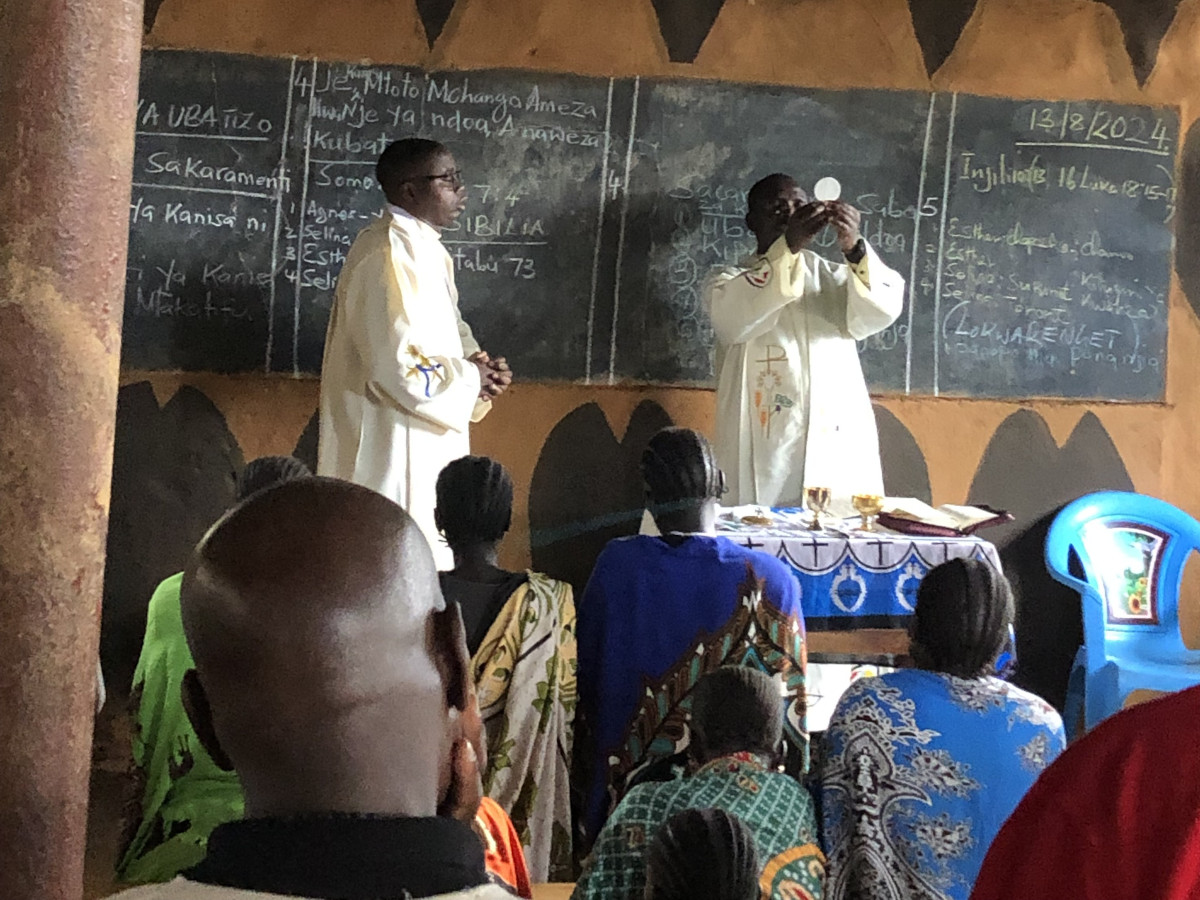
Fr. John Kipkemoi Korir, MCCJ