
Daniel Comboni
Comboni Missionaries
Institutional area
Other links
Newsletter
Mission is to proclaim, live and share God’s faithful love
Tuesday, 13 October 2026
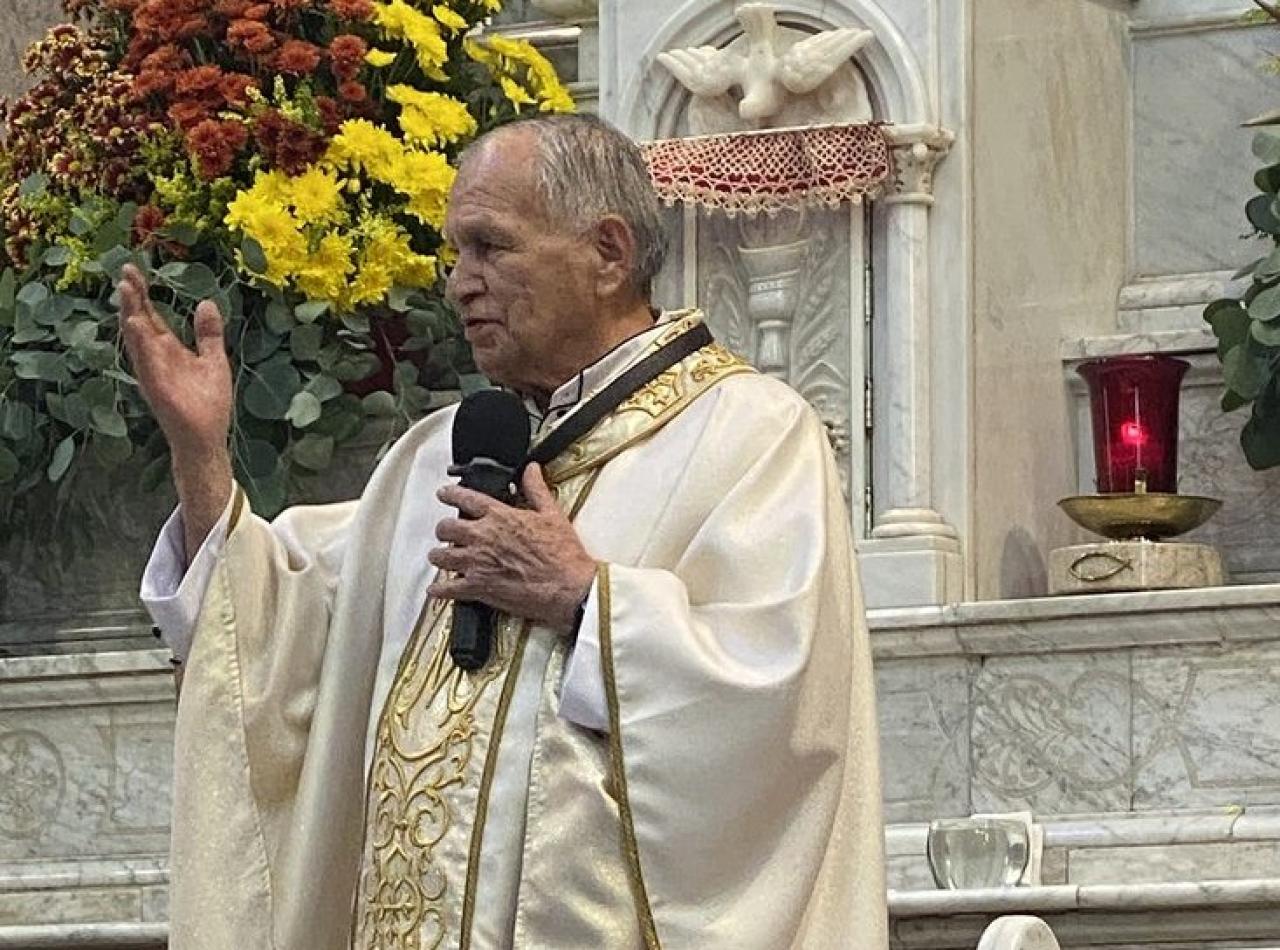
During the triduum of preparation for the solemnity of St Daniel Comboni, the Curia community revisited Pope Leo XIV’s message for World Mission Sunday 2026. Father Sylvester Hategek’Imana, a member of the Commission for Ongoing Formation, offered a reflection on the third part of the message, focusing on three key words: proclaim, live and share God’s faithful love. We present some excerpts from his reflection.
Reflecting on the third part of the message of the Holy Father, Pope Leo XIV, for the 100th World Mission Sunday, I could not help but recall the words of St Paul to the Corinthians:
For if I preach the Gospel, that gives me no ground for boasting. For necessity is laid upon me. Woe to me if I do not preach the Gospel! (1 Corinthians 9:16).
This conviction dwelt in the heart of St Paul because he was moved by the faithful and unconditional love of Christ crucified. That is why he could say: “Woe to me if I do not preach the Gospel!” This same responsibility challenges us too, as we are called to live out and bear witness to our missionary vocation.
In his message, Pope Leo XIV states: “If unity is the condition for mission, love is its very substance.”
The heart of every authentic mission is love: a love that is experienced and lived, that impels us towards others and is expressed in concrete gestures in our daily lives. In our missionary language, this love leads us especially towards the poor and abandoned of today’s world, particularly those who live on the peripheries of humanity.
The message continues: “The Good News that we are sent to proclaim to the world is not an abstract ideal: it is the Gospel of God’s faithful love, made flesh in the face and life of Jesus Christ.”
St Daniel Comboni, too, shows us how he lived out the challenge of proclaiming the Gospel in practical ways, sustained by the inspiration of the Holy Spirit. This is testified to by his own words:
Despite everything, we were happy to be able to make known to those people the principles and faith of the Gospel. The bases of trees served as our pulpit for preaching, and they were always surrounded by chiefs and naked black people, always armed with spears and poisoned arrows. They listened to the Word of God with extraordinary eagerness and an attentiveness that gave us much reason to hope. Our church, where we offered the Holy Sacrifice, was sometimes a small tent, sometimes a little hut five feet high, and sometimes the foot of a great tree (Writings, 2129).
The difficult external conditions and the lack of adequate facilities did not diminish Comboni’s apostolic zeal or his passion for the mission. He had embraced this vocation out of pure love for Christ and humanity.
The Pope helps us to understand this truth more deeply when he states:
The mission of the disciples and the Church as a whole is to continue the mission of Christ in the Holy Spirit: a mission born of love, lived in love, and leading to love. In fact, the Lord himself, in his great prayer to the Father before his Passion, after invoking unity among his disciples, concludes: “so that the love with which you have loved me may be in them, and I in them” (John 17:26). Impelled by the love of Christ, the Apostles then went out to evangelize for Christ (cf. 2 Corinthians 5:14). In the same way, throughout the centuries, multitudes of Christians — martyrs, confessors and missionaries — have given their lives to make this divine love known to the world. Thus, guided by the Holy Spirit, the Spirit of love, the Church’s evangelizing mission will continue until the end of time.
What moves us, Comboni missionaries and evangelisers in today’s world? Are we evangelisers filled with the love of Christ and animated by a passion for his mission, which impels us to go to the peripheries of humanity to bear witness to him?
On 24 June 1870, in his circular letter to the Fathers of the First Vatican Council, Daniel Comboni wrote:
Why is it that the African interior alone still lies in darkness and in the shadow of death, without a Pastor, without Apostles, without Church and without Faith? Why, among all the nations of earth, has Africa alone not submitted to the dominion of Christ? Never has a curse inflicted itself upon mankind with more harm and for a longer time than that most severe and saddest of curses by which the Almighty condemned the children of Ham. The causes for which the unfortunate peoples of Africa have been excluded from the benefits of redemption (Writings, 2301).
In the remainder of his circular letter, Comboni mentions several difficulties, including three that are particularly significant:
-
The harshness of the hardships and difficulties facing those who undertake the holy expeditions to Africa, compounded by the extreme severity of the climate;
-
The shortage of apostles whose voices should spread the truth and proclaim the Word of Christ;
-
The lack of financial resources which, as everyone can understand, are absolutely essential for carrying out undertakings of such great importance.
Faced with this situation, however difficult it might be, Comboni does not remain indifferent. Moved by love for Christ and humanity, he declares:
For many years now I have devoted myself to this arduous and almost hopeless task. To save the Africans from slavery, together with my enthusiastic co-workers, I have decided to make little of hunger, thirst, heat and of every threat to life. (Writings, 2303).
One hundred and fifty-six years after Comboni’s appeal, Pope Leo XIV expresses his gratitude to today’s missionaries in these words:
I would like to express my special gratitude to today’s ad gentes missionaries. Like Saint Francis Xavier, they have left their homeland, their families and all sense of security in order to proclaim the Gospel and bring Christ and his love to places that are often challenging, poor, conflict-ridden or culturally distant. Despite adversity and human limitations, they continue to give themselves joyfully, because they know that Christ himself, and his Gospel, are the greatest treasures we can offer. Through their perseverance, they demonstrate that God’s love transcends all barriers. The world still needs these courageous witnesses of Christ, and ecclesial communities still need new missionary vocations. We must always keep them close to our hearts and continually pray to the Father for them.
Let us pray for ourselves and for all the members of the Comboni family throughout the world, especially the younger generations, that our passion for Christ and the Gospel may remain alive and active. Difficulties will not be lacking, but it will be Christ’s faithful love that sustains us and helps us persevere in the mission.
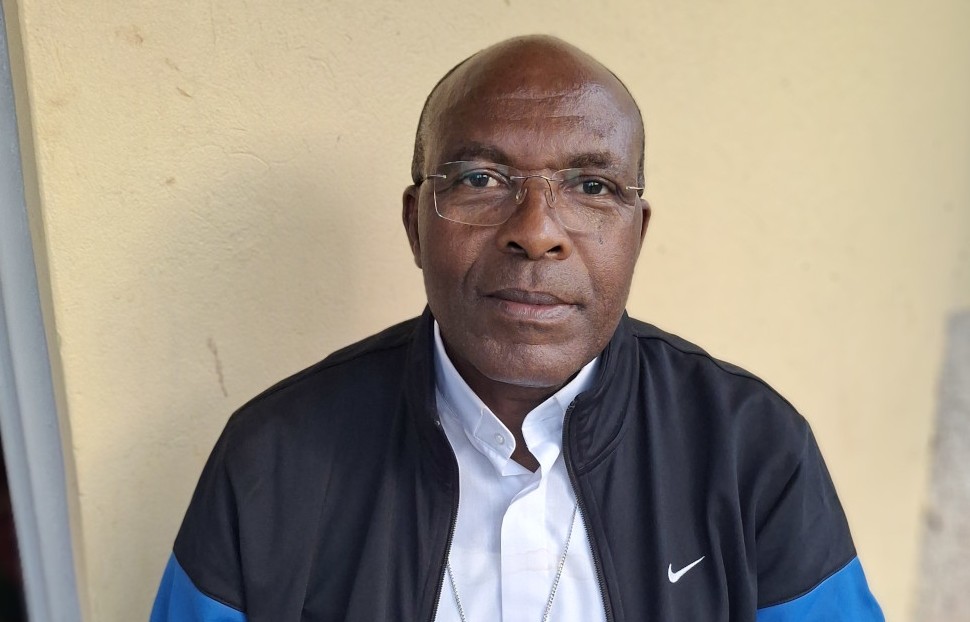
Fr Sylvester Hategek’Imana, MCCJ