Daniel Comboni
Comboni Missionaries
Institutional area
Other links
Newsletter
The Voices of Sudanese Women: Resistance, Dignity, and Hope in War
Monday, 2 November 2026
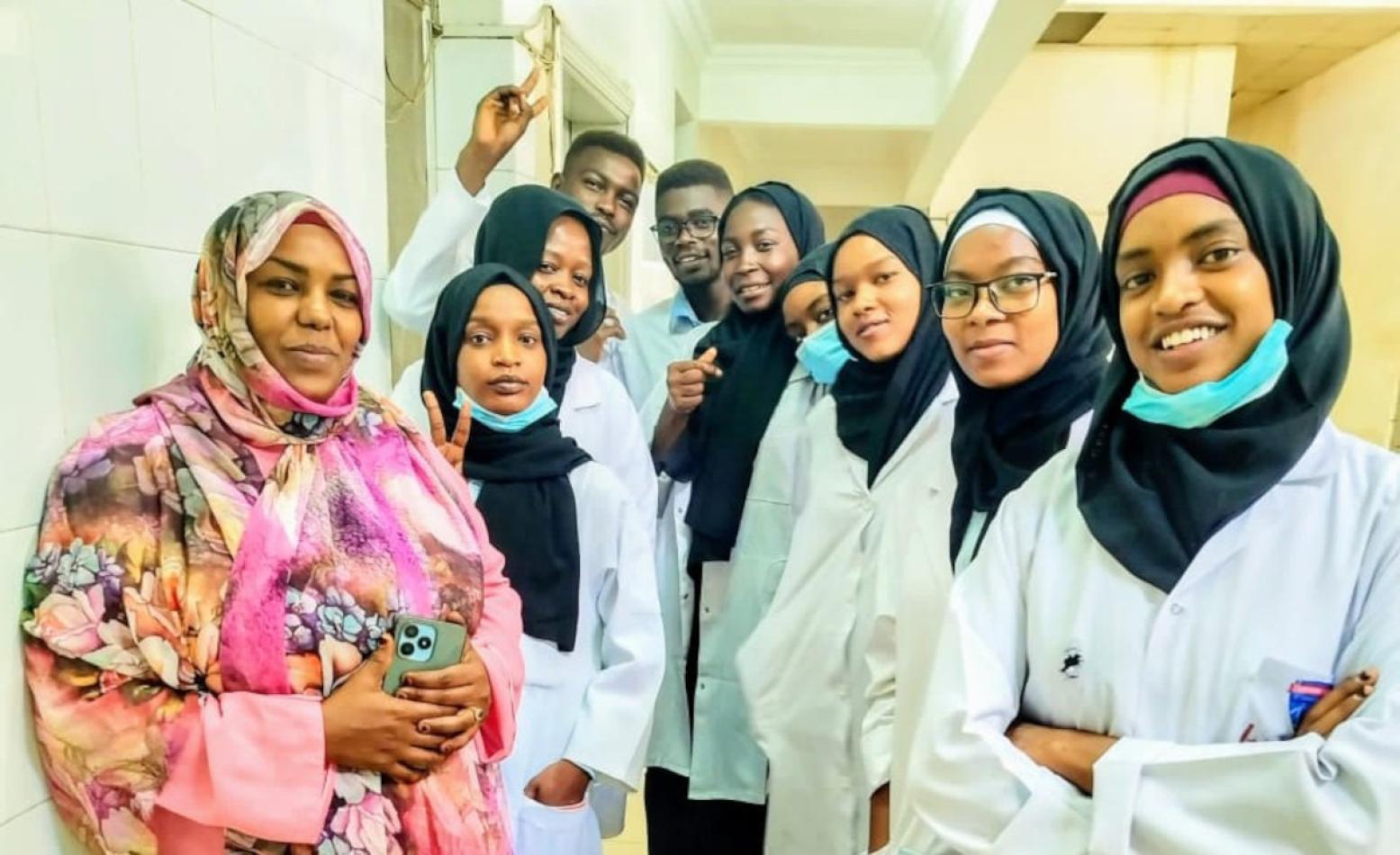
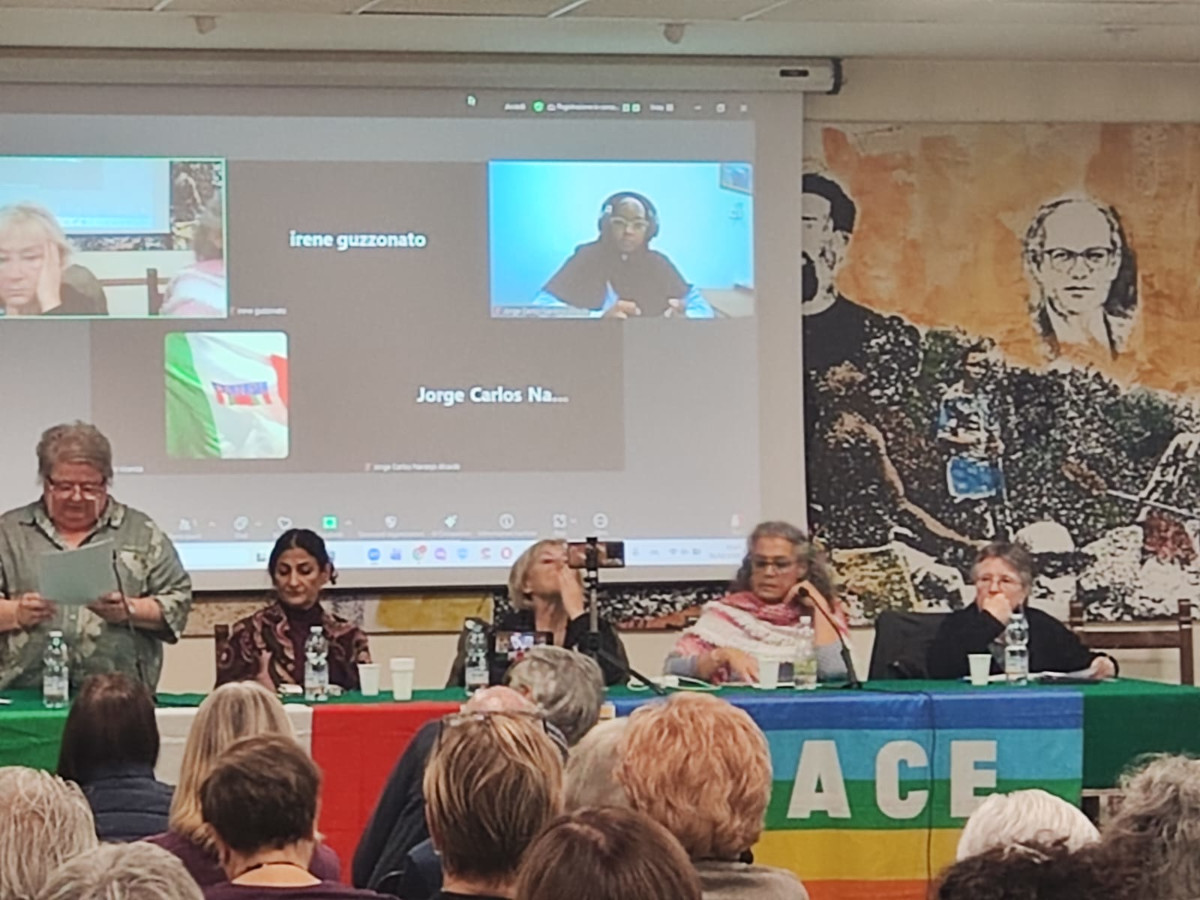
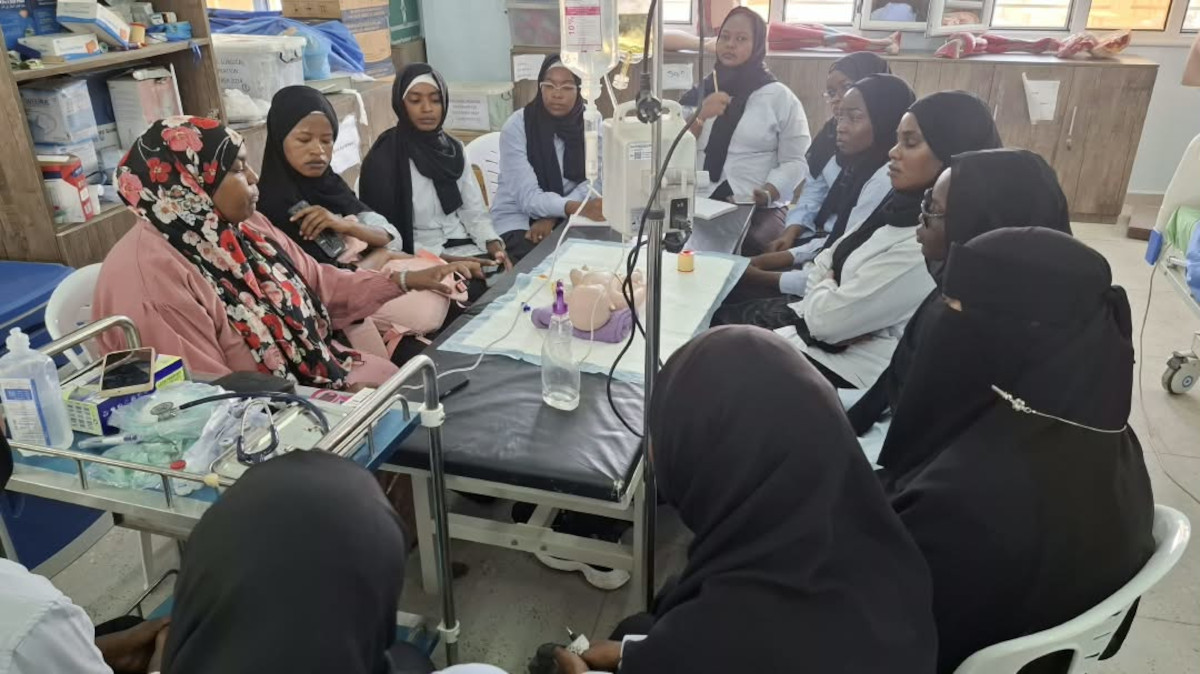
Following the outbreak of war in Sudan, higher education institutions were authorised to relocate to safer areas and move classes online from October 2023. However, nursing students still needed in-person training, forcing many, mostly women, to travel hundreds of kilometres through conflict zones to reach the Comboni College of Science and Technology in Port Sudan. Samar Muzamil (wearing glasses in the photo) is one of these courageous students, determined to continue her education despite the conflict so that she can support her family and serve her community after graduation. During her address at the conference “Women's Resilience in Men's Wars,” organised by the Italian National Association of Partisans (ANPI), Samar shared her perspective on the conflict and its impact on the lives of female students.
Distinguished guests, and all those who carry the conscience of the world,
I stand before you not with statistics alone, but with the living voices of Sudanese women — voices trembling with pain yet burning with courage. Voices that refuse silence, even when war seeks to erase them. I speak from the heart, for every mother, child, and family in Sudan, to share how this war began, who is fighting, the involvement of external parties, and how civilians — especially women — survive and stay strong through the destruction.
Before the war, Sudanese women lived ordinary lives. They were mothers, homemakers, and working women, rarely given a seat at the table where decisions were made. Today, however, they have been forced into the middle of this conflict — not just watchers, but as direct targets.
Imagine waking up one day to find that the very place you call home has become a battlefield. What would you do when war suddenly arrives at your doorstep?
At war since April 2023
The war erupted in April 2023, when tensions between the Sudanese Armed Forces (SAF) and the Rapid Support Forces (RSF) exploded to became a real war. Yet its roots run deeper. For decades, Sudan lived under dictatorship.
In 2019, the people rose up, demanding freedom and dignity. They brought down Omar al-Bashir, opening a fragile window of hope. But the transition was unstable. Rival military leaders refused unity, and political deadlock turned into violence. What began as a struggle for power became a war that tore the country apart.
The two main adversaries are the SAF, led by General Abdel Fattah al-Burhan, and the RSF, a powerful paramilitary group led by Mohamed Hamdan Dagalo, known as Hemedti. Who were once partners, worked together to overthrow the regime, and carried out a coup in 2021.
Their rivalry is not only about military control, but about political dominance and wealth, which broke the country completely. While international efforts continuously press for peace, external hands keep fuelling the conflict with illegal weapons and covert support, driven purely by selfish economic interests. This leaves the warring parties to dive back into the conflict violent than before.
Since April 2023, battles have devastated Khartoum and spread across Darfur, Kordofan, and other regions, while truces collapse within days. The war has invaded every corner of Sudan—reaching every home, school, and hospital.
No one has escaped its shadow, though the face of destruction varies: for some, it is the loss of a roof; for others, a shattered education, an untreated chronic illness, or the sudden, violent loss of a loved one.
The toll on civilians is staggering. Over seven million people have been displaced, and hundreds of thousands have crossed into Chad, South Sudan, and Egypt, where refugee camps are overcrowded and resources scarce. Hospitals are bombed or looted, doctors forced to flee, and medicines impossible to find. With schools closed, supply chains broken, and markets destroyed, food prices are skyrocketing. Millions now face extreme hunger, with famine looming as aid struggles to reach those in need.
Stories and dreams through fire
As the representative of the Nursing Students Association and the great women of Sudan, I stand here to share our stories—so that history may record them, and so they remain a beacon of hope in the darkest of times. And those who carried their stories and dreams through fire.
Take a young woman I know from Al‑Fashir, in North Darfur. When the war and tribal clashes cut off her education, she refused to let go of her nursing studies. To secure safe passage out, she literally had to risk everything—even marrying just to make the journey. Traveling with five months pregnant through dangerous smuggling routes all the way from Darfur to Port Sudan. It took nine days of pure fear and exhaustion.
When she finally gave birth, she was miles away from her mother and family, who were still trapped by the conflict. Yet she told me, “I have no escape—my family is waiting for me, and I must finish my studies.” Her voice echoes the struggle of countless Sudanese students who risk their lives just to keep learning, healing others, and creating change.
And from Kadugli comes another testimony, proving that war leaves no ground untouched. A 20‑year‑old girl, her father gone, was raised by her mother who worked in a small restaurant to support her and her siblings with the bare minimum of survival.
When the war intensified in Kadugli — with bombings, the deaths of children, and famine that claimed lives — she set out to reach Port Sudan, hoping to continue her studies and support her family.
She thought the journey would take three days, but it lasted three months. She endured illness that nearly killed her, tribal insults, and humiliation, and was arrested three times at checkpoints by armed groups.
She faced harassment and attempted assault, but her answer was always the same: “Whoever wants to touch me must kill me first.” She sold her clothes piece by piece to afford tickets and food, until nothing remained but what she wore.
Yet, in the middle of this harrowing darkness, alongside exhausted fellow travellers, she chose to become a light. To survive and help others, she sold roasted peanuts, proving that even in the face of despair, she could create hope out of nothing.
With courage and disguise, blending among fighters to avoid death, she finally reached Port Sudan with nothing but a voice that refused to be silenced, a voice that fought until it reached its goal.
There are others, too. Two young women from Juba, South Sudan, tried to reach Port Sudan to complete their education. At the border, they were stopped—forbidden entry simply because of their nationality.
Soldiers threatened to circulate their passports with orders: “If these two girls pass through, even by mistake, arrest them and imprison them.”
Faced with danger, they chose another path. They travelled for hours by sea and for days by land, enduring exhaustion and fear, until they finally reached Port Sudan. But arrival came with a harsh, painful choice: to stay for their future, or return home to their families. One of them whispered, “I only want to see my mother, even once.”
And allow me to share my own story among them. I, too, fled with my family — like millions of others — running through bullets and sudden attacks, believing the war would last only a month. But our hope was betrayed.
My mother, a veterinary doctor, lost her government job. Working alone and risking her life countless times, standing inside a crowded cattle pen with more than 200 animals, knowing that one wrong move could kill her. And my father, a heart patient, worked despite his illness, they did and still do to keep us alive so that we could eat, so that we could study, so that I could stand here today and speak to you.
This is not just my story — it is the story of countless Sudanese women who sacrifice everything to keep their families alive. These voices remind us that education and survival in Sudan today are not ordinary paths — they are a battlefield of endurance.
Women bear the heaviest burden
When you look closely at war, women bear the heaviest burden. They lose family members and must survive alone as protectors and providers. Despite trauma and a broken healthcare system, Sudanese women are the backbone of community resilience.
They run Emergency Response Rooms and communal kitchens (takaaya) to feed the hungry without funding. Nurses and doctors work under fire, and midwives deliver babies in candlelit homes.
This is resistance. Not with guns, but with courage. Not with destruction, but with the stubborn act of keeping life alive. Sudanese women are not waiting for peace to be handed to them ,they are building it, every single day, with their bare hands.
What Sudanese women are doing today remind us with the resistance of Italian women 80 years ago. They are the guardians of memory, the protectors of dignity, the keepers of life. But they cannot carry this burden alone. They need solidarity, not pity; partnership, not charity.
True support must go beyond basic food rations to fund women's initiatives, rebuild education and healthcare, and protect them from violence. When women are at the centre of rebuilding, societies heal faster, and peace becomes possible.
Sudanese women are not just victims of war; they are the heartbeat of survival and the architects of hope. I ask you today: do not just hear their voices—carry them with you, stand with their courage, and join their resistance for life. The future of Sudan rests in their hands.
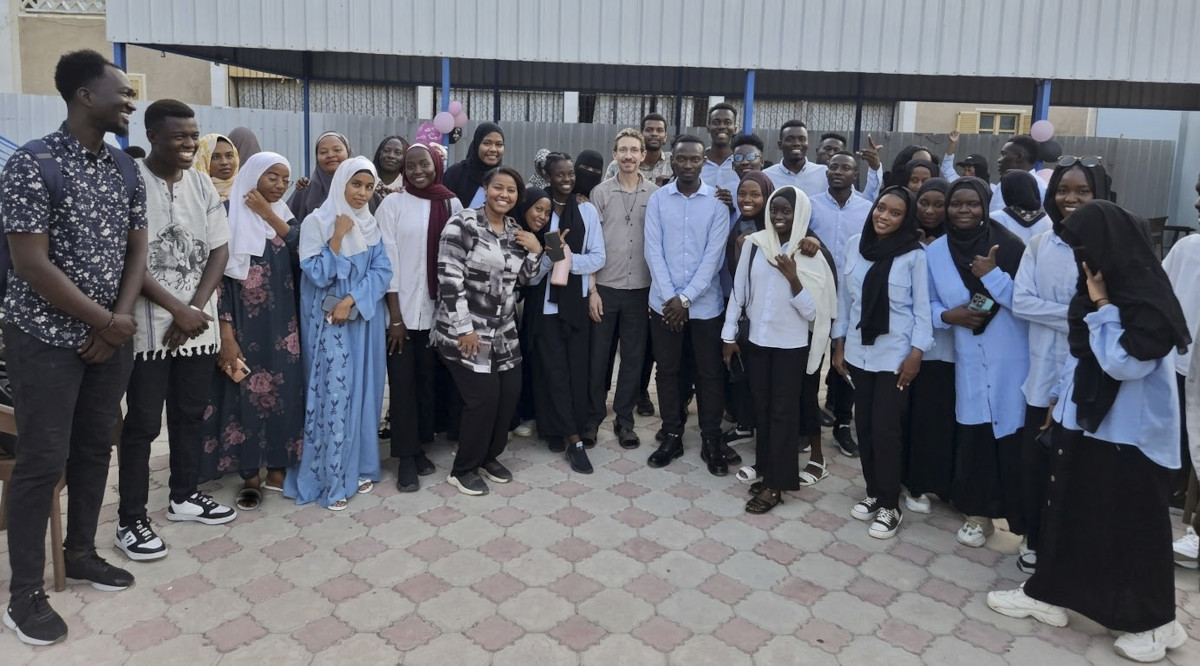
Samar Muzamil
Nursing Students Association President